Okay, confession time. The first moussaka I ever made—Easter 2021, extended family watching, my husband Abdel Ali nervously hovering—was genuinely one of the worst things I’ve ever cooked. And I’ve cooked a lot of bad things. The eggplant was somehow both burnt and watery (how??), the béchamel sauce curdled into something resembling cottage cheese, and my mother-in-law Eleni, who’s actually from Thessaloniki, just… kept adding more feta to her plate.
Which, if you know Greek mothers-in-law, is basically the culinary equivalent of a funeral dirge. Fast forward 43 test batches later (yes, I counted), and this moussaka recipe has become the dish that people actually request when they come over. Abdel Ali still can’t believe it’s the same person cooking. What changed? Well, I’m about to share the seven techniques that transformed my Greek eggplant casserole from embarrassing catastrophe to something even Eleni admits is “quite acceptable for an American.” Which, honestly, is high praise.
Table of Contents
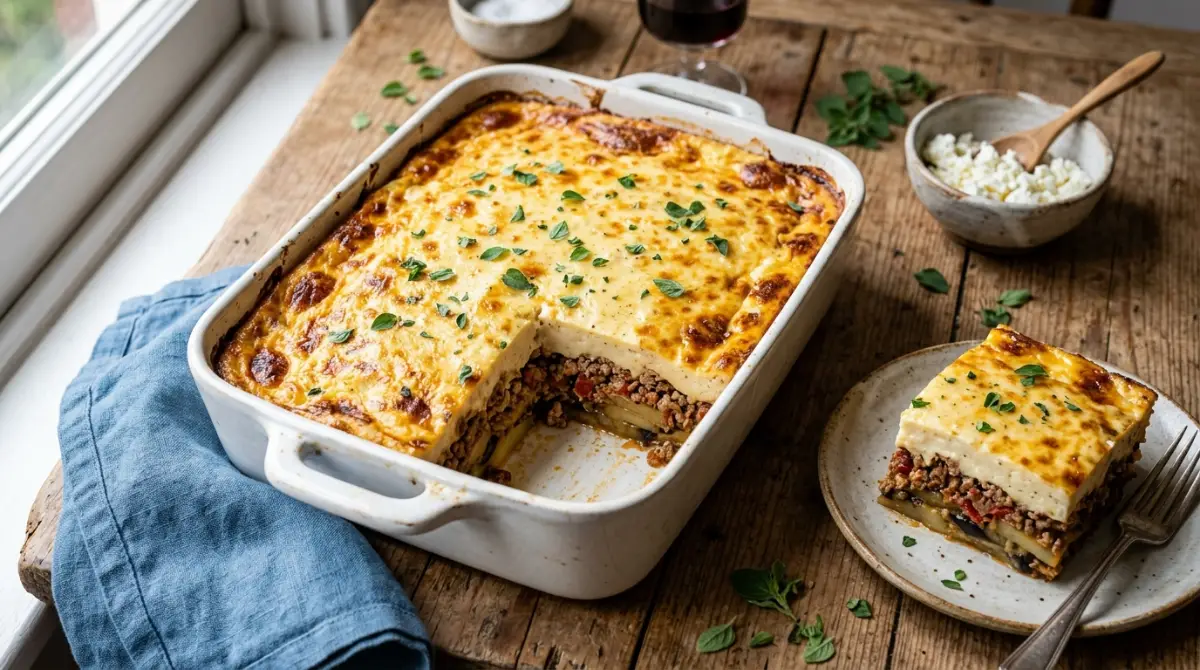
Moussaka: Greek Eggplant Casserole
Ingredients
Method
- 1. Prepare the eggplant: Slice eggplants into ⅓-inch rounds. Layer in a colander, salting each layer. Let drain for 30 minutes. Rinse briefly and pat completely dry with paper towels.
- 2. Make the meat sauce: Heat olive oil in a large skillet over medium-high heat. Sauté onion until softened (5 minutes), add garlic (1 minute). Add beef and cook until browned, breaking up with a wooden spoon. Stir in cinnamon, oregano, and nutmeg; cook 30 seconds. Add crushed tomatoes, tomato paste, beef broth, and bay leaf. Simmer on low for 30-40 minutes until thickened. Remove bay leaf and season with salt and pepper.
- 3. Roast the vegetables: Preheat oven to 400°F. Brush eggplant slices lightly with olive oil and arrange on baking sheets. If using potatoes, brush and arrange separately. Roast 20-25 minutes, flipping halfway, until golden and tender.
- 4. Make the béchamel: Melt butter in a saucepan over medium heat. Whisk in flour and cook 1-2 minutes. Gradually add warm milk, whisking constantly. Cook until thickened (5-7 minutes). Remove from heat. Whisk a ladleful into beaten eggs to temper, then stir egg mixture back into sauce. Add cheese, nutmeg, salt, and white pepper.
- 5. Assemble: Reduce oven to 350°F. Butter a 9×13-inch baking dish. Layer: potatoes (if using), half the eggplant, all the meat sauce, remaining eggplant, then pour béchamel evenly over top. Sprinkle with extra Parmesan if desired.
- 6. Bake: Bake uncovered for 45-50 minutes until golden brown and bubbling around edges.
- 7. Rest: Let stand 20-30 minutes before slicing. This is essential for clean slices.
- 8. Serve: Cut into squares and serve warm with Greek salad and crusty bread.
Notes
Why This Moussaka Recipe Actually Works
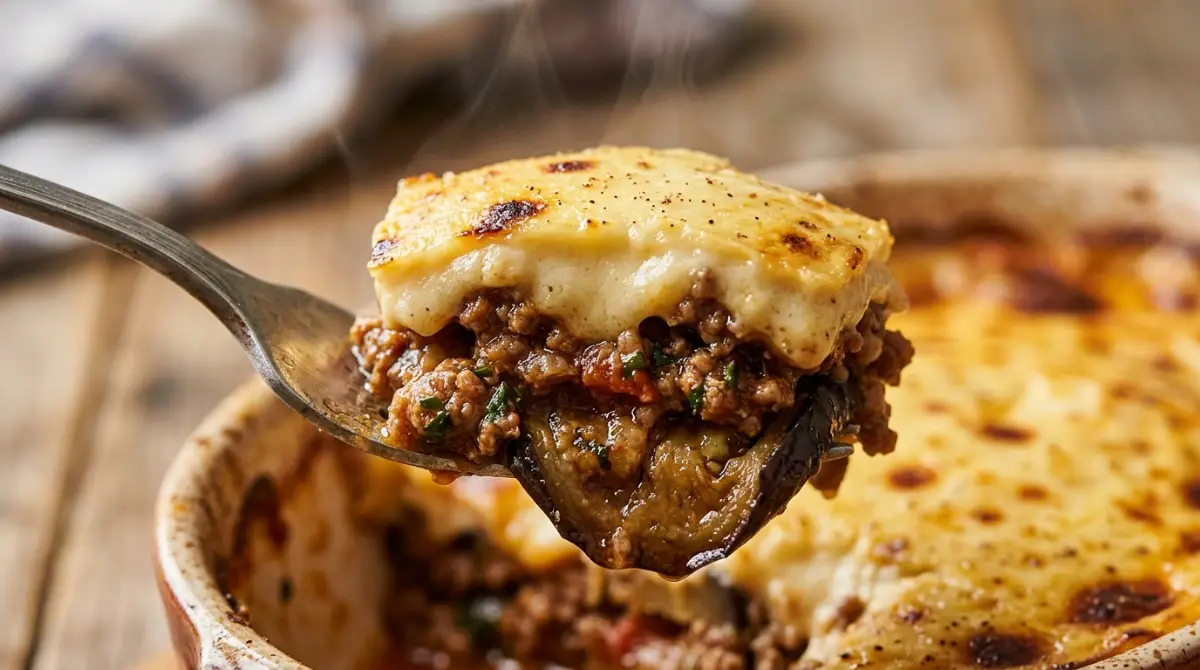
The Science Behind the Layers
Here’s the thing most recipes won’t tell you: moussaka is basically applied physics. (Stay with me here.) The reason so many homemade versions turn into a soggy, collapsed mess isn’t about talent—it’s about understanding moisture. Eggplant is roughly 92% water, and if you don’t deal with that water before it goes in the oven, your beautiful layered dish becomes eggplant soup with ambitions. The salting process does two crucial things: it draws out that excess moisture through osmosis, and it starts to break down the cell walls so your eggplant actually absorbs flavor instead of just sitting there being bland. If you love working with eggplant, you’ll also appreciate our stuffed eggplant recipe which uses similar techniques.
And the béchamel? That creamy top layer isn’t just for show. The eggs in a proper Greek béchamel create a protein matrix that sets during baking, forming an insulating layer that keeps the meat sauce moist while developing that gorgeous golden crust. It’s basically edible engineering, and honestly, understanding the why behind each step made me a much better cook overall.
When to Make This Mediterranean Comfort Food
Look, I’m not going to pretend this is a Tuesday night throw-together meal. This Greek layered dish takes about two hours, and your kitchen will look like a small tornado visited. But for Sunday dinners when you want something impressive? Absolute perfection. For make-ahead meal prep? Even better—moussaka actually improves after a day in the fridge. Holiday gatherings where you need a centerpiece that feeds a crowd? This is your dish. The flavors are similar to what you’d find in lamb shakshuka—warm spices, Mediterranean comfort, the kind of food that makes people go quiet because they’re too busy eating to talk.
Essential Ingredients for Authentic Moussaka
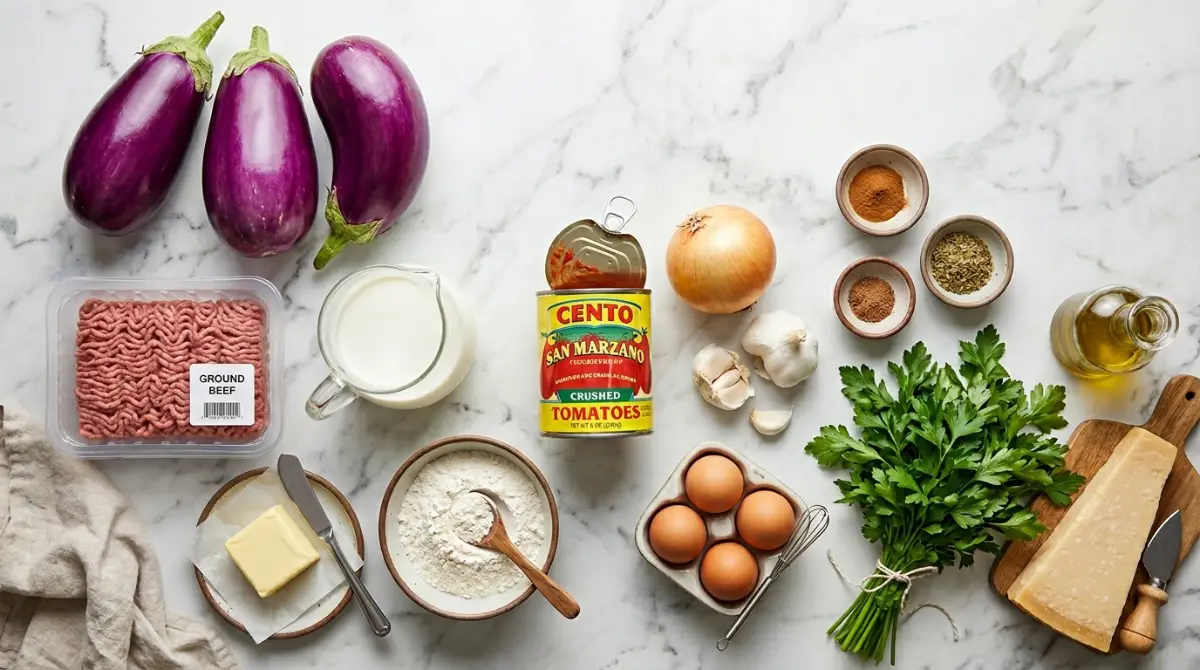
Complete Ingredients List
For the Vegetables:
3 large globe eggplants (about 3 lbs total), sliced ⅓-inch thick
2 lbs Yukon Gold potatoes, peeled and sliced ¼-inch thick (optional)
¼ cup olive oil for brushing
Kosher salt for sweating eggplant
For the Meat Sauce:
2 tablespoons olive oil
1 large yellow onion, finely diced
4 cloves garlic, minced
1.5 lbs lean ground beef (90/10)
1 can (28 oz) crushed tomatoes
2 tablespoons tomato paste
½ cup beef broth
½ teaspoon ground cinnamon
1 teaspoon dried oregano
¼ teaspoon ground nutmeg
1 bay leaf
Salt and black pepper to taste
For the Béchamel:
4 tablespoons unsalted butter
⅓ cup all-purpose flour
3 cups whole milk, warmed
2 large eggs, beaten
½ cup freshly grated Parmesan cheese
¼ teaspoon freshly grated nutmeg
Salt and white pepper to taste
The Vegetable Foundation
Let me be honest—cheap eggplant will sabotage this entire dish. You want globe eggplants (the big purple ones) that feel heavy for their size with taut, shiny skin. Wrinkly skin means they’ve been sitting around losing moisture, which sounds like it’d be helpful but actually just means they’re bitter and sad. I buy mine from the farmers’ market when possible, but any well-stocked grocery store should have decent ones.
Now, the potato debate. Some Greek families would rather disown you than see potatoes in their moussaka. Others consider it incomplete without them. I’m firmly in the potato camp—they add this lovely starchy layer at the bottom that soaks up all those meat juices and honestly makes the dish feel more complete. Think of it like how you’d add potatoes to a Mediterranean breakfast bowl for extra substance. Use Yukon Gold or russet; both work beautifully.
| Eggplant Type | Best For | Texture | Recommendation |
| Globe (American) | Traditional moussaka | Creamy, holds shape | Best choice ★★★ |
| Italian | Lighter moussaka | Slightly sweeter | Good alternative ★★ |
| Chinese | Stir-fries, not moussaka | Too thin, gets mushy | Avoid ★ |
| Graffiti | Roasting, grilling | Firm, less seeds | Works well ★★ |
The Mediterranean Flavor Base
For the meat sauce: Ground beef (lean, 90/10), yellow onion (1 large, diced), garlic (4 cloves, minced), crushed tomatoes (one 28-oz can), tomato paste (2 tablespoons), beef broth (½ cup), ground cinnamon (½ teaspoon—this is the secret weapon), dried oregano (1 teaspoon), ground nutmeg (¼ teaspoon), bay leaf (1), salt and black pepper to taste.
For the béchamel: Unsalted butter (4 tablespoons), all-purpose flour (⅓ cup), whole milk (3 cups, warmed), eggs (2 large), freshly grated nutmeg (¼ teaspoon—don’t skip this), Parmesan or kefalotyri cheese (½ cup grated), salt and white pepper.
The cinnamon is what separates authentic Greek moussaka from generic eggplant casserole. It adds this warm, almost mysterious depth that makes people ask “what IS that?” Don’t worry, it doesn’t taste like Christmas cookies—it just makes everything taste more… Greek. Like when you add cinnamon to sweet potato puree—unexpected but perfect.
The Foolproof Moussaka Method
Preparation (45 Minutes Active)
Step 1: Salt those eggplants. Slice your eggplants into ⅓-inch rounds. Layer them in a colander, salting each layer generously (about 1 tablespoon total). Set over a bowl and let them weep for 30 minutes minimum. I usually do this first thing, then prep everything else while they’re sweating.
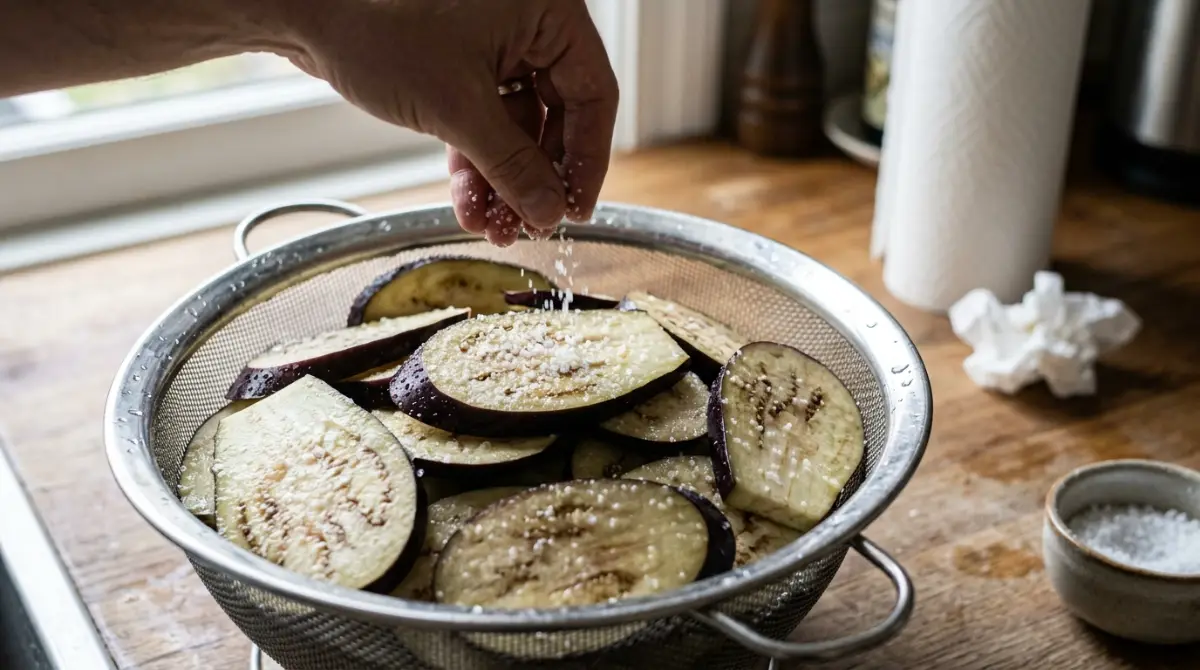
Pat them COMPLETELY dry with paper towels—like, way more than you think you need to. Wet eggplant = watery moussaka = sadness.
Step 2: Prep the potatoes. While the eggplant is doing its thing, peel and slice your potatoes into thin rounds (about ¼ inch). Soak them in cold water to remove excess starch. This prevents them from turning gluey, which… I learned the hard way.
Step 3: Start the meat sauce. Heat olive oil in a large skillet over medium-high. Add onions and cook until softened (about 5 minutes), then add garlic for another minute. Add the beef and break it up with a wooden spoon, cooking until browned.
Here’s where it gets good: add the cinnamon, oregano, and nutmeg. Let those spices bloom for 30 seconds—your kitchen is about to smell incredible. Pour in the crushed tomatoes, tomato paste, and beef broth. Add the bay leaf, bring to a simmer, then reduce heat to low. Let it bubble away for 30-40 minutes until thickened. The consistency you want is like a thick bolognese—it should hold its shape on a spoon, not run off.
The 120-Minute Assembly Timeline
| Time | Task | Pro Tip |
| 0:00 | Salt eggplant, start meat sauce | Use this time to prep all other ingredients |
| 0:30 | Roast eggplant and potatoes | Brush lightly with olive oil, 400°F |
| 0:55 | Make béchamel sauce | Warm milk first—cold milk = lumps |
| 1:10 | Assemble layers | Potato → eggplant → meat → eggplant → béchamel |
| 1:20 | Bake at 350°F | 45-50 min until golden brown |
| 2:05 | REST (critical!) | 20-30 min minimum or it falls apart |
Step 4: Roast the vegetables. Preheat oven to 400°F. Pat your salted eggplant slices completely dry (seriously, use like 10 paper towels). Brush both sides lightly with olive oil and arrange on baking sheets—don’t overlap or they’ll steam instead of roast.
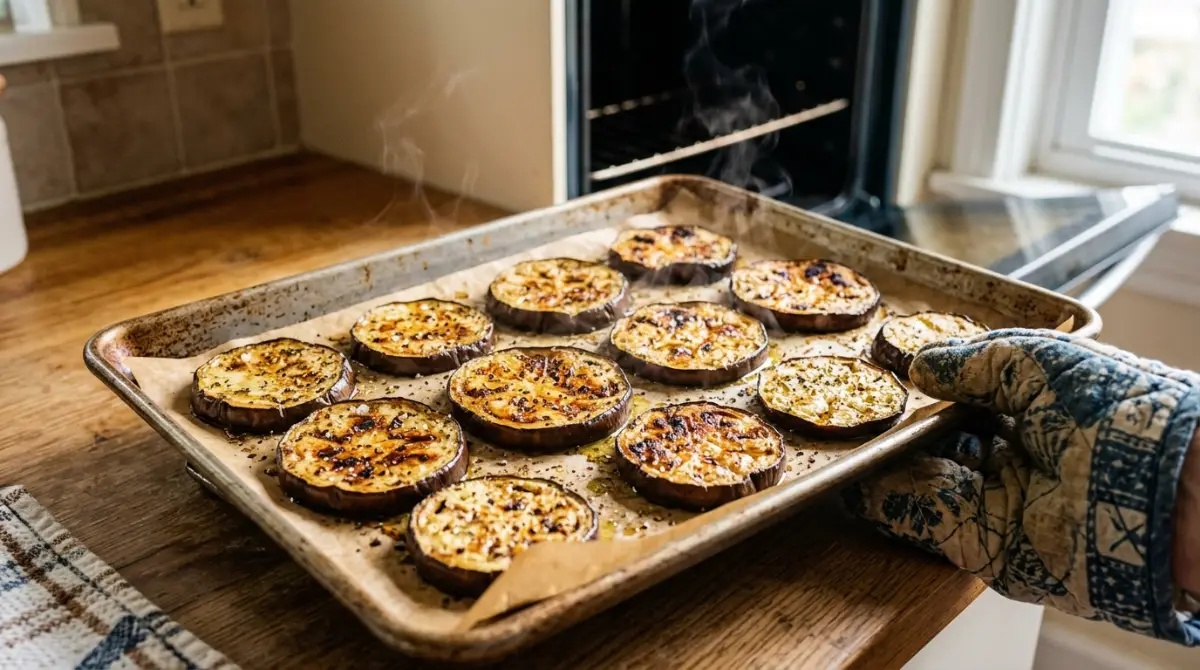
Same for potatoes. Roast for 20-25 minutes, flipping halfway, until golden and tender. This is when I usually pour myself some sparkling water and pretend I’m in a cooking show.
Step 5: Make the béchamel. This is where most people panic, but honestly? It’s easier than you think. Melt butter in a saucepan over medium heat. Whisk in flour and cook for 1-2 minutes (this cooks out the raw flour taste). Gradually—and I mean gradually, like a quarter cup at a time—whisk in the warm milk. Keep whisking until it thickens enough to coat the back of a spoon, about 5-7 minutes. Remove from heat.
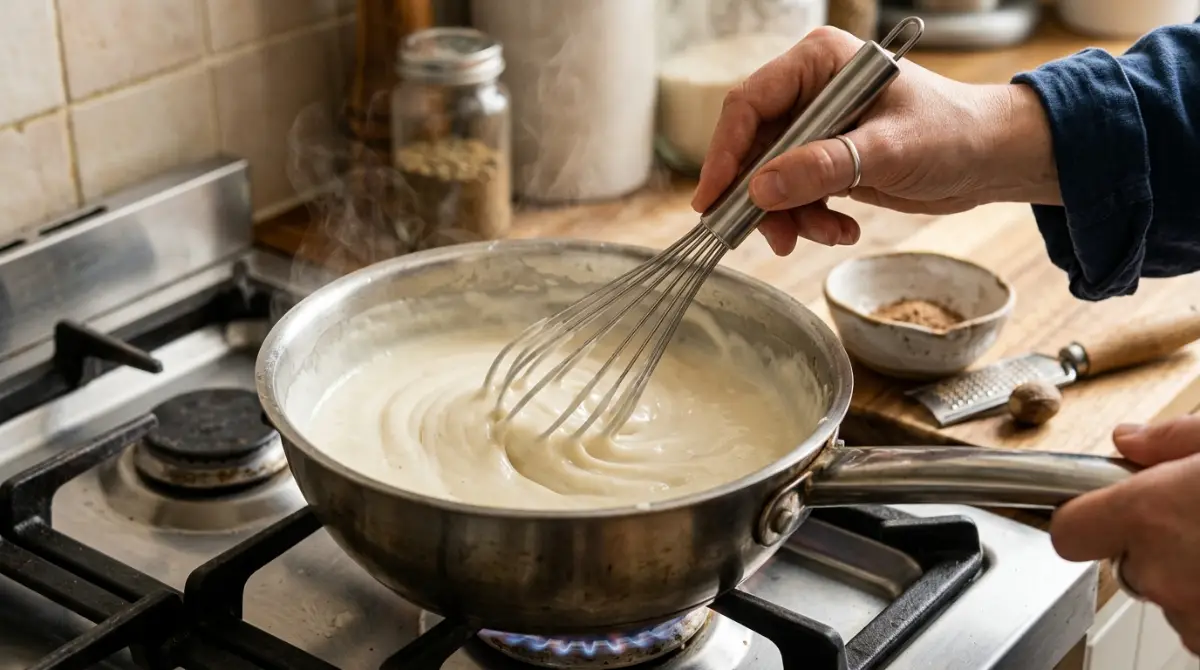
Here’s the crucial part: temper your eggs by whisking a ladleful of the hot sauce into the beaten eggs first, THEN add the egg mixture back to the pot. This prevents scrambled eggs in your béchamel, which, um, I’ve definitely never done. Stir in cheese, nutmeg, salt, and white pepper.
If you enjoy making creamy sauces like this béchamel, you might also love the cheese sauce technique in our rigatoni carbonara recipe—similar principles, different application.
Step 6: Layer and bake. Butter a 9×13 inch baking dish. Layer: potatoes first (if using), then half the eggplant, all the meat sauce, remaining eggplant, and finally pour the béchamel over everything. Smooth it out and sprinkle with a little extra Parmesan if you’re feeling fancy.
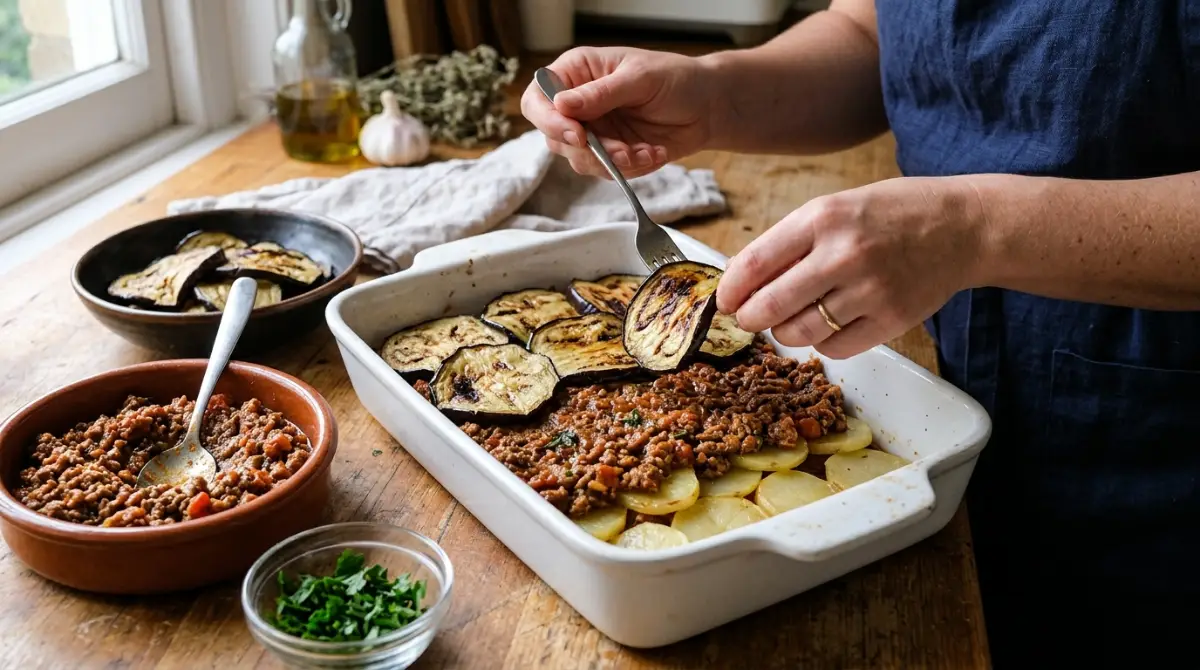
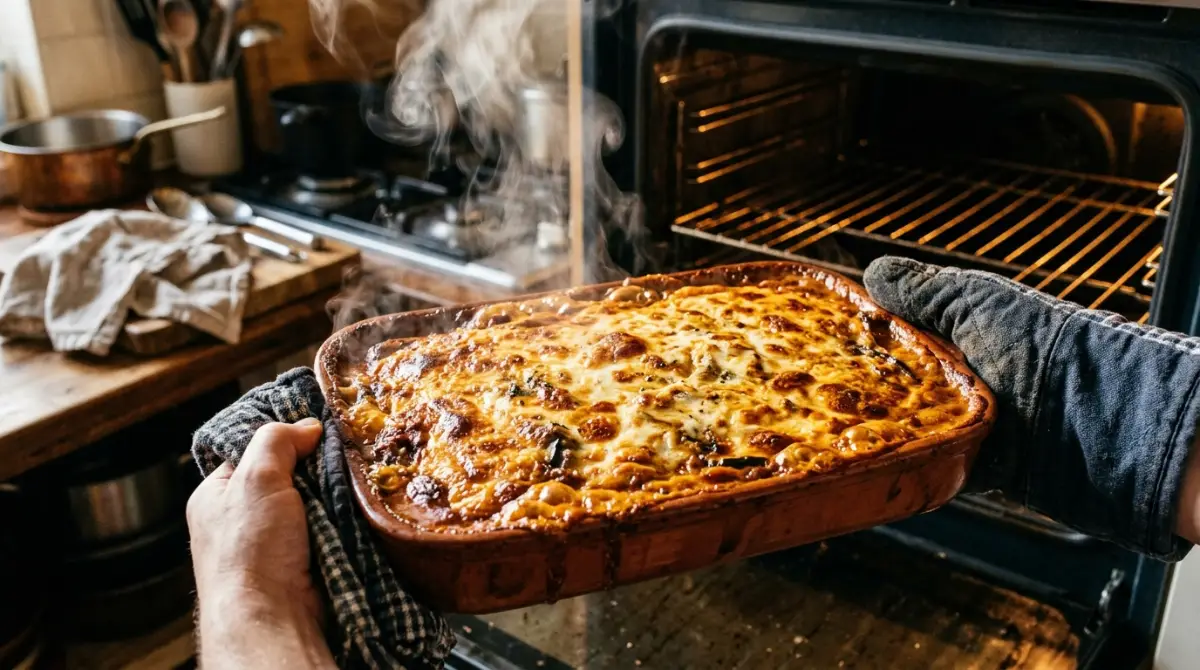
Bake at 350°F for 45-50 minutes until golden brown and bubbling around the edges. And then—this is the hardest part—LET IT REST for at least 20-30 minutes before cutting. I know, I know. But trust me, cutting too early = moussaka lava. Which tastes good but looks like a Greek tragedy.
Creative Moussaka Variations
Regional and Modern Twists
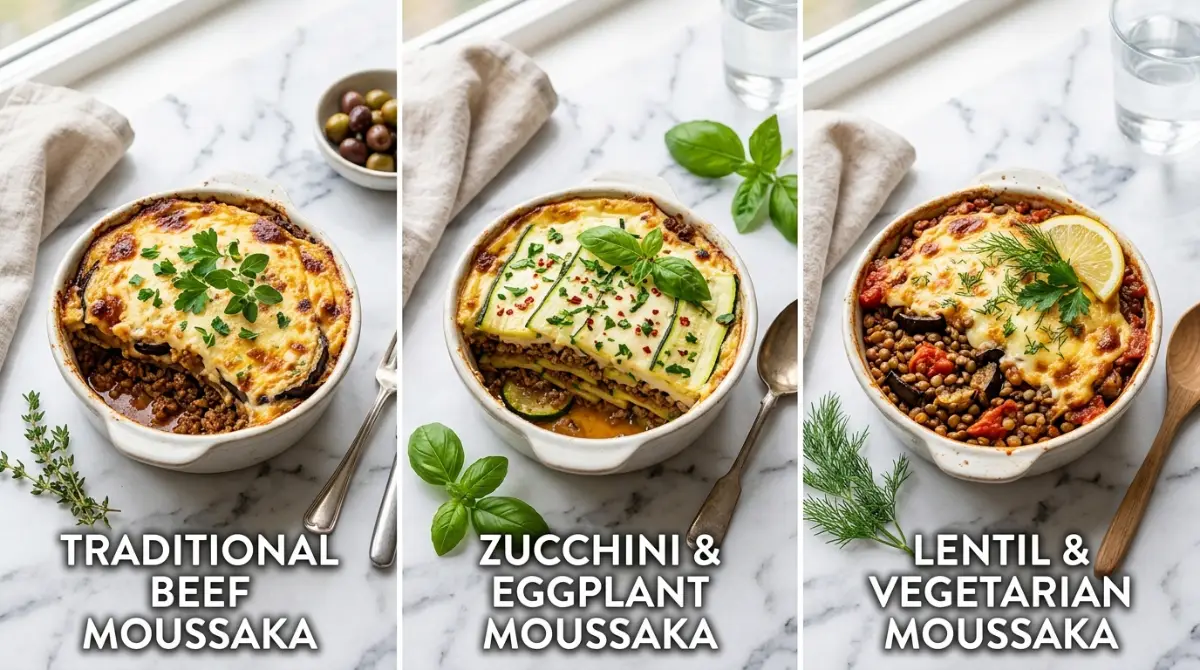
One thing I’ve learned from obsessively researching this dish: there’s no single “correct” moussaka. Greek families argue about it the way Italians argue about carbonara. Some use only eggplant, others swear by zucchini, and there’s an entire contingent that thinks potatoes are essential. The version here is what I’d call “traditional with smart shortcuts,” but feel free to adapt—that’s the Mediterranean way. You’ll find similar flexibility in dishes like spicy rigatoni where you can adjust heat levels to taste.
| Variation | Key Changes | Best For |
| Lamb Moussaka | Swap beef for ground lamb | Most traditional, richer flavor |
| Zucchini Moussaka | Replace eggplant with zucchini | Eggplant haters, lighter dish |
| Turkish Style | Skip béchamel, top with yogurt | Lower calorie, tangier finish |
| Lentil Moussaka | Replace meat with cooked lentils | Vegetarian, high fiber |
Dietary Modifications
Gluten-free: Use rice flour or a GF flour blend for the béchamel. Works perfectly—I’ve tested it. Check out our 10 gluten-free Mediterranean recipes for more ideas.
Low-carb/Keto: Skip the potatoes entirely and use extra eggplant or add a layer of sliced zucchini. The dish is already pretty low-carb without them.
Dairy-free: This is trickier since béchamel is basically butter + milk. I’ve had decent luck with oat milk and vegan butter, plus nutritional yeast instead of cheese. It’s different, but still good.
Storage & Serving Your Moussaka
Storage Techniques That Actually Work
Here’s something that blew my mind when I discovered it: moussaka is actually BETTER the next day. Like, noticeably better. The flavors meld, the layers firm up, and it slices like a dream. So if you’re making this for a dinner party, consider assembling it the night before, refrigerating overnight, and baking the day of. You might need to add 10-15 minutes to the baking time if it’s going in cold.
Refrigerator: 3-4 days in an airtight container. Reheat individual portions in the microwave (2-3 minutes) or whole pan in 350°F oven covered with foil (20-25 minutes).
Freezer: Up to 3 months! Freeze unbaked for best results—wrap the assembled pan tightly in plastic wrap, then foil. Thaw overnight in fridge, then bake adding 20-25 minutes to the cook time. I always have one in my freezer for emergencies. You know, “emergencies” like Tuesday.
What to Serve Alongside
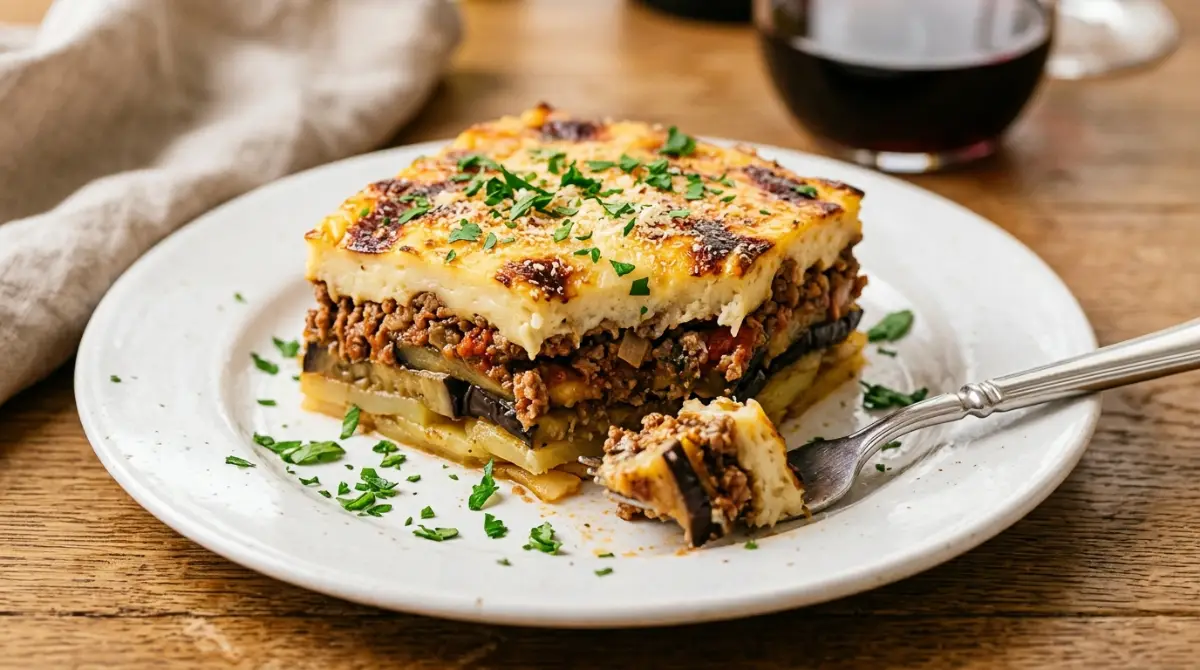
Moussaka is rich and substantial, so you want sides that cut through and refresh. A simple Greek salad with crisp cucumbers, tomatoes, red onion, and feta is traditional and perfect. Warm pita bread for sopping up extra sauce is non-negotiable in my house. For something more substantial, our Mediterranean salads recipes collection has tons of options that complement this Greek comfort food beautifully.
| Side Dish | Why It Works | Prep Time |
| Greek Salad | Fresh, acidic contrast | 10 minutes |
| Tzatziki + Pita | Cool, creamy, sauce-mopping | 5 minutes |
| Roasted Lemon Potatoes | Carb lovers only | 45 minutes |
| Steamed Green Beans | Light veggie balance | 8 minutes |
Nutritional Profile of Moussaka
I’m not a dietitian (disclaimer!), but I’ve done my research on this. Moussaka isn’t exactly diet food—the béchamel alone makes sure of that—but it’s not as indulgent as you might think. Eggplant is surprisingly nutrient-dense, and because you’re roasting instead of frying, you’re already cutting significant calories compared to traditional taverna versions.
Macronutrient Breakdown (Per Serving)
| Nutrient | Amount | % Daily Value |
| Calories | 350 kcal | 17% |
| Protein | 22g | 44% |
| Total Fat | 19g | 24% |
| Carbohydrates | 22g | 8% |
| Fiber | 5g | 18% |
Micronutrient Highlights
| Micronutrient | Source | Benefit |
| Vitamin B12 | Beef, eggs | Energy metabolism |
| Potassium | Eggplant, potatoes | Heart health |
| Calcium | Béchamel, cheese | Bone strength |
| Iron | Ground beef | Oxygen transport |
| Lycopene | Tomatoes | Antioxidant |
For a complete Mediterranean meal, pair your moussaka with an enlightened Mediterranean chicken bowl the next day to balance out the richness.
Moussaka FAQ: Your Questions Answered
How long does moussaka take to make from scratch?
Plan for about 2 hours total—45 minutes of active prep, 45-50 minutes of baking, and 20-30 minutes of resting. It sounds like a lot, but most of that time the oven is doing the work while you scroll Instagram or, I don’t know, clean your kitchen. (Just me? Okay.)
Can I make moussaka a day ahead?
Yes, and honestly you should! Assemble completely, cover tightly with plastic wrap, and refrigerate overnight. Bake the next day, adding 10-15 minutes to account for the cold dish. The flavors actually meld better this way—our Mediterranean breakfast recipes use similar make-ahead logic.
Should I use lamb or beef in moussaka?
Traditional Greek moussaka uses lamb, which has a richer, more distinctive flavor. But beef (or a 50/50 mix) works beautifully and is more accessible in most American grocery stores. I usually use lean ground beef unless I’m feeling fancy.
Why do I need to salt the eggplant?
Salting draws out excess moisture (remember, eggplant is 92% water) and prevents your moussaka from becoming a soggy mess. It also helps the eggplant absorb the flavors of the dish better. Don’t skip this step—I learned that the hard way.
Can moussaka be frozen?
Absolutely! Freeze unbaked for best results—up to 3 months. Wrap tightly in plastic wrap then foil. Thaw overnight in the fridge before baking. Cooked moussaka also freezes well for up to 2 months; just reheat covered at 350°F until heated through.
How do I prevent watery moussaka?
Three things: salt and drain your eggplant thoroughly, make sure your meat sauce is thick (not runny), and let the finished dish rest for at least 20 minutes before cutting. That resting time is crucial for the layers to set.
Should I fry or bake the eggplant?
Traditional recipes fry the eggplant, but roasting is easier, healthier, and honestly tastes just as good once it’s layered and baked. I roast at 400°F for 20-25 minutes. Your waistline will thank you.
How long should moussaka rest before cutting?
Minimum 20 minutes, ideally 30. I know it’s torture when your kitchen smells that amazing, but cutting too early = layers that collapse and sauce that runs everywhere. Pour yourself some sparkling lemon water and practice patience. Or, um, don’t—I’ve definitely cut into mine early out of sheer hunger.
Perfect Moussaka Pairings
Complete Meal Combinations
| Occasion | Menu | Beverage |
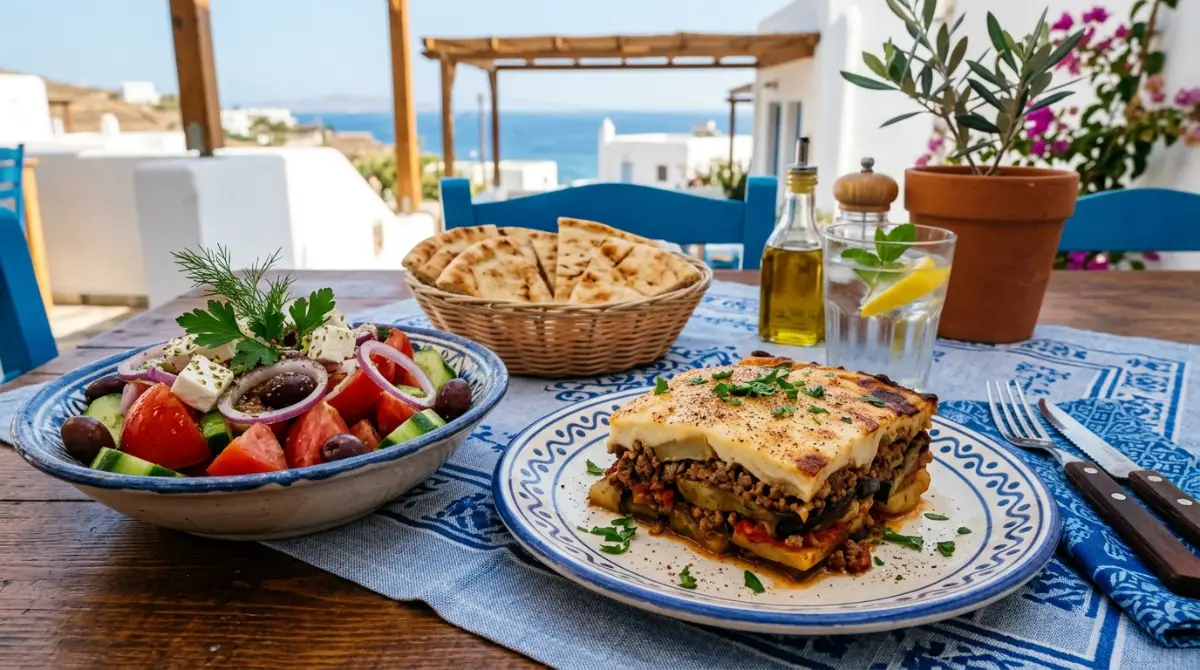
| Sunday Family Dinner | Moussaka + Greek salad + pita | Sparkling water with lemon |
| Dinner Party | Hummus starter + moussaka + baklava | Fresh mint lemonade |
| Casual Weeknight | Moussaka + simple green salad | Iced herbal tea |
| Holiday Gathering | Mezze platter + moussaka + tiramisu | Pomegranate spritzer |
Dessert Suggestions
After something this rich, I usually go for something lighter—fresh fruit with Greek yogurt and honey, or maybe some orange slices with a sprinkle of cinnamon. But if you’re feeling indulgent, check out our Mediterranean desserts recipes—the easy tiramisu is always a crowd-pleaser and the coffee helps cut through the richness.
Make This Moussaka Your Own
Personalizing Your Greek Eggplant Casserole
Here’s what I’ve learned after all those test batches: moussaka is more of a template than a rigid recipe. Swap the beef for lamb if you like richer flavor. Add a layer of zucchini if you’re overrun with summer squash. Double the cinnamon if you’re obsessed with warm spices (guilty). The technique is what matters—the salting, the layering, the resting—and once you’ve got that down, you can make it your own. Just like our perfect zucchini corn fritters where the base technique opens up endless variations.
Join the Conversation
I’d genuinely love to hear how your moussaka turns out—the triumphs, the disasters, the “I accidentally made scrambled eggs in my béchamel” stories. (No judgment here, obviously.) Drop a comment below with your questions, variations, or just to tell me whether you’re Team Potato or Team No-Potato. And if you’re looking for more Greek-inspired comfort food, don’t miss our roasted vegetables salmon recipe—it uses similar Mediterranean flavors with a lighter touch. Now go make some moussaka. Your kitchen is about to smell absolutely incredible.