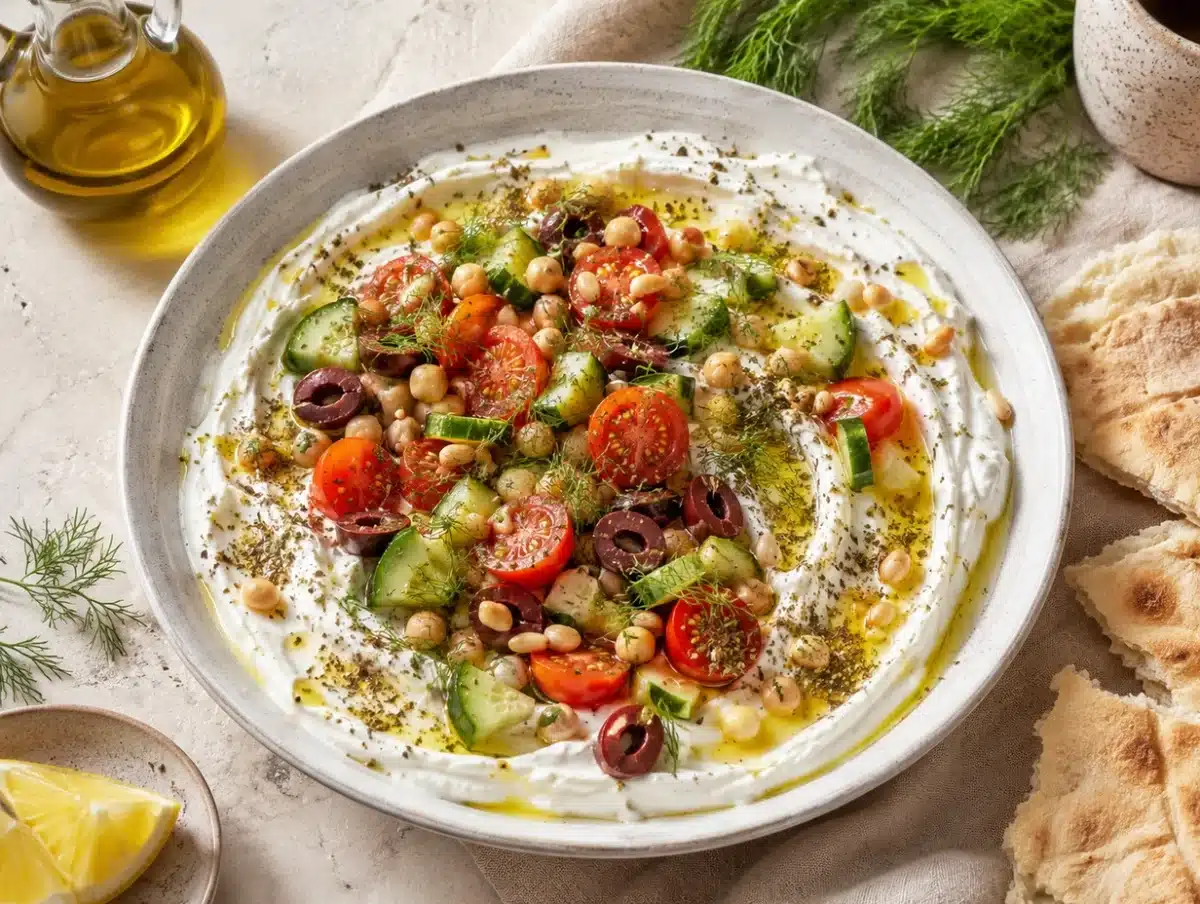
There’s a sound I associate with summer mornings in Chania — a wooden spoon scraping the bottom of a clay pot as my yiayia strained her homemade yogurt through cheesecloth. Thick, tangy, impossibly creamy. She’d spoon it into shallow bowls, drizzle olive oil from our family’s trees in Kolymvari, and scatter whatever the garden offered that morning: cucumbers still cool from the vine, tomatoes so ripe they’d split if you looked at them wrong, a handful of olives from the neighbor’s grove, fresh dill she’d snipped while the coffee brewed. Sometimes a squeeze of lemon. Always a pinch of salt. “Afto einai proino,” she’d say. That’s breakfast.
That memory is the blueprint for this savory Mediterranean yogurt bowl. It’s not a modern invention — it’s how people around the eastern Mediterranean have been eating yogurt for centuries. Not sweet with honey and granola, but savory, loaded with fresh vegetables, good olive oil, and warming spices. Think of it as a deconstructed tzatziki that became a meal.
This healthy Mediterranean breakfast comes together in 10 minutes flat, delivers over 20 grams of protein per bowl, and keeps you full until lunch without the sugar crash. Whether you’re meal-prepping for the week or feeding overnight guests, this savory Greek yogurt recipe is about to become your most reliable morning move. Let me show you how we do it.
Table of Contents
Savory Mediterranean Yogurt Bowl
Ingredients
Method
- 1. Drain any whey from the yogurt. For extra thickness, strain through cheesecloth for 20–30 minutes.
- 2. Dice cucumbers, halve tomatoes, halve olives, and chop herbs. Set aside in small bowls.
- 3. Toss drained chickpeas with ½ tsp za’atar, a drizzle of olive oil, and a pinch of salt.
- 4. Swoosh 1 cup yogurt into each shallow bowl, spreading to edges and creating a well in the center.
- 5. Season yogurt base with a pinch of salt, pepper, and a squeeze of lemon juice.
- 6. Arrange cucumbers, tomatoes, chickpeas, and olives in sections on the yogurt — don’t mix.
- 7. Drizzle generously with extra virgin olive oil. Sprinkle za’atar over the entire bowl.
- 8. Scatter fresh dill or mint. Add optional Aleppo pepper or feta.
- 9. Serve immediately with warm pita bread or seed crackers for scooping.
Notes
Why This Savory Mediterranean Yogurt Bowl Is Special
The Science of Savory Yogurt
Here’s what most people get wrong about yogurt: they treat it as a dessert vehicle. But yogurt’s natural tanginess — that lactic acid produced by bacterial fermentation, as Harold McGee explains in On Food and Cooking — is actually a savory flavor. It’s closer to a vinaigrette than to ice cream. When you pair that tang with the glutamate-rich umami of ripe tomatoes, the brininess of Kalamata olives, and the fruity bitterness of good olive oil, you unlock a flavor synergy that sweet toppings simply can’t match.
The protein in Greek yogurt (roughly 15–20g per cup) also forms a more satiating base when paired with healthy fats and fiber from vegetables rather than simple sugars. This isn’t just a trendy breakfast — it’s biochemistry.
A Flavor Profile That Wakes You Up
Imagine this: a thick, cool swoosh of tangy yogurt — almost like cream cheese in texture — topped with crunchy cucumber, juicy cherry tomatoes, briny olives, earthy chickpeas dusted in za’atar, and a generous drizzle of grassy Cretan olive oil. Every spoonful is different. Cool and warm. Creamy and crunchy. Salty and bright. This savory yogurt bowl recipe is what I make when friends stay over and I want to impress them without actually trying. (I’ve served it at least 40 times now — it never fails.) It works beautifully for a Mediterranean breakfast bowl, a light lunch, or even a side dish at dinner. You’ll love this.
The Story Behind the Dish
Yogurt: A Mediterranean Staple for Millennia
Yogurt has been a cornerstone of eastern Mediterranean cuisine for over 5,000 years. In Greece, we call it yiaourti, and it appears on the table at nearly every meal — not just breakfast. In Turkey, it’s the base for cold soups and dips. In Lebanon and Syria, labneh (strained yogurt) is spread on plates and drizzled with olive oil for a simple mezze. The concept of a savory yogurt bowl with vegetables isn’t a food-blogger trend — it’s ancient wisdom repackaged for modern kitchens. In Crete specifically, savory Greek yogurt breakfast bowls were common farmer food: quick, nourishing, no cooking required.
My Yiayia’s Morning Ritual
Every morning at my grandfather’s taverna in Chania, my yiayia would set out two bowls — one of strained yogurt and one of honey. The tourists always reached for the honey. The fishermen, including my father, went straight for the savory version with olive oil, cucumber, and a sprinkle of dried oregano. “The honey is for children and tourists,” my father would tease. He wasn’t entirely wrong. The savory bowl was the working person’s breakfast — protein-rich, hydrating, and sustaining enough to get you through a morning of hauling nets. This Mediterranean diet breakfast carries that same spirit.
Essential Ingredients for Savory Mediterranean Yogurt Bowl
Complete Ingedients List
For the Yogurt Base (per bowl):
1 cup (240 g) full-fat plain Greek yogurt
Pinch of flaky sea salt
Crack of freshly ground black pepper
1 teaspoon fresh lemon juice
For the Toppings (per bowl):
½ cup (75 g) mini cucumbers, diced into ¼-inch pieces
½ cup (75 g) cherry tomatoes, halved
⅓ cup (80 g) canned chickpeas, drained, rinsed, and patted dry
6–8 Kalamata olives, halved and pitted
1 teaspoon za’atar spice blend (plus extra for chickpeas)
1–2 tablespoons extra virgin olive oil
1 tablespoon fresh dill or mint, chopped
Optional: Aleppo pepper, sumac, soft-boiled egg, avocado, feta crumbles, warm pita bread
Core Ingredients
Every ingredient here serves a purpose — this bowl is a careful balance of creamy, crunchy, tangy, and savory.
| Ingredient | Amount | Why It Matters | Authentic Pick | Substitution |
| Full-fat Greek yogurt | 1 cup (240 g) | Thick, protein-rich base with natural tang; the canvas for all toppings | Strained sheep’s milk yogurt from Crete | Labneh, skyr, or coconut yogurt (dairy-free) |
| Mini cucumbers | ½ cup diced | Cool crunch and hydration that contrasts the creamy yogurt | Persian or Lebanese mini cucumbers | English cucumber (seeded) or diced celery |
| Cherry tomatoes | ½ cup halved | Bursts of sweet-acid brightness and umami depth | Vine-ripened cherry or Santorini tomatoes | Diced Roma tomatoes or sun-dried tomatoes |
| Kalamata olives | 6–8, halved | Briny depth and healthy monounsaturated fats | Whole Kalamata from Messinia | Castelvetrano olives or capers |
| Chickpeas | ⅓ cup (80 g), drained | Plant protein and earthy texture; fiber for satiety | Canned chickpeas, rinsed | White beans, lentils, or roasted edamame |
| Za’atar spice blend | 1 tsp | Aromatic, tangy, herbal — the defining Mediterranean flavor note | Authentic blend with wild thyme, sumac, sesame | Dried oregano + sumac + toasted sesame seeds |
| Extra virgin olive oil | 1–2 tbsp | Fruity, peppery finishing drizzle that ties everything together | Cold-pressed EVOO from Kolymvari, Crete | Avocado oil or tahini drizzle |
| Fresh dill or mint | 1 tbsp chopped | Aromatic herb finish that brightens and lifts all flavors | Fresh Greek dill (anithos) | Fresh parsley, basil, or cilantro |
About the yogurt: please use full-fat. I know, I know — but the fat is what makes the bowl satiating and gives it that luxurious, labneh-like texture. Low-fat Greek yogurt tastes sour and thin by comparison. After testing this with at least 6 different brands, I can tell you: the thicker and creamier, the better. If you can find sheep’s milk yogurt, even better — that’s what my yiayia used.
Dietary Substitutions & Pro Tips
| Dietary Need | Replace | With | Notes |
| Dairy-Free | Greek yogurt | Thick coconut yogurt or cashew yogurt | Choose unsweetened; add a pinch of salt to boost the savory tang |
| Vegan | Greek yogurt + honey (if any) | Coconut yogurt + maple drizzle (optional) | Load up on extra chickpeas and nuts for protein |
| Higher Protein | Standard recipe | Add a halved hard-boiled egg or 60g smoked salmon | Pushes protein to 30g+ per bowl |
| Low-FODMAP | Chickpeas + garlic | Canned lentils (well-rinsed) + garlic-infused oil | Rinse legumes thoroughly to reduce FODMAPs |
| Nut-Free | No nuts in base recipe | Already nut-free as written | Safe as written; skip optional pine nut garnish |
| Keto | Chickpeas | Extra olives + hemp seeds + avocado slices | Drops net carbs to under 8g per bowl |
Pro Tip: Take your yogurt out of the fridge 10 minutes before assembling. Slightly cool (not ice-cold) yogurt has a creamier texture and lets the olive oil pool beautifully on the surface instead of seizing up. My mother taught me this — she said cold yogurt ‘closes its mouth’ to olive oil. full-fat plain Greek yogurt, flaky sea salt, ground black pepper, fresh lemon juice, mini cucumbers, cherry tomatoes, canned chickpeas, za’atar spice blend, extra virgin olive oil, fresh dill or mint, Aleppo pepper, sumac, soft-boiled egg, avocado, feta crumbles, warm pita bread
Equipment & Technique
complete Ingredients List
For the Yogurt Base (per bowl):
1 cup (240 g) full-fat plain Greek yogurt
Pinch of flaky sea salt
Crack of freshly ground black pepper
1 teaspoon fresh lemon juice
For the Toppings (per bowl):
½ cup (75 g) mini cucumbers, diced into ¼-inch pieces
½ cup (75 g) cherry tomatoes, halved
⅓ cup (80 g) canned chickpeas, drained, rinsed, and patted dry
6–8 Kalamata olives, halved and pitted
1 teaspoon za’atar spice blend (plus extra for chickpeas)
1–2 tablespoons extra virgin olive oil
1 tablespoon fresh dill or mint, chopped
Optional: Aleppo pepper, sumac, soft-boiled egg, avocado, feta crumbles, warm pita bread
What You’ll Need
| Traditional Tool | Modern Alternative | Why It Matters |
| Cretan clay shallow bowl | Wide, shallow serving bowl | A shallow bowl lets you spread the yogurt thin so every spoonful gets toppings |
| Olive wood ladle | Large spoon or offset spatula | For swooshing the yogurt with a well in the center — presentation matters |
| Stone mortar (for crushing spices) | Small prep bowls | Pre-measured toppings in small bowls makes assembly fast and beautiful |
| Sharp paring knife | Any sharp knife | Clean, precise cuts on cucumbers and tomatoes keep textures distinct |
| Cheesecloth (for straining) | Fine-mesh sieve | If your yogurt is too thin, strain it for 30 minutes to thicken — a Cretan trick |
Mise en Place & Assembly Mindset
This savory breakfast idea is all about assembly, not cooking — so your mise en place is everything. Before you start: dice the cucumbers, halve the tomatoes, drain and season the chickpeas, halve the olives, chop the herbs. Arrange everything in small bowls. The actual assembly takes 2 minutes once your toppings are ready. Think of yourself as a painter — the yogurt is your canvas, the toppings are your palette. This is how we approach it in a professional kitchen, and it makes a 10-minute breakfast feel like an event.
Step-by-Step Instructions for Savory Mediterranean Yogurt Bowl
Preparation (Steps 1–4)
Step 1: Choose and prep your yogurt. Scoop 1 cup (240g) of full-fat Greek yogurt into a bowl. If your yogurt is a bit thin or watery, pour off any liquid whey sitting on top — that’s normal, just drain it. For an even thicker, labneh-like texture, strain the yogurt through a fine-mesh sieve lined with cheesecloth for 20–30 minutes over the fridge. This concentrates the protein and creates that impossibly rich base my yiayia achieved by draining her homemade yogurt overnight.
Yiayia’s Tip: My yiayia never discarded the whey — she used it in bread dough and marinades. Don’t throw it away! It’s packed with protein and probiotics.
Step 2: Dice the vegetables. Cut mini cucumbers into small ¼-inch (6mm) dice — small enough to scoop with a spoon but big enough to give you crunch. Halve cherry tomatoes. The key is uniform sizes so every spoonful has a bit of everything. My father would have called this “fisherman’s discipline” — small, neat, efficient. No wasted motion.
[Image 5: Dicing vegetables]
Step 3: Season the chickpeas. Drain and rinse ⅓ cup of canned chickpeas. Pat them dry (this matters — wet chickpeas dilute the yogurt). Toss them in a small bowl with ½ teaspoon za’atar, a drizzle of olive oil, and a tiny pinch of salt. These za’atar chickpeas alone are addictive — I’ve caught myself eating the entire bowl before it makes it onto the yogurt. Don’t be like me.
[Image 6: Seasoning chickpeas with za’atar]
Step 4: Prepare remaining toppings. Halve your Kalamata olives (halving exposes more briny surface area to the yogurt — flavor science, not fussiness). Chop the fresh dill or mint. Have your olive oil and lemon ready. If you’re adding optional extras — a soft-boiled egg, avocado, or a sprinkle of Aleppo pepper — prepare those now too.
Assembly (Steps 5–9)
Step 5: Swoosh the yogurt. Spoon the yogurt into a wide, shallow bowl. Using the back of a large spoon, spread it in a thick, even layer, creating a shallow well in the center and gentle swooshes up the sides. This isn’t just pretty — the ridges and valleys catch olive oil and create pools of flavor. Professional chefs call this a “schmear” and it makes all the difference. Don’t rush this step.
Step 6: Season the yogurt base. Before adding toppings, sprinkle a tiny pinch of flaky sea salt and a crack of black pepper directly onto the yogurt. Then squeeze about a teaspoon of fresh lemon juice over the surface. This seasons the base itself so even a plain spoonful has flavor. (As J. Kenji López-Alt explains in The Food Lab, seasoning every component individually creates a more complex final dish than seasoning everything at once.)
Step 7: Layer the toppings. Arrange your diced cucumbers, halved tomatoes, seasoned chickpeas, and Kalamata olives in sections on top of the yogurt. Don’t mix them in — let each ingredient keep its identity. You eat with your eyes first, and the contrast of colors — green, red, golden, purple — against the white yogurt is genuinely beautiful. This is your savory Mediterranean yogurt bowl becoming art.
Step 8: Finish with oil, herbs, and spice. Drizzle 1–2 tablespoons of your best extra virgin olive oil in a generous stream over the entire bowl. Sprinkle za’atar over the top. Scatter the fresh dill (or mint). If you want heat, add a pinch of Aleppo pepper or red pepper flakes. The olive oil should pool in the swoosh valleys — those glistening little pockets are the best bites.
[Image 9: Drizzling olive oil and za’atar]
Yiayia’s Tip: “Never be stingy with the oil, Niko.” My yiayia drizzled olive oil the way some people drizzle maple syrup — generously and with love. The oil carries the za’atar flavor across the entire bowl and makes the yogurt silky. Don’t skip it.
Step 9: Serve immediately. Serve with warm pita bread, crusty sourdough, or seed crackers for scooping. I tear the pita into rough pieces and arrange them right alongside the bowl. The combination of cool, tangy yogurt and warm, chewy bread is extraordinary. Creamy. Crunchy. Tangy. Satisfying. That’s a savory Mediterranean yogurt bowl done right.
The Secret Touches
Insider Techniques That Elevate Everything
1. The Salt-Before-Toppings Rule. Seasoning the yogurt base directly — before any toppings — means the yogurt itself is flavorful, not bland. Most people only season the toppings. But in Crete, the yogurt was always seasoned with salt and olive oil first. It transforms the experience from “plain yogurt with stuff on top” to a cohesive dish where every element sings.
2. The Room-Temperature Olive Oil Drizzle. Cold olive oil from the fridge congeals slightly on cold yogurt, creating an unpleasant film. Room-temperature EVOO stays fluid and pools into those beautiful golden rivulets that you see in every Mediterranean food photograph. The volatile aroma compounds are also more active at room temperature, so you get that gorgeous grassy, peppery scent the moment you bring the bowl to your face.
3. The Za’atar Toast Combo. Warm your pita in a dry skillet for 30 seconds per side, then brush with olive oil and sprinkle with za’atar while still hot. The warm bread melts slightly into the cool yogurt — the thermal contrast makes your palate pay attention. My mother always warmed the bread for savory yogurt. She said cold bread with cold yogurt was “lazy.”
4. The Layered Assembly (Not Mixed). Resist the urge to stir everything together. The beauty of this yogurt bowl with vegetables is the distinct textures and flavors in each bite. When you keep toppings separate, you can customize every spoonful — more olive here, extra chickpea there. Once you stir, it’s just… dip. Keep it composed.
Common Mistakes to Avoid
| Mistake | What Happens | How to Fix It |
| Using flavored or sweetened yogurt | Vanilla or honey yogurt clashes terribly with savory toppings | Always use plain, unsweetened Greek yogurt — full-fat for best results |
| Watery yogurt base | Toppings slide off and the bowl becomes soupy within minutes | Drain off any liquid whey, or strain yogurt through cheesecloth for 20 minutes |
| Skipping the olive oil | Bowl tastes flat and one-dimensional; yogurt feels too sour | A generous drizzle is non-negotiable — it rounds out the acidity and carries flavors |
| Cutting vegetables too large | Chunks are hard to scoop with a spoon and overpower the yogurt in each bite | Dice cucumbers to ¼ inch; halve cherry tomatoes — uniform small pieces are key |
| Assembling too far ahead | Vegetables release liquid and make the yogurt watery; cucumbers lose crunch | Prep components ahead, but assemble no more than 15 minutes before serving |
Variations & Serving Ideas
Regional Twists and Creative Adaptations
In Crete, this would be simpler — just strained yogurt, olive oil, dried oregano, and a few slices of cucumber. On the Greek islands, you might see it with capers and sun-dried tomatoes. In Lebanon and Turkey, the base would be labneh (ultra-strained yogurt) with mint and sumac. For a heartier version, add a halved soft-boiled egg and a spoonful of whipped feta with hot honey on the side — the contrast of tangy yogurt and sweet-spicy feta is incredible.
Want a warm-weather lunch? Turn this savory Mediterranean yogurt bowl into a grain bowl by spooning the yogurt and toppings over a bed of warm quinoa or farro — similar to how we build our grilled chicken Mediterranean bowl. For a weeknight shortcut, use pre-diced veggies from the salad bar and canned chickpeas straight from the tin (rinsed, of course). Not glamorous, but still delicious.
Feeling adventurous? Try roasted beet and walnut topping, harissa-roasted carrots with pistachios, or a “Greek salad” version with feta, red onion, and pepperoncini. The base technique — swooshed yogurt, olive oil, toppings — is infinitely adaptable.
What to Serve Alongside
Warm pita is the classic partner — tear and scoop. For a fuller breakfast, set out a basket of our garlic Parmesan focaccia alongside a spread of olives, a simple tomato salad, and perhaps our Mediterranean hummus breakfast bowl for guests who want variety.
For beverages, keep it Mediterranean and alcohol-free. Fresh mint tea (tsai tou vounou — Greek mountain tea — is my first choice), iced chamomile with lemon and honey, or a simple glass of fresh-squeezed orange juice. Sparkling water with cucumber slices is another gorgeous pairing. For a more substantial brunch, hibiscus iced tea or a tamarind cooler work beautifully with the tangy yogurt.
Storage & Meal Prep for Savory Mediterranean Yogurt Bowl
How to Store Components
Let me be honest: an assembled savory Mediterranean yogurt bowl doesn’t store well. The vegetables release liquid and the yogurt thins out. But the individual components prep beautifully — and that’s the secret to making this a weekday staple.
| Method | Container | Duration | Notes |
| Yogurt portions (fridge) | Individual jars or airtight containers, 1 cup each | Up to 5 days | Pre-portion into serving-size containers for grab-and-go assembly |
| Prepped vegetables (fridge) | Separate small containers or a divided prep container | Up to 3 days | Keep cucumbers and tomatoes separate — tomatoes release more juice |
| Seasoned chickpeas (fridge) | Small airtight container | Up to 4 days | Za’atar flavor deepens as chickpeas marinate — even better on day 2 |
| Assembled bowl (fridge) | Covered with plastic wrap | Maximum 2 hours | Only assemble right before eating; cucumber releases water quickly |
Reheating & Freshness Tips
There’s nothing to reheat here — this high protein yogurt bowl is served cold or at cool room temperature, which makes it the ultimate no-cook breakfast. If you’ve meal-prepped the components, assembly takes under 3 minutes: swoosh yogurt, add toppings from containers, drizzle oil, sprinkle za’atar. Done. If your yogurt has been sitting in the fridge and developed a layer of whey on top, simply pour it off. For maximum freshness, add the olive oil, herbs, and lemon at the moment of eating — those volatile flavors are best when fresh. This is Mediterranean fast food at its finest.
Frequently Asked Questions
Substitution & Technique Questions
Can I use regular yogurt instead of Greek yogurt?
You can, but I’d strongly recommend straining it first. Regular yogurt is thinner and will make your bowl soupy. Strain it through a cheesecloth-lined sieve for 1–2 hours in the fridge, and you’ll get a thickness similar to Greek yogurt. The thicker the base, the better it holds toppings and the more satisfying each spoonful will be. Labneh is another excellent option if you can find it — it’s the thickest of all.
What’s za’atar and where do I find it?
Za’atar is a Middle Eastern spice blend typically made from dried wild thyme, sumac, toasted sesame seeds, and salt. It’s tangy, herbal, and earthy — absolutely essential for this savory yogurt bowl recipe. Find it in the international aisle of most grocery stores, at Middle Eastern markets, or online. If you can’t find it, mix equal parts dried oregano, ground sumac, and toasted sesame seeds with a pinch of salt.
Can I add eggs to this bowl?
Absolutely — a halved soft-boiled or jammy egg is one of my favorite additions. It turns this from a light breakfast into a proper meal with 30g+ of protein. For a beautiful Mediterranean egg breakfast, you’ll also love our Greek feta egg bake which uses similar tangy, bright flavors in a baked format.
Is this bowl good for meal prep?
The components meal-prep brilliantly — pre-portion yogurt, dice vegetables, season chickpeas, and store everything separately in the fridge for up to 3–4 days. Never assemble ahead of time (the vegetables make the yogurt watery). Assembly takes under 3 minutes. I prep a week’s worth every Sunday night in my Athens kitchen — it’s the reason I actually eat a healthy Mediterranean breakfast on busy mornings.
What other toppings work in a savory yogurt bowl?
The possibilities are endless: roasted red peppers, artichoke hearts, avocado, pomegranate seeds, toasted pine nuts, crumbled feta, sun-dried tomatoes, pickled onions, radishes, or roasted sweet potato. Think Mediterranean mezze — if it works on a mezze platter, it works in this bowl. Our Mediterranean white bean salad makes a wonderful hearty topping too.
Dietary, Nutrition & Authenticity Questions
Is this savory Mediterranean yogurt bowl keto-friendly?
The base recipe has about 14g net carbs per serving, mainly from chickpeas. For strict keto, swap the chickpeas for extra olives, hemp seeds, and a quarter avocado — that drops net carbs to around 6g. The full-fat yogurt and olive oil are already keto staples. It’s one of the most naturally adaptable savory breakfast ideas for any eating style.
How much protein is in this bowl?
As written, one serving provides approximately 22g of protein — mostly from the Greek yogurt (15–20g per cup) plus the chickpeas. Adding a hard-boiled egg brings it to about 28g. Adding 60g of smoked salmon pushes it over 35g. It’s a genuinely high protein yogurt bowl that keeps you satisfied for hours without any sugar crash.
Is savory yogurt authentically Mediterranean?
One hundred percent. Savory yogurt is far more traditional in the Mediterranean and Middle East than sweet yogurt. In Greece, Turkey, Lebanon, and throughout the Levant, yogurt is served with olive oil, herbs, and vegetables as part of everyday meals. The American-style sweet yogurt bowl with granola and berries is actually the outlier. This bowl is a return to the original, authentic way yogurt was meant to be enjoyed.
Can I make this dairy-free?
Yes! Thick coconut yogurt or cashew yogurt work well as the base. Look for unsweetened varieties and add a pinch of salt to enhance the savory character. The toppings are all naturally dairy-free (unless you add feta). The bowl won’t have quite the same protein content, so boost it with extra chickpeas, hemp seeds, or a drizzle of tahini. The same Mediterranean flavors come through beautifully with similar toppings used in our chickpea stuffed sweet potatoes.
Can kids enjoy this yogurt bowl?
My son started eating savory yogurt at age two — skip the olives for very young children (choking hazard) and go easy on the za’atar if they’re spice-sensitive. Let them help assemble their own bowls — kids eat better when they build their own food. The cucumber and chickpeas are usually big hits, similar to toppings in our lemon chickpea patties with yogurt sauce which is another kid-friendly Mediterranean favorite.
From My Greek Kitchen to Yours
Bringing Greece to Your Table
Every time I assemble this savory Mediterranean yogurt bowl, I’m back in that Chania kitchen with my yiayia — the morning light streaming through the blue shutters, the sound of my grandfather’s fishing boat motoring back into the harbor, the simple perfection of cold yogurt and warm olive oil on a hot summer morning.
Mediterranean cooking isn’t about complicated techniques or rare ingredients. It’s about treating simple things with respect. Good yogurt. The best olive oil you can find. Whatever the season is offering. A little za’atar, a little salt, a lot of love. That’s it. That’s the whole philosophy.
When you make this — and I genuinely hope you do — share it with me. Drop a comment, tag me with a photo, tell me what toppings you invented. Seeing your versions of my family’s flavors is the best part of this work. Kali orexi! — bon appétit, friends.
More Mediterranean Recipes You’ll Love
If this yogurt bowl has you craving more Mediterranean mornings, our Mediterranean hummus breakfast bowl is a gorgeous savory cousin that swaps the yogurt base for creamy hummus. For a heartier brunch, our Greek feta egg bake brings the same bright, tangy flavors in a warm, custardy format. And when you want something to dip into this bowl, our whipped feta garlic confit dip is utterly irresistible alongside warm pita. Explore, assemble, and eat beautifully — the Mediterranean way.