Can we talk about how once you make roasted red pepper hummus from scratch, store-bought will never hit the same? Because it’s true. This homemade hummus is impossibly creamy, smoky-sweet from charred red bell peppers, rich and nutty from tahini, and bright from fresh lemon and garlic. It’s the kind of dip that people stand around at parties, scooping endlessly, saying “wait, you MADE this?”
Here’s the best part: this red pepper hummus comes together in about 15 minutes (most of that is just blending), it’s naturally vegan, gluten-free, and packed with plant-based protein and fiber from chickpeas. Loaded with vitamin C from the roasted peppers, heart-healthy fats from tahini and olive oil, and anti-inflammatory compounds from garlic — it’s basically a superfood masquerading as a party dip.
My love for hummus started at my papa’s market stall in Valencia, where a Lebanese vendor two stalls down made the silkiest hummus I’d ever tasted. He’d drizzle olive oil in a generous spiral and sprinkle smoked paprika on top. Years later, when I started experimenting with roasted peppers in my San Diego kitchen, my first batch was way too thin (I’d added the roasted pepper liquid — rookie mistake!). After testing eight versions, I cracked the code: drain the peppers well, use enough tahini for body, and blend until your arm gets tired. Game. Changer. This has become my go-to hummus for everything — dipping, spreading, bowl-building, and pure snacking.
Table of Contents

Roasted Red Pepper Hummus
Ingredients
Method
- 1. If roasting fresh peppers: broil halved, seeded peppers skin-side up for 8-10 min until charred. Cover, steam 5 min, peel. (Or use drained, dried jarred peppers.)
- 2. Process garlic in food processor until minced. Add tahini and lemon juice; process 1 min until pale and whipped.
- 3. Add chickpeas, roasted peppers, olive oil, paprika, cumin, and salt. Process 2-3 min until silky smooth, scraping sides.
- 4. Taste and adjust seasoning. Add 1-2 tbsp ice water if too thick.
- 5. Transfer to serving bowl. Create a swoosh with the back of a spoon. Drizzle olive oil, sprinkle paprika, and add garnishes.
- 6. Serve at room temperature with warm pita, vegetables, or crackers.
Notes
Why You’ll Love This Roasted Red Pepper Hummus
Health & Nutrition Benefits
This creamy hummus recipe is a nutritional powerhouse hiding inside a gorgeous bowl of smoky deliciousness:
⚡ Chickpeas deliver 6g plant protein and 5g fiber per serving — a Blue Zones longevity staple linked to gut health and blood sugar stability
💚 Roasted red bell peppers are loaded with vitamin C (more than oranges!), beta-carotene, and the antioxidant capsanthin — roasting increases bioavailability
🍱 Tahini provides calcium, iron, and healthy fats — sesame seeds are one of the most mineral-rich foods in the Mediterranean pantry
⚡ EVOO and garlic add anti-inflammatory monounsaturated fats and allicin — the PREDIMED study’s star combination
With my Barcelona nutrition training, I love that something this delicious is also this nutrient-dense. Abundance, not deprivation.
Practical Wins for Real Life
⚡ 15 minutes from start to finish (using jarred roasted peppers) or 25 min (roasting fresh)
🍱 One food processor, minimal cleanup, mostly pantry staples
💚 Naturally vegan, gluten-free, dairy-free, nut-free, and soy-free
⚡ Costs about $3 for a huge batch — versus $5+ for a tiny store-bought tub
Meal prep-friendly, party-ready, weeknight snack, lunch box hero. Such a game-changer.
The Mediterranean Diet Connection
Hummus: A Mediterranean & Middle Eastern Icon
Hummus is arguably the single most iconic food of the Mediterranean and Middle Eastern world — the word itself means “chickpeas” in Arabic. This roasted pepper hummus combines the Mediterranean Diet’s pillars: legumes (chickpeas), seeds (tahini), olive oil, fresh vegetables (peppers), and garlic. It’s plant-forward eating at its most delicious and accessible. Our Mediterranean salads make the perfect pairing for a complete Mediterranean meal.
My Hummus Journey
The Lebanese vendor at my papa’s Valencia market — his name was Khalil — taught me that great hummus needs three things: quality tahini, fresh lemon, and patience with the food processor. In my nutrition studies in Barcelona, I learned the science behind why hummus is so satiating: the combination of protein, fiber, and healthy fats creates a slow, steady energy release (low glycemic index). Now in San Diego, I make a batch of this smoky hummus every single week. My California friends call it “rocket fuel.” (They’re not wrong.)
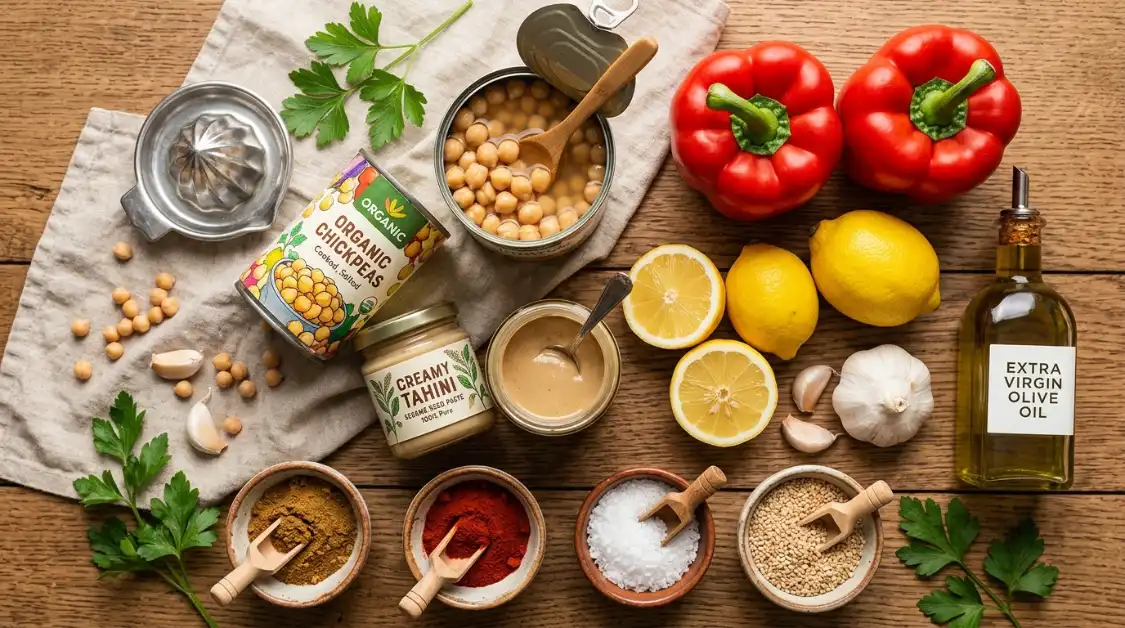
Essential Ingredients for Roasted Red Pepper Hummus
Core Ingredients Breakdown
Every ingredient earns its spot in this Mediterranean hummus:
| Ingredient | Amount | Why It’s Great | Best Pick | Substitution |
| Chickpeas (garbanzo beans) | 1 can (15 oz / 425g), drained | Plant protein (6g), fiber (5g), iron, folate; creates the creamy body of hummus | Canned for convenience; simmer 5 min with pinch of baking soda for ultra-smooth | Cooked dried chickpeas (soak overnight, cook 1 hr); white beans for a twist |
| Roasted red bell peppers | 2 medium peppers (or 1 cup / 240g jarred) | Vitamin C, beta-carotene, capsanthin; adds sweet, smoky depth and gorgeous coral color | Roast fresh under the broiler for best flavor; jarred works perfectly for speed | Jarred piquillo peppers; roasted orange bell peppers |
| Tahini | 3 tbsp (45g) | Calcium, iron, B vitamins, healthy fats; gives hummus its signature nutty richness | Soom or another well-stirred, drippy tahini; avoid dry, grainy brands | Sunflower seed butter (nut-free); cashew butter (different flavor) |
| Garlic | 2 Garlic cloves, raw (or 4 roasted) | Allicin (immune, anti-inflammatory); sharp bite raw or mellow sweetness roasted | Fresh cloves; roast alongside the peppers for mellower flavor | 1/2 tsp garlic powder (less complex but works) |
| Lemon juice | 2 tbsp (30ml), fresh | Vitamin C; brightens all flavors, prevents oxidation, balances tahini’s richness | Always fresh-squeezed; bottled lacks the brightness | Lime juice (slightly different but good) |
| Extra virgin olive oil | 2 tbsp (30ml) + drizzle for serving | Oleic acid, polyphenols; ties everything together, creates silky texture | Fruity, peppery EVOO | Avocado oil |
| Smoked paprika + cumin | 1/2 tsp each | Antioxidants; amplifies the smoky-sweet pepper flavor and adds earthy warmth | Smoked Spanish paprika (pimentón) | Regular paprika + pinch of cayenne |
Love chickpea recipes? Our enlightened Mediterranean chicken bowl features chickpeas in a completely different way, and our feta pesto creates a similar creamy dip with feta instead.
Dietary Modifications & Tips
| Need | Replace | With | Notes |
| Already vegan! | N/A | N/A | Entirely plant-based as written |
| Gluten-free | Already GF! | N/A | Serve with GF crackers or veggies instead of pita |
| Nut-free | Already nut-free! | N/A | Tahini is sesame (a seed, not tree nut); check labels for sesame allergy |
| Lower fat | Reduce tahini + olive oil | Use 2 tbsp tahini, 1 tbsp oil; add 2 tbsp chickpea liquid for creaminess | Still delicious; slightly less rich |
| Higher protein | Standard recipe | Add a scoop of white beans alongside the chickpeas | Boosts protein to ~9g per serving |
| Spicier version | Smoked paprika | Add 1 tsp harissa or a roasted jalapeño to the blend | Smoky heat that pairs beautifully with the sweet peppers |
Shopping tip: Buy tahini that’s drippy and well-stirred — dry, grainy tahini makes grainy hummus. Canned chickpeas are perfectly fine for this recipe (unlike falafel, where dried are essential). For more GF ideas, browse our gluten-free Mediterranean recipes.
Equipment & Quick Prep
What You’ll Need
| Tool | Why It Helps | Alternative |
| Food processor | Creates the smoothest, creamiest hummus; processes chickpeas to silky perfection | High-powered blender (use tamper; add splash of liquid); immersion blender (chunkier) |
| Baking sheet + broiler | Chars peppers for that deep smoky-sweet flavor in 10 min | Gas stovetop flame; jarred roasted peppers (skip roasting entirely) |
| Citrus juicer or reamer | Fresh lemon juice makes a world of difference vs. bottled | Squeeze by hand; fork helps extract more juice |
| Serving bowl + spoon | The swoosh presentation with olive oil pool is half the fun | Any bowl; use back of spoon to create the classic well |
Prep-Ahead Checklist
If roasting fresh peppers (10 min): Halve peppers, remove seeds. Broil skin-side up until charred and blistered, about 8-10 min. Place in a covered bowl to steam for 5 min, then peel off skin. (The skin peels right off!)
If using jarred peppers (0 min): Drain well and pat dry. Excess liquid makes thin hummus — this was my rookie mistake!
Quick prep: Drain and rinse chickpeas. Squeeze lemon. Peel garlic. Measure tahini and spices. Total: 5 minutes of actual hands-on prep. Our Mediterranean breakfast bowl is another fast-prep option for busy mornings.
Step-by-Step: How to Make Roasted Red Pepper Hummus
Roasting & Prep (Steps 1–4)
Step 1 — Roast the Peppers (10 min, optional): Set oven to broil. Halve 2 red bell peppers, remove seeds and stems. Place skin-side up on a baking sheet. Broil 8-10 minutes until skins are charred and blistered — deeply blackened in spots. Transfer to a bowl, cover tightly with plastic wrap, and let steam 5 minutes. The skins will peel right off. (Or skip this step entirely and use drained jarred roasted peppers.)
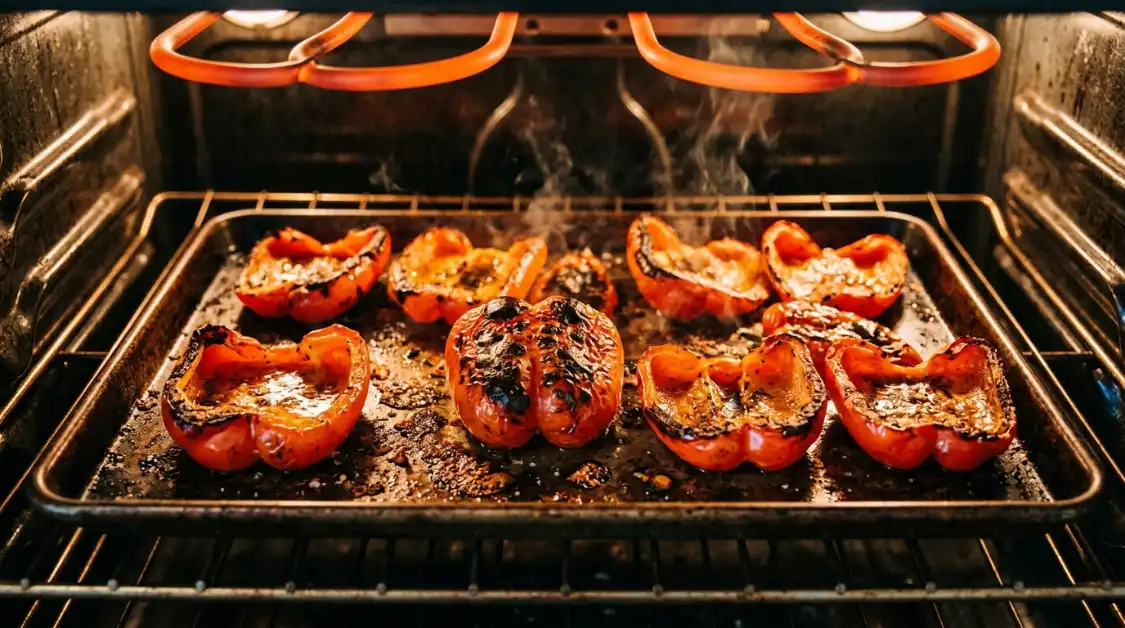
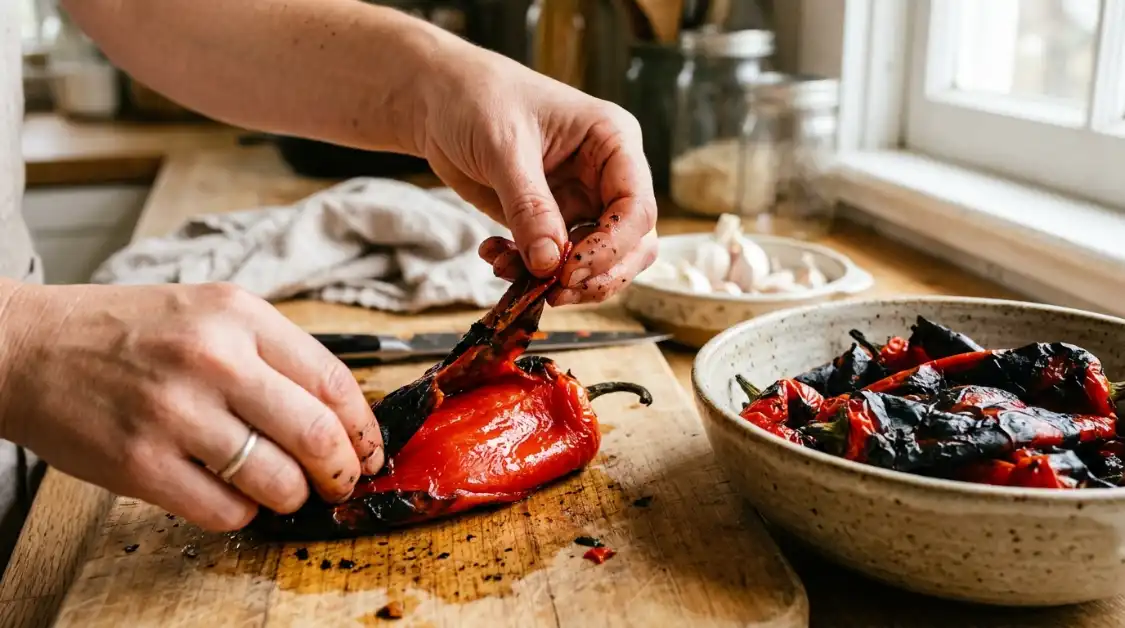
Maya’s Tip: The more charred the peppers, the smokier your roasted red pepper hummus will be. Don’t pull them early — you want real blackened blisters. The charring creates caramelization compounds (Maillard reaction + sugar caramelization) that give the hummus its incredible depth. Kenji López-Alt notes that properly charred peppers have 3x more flavor complexity than lightly roasted ones.
Step 2 — Prep the Chickpeas (2 min): Drain and rinse a can of chickpeas. For the creamiest hummus, simmer the drained chickpeas in water with a pinch of baking soda for 5 minutes. The baking soda softens the skins and helps the food processor break them down to silk. Drain again. (This step is optional but makes a noticeable difference.)
Step 3 — Pat Peppers Dry (1 min): Whether using freshly roasted or jarred, pat the peeled peppers very dry with paper towels. Excess moisture is the #1 reason homemade hummus turns out thin and soupy instead of thick and scoopable. You’ve got this!
Step 4 — Process Garlic First (30 sec): Drop garlic cloves into the food processor and pulse 5-6 times until finely minced. Processing garlic alone first ensures it’s evenly distributed — no one wants a surprise garlic chunk.
Blending & Serving (Steps 5–10)
Step 5 — Add Tahini & Lemon (1 min): Add tahini and lemon juice to the food processor. Process for 1 full minute until the mixture is pale, thick, and whipped-looking. This step creates a fluffy tahini base that makes the finished hummus incredibly smooth. Don’t skip it — it’s the secret to creamy hummus.
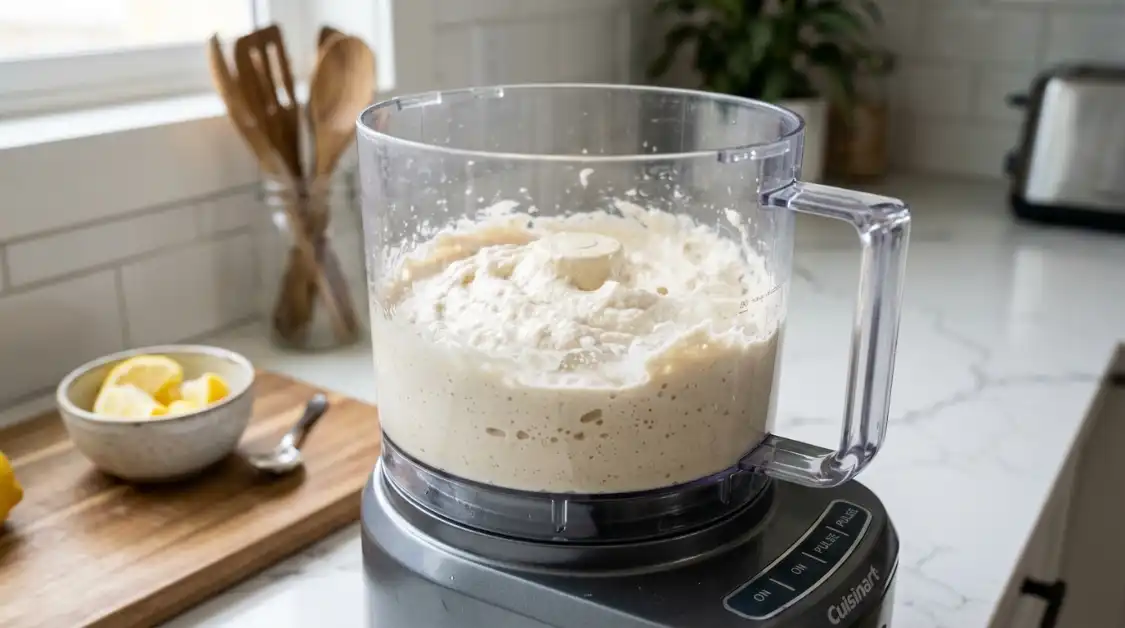
Pro Tip: Whipping tahini with lemon juice BEFORE adding chickpeas is the #1 trick for ultra-creamy hummus. The acid and agitation emulsify the tahini’s oils, creating a lighter, fluffier base. My Barcelona culinary instructor called this “the hummus foundation” — everything built on top gets creamier as a result.
Step 6 — Add Chickpeas & Peppers (2 min): Add the drained chickpeas, roasted red peppers, olive oil, salt, smoked paprika, and cumin. Process for 2-3 minutes, scraping down the sides every 30 seconds, until the hummus is completely smooth and creamy. The color should be a gorgeous coral-orange. If it’s too thick, add 1-2 tablespoons of ice water (not chickpea liquid — that can make it too thin). The aroma at this point — smoky peppers, toasty tahini, fresh lemon — is incredible.
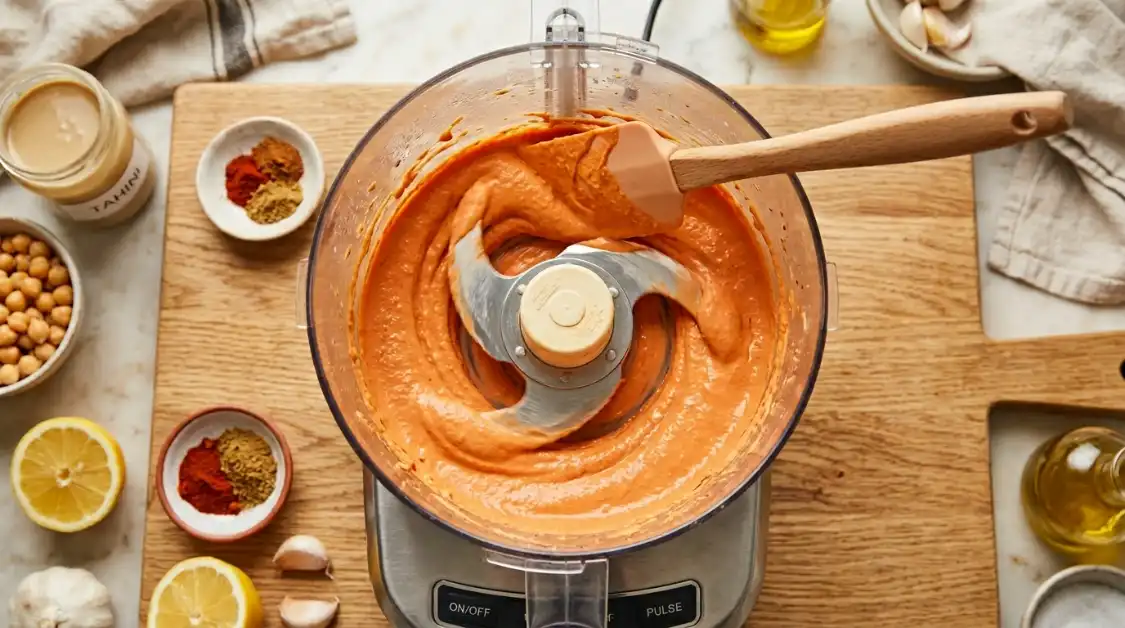
Step 7 — Taste & Adjust: This is the most important step in any roasted red pepper hummus recipe. Taste it. Need more tang? Add lemon. More smoky? More paprika. More salt? Don’t be shy. The flavors should be bold, balanced, and make you want to eat it straight from the processor. (I always do. No judgment.)
Step 8 — The Swoosh Presentation: Scoop the hummus into a wide, shallow bowl. Using the back of a spoon, create a swoosh with a well in the center. This is where the olive oil pools — the classic Mediterranean hummus presentation. That olive oil well isn’t just beautiful; it keeps the surface from drying out and adds richness to every scoop.
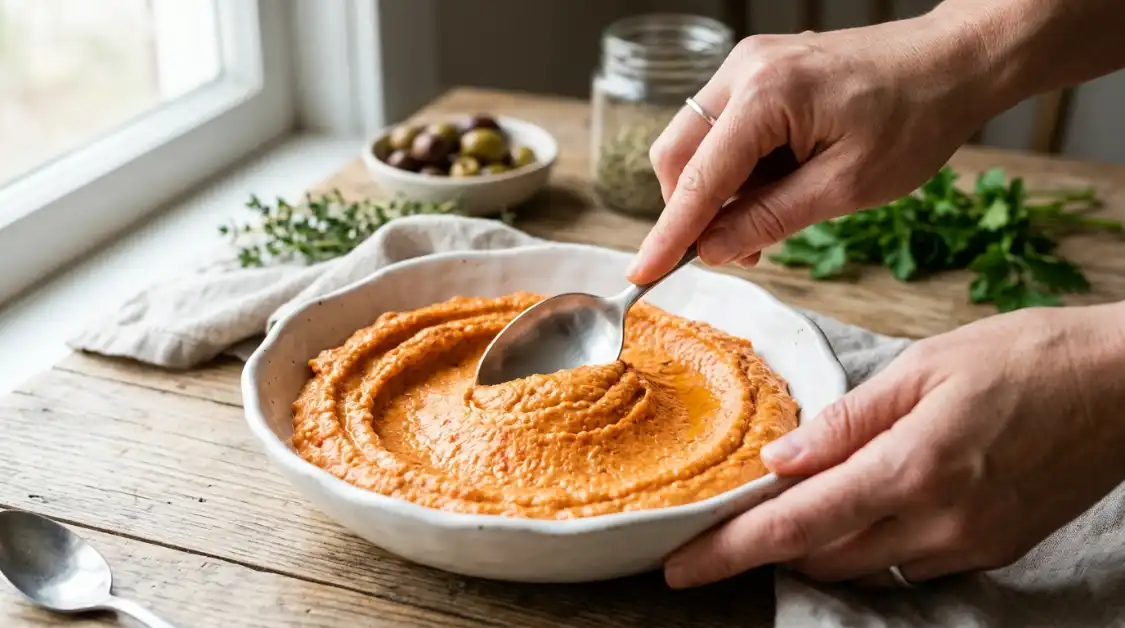
Step 9 — Garnish: Drizzle your best EVOO generously into the well. Sprinkle with smoked paprika, a pinch of cumin, and optional toppings: toasted pine nuts, a few whole chickpeas, a drizzle of tahini, chopped fresh parsley, or Aleppo pepper flakes. Each garnish adds a new dimension.
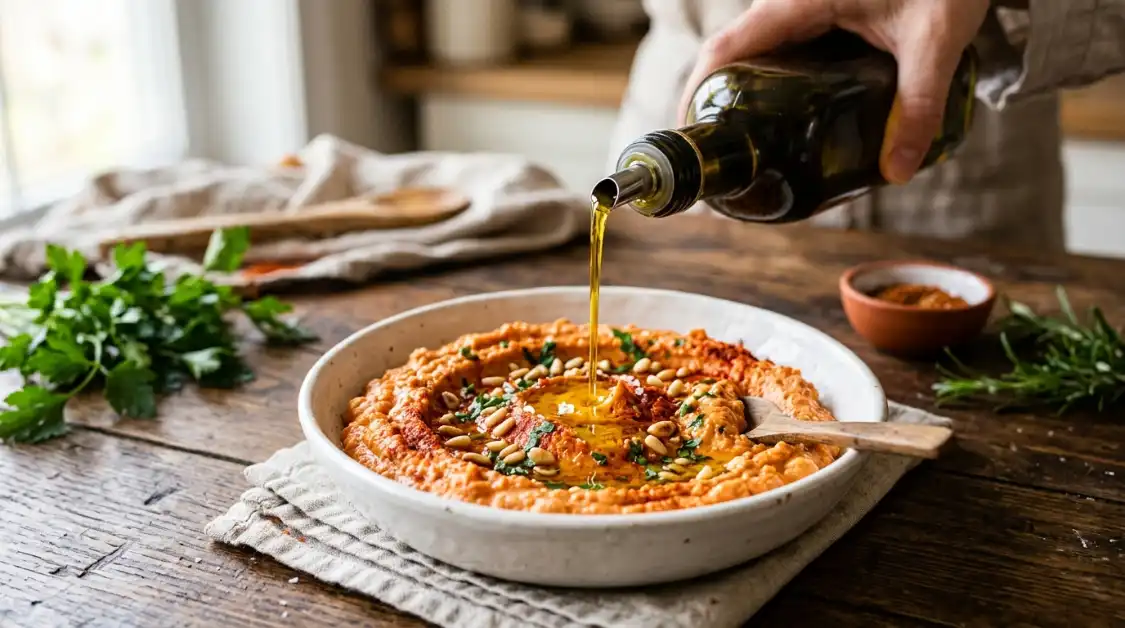
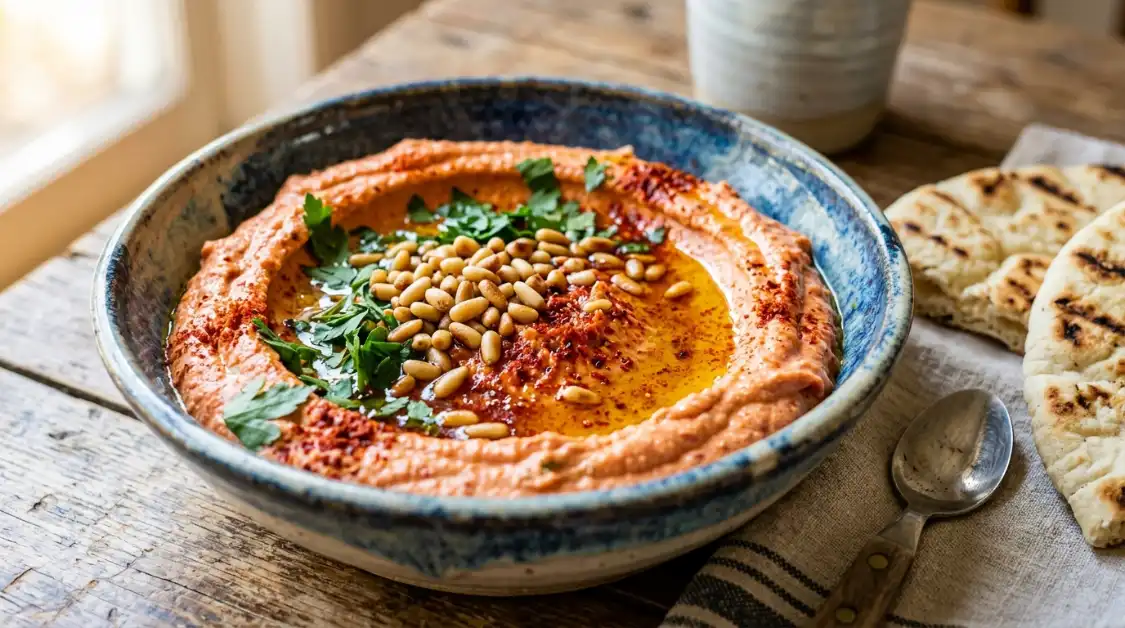
Step 10 — Serve & Enjoy! Serve at room temperature with warm pita, vegetable crudités, crackers, or use as a spread. Room-temp hummus tastes significantly better than cold — Harold McGee explains that cold suppresses flavor volatiles in legume-based dips. Let it sit 10 minutes out of the fridge before serving. For a full mezze spread, pair with our lamb shakshuka recipe or alongside our spinach and feta pizza.
Tips, Tricks & Shortcuts
My Best Success Tips
1. Whip tahini + lemon BEFORE adding chickpeas. This single technique is the difference between good hummus and extraordinary hummus. The emulsification creates a lighter, creamier base.
2. Pat roasted peppers dry. Excess moisture = thin, soupy hummus. I learned this the hard way on batch one.
3. Simmer canned chickpeas with baking soda. 5 minutes + a pinch of baking soda softens the skins and yields dramatically smoother results.
4. Process longer than you think. Most people under-blend. Run the food processor 2-3 full minutes, scraping down sides, for truly silky homemade hummus.
5. Use good tahini. Drippy, well-stirred tahini = creamy hummus. Dry, separated tahini = grainy hummus. Brand matters here.
6. Serve at room temperature. Always. Cold hummus tastes muted and feels stiff. 10-15 minutes on the counter transforms it.
7. Double the batch. Hummus keeps 5-7 days. Make extra and use it all week as a spread, dip, bowl topper, or sandwich condiment.
Common Mistakes to Avoid
| Mistake | Result | Fix |
| Not draining peppers well enough | Thin, soupy hummus that won’t hold the olive oil well | Pat peppers very dry; squeeze out excess liquid before adding to processor |
| Adding chickpea liquid for creaminess | Can make hummus too thin and gloopy instead of thick | Use ice water (1 tbsp at a time) if needed; or add more tahini for richness |
| Skipping the tahini-lemon whip step | Denser, grainier hummus without that fluffy lightness | Always process tahini + lemon for 1 full minute BEFORE adding chickpeas |
| Under-processing | Grainy, chunky texture instead of smooth and silky | Process 2-3 minutes total; scrape down sides; don’t rush this step |
| Using dry, grainy tahini | Gritty hummus no matter how long you blend | Invest in quality, drippy tahini (Soom is great); stir well before measuring |
| Serving ice-cold from the fridge | Muted, flat flavors; stiff texture | Let sit at room temp 10-15 min before serving; flavors bloom beautifully |
Variations & Serving Ideas
Creative Twists on Roasted Red Pepper Hummus
Spicy harissa version: Add 1-2 tsp harissa paste for a smoky, fiery kick. Our spicy rigatoni fans will love this.
Roasted garlic version: Roast a whole head of garlic alongside the peppers. Squeeze in for mellow, sweet depth.
Sun-dried tomato twist: Replace half the roasted peppers with sun-dried tomatoes for an umami-rich variation.
Smoky chipotle: Add 1 chipotle pepper in adobo for a Mexican-Mediterranean fusion. Bold and addictive.
White bean version: Swap chickpeas for cannellini beans for a milder, ultra-creamy base. Our sweet potato puree fans will enjoy the softer flavor.
Serving Suggestions & Pairings
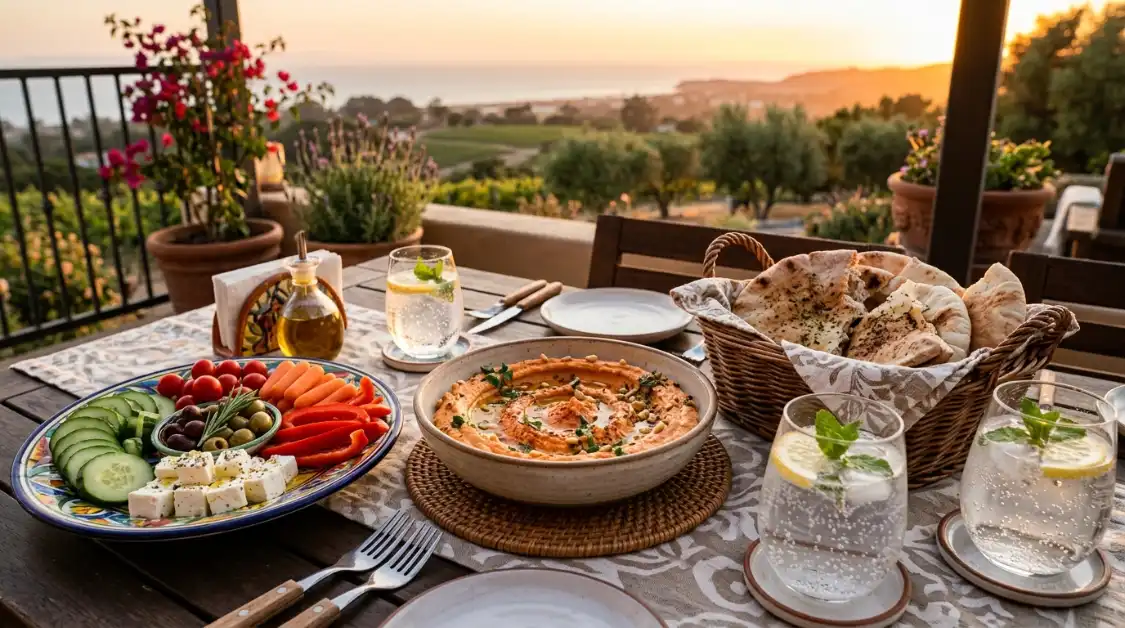
Classic dip: Warm pita, fresh vegetables (carrots, cucumbers, bell peppers, radishes, celery), crackers
Spread: On sandwiches, wraps, toast, or flatbread. Replaces mayo beautifully.
Bowl topper: Dollop on grain bowls, salad bowls, or our enlightened Mediterranean chicken bowl for instant creaminess
Mezze: Alongside olives, pickles, feta, and our caprese pasta salad with orzo for a stunning appetizer spread
Non-alcoholic beverages: Fresh mint lemonade, sparkling water with cucumber, iced hibiscus tea, pomegranate juice, or herbal sage tea
Meal Prep & Storage
Storage Guide for Roasted Red Pepper Hummus
| Method | Container | Duration | Notes |
| Fridge — hummus | Airtight glass container | 5-7 days | Drizzle thin layer of olive oil on top to prevent drying; stir before serving |
| Freezer — hummus | Freezer-safe container or silicone bags | Up to 4 months | Thaw overnight in fridge; stir well, add fresh lemon juice to brighten |
| Fridge — roasted peppers (extra) | Glass jar with olive oil | Up to 2 weeks | Great for other recipes: pasta, sandwiches, grain bowls |
| Counter | N/A | 2 hours max | Standard food safety; always refrigerate promptly |
Meal Prep Tips
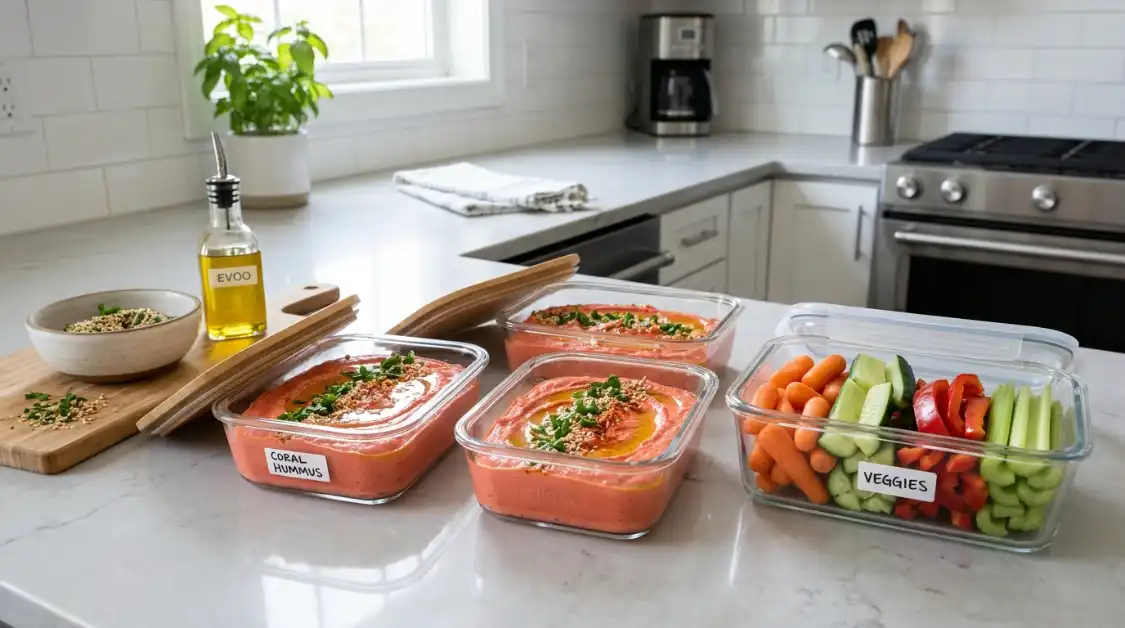
Best strategy: Make a double batch of roasted red pepper hummus on meal prep Sunday. Use all week: as a dip with cut veggies, sandwich spread, grain bowl topping, and base for our Mediterranean breakfast bowl.
Freezer portions: Divide into individual portions (about 1/2 cup each) in small containers. Freeze flat for quick thawing. Pull one out the night before for next-day lunches.
Reheat tip: Hummus doesn’t need reheating — just bring to room temperature. Stir well and add a squeeze of fresh lemon and drizzle of olive oil to refresh it.
Frequently Asked Questions
Substitution & Technique Questions
Can I use jarred roasted peppers instead of fresh?
Absolutely! Jarred roasted peppers work great and save 10 minutes. Just drain them thoroughly and pat very dry — excess liquid is the enemy of thick, scoopable hummus. Look for peppers packed in water, not oil, for best results. Fresh-roasted give a slightly smokier flavor, but jarred are a perfectly delicious shortcut.
Why is my hummus grainy?
Three likely causes: (1) dry or low-quality tahini, (2) not processing long enough, or (3) not softening the chickpea skins. Use drippy, well-stirred tahini. Process for a full 2-3 minutes. For ultra-smooth results, simmer canned chickpeas with baking soda for 5 min before blending.
Can I make roasted red pepper hummus without tahini?
You can, but the flavor and texture will be different. Tahini gives hummus its signature nutty richness and creamy body. Without it, add 2 tbsp extra olive oil or try sunflower seed butter as a substitute. The hummus will still be delicious, just lighter in flavor.
How do I make it spicier?
Add a roasted jalapeño with the peppers, stir in 1-2 tsp harissa paste, add a pinch of cayenne, or blend in one chipotle pepper in adobo. Start with a little — you can always add more heat but can’t take it away. Finish with Aleppo pepper flakes on top for beautiful, gentle heat.
Dietary, Nutrition & Lifestyle Questions
Is roasted red pepper hummus healthy?
Very! It’s a nutrient-dense, whole-food dip. Chickpeas provide plant protein and fiber, roasted peppers deliver vitamin C and antioxidants, tahini adds calcium and iron, and olive oil provides heart-healthy fats. At ~150 calories per generous serving with 6g protein and 5g fiber, it’s one of the healthiest dips you can eat. I’m a certified health coach, not a doctor — consult your healthcare provider for personalized guidance.
Is this hummus recipe keto-friendly?
Hummus isn’t strictly keto due to chickpeas (about 10g net carbs per serving), but it’s much lower carb than many dips. For keto, reduce the serving size to 2 tablespoons or try our white bean variation which is slightly lower carb. Pair with cucumber rounds and celery. Browse our gluten-free Mediterranean recipes for more options.
How many servings does this make?
This recipe makes about 2.5 cups, which is 6-8 generous appetizer servings. Double it for parties — hummus always disappears faster than you think! One block feeds 4-6 as a snack, or 2-3 as a substantial lunch component with pita and veggies.
Can kids eat this?
Yes! Hummus is a fantastic kid-friendly food — it’s mild, creamy, and fun to dip. The sweet roasted pepper flavor is appealing to young palates. Skip the cayenne and reduce garlic for very young kids. My niece calls it “pink hummus” and considers it her favorite snack.
How do I make this ahead for a party?
Make it up to 5 days ahead. Store covered with a thin layer of olive oil in the fridge. Before serving, stir well, taste and adjust (add a squeeze of fresh lemon), transfer to a serving bowl, create the swoosh, drizzle fresh olive oil, and garnish. It actually tastes even better the next day as the flavors meld.
Nutritional Highlights & Final Thoughts
Why This Recipe Is Good for You
Drawing on my University of Barcelona nutrition science degree and Cornell plant-based certificate, here’s why roasted red pepper hummus deserves a permanent spot in your fridge. Chickpeas are among the most studied legumes for health benefits — high in both soluble fiber (lowers cholesterol, stabilizes blood sugar) and insoluble fiber (gut microbiome diversity).
Roasted red bell peppers contain more vitamin C per serving than oranges, plus the antioxidant capsanthin — and roasting actually increases the bioavailability of these fat-soluble carotenoids when paired with olive oil. Tahini’s sesame seeds deliver calcium (88mg per tablespoon), making this dip a bone-health ally. Garlic’s allicin has been studied for cardiovascular and immune benefits. At approximately 150 calories per serving with 6g protein, 5g fiber, and a rich matrix of micronutrients, this Mediterranean hummus is proof that the healthiest foods can also be the most crave-worthy.
Let’s Make Some Hummus!
Whether you scoop it with warm pita, spread it on a sandwich, dollop it on a grain bowl, or eat it straight from the food processor (no shame — I do it every time), I hope this roasted red pepper hummus becomes a weekly staple in your kitchen. It’s the kind of recipe that makes you feel like a Mediterranean market vendor in your own home.
Tag me on Instagram when you make it — I especially love seeing your garnish game! Drop a comment below: are you team classic hummus or team roasted red pepper? I read every single one.
For more Mediterranean dips and spreads, try our cheese sauce with feta for a warm option, our stunning spinach and feta pairing guide, the crowd-favorite roasted vegetables salmon as a main course, or end on a sweet note with our easy tiramisu. Happy cooking, friends!
— Maya ❤️