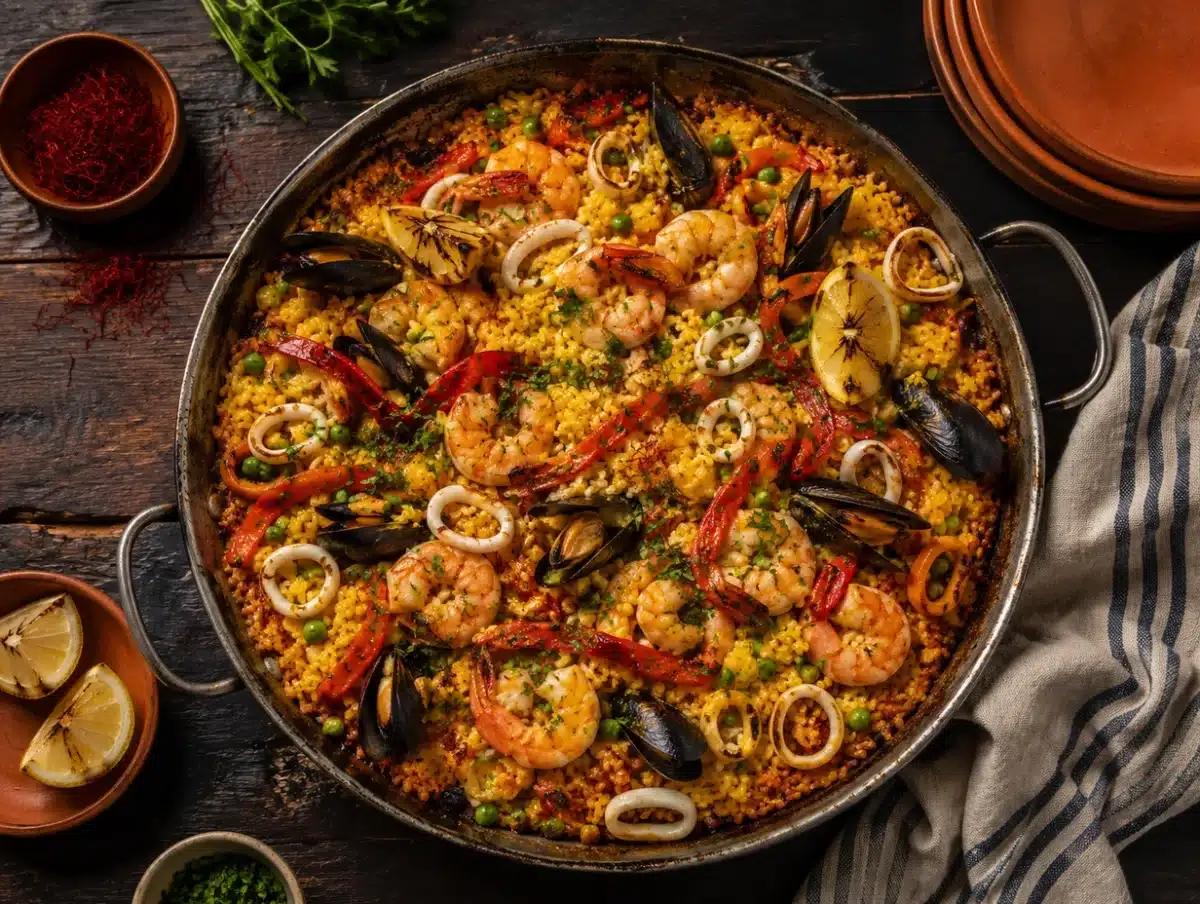
August 2022. My cousin Tomás was visiting from Chicago and I—for reasons I still can’t fully explain—decided to make one-pot Spanish seafood rice for the first time on a Tuesday night with zero practice.
The rice was crunchy (not the good kind), the shrimp were rubber erasers, and I’d used ground turmeric instead of saffron because someone on the internet said it was “basically the same.” (It is not basically the same.) Tomás ate it without complaint, which somehow made it worse. Fourteen batches later—through mushy rice, overcooked mussels, one genuinely impressive kitchen fire (small, contained, don’t worry), and an embarrassing amount of money spent on saffron—I finally cracked it. Golden, crispy-bottomed rice. Perfectly tender seafood. And that elusive socarrat crust. Here’s everything.
Table of Contents
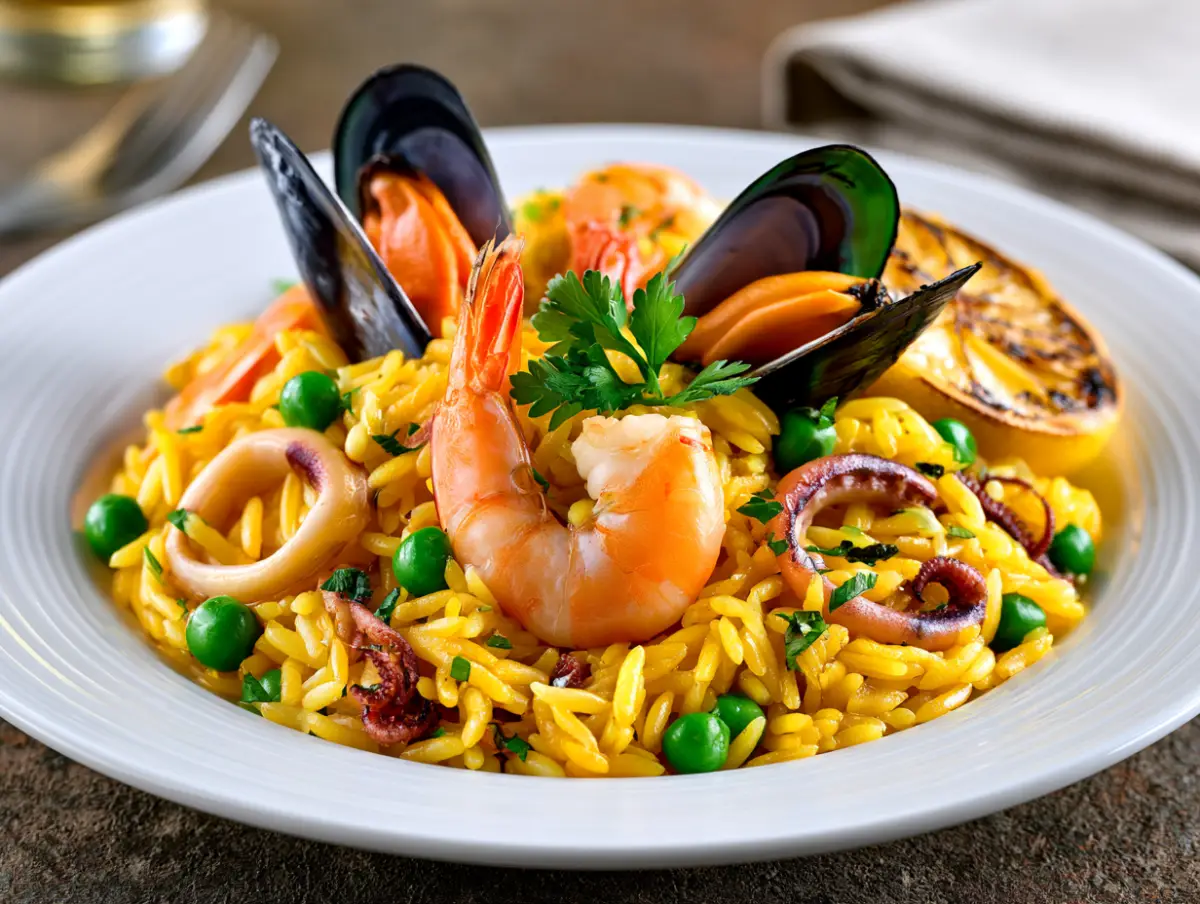
One-Pot Spanish Seafood Rice
Ingredients
Method
- 1. Simmer shrimp shells, water, bay leaf, peppercorns, and garlic for 15 minutes. Strain, add saffron to hot stock, and set aside.
- 2. Heat olive oil in a 12–14 inch deep skillet over medium heat. Sauté onion and bell pepper 6–8 minutes. Add garlic, tomato paste, and paprika; cook 60 seconds.
- 3. Add crushed tomatoes, cook 2 minutes. Add rice, stir 1 minute to toast and coat.
- 4. Pour in saffron stock, stir ONCE to distribute. Add salt. Bring to boil, then reduce to medium-low simmer. Do NOT stir again.
- 5. Simmer uncovered 15 minutes until rice is almost tender and liquid mostly absorbed.
- 6. Nestle shrimp, mussels, and calamari into rice. Scatter peas. Cover and cook 6–8 minutes until shrimp are pink and mussels open.
- 7. Uncover, increase heat to medium-high for 2–3 minutes to create socarrat. Listen for crackling; remove when toasty-smelling.
- 8. Remove from heat, cover with towel, rest 5 minutes. Squeeze lemon over top, garnish with parsley and olive oil. Serve with lemon wedges.
Notes
Why This One-Pot Spanish Seafood Rice Works
The Science of Perfect Rice and Socarrat
The difference between great one-pot Spanish seafood rice and mediocre rice-with-stuff-on-it comes down to two things: starch management and heat control. Medium-grain rice (like bomba or calasparra) has a higher amylopectin content than long-grain, which means it absorbs more liquid without falling apart—Harold McGee explains in On Food and Cooking that this molecular structure allows the grains to swell up to three times their volume while maintaining individual integrity. That’s why long-grain rice turns to mush here.
The second revelation is socarrat—that caramelized rice crust on the bottom of the pan. It’s created by increasing the heat in the last 2–3 minutes, triggering a Maillard reaction between the rice starches and residual proteins in the broth. Kenji Lopez-Alt calls it “the best part of paella” and I have never agreed with anything more strongly in my life.
A Showstopper That’s Secretly Simple
Here’s what blows people’s minds about this easy seafood paella: it takes about 40 minutes and uses one pan. That’s it. It looks like you spent all day in the kitchen. You did not. My neighbor Elena literally asked me who catered when I brought this to a block party (Elena. It was me. I am the caterer.) The same impressive-yet-easy philosophy drives our creamy tomato basil chicken—simple ingredients, dramatic results, minimal dishes to wash.
Essential Ingredients for One-Pot Spanish Seafood Rice
The Mediterranean Pantry
The ingredient list for Spanish seafood rice recipe is shorter than you’d think. You need medium-grain rice (bomba or calasparra are ideal; Goya medium-grain is the budget-friendly USA substitute that works brilliantly), saffron threads (real ones—not turmeric, not “saffron powder,” the actual threads), shrimp (shell-on for maximum flavor), mussels, calamari rings, a good fish or seafood stock, crushed tomatoes, onion, bell pepper, garlic, smoked paprika, and olive oil. Frozen peas go in at the end for color and sweetness. Lemon wedges for serving are not optional. For similar Mediterranean seafood magic, explore our Mediterranean shrimp white bean salad and our Mediterranean sheet pan salmon.
Ingredient Quality Comparison:
| Ingredient | Budget Option | Premium Option | Impact |
| Rice | Goya medium-grain or arborio | Bomba or Calasparra DO | Premium absorbs 3x liquid without bursting |
| Saffron | Trader Joe’s saffron (small jar) | La Mancha DO threads | Deeper color, more complex floral flavor |
| Shrimp | Frozen shell-on 21/25 count | Fresh wild-caught Gulf shrimp | Sweeter, firmer, more oceanic taste |
| Stock | Store-bought seafood stock | Homemade from shrimp shells | Vastly more depth and body |
| Paprika | Standard smoked paprika | Pimentón de la Vera DO | Authentic smoky-sweet Spanish flavor |
The Game-Changer: Homemade Quick Stock from Shrimp Shells
I didn’t figure this out until batch ten and I’m genuinely upset about the nine batches I wasted with store-bought stock. Here’s the trick: peel your shrimp and simmer the shells in water with a bay leaf, peppercorns, and a smashed garlic clove for 15–20 minutes.
Strain. That’s your stock now. The difference in flavor is—I’m not exaggerating—the single biggest upgrade you can make to any saffron rice with seafood recipe. The shells contain chitin and proteins that break down into a deeply savory, oceanic broth. It’s the exact principle that makes shrimp bisque so rich. Kenji Lopez-Alt recommends toasting the shells first for even more depth, which I do now religiously.
USA alternative: if you’re using pre-peeled shrimp, a combination of bottled clam juice and chicken broth gets you about 80% of the way there.
Complete Ingredients List
For the Quick Stock:
Shells from 1 lb shrimp
4 cups water
1 bay leaf
3 black peppercorns
1 garlic clove, smashed
½ tsp saffron threads
For the Rice:
3 tbsp extra virgin olive oil
1 medium yellow onion, finely diced
1 red bell pepper, diced
4 cloves garlic, minced
1 tbsp tomato paste
1 tsp smoked paprika (pimentón)
½ cup crushed tomatoes
1½ cups medium-grain rice (bomba, calasparra, or Goya)
3½ cups saffron-infused stock
½ tsp salt (adjust to taste)
For the Seafood:
1 lb shrimp, peeled and deveined (shells reserved for stock)
1 lb mussels, scrubbed and debearded
½ lb calamari rings
½ cup frozen peas
For Finishing:
Juice of 1 lemon
Fresh flat-leaf parsley, chopped
Lemon wedges for serving
Extra virgin olive oil for drizzling
The Foolproof Method for One-Pot Spanish Seafood Rice
Preparation: Building the Sofrito
Step 1 (15 min): Make the quick stock. Peel 1 pound shell-on shrimp, reserving the shells. Simmer shells in 4 cups water with 1 bay leaf and 3 peppercorns for 15 minutes. Strain and add ½ teaspoon saffron threads to the hot stock (it needs time to bloom—saffron releases its color and flavor in warm liquid). Set shrimp aside.
Step 2 (10 min): Heat 3 tablespoons olive oil in a large deep skillet or Dutch oven (12–14 inch) over medium heat. Add 1 diced onion and 1 diced red bell pepper. Cook 6–8 minutes until soft and starting to caramelize. Add 4 minced garlic cloves and cook 1 minute. Stir in 1 tablespoon tomato paste and 1 teaspoon smoked paprika (pimentón). Cook 60 seconds—this is your sofrito, the flavor foundation of all great Spanish rice. We use this same aromatic base in our pasta amatriciana and our Italian chicken casserole.
Step 3 (2 min): Add ½ cup crushed tomatoes and cook for 2 minutes, stirring. Then add 1½ cups medium-grain rice and stir constantly for 1 minute to toast the grains and coat them in the sofrito. This toasting step is critical—it creates a seal on the outside of each grain that helps it absorb liquid without falling apart. Skip this and you get risotto. Which is great, but it’s not what we’re making.
Main Method: The Rice and Seafood
Step 4 (1 min): Pour in the saffron-infused stock (about 3½ cups—the ratio is roughly 1 part rice to 2.5 parts liquid for a non-soupy result). Stir once to distribute evenly. Add ½ teaspoon salt. This is the last time you stir. I know it feels wrong. Do not stir again. Stirring releases starch and turns your Spanish seafood rice into risotto. Bring to a boil.
Step 5 (15 min): Reduce heat to medium-low and simmer uncovered for 15 minutes. The liquid should be mostly absorbed and the rice almost tender. Resist. The. Urge. To. Stir. I failed at this on batches two through five. The rice should look slightly wet on top but not swimming. If it’s too dry, add a splash more stock.
Step 6 (8 min): Nestle the shrimp, cleaned mussels (about 1 pound), and ½ pound calamari rings into the rice. Don’t push them under—let them sit on top. Add ½ cup frozen peas. Cover with a lid or foil and cook for 6–8 minutes until the shrimp are pink, the mussels have opened, and the calamari is tender. Discard any mussels that don’t open.
Step 7 (3 min — THE SOCARRAT): Remove the cover. Increase heat to medium-high for 2–3 minutes. You’ll hear a gentle crackling sound—that’s the bottom layer of rice caramelizing into the socarrat. When you smell a toasty, nutty aroma (not burnt), remove from heat immediately. This is the glory moment. This is what separates good from legendary. (I burned the socarrat on batch six. Thirty seconds too long. The kitchen smelled like a campfire for two days.)
Step 8: Remove from heat, cover with a clean kitchen towel and let rest for 5 minutes. The towel absorbs excess steam so the rice stays fluffy, not soggy. Squeeze lemon juice generously over everything and scatter with fresh parsley. Serve straight from the pan—this is a communal dish.
Creative Variations for Spanish Seafood Rice
Flavor Variation Ideas
| Variation | Key Changes | Best For | Difficulty |
| Mixed Paella | Add seared chicken thigh pieces with the sofrito | Meat + seafood lovers, big gatherings | Moderate |
| All-Shrimp Simple | Skip mussels & calamari, use 2 lbs shrimp only | Picky eaters, quick dinners | Very Easy |
| Vegetarian | Replace seafood with artichoke hearts, chickpeas, roasted peppers | Plant-based eaters, Mediterranean diet | Easy |
| Spicy Seafood | Add harissa or ½ tsp cayenne + chopped fresh chili | Heat lovers, adventurous palates | Easy |
| Budget-Friendly | Frozen seafood mix + frozen peas, skip saffron (use turmeric) | Students, large families | Very Easy |
| Kid-Friendly | Mild shrimp only, skip mussels, extra peas and corn | Families, texture-sensitive eaters | Very Easy |
For gluten-free: this one pan seafood rice is naturally GF—no flour, no breadcrumbs, just rice and seafood. For dairy-free: it’s already completely dairy-free as written. For paleo, swap the rice for cauliflower rice (add in the last 10 minutes only). Pair the vegetarian version with our gemista (Greek stuffed peppers and tomatoes) for a stunning plant-based Mediterranean feast.
Dietary Modifications That Work
I’ve tested this Mediterranean seafood rice with a shellfish-free version (batch eleven) using firm white fish chunks and it was excellent—the saffron rice carries the dish regardless. For low-sodium, use homemade unsalted stock and reduce the added salt; the seafood brings natural brininess. For a Whole30 approach, swap rice for cauliflower rice (riced in a food processor, added in the last 8 minutes). Our Mediterranean chickpea power bowl uses the same build-from-scratch-stock philosophy.
Storage & Serving Your Spanish Seafood Rice
Storage Tips for Seafood Rice
Let’s be honest: this homemade seafood rice is best eaten immediately, straight from the pan, ideally with people you like and a lot of lemon. But life happens. Store leftovers in airtight containers in the fridge for up to 2 days (seafood doesn’t have a long fridge life—respect it). I do not recommend freezing this dish. The rice texture changes significantly after freezing and the seafood becomes rubbery. Trust me, I tried on batch eight. Reheat gently on the stovetop with a splash of stock, covered, over low heat. Microwave works in a pinch but the rice dries out. The same day-of philosophy applies to our Mediterranean white bean salad—some things are just better fresh.
Serving Strategy
| Serving Style | Accompaniment | Vibe | Best For |
| Straight from the Pan | Lemon wedges, crusty bread, aioli | Casual, communal, authentic | Family dinner, friends over |
| Plated Elegant | Arugula salad, grilled lemon halves, herb oil | Date night, impressive presentation | Special occasions |
| Outdoor Entertaining | Full spread: olives, bread, roasted peppers | Summer party, festive | Block parties, holidays |
| Quick Weeknight | Simple green salad, garlic bread | No-fuss, fast | Busy Tuesday, meal for two |
For an absolutely show-stopping Mediterranean table, pair with our grilled chicken Mediterranean bowl and a simple side of grilled vegetables.
Nutritional Benefits of One-Pot Spanish Seafood Rice
Macronutrient Profile
Disclaimer up front: I’m not a dietitian, and my relationship with portion sizes is, um, complicated. But nutritionally, this saffron seafood dish is a powerhouse. The combination of shrimp, mussels, and calamari delivers lean complete protein, the rice provides sustained energy, and the olive oil adds Mediterranean-approved fats. It’s genuinely one of the most balanced one-pot meals I make.
| Nutrient | Per Serving (~1.5 cups) | % Daily Value | Notes |
| Calories | 380 kcal | 19% | Based on 2,000 cal diet |
| Protein | 30g | 60% | Shrimp + mussels + calamari |
| Total Fat | 10g | 13% | Mostly from olive oil |
| Saturated Fat | 1.5g | 8% | Very low—seafood is lean |
| Carbohydrates | 42g | 15% | Complex carbs from rice |
| Fiber | 3g | 11% | Peas and bell pepper |
| Sugar | 4g | 4% | Natural from tomatoes + peas |
Micronutrients and Health Benefits
| Micronutrient | Amount Per Serving | Health Benefit |
| Vitamin B12 | 18mcg (750% DV) | Mussels are the #1 food source of B12 |
| Iron | 6.5mg (36% DV) | Heme iron from shellfish; highly bioavailable |
| Selenium | 55mcg (100% DV) | Thyroid function + antioxidant from shrimp |
| Zinc | 4mg (36% DV) | Immune support from mussels + calamari |
| Iodine | 120mcg (80% DV) | Thyroid support from all seafood |
| Omega-3 (EPA/DHA) | 350mg | Anti-inflammatory from mussels |
The glycemic index of this Spanish rice dinner is moderate (around 55–60) due to the medium-grain rice, but the high protein content from the seafood slows glucose absorption significantly. Saffron contains crocin and safranal, compounds studied for mood-boosting and antioxidant properties. The mussels alone deliver more B12 per serving than almost any other food on earth. For more nutrient-dense Mediterranean cooking, try our pesto pasta with grilled chicken.
Frequently Asked Questions About One-Pot Spanish Seafood Rice
What rice is best for one-pot Spanish seafood rice?
Medium-grain rice is essential for a proper Spanish seafood rice recipe. Bomba rice is the gold standard—it absorbs liquid without bursting. Calasparra is another excellent Spanish option. In the US, Goya medium-grain or arborio rice are widely available substitutes. Never use long-grain or jasmine rice; they lack the starch needed for the right texture.
What is socarrat and how do I get it?
Socarrat is the crispy, caramelized rice crust that forms on the bottom of the pan—it’s the most prized part of any one pot paella. To achieve it, increase the heat to medium-high for the final 2–3 minutes of cooking. Listen for a gentle crackling sound and smell a toasty aroma. Remove from heat immediately before it burns.
Can I use frozen seafood for this Spanish rice recipe?
Absolutely! A frozen seafood mix works well for a budget-friendly easy Spanish rice. Thaw completely and pat dry before adding to the rice. You won’t get the same depth as fresh, but the saffron, sofrito, and stock do heavy flavor lifting. Add frozen seafood in the last 8 minutes of cooking.
How do I prevent the rice from getting mushy?
Three rules for perfect saffron rice with seafood: use medium-grain rice (not long-grain), toast it in the sofrito before adding liquid, and never stir after adding the stock. Stirring releases starch and creates a risotto texture. Also, maintain a gentle simmer—too high boils the water away before the rice cooks through.
Can I make one-pot Spanish seafood rice without saffron?
You can, but the flavor profile changes significantly. Saffron provides the distinctive floral, earthy taste and golden color. In a pinch, use ¼ teaspoon turmeric for color plus a pinch of sweet paprika for depth. It won’t taste the same, but the dish will still be delicious—just more of a generic seafood rice than an authentic Spanish one.
What’s the difference between paella and arroz caldoso?
Both are traditional Spanish rice dishes, but they differ in texture. Paella (what this recipe is based on) is dry—each grain separate, with a socarrat crust. Arroz caldoso (soupy rice) is more brothy, like a thick seafood soup with rice. This best seafood rice recipe aims for the classic dry-style paella result.
How many people does this weeknight seafood dinner serve?
This recipe generously serves 6 as a main course. For a crowd, you can scale up using a larger pan, but maintain the rice-to-liquid ratio of 1:2.5. Don’t crowd the pan—the rice needs to cook in a thin, even layer for proper socarrat development.
Pairing & Serving Ideas for Spanish Seafood Rice
Perfect Pairings Table
| Category | Pairing | Why It Works |
| Bread | Crusty baguette or sourdough for sauce-mopping | Catches every drop of saffron-infused liquid |
| Salad | Simple mixed greens with sherry vinegar dressing | Acid and crunch contrast the rich rice |
| Sauce | Garlic aioli (homemade or store-bought) | Creamy garlic against smoky paprika is everything |
| Vegetable | Grilled asparagus, roasted peppers, or Padrón peppers | Charred vegetables echo the smoky Spanish theme |
| Appetizer | Marinated olives, manchego, or roasted almonds | Sets the Spanish tapas tone for the meal |
Beverages: sparkling water with lemon is the cleanest pairing—it refreshes between rich, saffron-heavy bites. Fresh-squeezed lemonade is beautiful in summer. For cooler months, a warm Spanish-style chamomile with honey. I also love a fizzy ginger limeade—the ginger’s heat and the lime’s brightness cut through the richness perfectly. Serve this alongside our garlic Parmesan focaccia for a truly unforgettable spread.
Occasion-Based Serving
The magic of this one-pot Spanish seafood rice is that it scales. Tuesday night for two? Half the recipe, smaller pan, same technique. Saturday dinner party for twelve? Double it in a roasting pan—honestly it’s even more impressive at scale because the whole communal-eating-from-one-pan thing is incredibly festive. My cousin Tomás—the one from the original turmeric disaster—came back six months later and I served batch fourteen and he literally said, “This is the best thing you’ve ever made.” Our classic Greek lemon rice pilafi works as a lighter rice side if you want variety on the table.
Make This One-Pot Spanish Seafood Rice Your Own
The Spanish Tradition of Improvisation
Here’s something I find deeply comforting about Spanish rice cooking: the Valencian chef Llorenç Millo once said that paella “has as many recipes as there are villages, and nearly as many as there are cooks.” This one-pot Spanish seafood rice is a framework. Swap mussels for clams. Use firm white fish instead of calamari. Throw in some diced bell pepper. Add chickpeas. The sofrito-saffron-rice technique works with almost anything Mediterranean. Our lahanorizo (Greek cabbage rice) and our Mediterranean hummus breakfast bowl follow the same philosophy—master the base, then make it yours.
Share Your Socarrat
If you make this easy seafood paella (and given that it’s one pan and forty minutes, there’s genuinely no reason not to), I want to hear about it. Did you get the socarrat? What seafood did you use? Did the saffron blow your mind the way it blew mine on batch ten? Leave a comment, rate the recipe, and—most importantly—take a photo of that crispy rice bottom before anyone touches it. That’s the money shot. That’s what you post. Trust me. Now go make rice. Your one-pot Spanish seafood rice awaits, and your kitchen is about to smell absoluetly incredible.