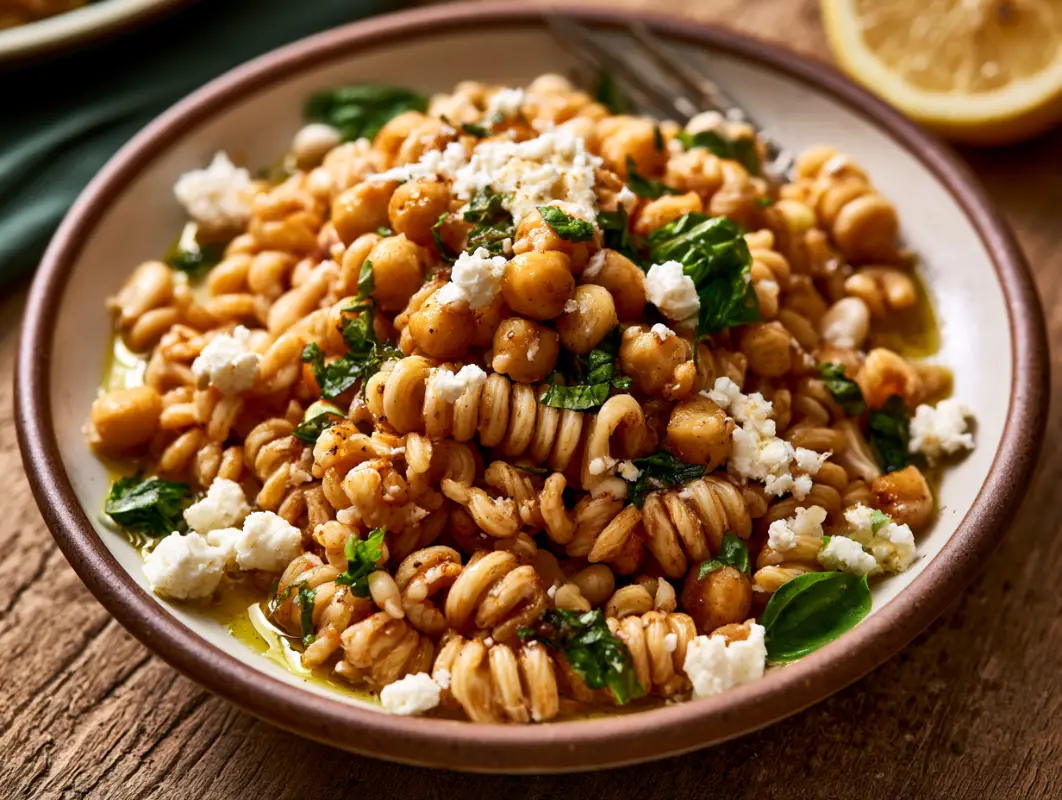
Every Friday evening when I was growing up in Chania, the smell of chickpeas simmering with garlic and olive oil would drift from my yiayia’s kitchen out onto the street — and neighbors would slow their walking pace, hoping for an invitation. She called it revithia me makaronia, her version of the ancient Italian pasta e ceci, but every ingredient was Cretan to its bones.
Chickpeas from a jar she had soaked herself overnight. Oil pressed from our family trees in the hills above the old harbor. Tomatoes so ripe they collapsed the moment you touched them. That first bowl of Mediterranean chickpea pasta taught me something I have never forgotten: the simplest ingredients, treated with patience and respect, will always make the most memorable meal.
I have been recreating this dish in my Athens kitchen for over 15 years. I have made it 80 times at minimum — adjusting the garlic level, testing cherry tomatoes against canned San Marzano, experimenting with fresh versus dried oregano. What you are getting here is the version that survived every test and earned approval from the toughest critic I know: my mother. This is healthy chickpea pasta that is naturally high in plant protein, fiber-rich, and on the table in 30 minutes. Whether you are cooking for one or feeding a hungry family, trust me — this recipe delivers every single time.
Table of Contents
Mediterranean Chickpea Pasta
Ingredients
Method
- 1. Drain, rinse, and dry chickpeas thoroughly (15 min spread on towel). Season with paprika, cumin, salt, and pepper.
- 2. Bring a large pot of salted water to a boil. Cook pasta 2 min less than package. Reserve 250ml pasta water. Drain.
- 3. Heat skillet over high heat 2 min. Add 3 tbsp olive oil. Add chickpeas in single layer. Sear 3 min undisturbed, stir, sear 1 more min until golden. Remove half to a bowl. Reduce heat to medium.
- 4. Add 2 tbsp olive oil. Add sliced garlic. Stir 90 sec until pale gold. Add cherry tomatoes, oregano, red pepper flakes, and salt. Cook 8-10 min until tomatoes collapse into jammy sauce.
- 5. Add kalamata olives and lemon zest. Stir. Add spinach in two batches; stir until wilted, 60-90 sec.
- 6. Add remaining chickpeas (the ones still in the pan) and cooked pasta. Add pasta water and toss vigorously to coat. Sauce should cling and coat every piece of pasta.
- 7. Remove from heat. Add lemon juice. Toss and taste. Adjust salt and lemon.
- 8. Plate in wide bowls. Scatter reserved golden chickpeas on top. Crumble feta generously. Drizzle olive oil. Serve immediately.
Notes
Why This Mediterranean Chickpea Pasta Recipe Is Worth Making Tonight
The Technique That Makes All the Difference
The secret to truly great garlic chickpea pasta is not in the ingredients — it is in the sequencing. Most weeknight cooks throw everything in together and simmer. The result? Muddy flavors, chickpeas that taste boiled rather than golden, and a sauce that is thin and sad. Here is what I do instead: I sear the drained chickpeas in hot olive oil first, without moving them, for a full 3 minutes.
This creates what Harold McGee, in On Food and Cooking, describes as a surface Maillard reaction — the same chemical process that browns bread and caramelizes onions. The exterior of each chickpea develops a thin, slightly crisp, nutty skin. That flavor change is dramatic and irreversible in the best possible way.
Cooking the garlic in the chickpea-infused oil next, then building the tomato sauce directly in the same pan, means every layer of flavor accumulates. Nothing gets wasted. It is the foundation principle of French fond cooking applied to a humble Mediterranean vegetarian pasta.
A Flavor Profile Made for Any Occasion
The finished dish is extraordinary in its balance. Sweet bursts from cherry tomatoes that collapse into jammy puddles. Deep, savory chickpeas with their golden edges. Briny kalamata olives that cut through the richness. A fistful of wilted spinach adding earthiness. Crumbled feta on top, salty and creamy. And underneath it all, the bright spine of lemon zest and fresh oregano that screams Crete to anyone who has ever eaten at a proper Greek taverna. This is easy chickpea pasta for a Tuesday night when you are exhausted, but it is elegant enough to serve to guests on Saturday. I have done both.
The Story Behind This Dish
Pasta e Ceci: Ancient Comfort Food
The dish has deep roots. Pasta e ceci — pasta with chickpeas — appears in Italian culinary records dating back to ancient Rome, where ceci (chickpeas, known to the Romans as cicer) were a staple legume of the poor and the wealthy alike. The name Cicero, the great Roman orator, is believed to derive from a family that farmed chickpeas. By the medieval period, the dish had traveled across the Mediterranean with traders and conquerors. In its simplest Italian form, it is a thick soup-stew with ditalini pasta, rosemary, and stewed chickpeas. In Greece, we made it our own: more tomato, more lemon, more olive oil, and always feta.
From My Yiayia’s Tapsi to Your Pot
My yiayia made this on the wood-burning stove she refused to replace until her mid-eighties. She used her tapsi — a wide, shallow Cretan cooking pan — which distributed heat perfectly across the chickpeas. She would cook it every Friday, the day before the Sabbath-adjacent day of rest in traditional Cretan households, because it could be eaten hot or at room temperature and only improved overnight. When my father came home from fishing on those evenings, he would eat two enormous bowls straight from the pot, standing at the counter, before even sitting down. That image — his weathered fishing coat still on, laughing with his mouth full — is why this Mediterranean chickpea pasta will always be my most personal recipe.
Essential Ingredients for Mediterranean Chickpea Pasta
Core Ingredients: What to Use and Why
Every ingredient in this recipe earns its place. Let me tell you why each one matters.
| Ingredient | Amount | Why It Matters | Authentic Pick | Substitution |
| Chickpeas (garbanzo beans) | 2 x 400g / 2 x 14oz cans | Primary protein and texture; sear to develop nutty flavor | Jarred cooked chickpeas (firmer texture than canned) | Butter beans or cannellini beans |
| Extra-virgin olive oil | 5 tbsp / 75 ml | Searing medium + sauce base; brings the Mediterranean character | Greek EVOO — Kolymvari PDO from Crete | Avocado oil (neutral; use more garlic to compensate) |
| Cherry tomatoes | 400g / 14oz, halved | Collapse into sweet, jammy pockets in the sauce | Small sweet vine tomatoes or Sun Gold variety | 1 x 400g / 14oz can San Marzano whole tomatoes, crushed |
| Garlic | 8 cloves, thinly sliced | Sliced (not minced) to cook gently without burning | Fresh heads, never jarred | Roasted garlic for a sweeter, milder profile |
| Kalamata olives | 80g / 3oz, pitted & halved | Briny depth that anchors the entire sauce | Genuine Greek Kalamata DOP olives | Castelvetrano (milder) or Nicoise olives |
| Fresh spinach | 120g / 4oz | Wilts into sauce, adds iron and color | Baby spinach (most tender) | Kale (add 5 min earlier), Swiss chard, or frozen spinach (thawed, squeezed) |
| Feta cheese | 120g / 4oz, crumbled | Creamy, salty finish that ties every element together | Greek PDO block feta (in brine) | Vegan: skip or use almond-based feta; Dairy-light: use 60g |
| Short pasta (pasta rigatoni or pasta fusilli) | 350g / 12oz | Short shapes hold chunky sauce in every crevice | Bronze-die extruded rigatoni | Gluten-free fusilli, orzo, or ditalini |
On the olive oil: I cannot stress this enough. This dish has nowhere to hide. With only a handful of ingredients, the oil is the canvas. I use Kolymvari extra-virgin from my home region in Crete — it has a peppery finish and a grassy aroma that makes the sauce taste complex even at its simplest. A mediocre oil will give you a mediocre sauce. This is one area where spending an extra dollar matters enormously.
Dietary Substitutions for Every Table
Yiayia’s Tip: Drain your canned chickpeas and spread them on a kitchen towel. Let them dry for 15 minutes before searing. The drier the surface, the better the crust. This single step makes the difference between golden and gray chickpeas.
| Dietary Need | Replace | With | Notes |
| Vegan / Dairy-free | Feta cheese | Nutritional yeast (2 tbsp) + toasted pine nuts | Add 1 extra pinch of sea salt to compensate for the feta’s brininess |
| Gluten-free | Regular pasta | Certified GF chickpea pasta or brown rice fusilli | Cook GF pasta 1 min less than package; it continues cooking in the sauce |
| Lower sodium | Kalamata olives + feta | Reduce both by half; increase lemon zest | The citrus compensates beautifully for lost salt contrast |
| Nut-free | Pine nut garnish | Toasted sunflower seeds or pumpkin seeds | Same crunchy finish, zero nut risk |
| Extra protein | Just chickpeas | Add 200g / 7oz grilled chicken strips | Slice and add after the sauce is built; toss and warm through 2 min |
Equipment and Technique Essentials
The Right Tools for the Job
| Traditional Tool | Modern Alternative | Why It Matters |
| Wide tapsi (Cretan shallow pan) | 12-inch stainless-steel or cast-iron skillet | Wide surface area lets chickpeas sear in a single layer without crowding |
| Wooden spoon (κουτάλα) | Silicone spatula | Scrapes browned fond from pan without scratching; critical for flavor |
| Large pasta pot (8 qt) | Any deep pot | Pasta needs room to circulate; crowding makes it stick and cook unevenly |
| Zester / microplane | Fine box grater | Releases lemon aromatic oils into the sauce without the bitter pith |
Mise en Place: How to Set Up Your Workspace
Before you light the burner: drain and thoroughly dry your chickpeas (spread on a towel for 15 minutes). Halve the cherry tomatoes. Slice the garlic thin — not minced, not crushed, but sliced. Pit and halve the olives. Crumble the feta. Zest and juice the lemon into separate small bowls. Set everything within arm’s reach. This dish moves fast once it starts. I once scrambled for my garlic while the chickpeas were already in the pan and burned the first batch completely. (The smoke alarm was not impressed.) Mise en place is not chef pretension — it is the reason home cooks make great food instead of stressful food.
Start your pasta water at the same time as your skillet. You want both ready within a minute of each other. I always salt my pasta water generously — it should taste like mild sea water, about 1 tablespoon per liter.
Step-by-Step Instructions: Mediterranean Chickpea Pasta
Preparation Steps 1 to 4
Step 1 — Dry and season the chickpeas: After draining and rinsing, spread the chickpeas on a clean kitchen towel. Pat the tops dry and let them air-dry for 15 minutes. Season lightly with half a teaspoon of smoked paprika, a pinch of salt, and a crack of black pepper. Why paprika? It adds a warm, slightly smoky layer to the Maillard crust that develops during searing. You will not taste it as paprika — you will taste it as depth.
Yiayia’s Tip: My yiayia would whisper a tiny pinch of ground cumin over her chickpeas at this stage. She called it ‘the invisible spice’ — you never identify it, but something tastes missing when it’s gone. Add a quarter teaspoon and thank her later.
Step 2 — Start your pasta water: Fill a large pot with water, cover, and bring to a high boil. Add 1 tablespoon of fine sea salt. This is not the moment to be timid with salt. Your pasta water is the only opportunity to season the actual pasta itself — everything else seasons the sauce. Cook your rigatoni or fusilli 2 minutes less than the package suggests. Reserve 250 ml / 1 cup of pasta water before draining. Do not skip this.
Step 3 — Prep the aromatics: Peel and thinly slice all 8 garlic cloves. Slicing instead of mincing is deliberate. Thin slices cook gently in the oil, becoming sweet and soft before they can burn. As J. Kenji Lopez-Alt explains in The Food Lab, the surface area of minced garlic causes it to cook exponentially faster than sliced garlic — meaning in a 3-minute window, minced can go from raw to scorched while sliced is still perfectly golden. Halve the cherry tomatoes. Zest and juice your lemon.
Step 4 — Organize your station: Set the chickpeas, garlic, tomatoes, olives, spinach, feta, and lemon within easy reach. Once the pan is hot, this dish takes only 15 minutes. Hesitating to find an ingredient means burned garlic or overcooked chickpeas. Everything out, everything ready. You are ready to cook.
Cooking and Assembly Steps 5 to 10
Step 5 — Sear the chickpeas (high heat, 375-400°F / 190-200°C equivalent): Heat your wide skillet over high heat for 2 minutes. Add 3 tablespoons of olive oil. When the oil shimmers, add the dried chickpeas in a single layer. Do not stir. Do not prod. Let them sear undisturbed for 3 full minutes. You should hear a consistent, satisfying sizzle. After 3 minutes, stir once and cook 1 more minute. The chickpeas should be golden on at least one side, slightly firm on the outside, and smell irresistibly nutty. Remove half of them to a bowl and set aside — these will be stirred in later so they retain their texture.
Step 6 — Build the garlic base: Reduce heat to medium. Add 2 more tablespoons of olive oil to the pan. Add the sliced garlic. Stir gently and cook for exactly 90 seconds — you are aiming for pale gold at the edges, completely soft in the center. The moment you see even a hint of dark brown, add the tomatoes immediately to drop the temperature.
Yiayia’s Tip: If your garlic ever starts browning too fast, do what my yiayia always did: tilt the pan and let the oil pool at one edge, then use a spoon to baste the garlic with the oil. The basting slows the cooking instantly without reducing the heat.
Step 7 — Make the tomato sauce (medium heat, 10 min): Add the halved cherry tomatoes to the garlic oil. Season with 1 teaspoon of dried oregano, half a teaspoon of sea salt, and a quarter teaspoon of red pepper flakes. Cook stirring occasionally for 8-10 minutes until the tomatoes have completely collapsed and their juice has thickened slightly into a jammy sauce. Add the kalamata olives and the lemon zest. Stir to combine. The smell at this point — garlic, tomato, oregano, olive, lemon — is the exact smell of my grandfather’s taverna in Chania on a summer evening. I dare you not to close your eyes.
Step 8 — Add spinach and chickpeas: Add the fresh spinach to the sauce in two handfuls, stirring between each addition. It will look like an enormous amount. It will wilt to almost nothing in 60-90 seconds. Once wilted, stir in the remaining seared chickpeas (leave the reserved golden ones for the top). Add the cooked, drained pasta plus a generous splash of reserved pasta water. The starchy pasta water is critical — it emulsifies with the olive oil and tomato juices into a cohesive, silky sauce that actually clings to every piece of pasta.
Step 9 — Finish with lemon: Remove the pan from heat. Squeeze the lemon juice over the pasta. Toss well. Taste — it should be vibrant, bright, and deeply savory. Add more lemon juice if needed. Add another splash of pasta water if the sauce is too thick. Adjust salt. This is your moment to make it yours.
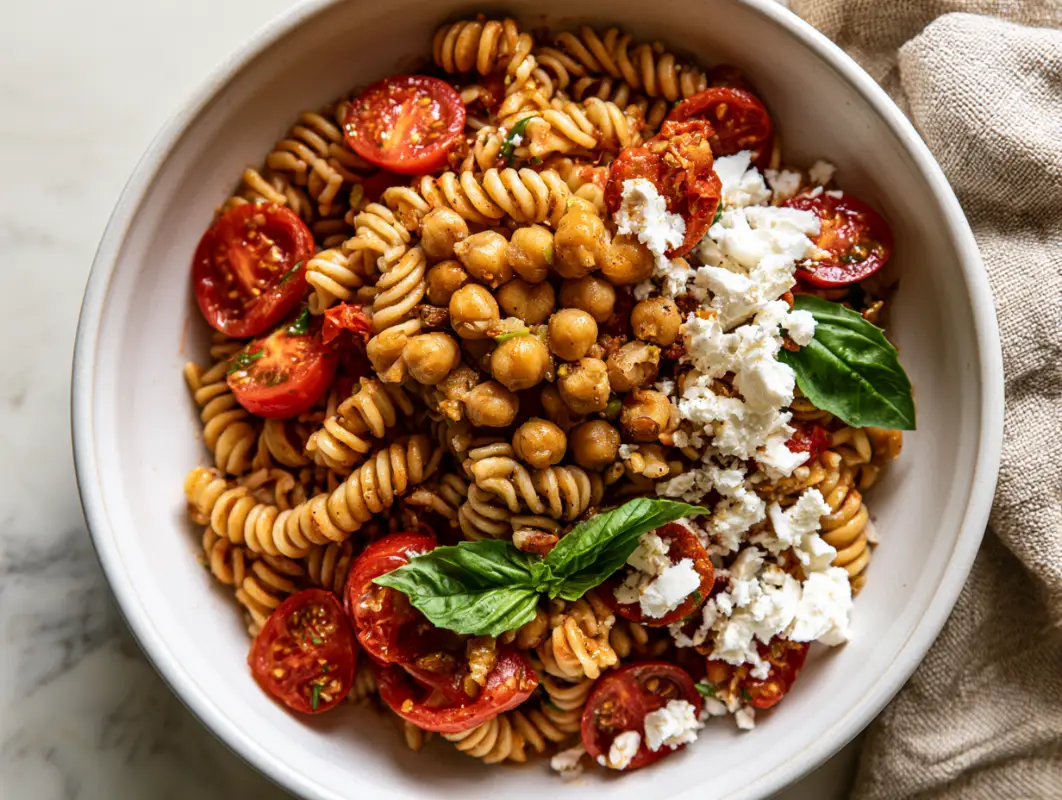
Step 10 — Plate and serve: Divide into wide bowls. Scatter the reserved golden seared chickpeas over the top of each bowl for a beautiful textural contrast. Crumble generous amounts of feta cheese over everything. A drizzle of your best raw extra-virgin olive oil. A few torn fresh basil leaves or a pinch of dried oregano. That is your Mediterranean chickpea pasta. Eat it immediately and be proud.
The Secret Touches That Elevate This Recipe
Three Techniques That Change Everything
The Split-Chickpea Method: Searing all the chickpeas and reserving half to add at the end, kept golden and firm, gives your pasta two textural personalities — soft, sauce-infused chickpeas integrated throughout, and crisp, golden ones on top. I discovered this by accident at a cooking workshop when a student added chickpeas too late. The texture contrast was revelatory. I have done it intentionally ever since.
Pasta Water Emulsification: This technique is the backbone of all great Italian pasta sauces and it works equally well for this Greek-inspired dish. The starch released from cooking pasta makes the water viscous. When this starchy water meets the olive oil and tomato juices, it creates an emulsion — a stable, creamy, unified sauce rather than a separated, oily one. Always add it hot, directly from the pot, and toss vigorously.
Lemon Off the Heat: Add lemon juice only after you remove the pan from the burner. Acidic juice that cooks in an open pan for more than 30 seconds loses much of its fragrant volatility — the compounds that make lemon taste alive and bright. Off-heat addition preserves that vivid citrus note. The zest, which contains the aromatic oils rather than the juice, can and should go in earlier while the pan is hot, so the heat blooms those oils into the sauce. This two-stage lemon approach — a technique I first encountered during my apprenticeship at Varoulko — is the reason this pasta tastes professional.
Common Mistakes and How to Fix Them
| Mistake | What Happens | How to Fix It |
| Skipping the chickpea drying step | Chickpeas steam instead of sear; pale, soft, flavorless | Pat bone-dry; if needed, oven-dry at 200°F/95°C for 10 min |
| Mincing instead of slicing garlic | Garlic burns in 60 seconds; bitter, acrid sauce | Slice 2mm thick; stir gently at medium heat only |
| Adding pasta to undercooked sauce | Sauce stays thin and watery; pasta absorbs liquid without flavor | Cook tomatoes until fully jammy before adding pasta — minimum 8 min |
| Forgetting pasta water | Sauce turns grainy, oily, separated | Always reserve 250 ml before draining; add hot directly from pot |
| Overcooking the spinach | Grey, mushy, unpleasant texture and color | Add in two batches; 60-90 seconds maximum; pull from heat while still bright green |
Variations and Serving Suggestions
Regional Variations and Modern Adaptations
Pasta e ceci is one of those deeply regional Italian dishes where every town claims a definitive version. In Rome, it is a thick soup with broken pasta and a heavy rosemary-anchovy base (very different). In Naples, they add whole San Marzano tomatoes and a pinch of cinnamon. In Crete, we skip the anchovies entirely and rely on the brininess of olives and feta. For a truly Cretan version, add a tablespoon of dried wild oregano (the mountain variety, rigani, is more aromatic than the Italian kind) and finish with Cretan honey — half a teaspoon drizzled over the top. Sweet, salty, herby. Extraordinary.
For a weeknight shortcut when you are genuinely exhausted, use a good-quality store-bought tomato passata instead of fresh cherry tomatoes. Add the passata straight after the garlic and simmer for just 5 minutes. The result is a bit less complex but genuinely delicious. I have made this version on many a Thursday when my Athens workshops have run three hours over schedule.
What to Serve Alongside
For a complete Mediterranean table, pair this with a crisp Mediterranean white bean salad on the side — the cool, lemony beans are a wonderful contrast to the warm pasta. Or serve alongside our gemista — Greek stuffed peppers and tomatoes for a proper Sunday spread. If you want to add some protein, our grilled chicken Mediterranean bowl uses the same Mediterranean flavor base and the grilled chicken makes a beautiful topping for this pasta.
For beverages — and I am passionate about this even without alcohol — try a tall glass of homemade lemonade sweetened with honey and mint leaves. Or brew a pot of tsai tou vounou, the Greek mountain tea made from dried Sideritis herb, served warm in small glasses alongside the meal. Cold hibiscus tea (karkade) is stunning against the richness of the olive oil and feta. My absolute favorite pairing: chilled ayran, the tangy yogurt drink, which cuts through the pasta’s richness like a dream.
Storage and Reheating
How to Store Mediterranean Chickpea Pasta
| Method | Container | Duration | Notes |
| Refrigerator | Airtight glass container | Up to 4 days | Pasta absorbs sauce as it sits; add broth or water when reheating |
| Freezer (sauce only) | Freezer-safe zip bag, flat | Up to 2 months | Freeze the chickpea-tomato sauce without pasta; cook fresh pasta to serve |
| Freezer (assembled) | Airtight freezer container | Up to 1 month | Texture degrades slightly; still very good. Defrost overnight in fridge |
| Meal prep (components) | Separate airtight containers | Sauce 4 days; pasta 3 days | Keep sauce and pasta separate until ready to eat; better texture |
Reheating Without Ruining the Texture
The stovetop is always your best friend here. Add the refrigerated Mediterranean chickpea pasta to a skillet with 3-4 tablespoons of water or vegetable broth over medium-low heat. Toss gently for 3-4 minutes until warmed through. The liquid rehydrates the sauce and restores its silkiness. Add a fresh squeeze of lemon juice and a drizzle of raw olive oil after reheating — heat destroys some of their brightness, so finishing fresh makes a real difference. Avoid the microwave if possible: it makes the chickpeas rubbery and the spinach sad. If you must use the microwave, cover with a damp paper towel and use 60% power in 90-second intervals.
Frequently Asked Questions
Substitutions and Technique Questions
Can I use dried chickpeas instead of canned?
Yes, and the result will be even better. Soak 250g / 9oz of dried chickpeas overnight in plenty of cold water. Drain, rinse, and simmer in fresh water for 45-60 minutes until tender but still holding their shape. Use the same weight as two cans. The chickpeas will be firmer, creamier inside, and the searing step will be even more dramatic. I make it this way on weekends when I have time and canned when I do not. Both are excellent.
What pasta shape works best for this recipe?
Short shapes that can catch chunks of chickpea and sauce: rigatoni, fusilli, penne, or orecchiette are all ideal. Avoid long pasta like spaghetti or linguine — the chunky sauce cannot cling properly. If you want a more soup-like result closer to the traditional Italian pasta e ceci, use ditalini or small elbow pasta and add an extra 120ml / half cup of broth to keep everything looser.
Can I make this without the olives?
Absolutely — though I encourage you to try them first, even if you are not usually an olive fan. Kalamata olives cooked into a tomato sauce become milder and lose their raw sharpness. They contribute brininess and depth without tasting strongly of olive. If you truly cannot do olives, substitute 1 tablespoon of capers for a similar salty-briny punch, or simply add an extra pinch of sea salt and a squeeze of lemon.
My sauce is too thick — what do I do?
Add more pasta water. This is always the answer. The pasta water is seasoned, starchy, and hot — it loosens the sauce beautifully without diluting flavor. If you have already discarded your pasta water (it happens to all of us), use warm vegetable broth instead. Add it one tablespoon at a time until you reach the consistency you want. The sauce should coat the back of a spoon but still move fluidly around the pan.
Dietary, Make-Ahead, and Authenticity Questions
Is Mediterranean chickpea pasta vegan?
The pasta, chickpeas, vegetables, and olive oil base are 100% vegan. The only non-vegan ingredient is the feta cheese. Simply omit it and add 2 tablespoons of nutritional yeast to the sauce for a savory, cheese-like depth. Toast a handful of pine nuts in olive oil and scatter over the top for richness and texture. The result is a beautiful, fully plant-based pasta dish. You can also find excellent vegan feta alternatives made from almond or cashew bases in most health food stores.
Can I make this ahead for a dinner party?
Make the chickpea-tomato sauce up to 2 days ahead — it actually improves overnight as the flavors meld. Cook the pasta fresh on the day of serving and toss with the warmed sauce. If you must make the whole dish ahead, undercook the pasta by 3 minutes so it does not become mushy when you reheat. Add fresh feta and a drizzle of olive oil only at the very last moment before serving.
Is this recipe authentic Greek food?
It is Mediterranean in spirit and largely Greek in character, though the dish has Italian roots as pasta e ceci. In Crete and across mainland Greece, chickpeas cooked with pasta, olive oil, tomatoes, and feta are a beloved taverna staple. My version reflects how this dish is actually made in Greek homes — not a rigid historical reconstruction, but a living recipe that has evolved through generations. My yiayia would recognize every element. That is my definition of authentic.
How many calories per serving?
Approximately 520 calories per serving with regular pasta and full feta (4 servings from this recipe). Using gluten-free chickpea pasta reduces this slightly and increases protein to approximately 24g per serving. Full nutrition details are in the recipe card below. A quick reminder: I am a chef, not a registered dietitian. Please consult a nutrition professional for precise dietary guidance tailored to your health needs.
Bringing the Mediterranean to Your Table
A Note from Nikos
Every time I make this Mediterranean chickpea pasta, I think about what food really is. It is not just fuel. It is the way we stay connected to people we love, even after they are gone. My yiayia has been gone for six years. But every Friday evening when I cook revithia me makaronia — chickpeas with pasta — I can smell her kitchen. I can hear the wood stove crackling. I can see my father taking off his fishing coat and reaching for a bowl before he even says hello. That is the power of a recipe made with intention.
I hope this Mediterranean chickpea pasta brings something like that to your table. Make it on a weeknight. Share it with someone you care about. Leave me a comment below telling me how it turned out — I read every single one and respond to as many as I can. And if you share a photo, tag me. Nothing makes me happier than seeing this dish reproduced in kitchens across the world. Kalí órexi — good appetite, from Athens to wherever you are.
More Mediterranean Recipes to Explore
If you loved the flavors here, our classic Greek lemon rice pilafi makes a wonderful side or base for this chickpea sauce on nights when you want something lighter than pasta. The Mediterranean chickpea power bowl uses the same hero ingredient in a completely different format — roasted and crispy over greens and tahini. For another one-pan pasta night, our pasta primavera recipe is brilliant in spring, and the pesto pasta with grilled chicken is a crowd-pleasing weeknight favourite that shares the same spirit of simple, quality Mediterranean ingredients.