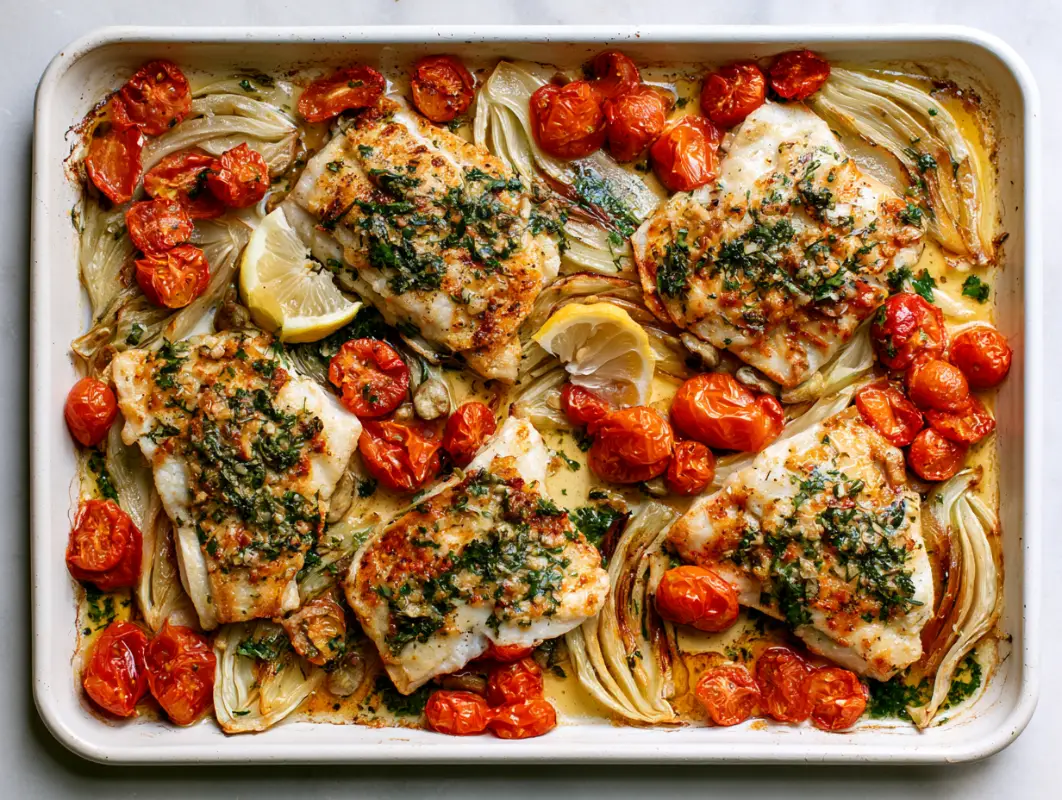
Can we talk about how intimidating “crusted fish” sounds — and how ridiculously easy it actually is? Because this sheet pan dukkah-crusted fish with roasted fennel might be the most impressive-looking weeknight dinner you’ll ever make, and the whole thing comes together in about 30 minutes with almost zero fuss.
Here’s the deal: you take flaky white fish fillets (I love cod or sea bass), press them into a fragrant dukkah crust — that’s the Egyptian nut-and-spice blend that’s been a staple in Mediterranean and Middle Eastern kitchens for centuries — and roast everything on a single sheet pan alongside caramelized fennel wedges. The fennel gets sweet and tender in the oven while the dukkah turns golden and crunchy. The textures, the flavors, the aromas? Absolutely stunning. And it’s loaded with omega-3s, anti-inflammatory spices, heart-healthy fats, and fiber-rich vegetables.
I first discovered dukkah during a research trip to Cairo while studying nutrition at the University of Barcelona. Locals were dipping bread in olive oil and this incredible nutty spice mix — I was hooked. Now, living in San Diego, I’ve adapted it into everything from salads to fish, but this sheet pan dukkah-crusted fish recipe is the one my family requests most. I tested six versions before nailing this ratio of hazelnuts, coriander, cumin, and sesame. Trust me, once you try dukkah on fish, you’ll never go back to plain breadcrumbs.
Table of Contents
Why You’ll Love This Dukkah-Crusted Fish Recipe
Health & Nutrition Benefits
Here’s the best part — this Mediterranean fish recipe is a nutritional powerhouse:
⚡ White fish delivers 20-25g of lean protein per fillet with minimal saturated fat — one of the cleanest protein sources you can eat
💚 Dukkah‘s hazelnuts and sesame seeds provide vitamin E, magnesium, and plant-based omega fatty acids — the Blue Zones research links regular nut consumption to longevity
🍱 Roasted fennel is packed with fiber, potassium, and vitamin C, plus anethole — a compound studied for its anti-inflammatory and digestive benefits
⚡ Cumin and coriander in the dukkah spice mix contain antioxidants that research (including the PREDIMED study) connects to reduced inflammation markers
As someone with a nutrition science degree from Barcelona, I’m genuinely excited about how many health benefits are packed into one sheet pan dinner here.
Practical Wins for Busy Lives
⚡ Comes together in just 30 minutes — 10 min prep, 20 min in the oven
🍱 Meal prep-friendly! Components store beautifully (more on this below)
💚 One pan, one cleanup. The fennel and fish roast simultaneously
⚡ Budget-smart: frozen cod fillets + homemade dukkah = upscale dinner under $10
Date night. Tuesday night. Meal prep Sunday. This easy fish dinner works for all of them. Game. Changer.
The Mediterranean Diet Connection
How This Dish Fits Mediterranean Principles
This sheet pan fish dinner is textbook Mediterranean Diet: fish as the primary protein (eaten 2-3 times weekly in traditional Mediterranean cultures), abundant vegetables, olive oil as the cooking fat, and nuts and spices for flavor instead of heavy sauces or butter. The dukkah spice mix — roasted nuts, seeds, and warming spices — is a condiment with roots in ancient Egypt, used across North Africa and the Eastern Mediterranean for thousands of years. Paired with fennel (a staple from Sicily to Provence), this dish bridges multiple Mediterranean traditions into one beautiful plate. For another Mediterranean sheet pan approach, explore our roasted vegetables salmon recipe.
My Personal Connection
That trip to Cairo changed everything for me. I was 22, halfway through my Barcelona nutrition program, and a street vendor handed me warm pita with olive oil and dukkah. The combination of toasted hazelnuts, cumin, and sesame — it was like nothing I’d tasted in Valencia or Tuscany. I brought bags of dukkah home and immediately started experimenting.
My papa (who ran a market stall in Valencia) was skeptical at first — “What is this Egyptian thing?” — but after one bite of dukkah-crusted fish, he was converted. Now it’s a regular at family dinners, whether we’re in Spain or my San Diego kitchen. The roasted fennel is my nonna’s influence — she grew fennel in her Tuscan garden and roasted it with everything.
Essential Ingredients for Sheet Pan Dukkah-Crusted Fish
Complete Ingredients List
For the Dukkah Crust:
1/3 cup (45g) blanched hazelnuts
2 tbsp (18g) sesame seeds
1 tsp coriander seeds
1 tsp cumin seeds
1/2 tsp fennel seeds
1/4 tsp black pepper
1/4 tsp kosher salt
(Or use 1/2 cup / 65g store-bought dukkah)
For the Fish & Vegetables:
4 white fish fillets (6 oz / 170g each, about 1 inch thick — cod, sea bass, or halibut)
2 large fennel bulbs, trimmed and cut into wedges (fronds reserved)
1 pint (280g) cherry tomatoes, halved
3 cloves garlic, minced
3 tbsp (45ml) extra virgin olive oil, divided
1 tsp kosher salt (divided)
1/2 tsp freshly ground black pepper
For the Lemon-Herb Drizzle:
2 tbsp fresh lemon juice
1 tbsp extra virgin olive oil
Zest of 1 lemon
1/4 cup fresh dill, chopped
1/4 cup fresh parsley, chopped
Pinch of flaky sea salt
Lemon wedges for serving
Core Ingredients Breakdown
Quality ingredients make the difference between good and incredible here. The dukkah crusted fish relies on a balance of nutty crunch, aromatic spice, and clean protein. Here’s your detailed shopping guide:
| Ingredient | Amount | Why It’s Great | Best Pick | Substitution |
| White fish fillets | 4 fillets (6 oz / 170g each) | 20-25g lean protein per fillet, omega-3s, low in saturated fat, flaky texture takes the crust beautifully | Fresh cod, sea bass, or halibut (1-inch thick) | Salmon (richer), mahi-mahi, or snapper |
| Dukkah (homemade or store-bought) | 1/2 cup (65g) | Hazelnuts + sesame = vitamin E, magnesium, healthy fats; cumin + coriander = antioxidants, digestion support | Homemade for freshness; store-bought for speed | Make nut-free version with extra seeds + coconut flakes |
| Fennel bulbs | 2 large, cut into wedges | Fiber, potassium, vitamin C; anethole aids digestion; caramelizes beautifully when roasted | Firm, heavy bulbs with bright fronds | Zucchini wedges or halved Brussels sprouts |
| Extra virgin olive oil | 3 tbsp (45ml) | Heart-healthy monounsaturated fats, creates crispy crust, prevents sticking | Cold-pressed Greek or Spanish EVOO | Avocado oil for higher smoke point |
| Lemon | 2 lemons (zest + juice) | Vitamin C, brightens every flavor, aids iron absorption from fish | Meyer lemons for sweeter zest | Lime for a different citrus profile |
| Cherry tomatoes | 1 pint (280g), halved | Lycopene (more bioavailable when roasted!), adds color and sweetness | On-the-vine varieties for peak flavor | Grape tomatoes or diced Roma |
| Fresh dill + parsley | 1/4 cup each, chopped | Anti-inflammatory compounds, Mediterranean freshness, gorgeous garnish | Fresh always; buy bunched, not packaged | Fresh mint or cilantro |
| Garlic | 3 cloves, minced | Allicin for immunity, roasted garlic becomes sweet and mellow | Fresh, firm heads with tight skin | 1 tsp garlic paste in a pinch |
For a stunning summer starter before this dish, try our watermelon feta pasta salad — the freshness pairs beautifully with the warm spices of dukkah.
Dietary Modifications & Storage Tips
| Need | Replace | With | Notes |
| Nut-free | Hazelnut-based dukkah | Seed-only dukkah (sunflower, pumpkin, sesame + spices) | Equally crunchy and flavorful; safe for school lunches |
| Gluten-free | Already GF! | N/A | Dukkah is naturally gluten-free; always verify store-bought labels |
| Dairy-free | Already dairy-free! | N/A | No dairy in this recipe — serve with tahini drizzle instead of yogurt |
| Low-FODMAP | Fennel + garlic | Roasted zucchini + garlic-infused oil (discard garlic) | Fennel is high-FODMAP; zucchini is a safe swap |
| Higher protein | Standard portion | Add chickpeas to sheet pan or use salmon | Chickpeas add ~7g protein/serving; salmon adds omega-3s |
| Pescatarian → Vegan | Fish fillets | Thick-sliced cauliflower steaks or extra-firm tofu | Press tofu well; coat in dukkah the same way |
Storage tips: Fresh fish should be used within 1-2 days of purchase (or thaw frozen fillets overnight in the fridge). Fennel keeps 7-10 days refrigerated. Homemade dukkah stores in an airtight jar for up to 1 month at room temp — make a big batch! Fresh herbs last longest wrapped in a damp paper towel inside a bag in the fridge. For more gluten-free fish ideas, check out our gluten-free Mediterranean recipes collection.
Equipment & Quick Prep
Essential Tools for This Sheet Pan Dinner
| Tool | Why It Helps | Alternative |
| Large rimmed sheet pan (18×13″) | Fish and fennel roast together in one pan — no overcrowding | Two smaller pans if needed |
| Parchment paper | Prevents delicate fish from sticking; easy cleanup | Lightly oiled silicone mat |
| Mortar & pestle or spice grinder | For making fresh dukkah — coarse texture is key | Food processor with quick pulses; or buy pre-made |
| Microplane zester | Gets fine lemon zest without bitter pith | Fine grater or vegetable peeler + mince |
| Instant-read thermometer | Fish is done at 145°F (63°C) — no guesswork | Fork-flake test (fish flakes easily when done) |
Prep-Ahead Checklist
Total prep time: About 10 minutes. Here’s the plan:
Make dukkah (if homemade): Toast hazelnuts, sesame, cumin, coriander; crush coarsely. Can be done days ahead!
Prep fennel: Trim stalks, quarter bulbs, cut into wedges (save the fronds for garnish — they’re beautiful)
Halve tomatoes, mince garlic, zest and juice lemons
Pat fish dry: This is crucial for a crispy crust — moisture is the enemy of crunch
Batch prep tip: Make a triple batch of dukkah on Sunday and store in jars. It’s incredible on Mediterranean salads, roasted veggies, avocado toast, yogurt — honestly, put it on everything.
Step-by-Step: How to Make Sheet Pan Dukkah-Crusted Fish with Roasted Fennel
Prep & First Steps (Steps 1–4)
Step 1 — Preheat & Prep Pan (1 min): Preheat oven to 425°F (220°C). Line your sheet pan with parchment paper. This high heat is key — as Harold McGee explains, the Maillard reaction that creates that gorgeous golden crust on the dukkah really activates above 300°F. We want plenty of it.
Step 2 — Roast the Fennel First (3 min prep + 10 min head start): Toss fennel wedges and halved cherry tomatoes with 2 tablespoons olive oil, minced garlic, salt, and pepper. Spread in a single layer on the sheet pan. Slide into the oven for 10 minutes while you prep the fish. The fennel needs this head start because it takes longer to caramelize than fish takes to cook.
Maya’s Tip: Don’t throw away those fennel fronds! They’re gorgeous as a garnish and taste like mild licorice-meets-dill. I scatter them over the finished dish for that California-farmers-market look.
Step 3 — Crust the Fish (3 min): Pat fish fillets completely dry with paper towels. (I mean it — really dry. My first attempt at dukkah crusted fish failed because the fillets were damp and the crust slid right off. Learn from my mistakes!) Brush each fillet with remaining olive oil, season with salt and a squeeze of lemon juice. Press a generous layer of dukkah onto the top of each fillet — about 2 tablespoons per piece. Press firmly so it adheres. You’ve got this!
Step 4 — Add Fish to the Pan (1 min): After the fennel’s 10-minute head start, pull the pan out. Nestle the dukkah-crusted fish fillets among the fennel wedges and tomatoes. Make sure there’s space between each fillet for air circulation.
Cooking & Assembly (Steps 5–10)
Step 5 — Roast Together (12-15 min): Return the sheet pan to the oven. Roast 12-15 minutes until the fish reaches 145°F (63°C) internally and the dukkah crust is deeply golden. The fish should flake easily with a fork. The fennel will be caramelized and tender, the tomatoes jammy and sweet. The smell is absolutely intoxicating — toasted nuts, warm spices, sweet roasted vegetables. Know what I mean? It fills the entire house.
Step 6 — Check Doneness (30 sec): Use your thermometer or gently press the fish — it should feel firm but spring back slightly. Overcooked fish is dry fish, so pull it at 140°F and let carry-over cooking finish the job (Kenji López-Alt’s advice that changed my fish game forever). The dukkah crust should be deep golden-brown, not dark.
Pro Tip: If the crust is browning too fast but the fish isn’t done, loosely tent with foil for the last few minutes. This protects the nuts from burning while the fish finishes cooking.
Step 7 — Make the Lemon-Herb Drizzle (2 min): While the fish roasts, whisk together 2 tablespoons lemon juice, 1 tablespoon olive oil, chopped dill, chopped parsley, a pinch of salt, and a crack of pepper. This bright, herbaceous drizzle is what takes the sheet pan dukkah-crusted fish from great to extraordinary. The acidity cuts through the richness of the nuts perfectly.
Step 8 — Rest & Plate (2 min): Let the fish rest on the pan for 2 minutes. This allows the proteins to relax (protein denaturation science at work!) so the fish stays moist and flaky. Arrange the roasted fennel and tomatoes on plates, nestle the dukkah crusted fish on top.
Step 9 — Drizzle & Garnish: Spoon the lemon-herb drizzle over each fillet. Scatter reserved fennel fronds and extra chopped herbs over the top. Add lemon wedges for squeezing. The contrast of the golden crust, caramelized fennel, bright herbs, and sunny lemon — it’s stunning.
Step 10 — Serve Immediately! This healthy baked fish is at its absolute best straight from the oven. The dukkah crust stays crunchiest when fresh, and the roasted fennel is at peak sweetness. Pair with couscous, quinoa, or warm pita to round out the meal.
This Mediterranean sheet pan dinner pairs beautifully with our sweet potato puree or a bright caprese pasta salad with orzo as a side.
Tips, Tricks & Shortcuts
My Best Success Tips
1. Pat. The. Fish. Dry. Surface moisture prevents the dukkah crust from adhering and crisping. Paper towels, both sides, press firmly.
2. Make dukkah in advance. Homemade dukkah stores for a month. Sunday batch = weeknight shortcut all month long.
3. Use thick fillets. 1-inch thick fish fillets hold up best — thinner pieces overcook before the crust properly browns.
4. Give fennel a head start. Those 10 minutes alone in the oven let the fennel caramelize properly. Don’t skip this step for the best roasted fennel recipe results.
5. Don’t overcrowd. Spacing between fish fillets allows heat circulation for even crust browning. Use two pans if needed.
6. Finish with acid. The lemon-herb drizzle isn’t optional — it’s what balances the richness of the nuts and brings the whole dish into harmony. (My Cornell plant-based nutrition certificate taught me to think about flavor balance as much as nutrient balance!)
Common Mistakes to Avoid
| Mistake | Result | Fix |
| Skipping the pat-dry step | Dukkah crust slides off; steamed instead of crispy | Use multiple paper towels; press firmly on each side |
| Adding fish and fennel at the same time | Fennel is undercooked while fish is overdone | Give fennel a 10-minute head start before adding fish |
| Grinding dukkah too fine | Powdery crust instead of crunchy — loses the texture magic | Pulse briefly; aim for coarse crumble, not a powder |
| Using thin fish fillets | Fish overcooks and dries out before crust browns | Choose 1-inch thick fillets; cod and sea bass are ideal |
| Forgetting the lemon finish | Flat, one-note flavor despite all the spice work | Always finish with lemon juice + fresh herbs — brightness is essential |
Variations & Serving Ideas
Protein Swaps & Seasonal Variations
Salmon: Rich, oily salmon is gorgeous with dukkah — the nut crust complements salmon’s richness beautifully. Reduce cook time by 2 minutes since salmon stays juicier at a slightly lower internal temp (125°F for medium).
Chicken thighs: Bone-in, skin-on thighs take the dukkah crust amazingly. Increase roast time to 25-30 minutes at 425°F. Check our enlightened Mediterranean chicken bowl for another Mediterranean chicken option.
Plant-based: Thick cauliflower steaks or extra-firm tofu (pressed dry) take the dukkah crust beautifully. Same temp, similar timing.
Fall/Winter: Swap fennel for delicata squash half-moons or parsnip wedges. The sweetness of winter root vegetables with dukkah’s warmth is cozy and deeply satisfying.
Summer: Add zucchini halves and bell pepper strips alongside the fennel. Finish with fresh mint instead of dill for a summery twist.
Serving Suggestions & Pairings
Grains: Lemony couscous, herbed quinoa, warm pita bread, or fluffy basmati rice to soak up the lemon-herb drizzle
Salads: Fennel-orange salad (keeping the fennel theme!), a simple arugula salad with lemon vinaigrette, or browse our Mediterranean salads collection
Sauces: Tahini drizzle, our feta pesto for a creamy herbal addition, or a simple yogurt sauce with cucumber and dill
Non-alcoholic beverages: Sparkling water with orange slices and fresh thyme, iced chamomile tea, fresh pomegranate juice, or homemade cucumber-mint lemonade
Meal Prep & Storage
Storage Guide for Dukkah-Crusted Fish
| Method | Container | Duration | Notes |
| Fridge — cooked fish | Airtight glass container | 2-3 days | Crust softens in storage; re-crisp in 400°F oven for 5 min |
| Fridge — roasted fennel | Airtight container | 4-5 days | Great cold in salads or reheated as a side |
| Fridge — dukkah (dry) | Airtight jar | Up to 1 month | Make a big batch — use on everything! |
| Fridge — lemon-herb drizzle | Small jar | 3 days | Shake well before using; make fresh for best flavor |
| Freezer — raw fish (pre-crusted) | Parchment-separated, freezer bag | Up to 2 months | Freeze on tray first, then bag; bake from frozen +5 min |
| Do NOT freeze | N/A | N/A | Cooked crusted fish — crust turns soggy after thawing |
Meal Prep Tips
Best strategy: Make a big batch of dukkah. Pre-cut fennel wedges into containers. When ready to cook, it’s 10 minutes of assembly and 20 minutes hands-off oven time. For the fastest sheet pan dukkah-crusted fish dinner, have everything prepped.
Reheat: Oven at 400°F for 5-7 minutes to re-crisp the dukkah crust. Microwave softens it (not ideal but works in a pinch — cover with a damp paper towel).
Pair with: Pre-cooked quinoa or couscous in the fridge. A pre-washed salad kit. You’ve got a 5-minute assembly meal. Also try our crustless spinach and feta quiche for another make-ahead Mediterranean option.
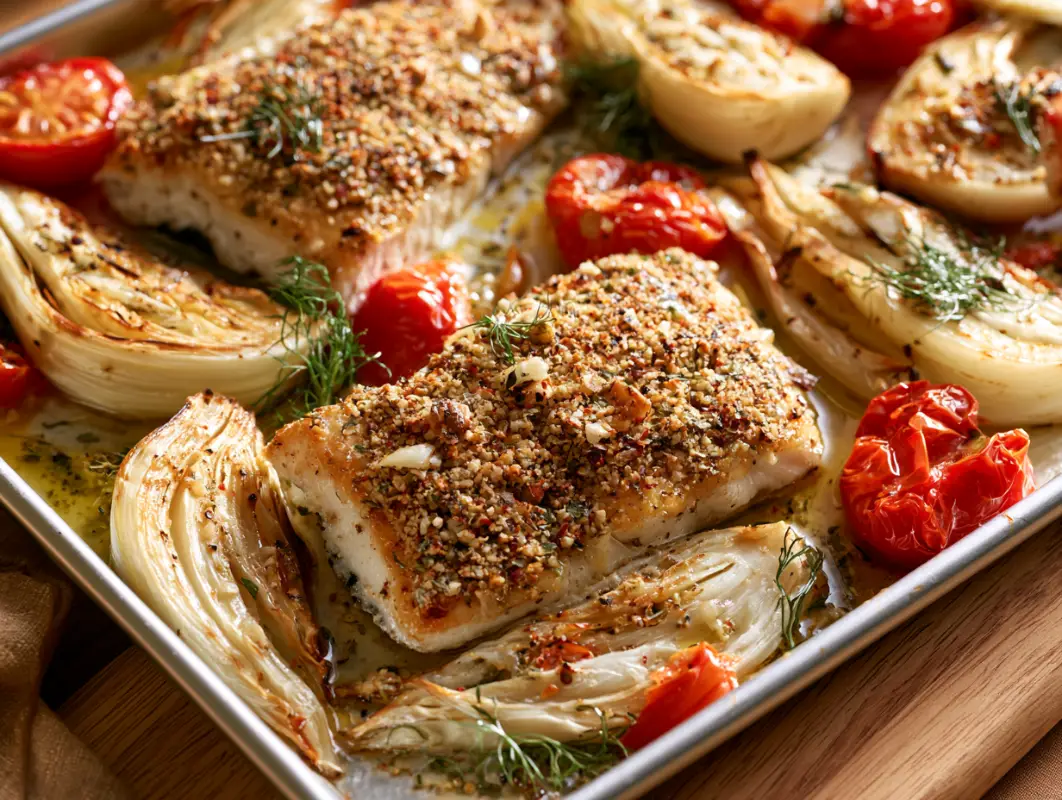
Sheet Pan Dukkah-Crusted Fish with Roasted Fennel
Ingredients
Method
- Preheat the oven to 425°F (220°C) and line a sheet pan with parchment paper. The high heat is what drives the golden crust on the dukkah. If making your own dukkah, toast and coarsely grind the hazelnuts, sesame seeds, coriander, cumin and fennel seeds with the pepper and salt.
- Toss the fennel wedges and halved cherry tomatoes with 2 tablespoons olive oil, the minced garlic, salt and pepper. Spread in a single layer on the sheet pan and roast for 10 minutes while you prep the fish — the fennel needs the head start to caramelize.
- Pat the fish fillets completely dry with paper towels. Brush each with the remaining olive oil, season with salt and a squeeze of lemon, then press a generous layer of dukkah — about 2 tablespoons per fillet — firmly onto the top so it adheres.
- After the fennel has had its 10 minutes, pull the pan out and nestle the crusted fillets among the fennel and tomatoes, leaving space between each one for air circulation.
- Return the pan to the oven and roast 12–15 minutes, until the fish reaches 145°F (63°C) and flakes easily and the dukkah crust is deeply golden. The fennel will be caramelized and the tomatoes jammy.
- Check doneness — the fish should feel firm but spring back slightly. Pull it at 140°F and let carry-over cooking finish the job. If the crust is browning faster than the fish is cooking, tent loosely with foil.
- While the fish roasts, whisk together the 2 tablespoons lemon juice, 1 tablespoon olive oil, chopped dill, chopped parsley, a pinch of salt and a crack of pepper for the lemon-herb drizzle.
- Rest the fish on the pan for 2 minutes so the proteins relax and it stays moist. Arrange the roasted fennel and tomatoes on plates and set the fish on top.
- Spoon the lemon-herb drizzle over each fillet, scatter the reserved fennel fronds and extra chopped herbs, and add lemon wedges for squeezing.
- Serve immediately, while the dukkah crust is at its crunchiest and the fennel at peak sweetness. Pair with couscous, quinoa or warm pita.
Notes
Frequently Asked Questions
Substitution & Technique Questions
What is dukkah and where do I buy it?
Dukkah (also spelled duqqa) is an Egyptian spice blend made from toasted nuts, seeds, and spices — typically hazelnuts, sesame seeds, coriander, and cumin. It’s crunchy, nutty, and aromatic. Find it at specialty grocery stores, Middle Eastern markets, or online. Making it at home is easy and lets you customize — I share my recipe in the card below!
Can I use frozen fish for this dukkah crusted fish recipe?
Absolutely! Just thaw fillets overnight in the fridge (never at room temp) and pat them extra dry before applying the crust. Frozen cod and halibut work beautifully and are budget-friendly. The key is removing all surface moisture so the dukkah adheres properly.
What if I have a nut allergy?
Make a nut-free dukkah using only seeds — sunflower seeds, pumpkin seeds, and sesame seeds with the same spice blend. You get the same crunch and flavor profile without any tree nuts. I’ve tested this version and it’s excellent. Some of my online course students prefer it!
Can I pan-sear instead of baking?
Yes, but the sheet pan method is easier for a complete meal. If you want a stovetop crust, sear crust-side down in a hot oiled skillet for 2 minutes, then flip and finish in a 400°F oven for 8-10 minutes. The oven roasts the fennel simultaneously though, which is the beauty of this sheet pan fish dinner.
Dietary, Nutrition & Meal Prep Questions
Is this sheet pan dukkah-crusted fish with roasted fennel keto-friendly?
Yes! As written, this is naturally low-carb and keto-friendly. The fish and dukkah contribute minimal carbs, and roasted fennel has only about 6g net carbs per serving. Skip the couscous side and serve with extra roasted vegetables or a green salad for a complete keto meal.
How much protein is in each serving?
Each serving provides approximately 28g of protein (from the fish plus the nuts and seeds in the dukkah). That’s over half of the recommended daily intake for most adults. Adding a quinoa side bumps it to about 36g. My Barcelona nutrition professors would approve of this balanced plate!
Can I meal prep the dukkah crust ahead of time?
Yes! Homemade dukkah stores in an airtight jar for up to a month at room temperature. Make a big batch and you’ll have weeknight-ready crusted fish dinner whenever you want. I keep a jar in my pantry at all times — it’s incredible sprinkled on everything from our Mediterranean breakfast bowl to roasted vegetables.
Is fennel safe for everyone to eat?
Fennel is generally safe and very nutritious! However, it can cause issues for people following a strict low-FODMAP diet or those with celery allergies (they’re in the same plant family). If fennel isn’t for you, swap with zucchini or bell peppers for this roasted fennel recipe.
What sides pair best with this for a complete Mediterranean meal?
My favorites are lemony couscous, warm pita with hummus, or a bright orange-fennel salad. For a heartier spread, add our spinach and feta pairing guide for a Greek-inspired combo, or keep it simple with steamed rice and a drizzle of tahini. This Mediterranean fish recipe is versatile enough for any pairing.
Nutritional Highlights & Final Thoughts
Why This Recipe Is Good for You
From my Cornell certificate training and Barcelona nutrition degree, here’s why this sheet pan dukkah-crusted fish with roasted fennel deserves a weekly spot in your rotation.
White fish provides complete protein with all essential amino acids and minimal saturated fat. The dukkah spice mix adds toasted hazelnuts (rich in vitamin E, a potent antioxidant) and sesame seeds (loaded with calcium and zinc — more calcium per tablespoon than milk!). The cumin and coriander seeds contain compounds that research links to improved digestion and reduced inflammation.
Roasted fennel delivers fiber for gut health, potassium for blood pressure regulation, and vitamin C for immune support. The olive oil provides oleic acid — the anti-inflammatory fat that makes the Mediterranean Diet so protective (the PREDIMED study showed a 30% reduction in cardiovascular events). All this in a 310-calorie serving. I’m a certified health coach, not a doctor — always consult your healthcare provider for personalized advice.
Let’s Cook Together!
I really hope this recipe inspires you to bring dukkah into your kitchen — it’s one of those ingredients that opens up a whole new world of flavor. Whether you’re a longtime Mediterranean food lover or just discovering it, this sheet pan dinner is the perfect entry point: simple, beautiful, and deeply nourishing.
Tag me on Instagram if you make it — I genuinely live for seeing your creations. Drop a comment below with your favorite variation. Did you go classic cod or try it with salmon? I read every single comment.
For more Mediterranean dinner magic, try our lamb shakshuka recipe, the creamy spinach and feta pasta, our one-pan roasted vegetables salmon, or finish the night with our easy tiramisu. Happy cooking, friends!