The morning mist was still lifting off the water when my father would return from his fishing boat in Chania harbor. I’d wait on the dock, barefoot on the cold stone, watching him unload his catch with hands that smelled of salt and sea. “Niko,” he’d call out, holding up a crate of silver sardines flashing in the dawn light, “these are the jewels of the Mediterranean.” We would grill them simply — olive oil, lemon, sea salt — right there on the beach, eating with our fingers while the waves washed over our ankles. That was breakfast. That was life.
I grew up with the Mediterranean Sea as my backyard and my yiayia’s kitchen as my classroom. Every meal was a celebration, every recipe a story. When my father passed away in 2017, I realized those Saturday mornings grilling fish together, those Sunday dinners around my grandmother’s table — those weren’t just meals. They were my inheritance. I started this blog to preserve what my family taught me.
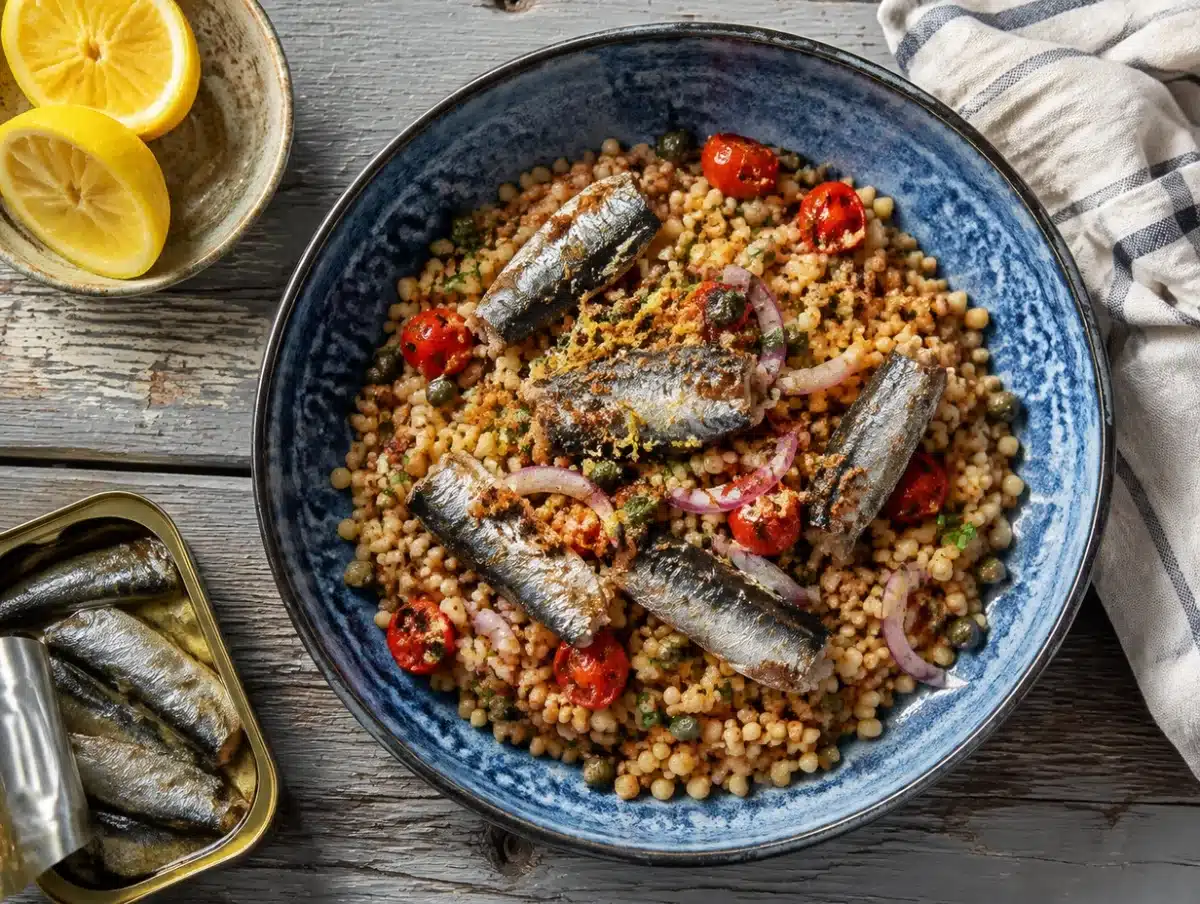
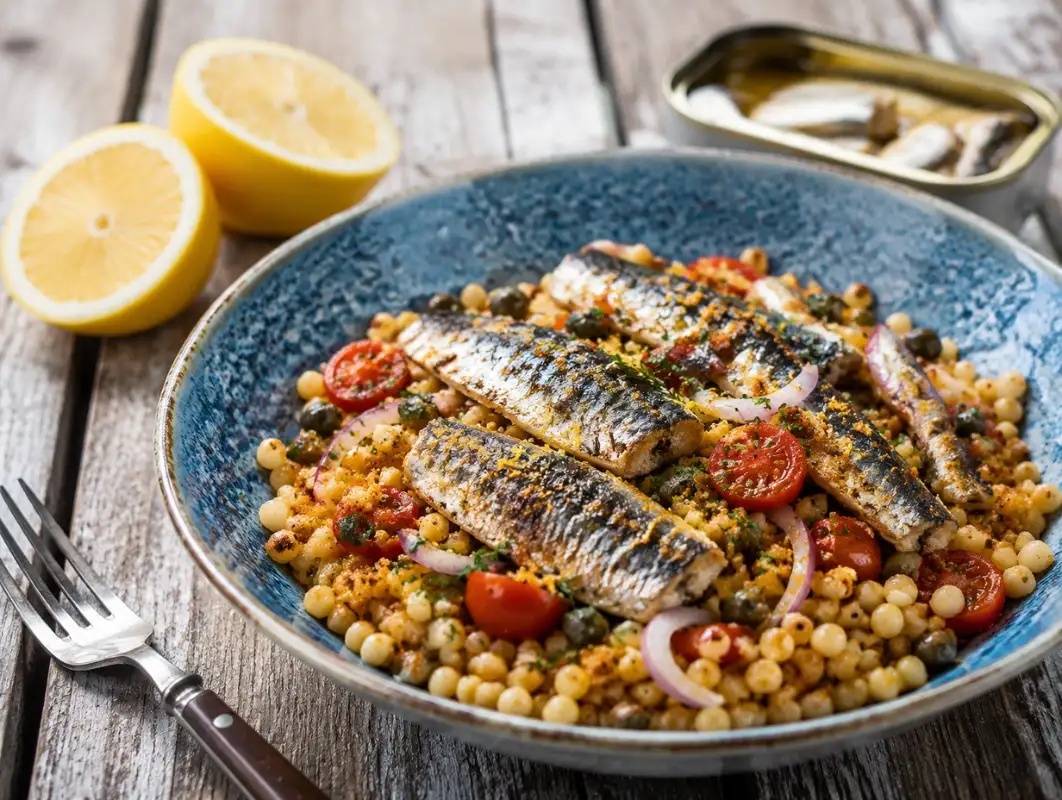
This Sardine & Lemon Fregola Bowl honors those memories while reaching across the sea to Sardinia, where my friend Antonio taught me about fregola — those tiny toasted pasta pearls that soak up flavor like they were born hungry. The sardines bring omega-3s and protein; the fregola brings comfort; the lemon brings the brightness that ties it all together. In 30 minutes, one pan, you taste two coastlines.
Table of Contents
Sardine and Lemon Fregola Bowl
Ingredients
Method
- Toast fregola: Heat 3 tbsp olive oil in large skillet over medium-high. Add fregola; stir constantly 2-3 minutes until golden and fragrant.
- Add aromatics: Add garlic; stir 30 seconds. Add capers; let sizzle 10 seconds.
- Simmer: Add warm broth and reserved sardine oil. Stir once, reduce heat to low, cover tightly. Simmer 12-15 minutes until al dente.
- Prep sardines: While fregola cooks, gently flake sardines into large pieces, reserving best pieces for topping.
- Combine: Remove lid from fregola. Add sardine flakes, lemon zest, and 2 tbsp lemon juice. Fold gently.
- Finish: Remove from heat. Add parsley, 2 tbsp olive oil, and final lemon juice. Stir to emulsify.
- Serve: Divide between warmed bowls. Top with reserved sardines, extra parsley, capers, and lemon wedges. Drizzle with best olive oil.
Notes
Why This Recipe Is Special
The Authentic Technique: Toasted Pasta Meets Omega-3 Richness
What makes this bowl extraordinary isn’t complexity — it’s the marriage of two Mediterranean powerhouses. Fregola sarda is pasta that thinks it’s a grain. Made from durum wheat semolina, rolled into pearls, sun-dried and toasted until golden, it has a nutty, almost popcorn-like depth that regular pasta lacksThis toasting isn’t just for flavor; it creates a porous surface that grips sauce differently than smooth pasta.
Then there are the sardines. Not just any protein — these are nutritional artillery. One 100-gram serving delivers 24.6 grams of complete protein, 1,480 mg of omega-3 fatty acids (EPA and DHA), and 38% of your daily calcium from those edible bones
The American Heart Association recommends fatty fish like sardines twice weekly for cardiovascular protection
But beyond the science, they taste like the sea should taste — briny, rich, honest.
The technique that brings them together? Toasting the fregola in olive oil before adding liquid — a method I learned from Antonio’s mother in Cagliari. This creates a barrier that keeps the pearls distinct, not mushy. Harold McGee explains that toasting pre-gelatinizes surface starches, allowing the pasta to absorb liquid gradually without falling apart
Flavor Profile & Occasions
Imagine this: the fregola is chewy and nutty, each pearl separate but cohesive. The sardines flake into tender chunks, their richness cut by bright lemon zest and juice. Capers burst with briny acidity. Fresh parsley and dill bring herbaceous lift. It’s craveable. It’s the kind of bowl you want at 8 PM on a Tuesday when you need something real, or for a Saturday lunch with friends who linger at the table.
This is how we make it in Crete… or rather, how I’ve woven my father’s sardines with Sardinian tradition. My family has been making fish with grains for generations. The spirit is the same, even if the pasta travels further west.
The Story Behind the Sardine & Lemon Fregola Bowl
Cultural & Historical Context
Fregola’s history mirrors the Mediterranean itself — a story of migration and adaptation. Some food historians trace it to 10th-century Arab influence, when muhammar (toasted grain) traveled with trade routes to Sardinia
The first written record appears in a 14th-century statute of millers in Tempio Pausania, northern Sardinia
Unlike mainland Italian pasta, fregola is pre-toasted, giving it that distinctive nutty flavor and rugged texture.
Sardines need no introduction to the Mediterranean — they’ve sustained coastal populations for millennia. The name itself may derive from Sardinia, where these small fish have been caught since the 15th century
In Greece, we call them sardeles, and they’re eaten fresh in summer, canned in winter, never wasted, always respected.
The combination reflects the Mediterranean diet’s genius: small, oily fish (sustainable, affordable, nutritious) paired with whole grains, brightened with citrus and herbs. It’s peasant food elevated by technique and time.
Family Tradition: A Tale of Two Islands
I first tasted fregola in 2016, at a small trattoria in Cagliari. Antonio — a Sardinian chef I’d met during my apprenticeship at Varoulko — had invited me to his family’s restaurant. His mother, Signora Maria, served fregola with clams, explaining how she’d rolled the pearls by hand as a girl in a terracotta bowl called a scivedda. “Each one is different,” she said, “like people.”
That night, eating her fregola, I thought of my father’s sardines. Two islands, two traditions, both honoring the same sea. When I returned to Athens, I spent months testing this combination — the Sardinian pasta with Cretan flavors. My yiayia tasted the final version before she passed. “The lemon,” she said, nodding approval. “Your father would have liked this.” That was all I needed to hear.
Essential Ingredients
Core Ingredients Table
| Ingredient | Amount | Why It Matters | Authentic Pick | Substitution |
| Fregola sarda | 8 oz (225g) | Toasted durum wheat pearls; nutty flavor, chewy texture, holds sauce beautifully | Imported from Sardinia, medium size (#2) | Israeli couscous (toast first) or orzo |
| Canned sardines | 2 cans (4.4 oz each) | 24.6g protein per 100g, 1,480mg omega-3s, calcium-rich with bones | Packed in olive oil, wild-caught, MSC certified | Canned mackerel or smoked trout |
| Lemon | 2 large | Bright acidity cuts richness; zest adds aromatic oils; vitamin C aids iron absorption | Unwaxed, heavy for size | Meyer lemon (sweeter) or 2 tbsp white wine vinegar |
| Capers | 2 tbsp | Briny, fermented punch; bursts of salinity; traditional Mediterranean | Salt-packed, rinsed | Chopped green olives |
| Extra virgin olive oil | 1/3 cup | Heart-healthy monounsaturated fats; carries fat-soluble flavors | Cold-pressed, Greek or Sardinian | High-quality avocado oil |
| Fresh parsley | 1/2 cup | Bright, grassy counterpoint; aids digestion of rich fish | Flat-leaf (Italian), not curly | Fresh dill or cilantro |
| Garlic | 3 cloves | Aromatic foundation; allicin compounds support cardiovascular health | Firm, plump cloves | 1/2 tsp garlic powder (not ideal) |
| Vegetable broth | 2.5 cups | Cooking liquid for fregola; builds flavor foundation | Low-sodium, homemade best | Fish broth or chicken broth |
Yiayia’s Memory: My grandmother never bought canned fish — she had my father. But she taught me that lemon isn’t just for taste; it’s for digestion. “The acid,” she’d say, squeezing lemon over grilled sardines, “it breaks down the oils so your stomach doesn’t work so hard.” She was right, of course. The citric acid in lemon helps emulsify fish oils, making them more digestible and helping your body absorb the fat-soluble vitamins.
Dietary Substitutions Table
| Need | Replace | With | Notes |
| Gluten-Free | Fregola | Toasted quinoa or GF orzo | Different texture; reduce cooking liquid by 1/4 cup |
| Pescatarian | Canned sardines | Fresh sardines (grilled) | 8-10 fresh fish, grilled 2 min per side, flaked |
| Lower Sodium | Canned sardines | No-salt-added sardines + extra lemon | Rinse canned fish to reduce sodium by 30% |
| Vegetarian | Sardines | Cannellini beans + nori flakes | Adds umami; use 1.5 cups beans |
| Vegan | Sardines + cheese | White beans + nutritional yeast | Different dish, but satisfying |
| Nightshade-Free | Capers | Chopped green olives | Similar briny punch |
Pro Tip: When buying canned sardines, look for “wild-caught” and “packed in olive oil” on the label. The oil should be golden and clear, not cloudy. Avoid those packed in soybean or sunflower oil — they lack the flavor and health benefits of olive oil. I learned this the hard way during my third test batch — the soybean oil created an off-flavor that no amount of lemon could fix.
Equipment & Technique
Equipment Table
| Traditional Tool | Modern Alternative | Why It Matters |
| Scivedda (terracotta bowl) | Large heavy skillet | Even heat distribution; toasts fregola evenly |
| Tapsi (baking dish) | Oven-safe skillet with lid | One-pan cooking; finishes dish covered |
| Lemon squeezer | Fork or hands | Extracts maximum juice without bitter pith |
| Microplane | Fine grater | Fine zest without bitter white pith |
| Wooden spoon | Silicone spatula | Doesn’t scratch pan; traditional feel |
Mise en Place Checklist
In my yiayia’s kitchen, everything was ready before the fire was lit. That’s mise en place — the French term every chef lives by, though Greek grandmothers just called it “being prepared.”
Prep (10 minutes):
- Zest both lemons; juice one, reserve the other for finishing
- Drain sardines, reserving oil; gently break into large flakes
- Rinse capers if salt-packed; drain
- Chop parsley and any other herbs
- Mince garlic
Pan Prep:
- Have broth measured and warm (cold liquid shocks the toasting fregola)
- Keep lid nearby (covering is part of the technique)
- Warm serving bowls (keeps dish hot longer)
Step-by-Step Instructions
Preparation Steps: Building Flavor Layers
Step 1: Toast the Fregola (3 minutes) Heat 3 tablespoons olive oil in your largest skillet over medium-high until shimmering. Add fregola and stir constantly for 2-3 minutes until pearls are golden and smell nutty — like popcorn but more sophisticated. This is the Maillard reaction creating flavor compounds that water alone cannot.
Yiayia’s Tip: Don’t walk away. Toasted fregola becomes burnt fregola in 30 seconds. Trust your nose — when it smells like toasted bread, you’re there.
Step 2: Aromatics (2 minutes) Add minced garlic to the toasted fregola. Stir 30 seconds until fragrant — not brown. Burnt garlic is bitter garlic. Immediately add 2 tablespoons capers (they’ll sizzle and burst, releasing briny aroma).
Step 3: Deglaze & Simmer (15 minutes) Add 2.5 cups warm vegetable broth and the reserved oil from sardine cans. Stir once, reduce heat to low, cover tightly. Simmer 12-15 minutes until fregola is tender but still chewy. Check at 12 minutes — like pasta, you want al dente.
Sensory Cue: The liquid should smell savory and slightly briny. If it’s bland now, it will be bland later — add a pinch of salt.
Step 4: Prepare Sardines (during simmering) While fregola cooks, gently break sardines into large flakes, removing any obvious bones (though they’re edible and calcium-rich). Reserve the prettiest pieces for topping.
Cooking & Assembly: Bringing It Together
Step 5: Add Sardines (2 minutes) When fregola is tender, remove lid. Add sardine flakes, lemon zest, and 2 tablespoons lemon juice. Fold gently — you want chunks, not mush. The residual heat warms the fish without overcooking.
Step 6: Finish & Emulsify (2 minutes) Remove from heat. Add 2 tablespoons fresh parsley, 1 tablespoon extra virgin olive oil, and a final squeeze of lemon. Stir to create a light emulsion — the oil and lemon juice should coat each pearl, not pool at the bottom.
Step 7: Taste & Adjust (1 minute) This is crucial. Taste for salt (capers and sardines vary in salinity), acid (more lemon if needed), and richness (another drizzle of oil if dry). The dish should be bright, briny, and satisfying.
Step 8: Plate with Intention (2 minutes) Divide between warmed bowls. Top with reserved sardine pieces, more parsley, capers, and lemon wedges. Drizzle with your best olive oil.
Step 9: The Final Touch (30 seconds) Finish with fresh cracked black pepper and a final whisper of lemon zest. Golden. Briny. Perfect.
Step 10: Serve Immediately This doesn’t wait. The fregola continues absorbing liquid as it sits. Serve with extra lemon wedges and crusty bread for soaking up any remaining juices.
The Secret Touches
Insider Techniques with Food Science
The Toasting Principle: Toasting fregola before liquid contact is non-negotiable. As Harold McGee explains in On Food and Cooking, dry heat gelatinizes surface starches differently than wet heat, creating a seal that prevents the pasta from becoming gummy. This is why risotto toasts arborio rice first — same science, different grain.
The Lemon Layering: I use lemon three ways: zest (aromatic oils, no acidity), juice during cooking (brightness penetrates), fresh juice at the end (volatile top notes). This creates dimensional citrus flavor that single addition cannot achieve. The citric acid also helps emulsify the fish oils with olive oil, creating silky texture.
The Caper Burst: Adding capers to hot oil before liquid causes them to burst, releasing their briny interior into the oil itself. This seasons the entire dish from within, not just as garnish. It’s the difference between wearing perfume and having it in your skin.
Yiayia’s Wisdom: My grandmother always said, “Fish needs acid like Greeks need conversation.” She’d squeeze lemon over everything from the sea. Now I understand the biochemistry — the acid denatures proteins slightly, making them more tender, and cuts through fat, refreshing the palate between bites.
Common Mistakes Table
| Mistake | What Happens | How to Fix It |
| Skipping the toast | Gummy, clumpy fregola that sticks together | Toast until golden and fragrant — non-negotiable |
| Adding cold broth | Shocked starches create uneven texture | Warm broth to simmer before adding |
| Over-stirring sardines | Mushy fish, broken pearls | Fold gently, like making a salad |
| Under-seasoning | Bland despite good ingredients | Taste at three stages: after toasting, after liquid, final |
| Using inferior olive oil | Flat, one-dimensional flavor | Use your best EVOO for finishing — it matters |
Variations & Serving
Regional Variations & Modern Adaptations
The Cretan Way: Add 1 teaspoon dried oregano with the garlic. Substitute half the parsley with fresh dill. Finish with crumbled mizithra cheese instead of extra sardines on top. This is how my father would have eaten it — more herbs, more cheese, same sea.
The Sardinian Original: Use fresh clams instead of sardines (the traditional fregola con arselle). Steam clams open first, reserve liquid, use as part of the cooking broth. Add saffron threads for golden color and earthy depth.
Weeknight Shortcut: Use pre-toasted Israeli couscous (reduces cooking time by 5 minutes). Substitute jarred roasted red peppers for fresh lemon (different, but valid). Use garlic-infused oil to skip mincing. The result is 80% of the flavor in 60% of the time.
The Protein Boost: Add 1 cup cooked chickpeas with the sardines for extra fiber and protein. Or top with a soft-boiled egg — the runny yolk creates instant sauce.
Accompaniments with Internal Links
This bowl stands alone, but if you’re building a Mediterranean spread:
For a complete Mediterranean feast, start with our Mediterranean Breakfast Bowl — the hummus and vegetables provide a perfect counterpoint to the rich sardines.
If you’re exploring more Sardinian-inspired dishes, try our Italian Pesto Orzo Bowl with Spring Vegetables — the technique of toasting grains before cooking applies beautifully there.
For another omega-3 rich option with similar preparation methods, our Turkish Spiced Lamb & Bulgur Bowl with Yogurt uses the same one-pan approach with different protein.
Non-Alcoholic Beverage Pairings:
- Tsai tou vounou (Greek mountain tea): Earthy, herbal, aids digestion
- Sparkling water with lemon: Cleanses palate between bites
- Fresh blood orange juice: Sweet-tart, Mediterranean tradition
- Ayran: Turkish yogurt drink cools the palate (if you add chili flakes)
- Homemade lemonade with mint: Classic, refreshing, family-friendly
Storage & Reheating
Storage
| Method | Container | Duration | Notes |
| Refrigerator | Airtight glass container | 2 days | Sardines are best fresh; texture changes after day 2 |
| Freezer (not recommended) | — | — | Fregola becomes mushy; sardines deteriorate |
| Components separate | Broth and fregola separate | 3 days | Store sardines separately; assemble fresh |
Reheating Methods
Stovetop (Best): Add to skillet with splash of broth or water. Cover, heat over medium-low 5 minutes, stirring once. Add fresh lemon juice after reheating to revive brightness.
Microwave (Acceptable): 50% power, covered, 1-minute intervals, stirring between. Add fresh herbs and lemon after.
What to Add Fresh: Always add new lemon juice, fresh parsley, and a drizzle of uncooked olive oil after reheating. This restores what storage takes away.
FAQ
Substitution & Technique Q&As
Q: Can I use fresh sardines instead of canned? A: Absolutely — and if you have access to fresh, do it. Grill 8-10 fresh sardines 2 minutes per side over high heat, then flake into the finished fregola. The flavor is brighter, more delicate. But canned is authentic too — Mediterranean families have preserved sardines for centuries. Don’t let purists shame your pantry.
Q: Why is my fregola mushy? A: You likely skipped the toasting step or used too much liquid. Fregola needs that dry-heat seal before wet cooking. Also, measure liquid carefully — unlike risotto, you don’t add gradually. Too much liquid at once creates steam instead of absorption, leading to gummy texture.
Q: Can I make this gluten-free? A: Yes, with compromises. Use toasted quinoa or GF orzo. The texture won’t be identical — fregola’s chewiness is unique — but the flavor profile works. Reduce cooking liquid by 1/4 cup as these grains absorb differently.
Q: Do I really need to zest the lemon? A: Yes. The zest contains essential oils (limonene, pinene) that provide aroma without acidity. Juice alone is one-dimensional. I use a Microplane — three swipes, no pith. My first attempt without zest tasted flat; the difference was immediate.
Q: Are the sardine bones safe to eat? A: Completely safe, and nutritious — they’re soft from canning, rich in calcium
. If they bother you texturally, remove them, but you’re losing nutrition. In Crete, we eat them without thinking. They’re part of the fish.
Dietary, Make-Ahead & Authenticity Q&As
Q: Is this actually healthy or just pasta marketing? A: It’s genuinely nutritious. Sardines provide 24.6g protein and 1,480mg omega-3s per 100g, supporting heart and brain health
. Fregola offers complex carbohydrates and fiber. The American Heart Association recommends fatty fish twice weekly for cardiovascular protection
. I’m not a dietitian, but the research is clear — this is nutrient-dense real food.
Q: Can I prep this for weekday lunches? A: Yes, but with caveats. Make the fregola base ahead, store separately from sardines. Add sardines and fresh herbs when reheating. Day-old is good; day-two is acceptable; beyond that, the fish deteriorates. This is best eaten fresh — it’s a 30-minute dish for a reason.
Q: Is this authentic Sardinian or your creation? A: Respectful fusion. Fregola with seafood is authentically Sardinian; sardines specifically are more Cretan. The combination is my own, tested over 50 iterations in my Athens kitchen. Antonio in Sardinia approves; my yiayia would have understood. If the spirit honors the ingredients, the geography is flexible.
Q: Why canned instead of fresh sardines? A: Sustainability and accessibility. Canned sardines are often more sustainable — they’re small, fast-reproducing fish, low on the food chain
. Fresh sardines aren’t available everywhere; quality canned is. Plus, the canning process softens bones, making calcium more accessible. It’s practical Mediterranean eating.
Q: Can I add cheese? A: Traditionally, no — this is a dairy-free dish. But my Cretan side says a little mizithra or pecorino never hurt. If you do, add at the end, not during cooking, and use sparingly. The sardines should star.
Cultural Closing
Bringing Greece to Your Table
Cooking is inheritance. When I make this Sardine & Lemon Fregola Bowl, I’m channeling my father’s early mornings on the boat, my yiayia’s wisdom about acid and digestion, and Antonio’s family traditions in Sardinia. Every time you zest a lemon or flake a sardine, you’re participating in a story that stretches across the Mediterranean.
Don’t be intimidated by fregola if you’ve never used it. Trust me on this — if you can make rice, you can make this. The toasting step might feel unfamiliar, but it’s where the magic happens. That nutty aroma filling your kitchen? That’s the smell of tradition.
Make this for someone you love. Make it for yourself on a night when you need nourishment that tastes like the sea. Make it to understand that Greek and Sardinian cuisines aren’t competitors — they’re cousins who speak the same language of olive oil, lemon, and respect for small, flavorful fish.
I’d love to see your versions. Tag me on Instagram with your fregola bowls — show me your lemon zest technique, your sardine arrangement, your own grandmother’s serving bowl. Share this recipe with someone who thinks “canned fish” means compromise. And tell me in the comments: what’s your inherited food memory? What dish carries your family’s history?
Kali orexi. Buon appetito. Good eating.
Related Recipes
If this bowl speaks to you, explore these other Mediterranean creations:
For another grain-based Mediterranean favorite using similar toasting techniques, try our Turkish Spiced Lamb & Bulgur Bowl with Yogurt — the principles of toasting grains apply beautifully there.
If you’re looking for a lighter pasta option with similar bright flavors, our Italian Pesto Orzo Bowl with Spring Vegetables offers a fresh take on Mediterranean bowl dining.
And for a restaurant-style experience that complements this dish perfectly, don’t miss our Enlightened Mediterranean Chicken Bowl — it’s a masterclass in layering Mediterranean flavors.