February 12, 2022. My first Valentine’s dinner attempt at duck breast à l’orange. What could go wrong? Everything. Greasy rubber skin, overcooked gray meat, and a sauce so bitter my girlfriend Claire actually spit it out. Like, into her napkin. In front of me. We ordered pizza.
Fast forward through seven more disasters (I documented them, yes), two kitchen burns from spattering fat, and one spectacular smoke alarm incident that had my neighbors knocking — I finally figured it out. The secret isn’t just technique. It’s understanding why the technique works.
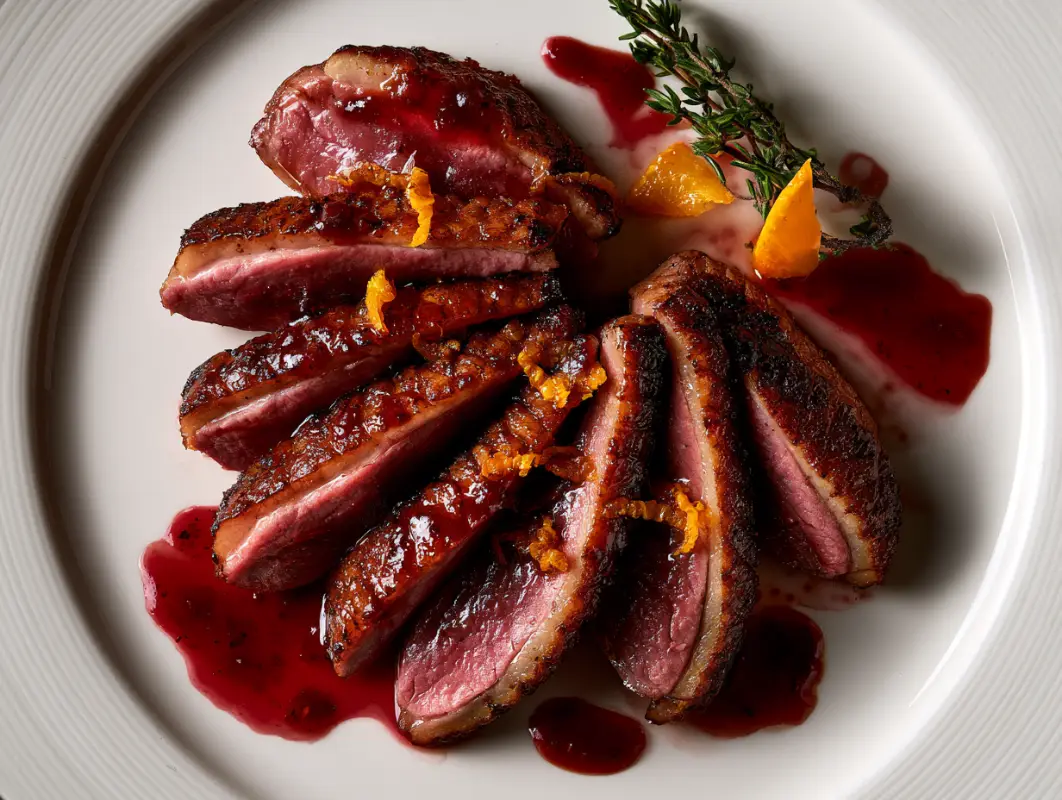
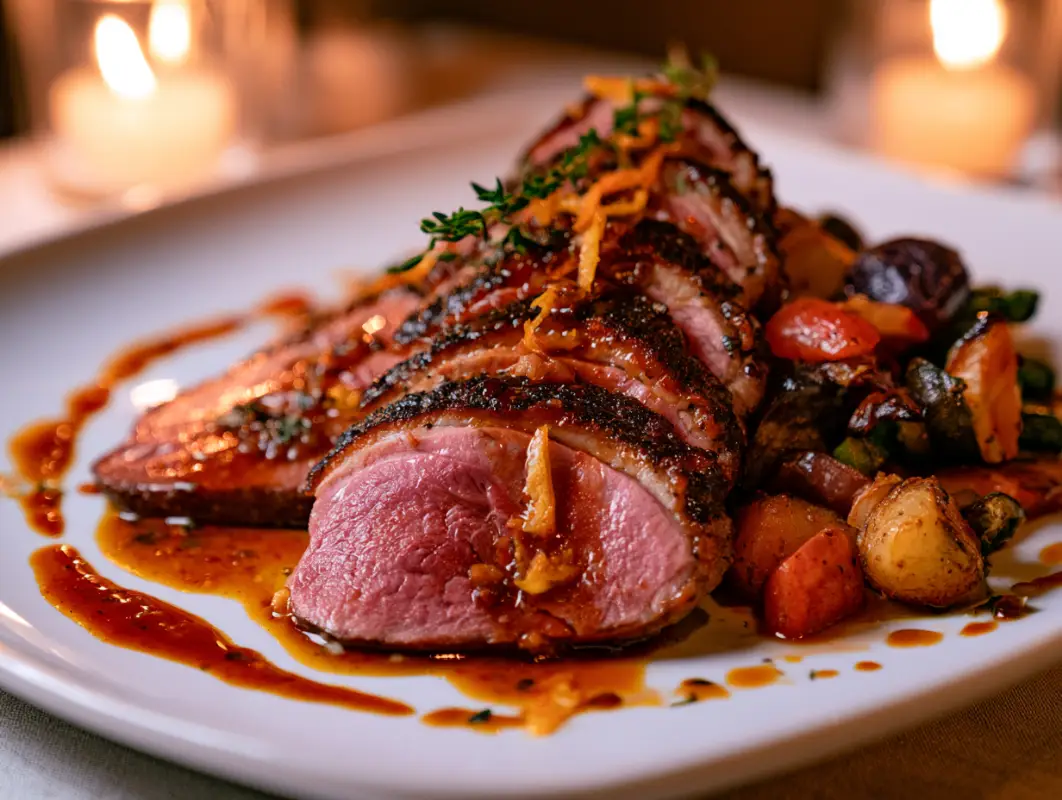
This Duck Breast à l’Orange With Blood Orange Glaze recipe will teach you the five game-changing secrets that transform rubbery disaster into restaurant-quality perfection: crispy golden skin, perfectly pink medium-rare meat, and a blood orange glaze that’s tangy-sweet without being cloying. No more pizza backup plans.
Table of Contents
Why Duck Breast à l’Orange Works Every Single Time
The Science of Crispy Skin and Tender Meat
Here’s what nobody tells you about duck breast à l’orange: it’s all about fat management. Duck breast has a thick layer of fat between the skin and meat — way more than chicken. That fat needs to render slowly, basting the meat while crisping the skin. Rush it? Greasy rubber (my first three attempts). Overcook trying to crisp it? Gray, dry meat (attempts four and five).
The magic formula: Start cold, cook slow, flip once. When you place scored duck breast skin-side down in a cold pan and bring it up to temperature gradually, the fat renders evenly without burning. About 12-15 minutes skin-side down over medium-low heat. The meat stays pink and juicy because it’s insulated by that fat layer until the very end.
Then there’s the blood orange glaze. Traditional duck à l’orange uses regular oranges, but blood oranges have this gorgeous ruby color and a more complex flavor — less sweet, more tart, with berry-like notes. The acidity cuts through the rich duck fat perfectly. It’s like how sweet potato soufflé balances sweet and savory flavors for elegant results.
When Duck Breast à l’Orange Shines Brightest
Perfect occasions: Valentine’s Day (redemption dinner attempt #8 was a success!), anniversaries, Christmas dinner when you want something fancier than turkey but less work than beef Wellington, or any time you want to impress someone who thinks you can’t cook. Duck breast à l’orange looks complicated but takes about 30 minutes start to finish.
I’ve served this for my parents’ anniversary (Dad said it was better than the French restaurant where he proposed), Claire’s birthday (we’re engaged now — coincidence?), and once for my foodie friend Marcus who’s a total snob about everything. He went silent after the first bite, then asked, “Who actually cooked this?” Best compliment ever, honestly. For more impressive French-inspired dishes, try our beef French onion soup casserole which also delivers restaurant elegance at home.
Essential Ingredients for Duck Breast à l’Orange
The Core Ingredient List with Quality Specifications
Ingredient quality matters more than technique here (controversial opinion, but true). Bad duck = disaster no matter how perfect your pan work. Here’s what you actually need:
| Ingredient | Amount (2 servings) | Quality Notes |
| Duck Breasts | 2 large (8-10 oz each) | Moulard or Pekin duck, skin-on, look for thick fat layer |
| Blood Oranges | 3-4 medium | Fresh juice plus zest, regular oranges work but less dramatic |
| Granulated Sugar | 3 tablespoons | For gastrique (caramel base), white sugar only |
| Apple Cider Vinegar | 2 tablespoons | Balances sweetness, red wine vinegar substitute OK |
| Chicken or Duck Stock | 1 cup | Low-sodium preferred, homemade best but store-bought works |
| Unsalted Butter | 2 tablespoons | Finishing richness, must be cold when added |
| Fresh Thyme | 3-4 sprigs | Optional but adds herbaceous note |
| Salt & Black Pepper | To taste | Kosher salt for seasoning, fresh cracked pepper |
Secret #1: Duck breast quality is everything. Moulard duck breasts (the ones from ducks raised for foie gras) are significantly better than regular Pekin duck — thicker, more fat, better flavor. They cost about twice as much but the difference is dramatic. My first five attempts used cheap duck breasts and I blamed myself. Attempt six with Moulard? Suddenly I could cook.
USA Substitutions and Ingredient Alternatives
Let’s talk substitutions, because not everyone has access to blood oranges in February:
| Original Ingredient | USA Substitute | Flavor Impact |
| Blood Oranges | Regular navel oranges + splash cranberry juice | Less tart, lighter color, but totally works |
| Duck Stock | Chicken stock + 1 tbsp soy sauce | Adds umami depth, closer to duck flavor |
| Apple Cider Vinegar | Red wine vinegar or sherry vinegar | Slightly different tang, equally good |
| Fresh Thyme | Dried thyme (1 tsp) or rosemary | Less aromatic but acceptable |
Can’t find duck breasts? Check Whole Foods, specialty butchers, or order from D’Artagnan online. They ship frozen and work great. Trader Joe’s sometimes carries them seasonally. In a pinch, you can use this technique on thick chicken breasts but it’s obviously not duck anymore. For another elegant poultry dish, see our Mediterranean chicken bowl which uses similar citrus techniques. You might also enjoy our Italian chicken casserole for weeknight-friendly poultry dinners.
The Foolproof Method for Duck Breast à l’Orange
Preparation: Scoring and Seasoning
Secret #2: Scoring technique makes or breaks the dish. You must score the fat (cutting through skin and fat but NOT the meat) to let fat render properly. Skip this? Greasy, rubbery skin. Cut too deep? Dry meat because juices escape. Here’s my exact method after ruining six duck breasts learning this:
Step 1: Pat duck breasts completely dry with paper towels. Moisture equals no crispy skin. Take your time here. Get them bone dry.
Step 2: Score the skin using a sharp knife at 45-degree angle, making diagonal cuts about half-inch apart. Then turn and cut the opposite direction, creating a crosshatch pattern. Press firmly but carefully — you want to cut through the fat layer but stop just before you hit pink meat. On attempt three, I cut too shallow and the fat didn’t render. Attempt four, too deep, and meat dried out. It’s a Goldilocks situation.
Step 3: Season ONLY the meat side with salt and pepper. Do not salt the skin — it draws out moisture and prevents crisping. This is the mistake I made on Valentine’s Day 2022. Never again.
The Critical Cooking Process
This is where magic happens or disaster if you rush it:
Step 4: Place duck breasts skin-side down in COLD pan. Yes, cold. Not preheated. This is crucial. Turn heat to medium-low. As pan heats gradually, fat renders slowly without burning. You’ll see fat pooling in the pan — that’s exactly what you want.
Step 5: Cook skin-side down for 12-15 minutes. Do not move them. Resist the urge to peek, flip, prod, or fiddle. Set a timer. Watch the sides of the breast — when you see that they’re about two-thirds cooked through with meat turning from dark red to pink, they’re ready to flip. The skin should be deep golden brown and crispy. If it sticks, it’s not ready. It’ll release when it’s done.
Step 6: Pour off most of the rendered fat (save it for roasting vegetables), flip duck breasts, and cook 3-5 minutes on the meat side. For medium-rare which is correct for duck, aim for internal temp of 130-135 degrees F. Duck is red meat, not poultry in terms of doneness. Overcooked duck is a tragedy.
Step 7: Rest duck breasts on a cutting board, skin-side UP, for 5-10 minutes. This redistributes juices. While they rest, make the blood orange glaze. The technique here is similar to our pesto chicken pasta bake in that resting time is non-negotiable for juicy results.
Step 8: Make the gastrique (fancy word for sweet-sour sauce base). In same pan with leftover fat, add 3 tablespoons sugar. Let it melt and turn amber (not dark brown which tastes bitter), about 3-4 minutes. Add 2 tablespoons vinegar — it will splatter and hiss, stand back. Add 1 cup stock, juice of 3 blood oranges, zest, and thyme. Simmer until reduced by half, about 8 minutes. Off heat, swirl in cold butter. Strain if desired. For more sauce-making techniques, check our crock pot cabbage soup which also builds deep flavors through reduction.
Creative Variations for Duck Breast à l’Orange
Four Delicious Flavor Variations
Once you’ve nailed the classic duck breast à l’orange, experiment. I’ve tried some wild things (attempt seven involved Grand Marnier and nearly set my kitchen on fire), but these variations actually work:
| Variation Name | What Changes | Flavor Profile |
| Cherry-Orange Duck | Add ½ cup dried cherries to sauce | Sweeter, more Christmas-y, pairs beautifully with duck |
| Spicy Orange Glaze | Add red pepper flakes + splash soy sauce | Asian-inspired, umami depth, subtle heat |
| Honey-Orange Version | Replace sugar with honey in gastrique | Floral sweetness, less sharp, more mellow |
| Citrus Medley Duck | Use 2 blood oranges + 1 grapefruit | More complex, bitter-sweet, sophisticated |
The Cherry-Orange version is my Christmas go-to. The dried cherries plump up in the sauce and add this gorgeous jewel-tone look. Marcus (the food snob friend) called it “suspiciously professional” which I’m taking as a compliment.
Dietary Modifications and Serving Options
Can you make duck breast à l’orange without sugar? Technically yes, but it’s not really à l’orange anymore. The gastrique (sugar-vinegar caramel) is fundamental to the dish. You could use honey or maple syrup, but the flavor changes significantly. I’ve tried stevia (disaster), monk fruit (weird aftertaste), and just skipping the sweet entirely (too harsh). Stick with sugar or honey.
Gluten-free: Duck breast à l’orange is naturally gluten-free as long as your stock is gluten-free (most are). Check labels if using store-bought.
Lower-calorie version: Remove duck skin before cooking and pan-sear the skinless breast. You lose the crispy skin experience, which is tragic, but you cut about 200 calories per serving. Use less butter in the sauce. It’s not the same, but it works.
Serving suggestions: Pair duck breast à l’orange with roasted root vegetables, creamy polenta, or mashed potatoes to soak up that glaze. Green beans work great for color contrast. For similar elegant sides, try our sweet potato puree which has that same restaurant-quality feel. Also see our chickpea stuffed sweet potatoes for a Mediterranean-inspired vegetable side.
Storage and Serving Strategies for Duck Breast à l’Orange
Storage Techniques and Make-Ahead Tips
Secret #3: Duck breast à l’orange does NOT reheat well. That crispy skin you worked so hard for? Turns soggy in the microwave or even the oven. The meat dries out. If you must make it ahead, here’s the strategy:
| Storage Method | How Long | Reheating Tips |
| Cooked Duck (Fridge) | 2-3 days max | Slice cold, serve at room temp, or sear briefly to warm |
| Orange Sauce (Fridge) | 5 days | Reheats beautifully, may need splash of stock to thin |
| Raw Duck (Fridge) | 1-2 days | Cook from cold for best results, pat very dry first |
| Rendered Duck Fat | 3 months fridge, 6 months freezer | Use for roasting veggies, frying eggs, making confit |
My actual strategy for dinner parties: Score and season duck breasts in advance (up to 4 hours ahead), refrigerate. Make sauce completely ahead (reheats great). When guests arrive, cook duck fresh. Takes 25 minutes and you can make small talk while doing it. Looks impressive, actually manageable.
Perfect Pairings and Plating
| Occasion | Recommended Sides | Beverage Pairing |
| Romantic Dinner | Roasted asparagus, pommes Anna | Sparkling cider, cranberry spritzer |
| Holiday Feast | Glazed carrots, herb stuffing, green beans | Sparkling grape juice, hot apple cider |
| Dinner Party | Creamy polenta, sautéed spinach | Pomegranate juice, iced tea |
| Special Anniversary | Truffle mashed potatoes, haricots verts | Sparkling white grape juice |
For Valentine’s redemption dinner (attempt eight, February 2023), I served duck breast à l’orange with roasted baby potatoes and green beans. Simple sides let the duck shine. Claire was appropriately impressed. For more elegant vegetable sides, try our crispy baked zucchini fritters which add textural contrast. Our Mediterranean salads collection also pairs beautifully with rich duck.
Nutritional Profile of Duck Breast à l’Orange
Full disclaimer: I’m not a nutritionist. But I can tell you what’s in duck breast à l’orange and why it’s not just indulgent — it’s got legitimate nutritional value too.
| Macronutrient | Per Serving | Notes |
| Calories | 420 | With sauce and butter, reasonable for special occasion meal |
| Protein | 34g | Duck is protein-dense, keeps you satisfied |
| Total Fat | 26g | Mostly monounsaturated, heart-healthy fats |
| Saturated Fat | 8g | Higher than chicken but rich in flavor |
| Carbohydrates | 18g | From orange juice and sugar in glaze |
| Fiber | 1g | Minimal, from orange zest |
| Vitamin/Mineral | Amount | Health Benefit |
| Iron | 35% DV | Duck is exceptionally high in iron, supports energy |
| Vitamin B12 | 18% DV | Essential for nerve function and red blood cells |
| Selenium | 22% DV | Antioxidant, supports thyroid function |
| Vitamin C | 45% DV | From blood oranges, immune support |
| Zinc | 16% DV | Immune health, wound healing |
Duck vs chicken: Duck has more iron, more B vitamins, and yes, more fat — but it’s mostly monounsaturated fat (the good kind, like in olive oil). Duck is technically red meat despite being poultry, which is why it’s served medium-rare. The blood oranges add serious vitamin C and antioxidants.
Is duck breast à l’orange healthy? It’s not health food, but it’s nutrient-dense for a special occasion meal. High protein, good fats, real food ingredients. Skip the bread basket and you’ve got a relatively balanced plate. For more nutrient-focused dishes, see our Mediterranean chicken bowl which delivers similar protein with lighter preparation.
Duck Breast à l’Orange with Blood Orange Glaze
Ingredients
Method
- Pat the duck breasts completely dry with paper towels — any moisture will stop the skin from crisping.
- Score the skin with a sharp knife at a 45-degree angle, making diagonal cuts about half an inch apart, then cut the opposite way to create a crosshatch. Cut through the fat but stop just before the pink meat.
- Season only the meat side with salt and pepper. Salting the skin draws out moisture and prevents crisping.
- Place the duck breasts skin-side down in a cold, unheated pan, then turn the heat to medium-low so the fat renders slowly as the pan warms.
- Cook skin-side down for 12–15 minutes without moving them. The skin should be deep golden and crisp, and will release from the pan on its own when it is ready.
- Pour off most of the rendered fat and save it, flip the breasts and cook 3–5 minutes on the meat side to an internal temperature of 130–135°F for medium-rare.
- Rest the duck skin-side up on a cutting board for 5–10 minutes.
- Make the gastrique in the same pan: add the sugar and let it melt to an amber caramel, about 3–4 minutes. Stand back and add the vinegar, then the stock, blood orange juice, zest and thyme. Simmer until reduced by half, about 8 minutes, then take off the heat and swirl in the cold butter. Strain if you like and spoon over the sliced duck.
Nutrition
Notes
Tried this recipe?
Let us know how it was!Frequently Asked Questions About Duck Breast à l’Orange
How do you cook duck breast without it being tough?
Cook it medium-rare (130-135°F internal temp) and always rest it. Duck is red meat — overcooking makes it tough and chewy. My first attempt went to 165°F like chicken and it was inedible. Also, slice against the grain when serving. If your duck is still tough after proper cooking, it might be the quality — wild duck or old duck can be naturally tougher than farmed Moulard.
Why do you start duck breast in a cold pan?
Cold start lets fat render gradually without burning the skin. If you start in a hot pan, the outside burns before the fat renders, leaving you with charred skin and greasy meat underneath. The slow temperature climb (cold pan to medium-low heat) renders fat evenly over 12-15 minutes. This is crucial and non-negotiable. Hot start was my mistake on attempts two and three.
Can you use regular oranges instead of blood oranges?
Yes, absolutely. Blood oranges look more dramatic (gorgeous ruby color) and taste slightly more tart with berry undertones, but regular navel oranges work perfectly fine. I’ve made this with both many times. For visual drama with regular oranges, add a splash of cranberry juice to the sauce — gives that pink hue.
How do you score duck breast properly?
Use a very sharp knife and make diagonal cuts through the skin and fat layer (about half-inch apart), then turn and cut the opposite direction creating a crosshatch pattern. Press firmly but carefully — you want to cut through fat but stop just before hitting the pink meat. If you cut into the meat, juices escape and it dries out. Too shallow and fat doesn’t render properly. It’s a feel thing you develop after a few attempts.
What is gastrique and why do you need it?
Gastrique is a French sauce technique — sugar caramelized then deglazed with vinegar, creating a sweet-tart base. It’s essential to duck à l’orange because it balances the rich fatty duck with brightness and acidity. Without the vinegar, the sauce is cloying. Without the sugar caramel, it’s too harsh. The gastrique creates that perfect sweet-sour harmony that makes duck à l’orange iconic.
Can you make duck à l’orange with chicken instead?
Technically yes but it’s not the same dish. Chicken doesn’t have the rich flavor or fat content of duck. You’d need to use chicken thighs (not breast — too dry) and add butter or oil to the pan since chicken doesn’t render fat like duck. It would be “chicken with orange sauce” which is tasty but not duck à l’orange. The whole point is that fatty, gamey duck flavor contrasting with bright citrus.
Why does my duck skin stay rubbery?
Three common reasons: 1) You didn’t score the skin properly, trapping fat underneath. 2) You started in a hot pan instead of cold, cooking the outside before fat rendered. 3) You moved the duck around too much — let it sit undisturbed skin-side down for the full 12-15 minutes. Also check that your duck breast isn’t wet when it goes in the pan. Pat it completely dry first.
Pairing and Serving Ideas for Duck Breast à l’Orange
Complete Menu Combinations
Duck breast à l’orange is rich and intense. You need sides that balance that richness without competing for attention. Here’s what actually works based on eight dinner parties and one very successful Valentine’s redemption:
| Menu Type | Complete Pairing | Why This Works |
| Classic French | Duck + pommes Anna + haricots verts | Traditional pairing, potatoes soak up sauce, green beans add freshness |
| Modern Elegant | Duck + truffle polenta + roasted beets | Creamy polenta base, earthy beets complement orange |
| Winter Holiday | Duck + glazed root vegetables + brussels sprouts | Seasonal veg, caramelization echoes sauce sweetness |
| Simple Impressive | Duck + mashed potatoes + sautéed spinach | Easy sides that let duck shine, very doable |
For Valentine’s redemption 2023, I went simple: duck breast à l’orange, roasted fingerling potatoes with thyme, and steamed green beans with lemon. Claire loved it. Sometimes simple is smarter. For other impressive mains, try our French onion chicken rice casserole which delivers similar French elegance with less stress.
Beverage Pairings and Presentation
Non-drinking beverage pairings for duck breast à l’orange:
Sparkling cranberry juice — The tartness mirrors the orange glaze, bubbles cleanse the palate between bites. Serve in champagne flutes to feel fancy.
Pomegranate juice (diluted with sparkling water) — Rich, tannic, fruity notes complement duck’s gamey flavor. Mix 1 part pomegranate juice to 2 parts sparkling water.
Black currant tea (hot or iced) — Slightly astringent, fruity, sophisticated. Serve in a nice teapot for dinner party drama.
Blood orange soda (Sanpellegrino makes one) — Echoes the sauce flavors, fun and unexpected.
Plating presentation: Slice duck breast on the bias (diagonal cuts) to show off that perfect pink center. Fan slices on plate. Spoon blood orange glaze over and around duck. Add your sides. Garnish with orange zest or fresh thyme if you’re feeling fancy. The visual is important — this is date night food, make it look good.
For more special occasion dinners, pair with our whipped feta dip as an appetizer. Also see our easy tiramisu for the perfect French-Italian fusion dessert to follow duck.
Master Your Own Perfect Duck Breast à l’Orange
Your Path to Duck à l’Orange Success
After eight failed attempts, two kitchen burns, one smoke alarm incident, and a Valentine’s dinner that ended in pizza delivery, here’s what I finally learned about duck breast à l’orange: technique beats luck every time. You can’t wing it (pun intended). But you also don’t need culinary school. You need to understand why each step matters.
The five secrets I’ve shared — quality duck matters, proper scoring technique, cold pan start, medium-rare doneness, and balanced gastrique — aren’t random tips. They’re the fundamental principles that separate greasy rubber from restaurant-quality duck breast à l’orange. Master these and you can make this dish confidently for any special occasion.
That blood orange glaze with its ruby color and perfect sweet-tart balance? The crispy golden skin that shatters under your fork? The perfectly pink meat that’s tender and juicy? All achievable. I promise. If I can go from Valentine’s disaster to engagement dinner success, so can you.
Share Your Duck à l’Orange Journey
I want to hear about your duck breast à l’orange attempts. Did you nail it first try? (Lucky.) Did your skin stay rubbery? Did you accidentally overcook it to gray? Did someone actually spit out your bitter sauce like Claire did on my first attempt?
Drop a comment below with your duck story. Share photos of that gorgeous pink center and crispy skin. And if something went wrong, tell me. I’ve probably made that exact mistake and can help you fix it for next time. After eight attempts, I’ve seen every possible duck disaster.
For more impressive French-inspired dishes, explore our complete Mediterranean recipe collection where classic techniques meet modern approachability. And if you loved the sweet-tart balance of duck à l’orange, try our Mediterranean chicken bowl which uses similar citrus brightness in a weeknight-friendly format.
Remember: your first duck breast à l’orange might not be perfect. Mine was catastrophically bad. But by understanding the science behind the technique — why cold start matters, why scoring is crucial, why medium-rare is correct — you’ll improve dramatically with each attempt. And when you finally nail it? When that crispy skin shatters and the pink meat is tender and the blood orange glaze is perfectly balanced? That feeling is worth every failed attempt.