So there I was at 11:47 PM on March 23rd, 2024, absolutely starving after a disaster of a dinner party (don’t ask about the soufflé… just don’t), and my fridge looked like the apocalypse had visited. Like, I had half an onion, suspicious yogurt, and exactly three eggs.
But then I remembered something my Italian roommate Lucia told me five years ago when she caught me ordering pizza at midnight for the third time that week: “Why you waste money? Make aglio e olio!”
I honestly thought she was messing with me. How could six ingredients create something that tasted like I’d spent actual effort? Twenty-one minutes later (I timed it because I’m weird like that), I was eating what is hands-down the most elegant simplicity I’ve ever put in my mouth.
I’ve made this Italian pantry pasta forty-seven times since that night. Yes, forty-seven. I may have a problem.
Here’s why spaghetti aglio e olio will ruin all other quick pasta for you forever.
Table of Contents

Spaghetti Aglio e Olio in 20 Minutes
Ingredients
Method
- Instructions
- Boil the Water: Fill your largest pot with 4-5 quarts water. Add 2 tablespoons kosher salt (yes, that much). Bring to a rolling boil over high heat. This takes about 10 minutes, so start here first.
- Prep While Waiting: While water heats, thinly slice garlic cloves. Aim for 1/8 inch thickness, as even as possible. Chop parsley. Set out a 2-cup measuring cup for pasta water. Get your tongs ready.
- Cook Spaghetti: Add spaghetti to boiling water. Stir immediately to prevent sticking. Set timer for 2 minutes LESS than package directions (usually 9-10 minutes for al dente). Stir occasionally.
- Start Garlic Oil (5 minutes after pasta goes in): In your largest skillet, combine cold olive oil, sliced garlic, and red pepper flakes. Place over MEDIUM-LOW heat. Watch carefully as garlic begins to sizzle gently – tiny bubbles, not violent popping.
- Toast the Garlic: Cook, swirling pan occasionally, for 3-5 minutes until garlic is fragrant and turns light golden blonde. DO NOT let it brown deeply or it will be bitter. The moment it looks light gold, remove from heat immediately.
- Reserve Pasta Water: Before draining pasta, scoop out 2 cups of pasta water with measuring cup. Set aside. This is crucial – don’t skip!
- Combine (Mantecare): Drain pasta. Return empty pot to turned-off burner. Add pasta back to pot. Pour garlic oil mixture over pasta. Add 1/2 cup reserved pasta water.
- Toss Vigorously: Using tongs, toss pasta energetically over medium heat for 2-3 minutes. The motion plus heat plus starch creates an emulsion. Pasta should look glossy and coated, not oily. Add more pasta water 1/4 cup at a time if needed – sauce should coat spaghetti but not pool at bottom.
- Finish: Remove from heat. Add chopped parsley and toss once more. Taste and adjust salt. Add several grinds of fresh black pepper.
- Serve Immediately: Divide among warmed pasta bowls. Serve with Parmesan on the side if desired (though not traditional). Eat while hot – this doesn’t wait well.
Notes
- Room temperature: Never. Garlic oil at room temp = botulism risk after 2 hours
- Refrigerate: Up to 2-3 days in airtight container, though sauce will separate
- Reheat: Add 2-3 tablespoons water to pan, heat gently while tossing to re-emulsify
- Freeze: Not recommended – texture suffers significantly
- This is truly a “make when you want to eat” dish
- Can pre-slice garlic up to 24 hours ahead (store covered in fridge)
- Can measure ingredients in advance
- Cannot successfully make the full dish ahead
- Pasta: Linguine, fettuccine, or bucatini work well
- Olive oil: Must be extra virgin – quality matters here
- Garlic: Fresh only – jarred will burn immediately
- Red pepper: Fresh peperoncini can replace flakes (1-2 whole peppers)
- Parsley: Can use fresh basil instead, or omit
- Vegan: Already vegan if using dried pasta and skipping Parmesan
- Gluten-Free: Use GF spaghetti; cook 1 minute less than package says
- Low-Carb: Replace pasta with zucchini noodles (salt and drain first)
- Low-Oil: Minimum 1/3 cup oil needed for emulsion; less won’t work
- Slice garlic evenly so it cooks uniformly
- Start garlic in COLD oil on medium-low heat
- Watch garlic constantly – it burns in seconds
- Don’t skip the vigorous tossing – this creates the sauce
- Pasta water is non-negotiable for emulsion
- Serve immediately – sauce breaks as it cools
- Burning garlic (too high heat, not watching)
- Greasy pasta (didn’t emulsify with pasta water)
- Bitter flavor (burnt garlic)
- Too oily (didn’t toss enough or add pasta water)
- Mushy pasta (cooked too long)
Why This Spaghetti Aglio e Olio Works
The Chemistry of Culinary Magic
Okay, so here’s the thing nobody tells you about this Naples pasta recipe: it’s basically edible science. When you slowly toast garlic in olive oil, you’re activating allicin compounds that create this sweet, nutty flavor instead of that harsh raw garlic bite. The Italians have been doing this for literally centuries in what they call “cucina povera” (poor kitchen cooking), but honestly? There’s nothing poor about this taste.
The real magic happens when you add that starchy pasta water to the garlicky oil. The starches act as an emulsifier (fancy word alert!), binding the water and oil together into this silky, glossy sauce instead of a greasy mess. It’s the same science behind a proper vinaigrette, except you’re creating it accidentally while making dinner. Food scientist Harold McGee explains this emulsification process in “On Food and Cooking” – basically, you’re a chemistry genius without even trying.
When to Serve This Midnight Pasta Masterpiece
This is your emergency pasta. Your “the grocery store is closed and I’m hungry” pasta. Your “it’s 1 AM and I just got home” pasta (hence the nickname midnight pasta in Italy). I serve this for everything from Tuesday night solo dinners to impressing dates who think I’m fancy. Pro tip: nobody needs to know it took 20 minutes. Let them think you slaved away. I also love making this Greek Sheet Pan Chicken Dinner when I want something more substantial, but honestly, aglio e olio is perfection in its simplicity.
Essential Ingredients
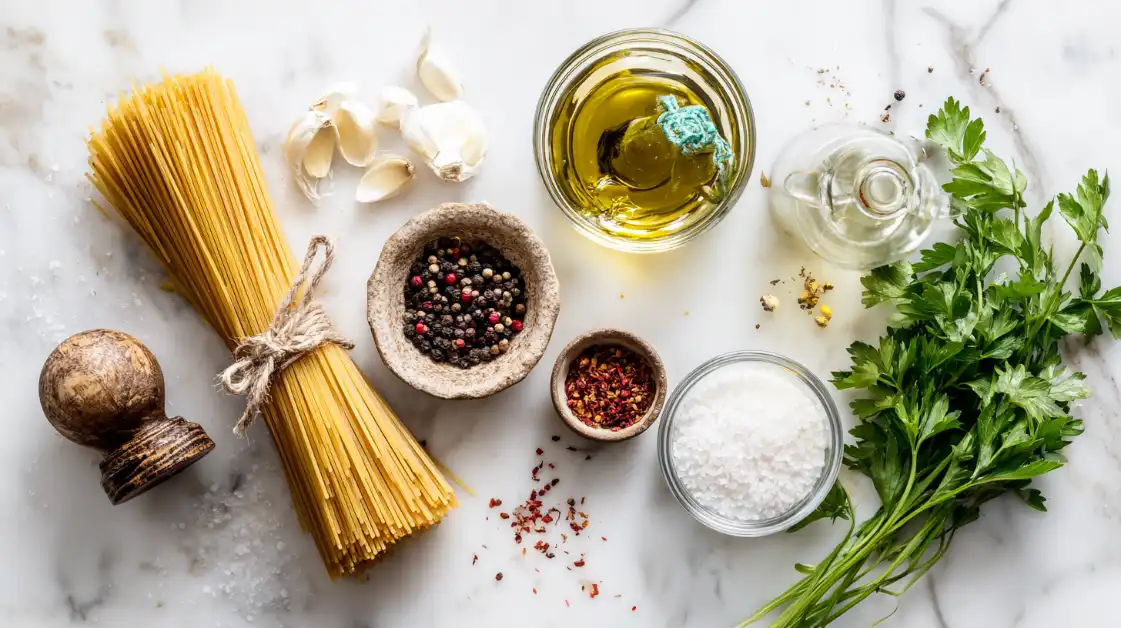
The Sacred Six: No Compromises Allowed
Listen, this authentic aglio olio has six ingredients. SIX. And you probably have four of them right now. Here’s the non-negotiable list:
For Perfect Garlic Olive Oil Pasta:
- 1 pound spaghetti (not just any pasta – we’ll talk about this)
- 1/2 cup extra virgin olive oil (this is NOT the time for that $4 bottle, folks)
- 8-12 garlic cloves, thinly sliced (I use 12 because I have no chill)
- 1-2 teaspoons red pepper flakes (or 2 fresh peperoncini if you’re fancy)
- Salt (for pasta water – be generous, like ocean-level generous)
- Fresh parsley, chopped (optional but honestly, why wouldn’t you?)
- Reserved pasta water (this is THE secret ingredient, not optional)
The garlic must be sliced, not minced. This is crucial. Minced garlic burns in like 30 seconds and turns bitter, and then you’re just sad and hungry. Sliced garlic has more surface area for even browning and won’t incinerate itself.
The Oil Situation (I Have Opinions)
Your olive oil needs to be good enough to dip bread in. I’m serious. This isn’t a stir-fry where the oil is just a cooking medium – it IS the sauce. I use a peppery Tuscan extra virgin that costs like $18 a bottle, and it’s worth every penny. If it tastes like nothing or (worse) like metal, your aglio e olio will taste like sadness drizzled over noodles.
Quality Comparison Chart
| Ingredient Tier | What You Get | Worth It? |
|---|---|---|
| Grocery store dried spaghetti | Totally fine, feeds you well | Yes – De Cecco or Barilla are great |
| Bronze-die extruded pasta | Sauce grabs better, rough texture | Yes if you can find it |
| Mediocre olive oil ($5-8) | Acceptable but bland | Only in emergencies |
| Good EVOO ($15-25) | Transforms the entire dish | ABSOLUTELY |
| Jarred pre-minced garlic | Will 100% burn and ruin everything | NO. Hard no. |
USA-Friendly Substitutions:
- Can’t find fresh peperoncini? Red pepper flakes work perfectly (this is what I use anyway)
- No fancy olive oil? Use the best you have, but consider upgrading next time
- Out of parsley? Skip it, or try fresh basil (controversial but tasty)
The secret weapon? That pasta water. It has starches that create the sauce emulsion. Without it, you just have oily spaghetti, and that’s basically a crime against Italian cooking. This is similar to how we make Spinach and Feta Pasta – the pasta water is everything.
The Foolproof Method
Preparation Phase (5 minutes, actually)
Here’s where most people mess up: they rush. DON’T. Put your largest pot of water on to boil first – like, the biggest pot you own. Add enough salt that you taste it and think “that seems like too much salt” (it’s not, trust me). While that’s heating, slice your garlic. Thin and even slices, like you’re auditioning for a cooking show. Thickness matters because cooking time matters because burnt garlic matters (and by “matters” I mean “will ruin your entire night”).
Chop your parsley if using. Have a measuring cup ready for pasta water. Get your tongs out. Mise en place, as the French say (even though this is Italian, but whatever, being organized is universal).
Critical timing note: This whole thing moves FAST once you start. Like, you cannot walk away to check Instagram. I learned this the hard way when I burnt an entire pan of garlic while looking at pictures of someone’s vacation. Don’t be me.
Main Cooking Method (15 minutes of actual cooking)
Step 1: Cook the Spaghetti (9-11 minutes)
Once water is boiling aggressively, add your spaghetti. Stir immediately so it doesn’t stick together. Set a timer for 2 minutes LESS than the package says. We’re going for just-before-al-dente because the pasta finishes cooking in the sauce. This is important. Write it down. Tattoo it somewhere.
Before draining, SCOOP OUT 2 CUPS OF PASTA WATER. I cannot stress this enough. I keep a measuring cup on the counter so I don’t forget, because I’ve forgotten approximately eight times and cried each time.
Step 2: The Garlic Oil (Start this 5 minutes after pasta goes in)
Here’s where technique matters. Add olive oil to your largest skillet (cold pan, cold oil). Add sliced garlic and red pepper flakes. Turn heat to MEDIUM-LOW. Not medium. Not low. Medium-low.
Now just… watch it. Swirl the pan occasionally. The garlic should sizzle gently – tiny bubbles, not violent popping. You want it to slowly turn golden, almost blonde, around 3-5 minutes. The moment it looks light gold, turn off the heat. Residual heat will keep cooking it.
Step 3: The Marriage (2-3 minutes)
This is called “mantecare” in Italian, and it’s where magic happens. Using tongs, transfer the not-quite-done spaghetti directly from the water into the garlic oil. Some pasta water will come with it – that’s perfect.
Add 1/2 cup of reserved pasta water. Now toss everything vigorously over medium heat. Like, really toss it. The motion plus heat plus starch creates an emulsion. Add more pasta water if it looks dry. The pasta should look glossy and coated, never oily or watery.
Pro tips from the forty-seven times I’ve made this:
- If garlic starts browning too fast, remove pan from heat immediately and add a splash of cold pasta water
- The sauce should coat the back of a spoon lightly – not thick, not thin
- If you smell burning garlic even slightly, start over (I’m serious, burnt garlic is bitter and terrible)
- Keep pasta water nearby for the first few bites – you might need to loosen the sauce
Step 4: Finish and Serve (1 minute)
Kill the heat. Add chopped parsley. Toss one more time. Serve immediately in warm bowls. Do NOT let this sit – the oil will separate as it cools and you’ll be sad.
This technique is similar to what we do with our Mediterranean Chicken Bowl, where timing and temperature control are everything. The difference is, aglio e olio is even more unforgiving.
Creative Variations
Beyond the Basic (But Still Keeping It Simple)
Look, purists will tell you that true spaghetti aglio e olio has exactly
five ingredients and zero modifications. Those purists can fight me. Here are the variations I’ve tested that don’t destroy the soul of the dish:
| Variation Name | Key Addition | Best For |
|---|---|---|
| Aglio Olio e Peperoncino | Extra chili heat + fresh peppers | Spice lovers and midnight regrets |
| Breadcrumb Topped | Toasted garlic breadcrumbs on top | Adding texture + using old bread |
| Lemon Aglio Olio | Zest and juice of 1 lemon | Brightening it up, summer vibes |
| Anchovy Enhanced | 4-6 anchovy fillets melted in oil | Adding umami depth (trust me) |
Dietary Modifications That Won’t Make Italians Cry
Gluten-Free: Use GF spaghetti (Barilla or Jovial brands). Cook 1 minute less than package says because GF pasta gets mushy FAST. Same technique otherwise.
Vegan: Already vegan if you skip the Parmesan (which is traditional anyway). Some people add nutritional yeast but honestly, I’d skip that.
Low-Carb/Keto: Zucchini noodles work but you MUST salt and drain them first to remove excess water. Or you can try spaghetti squash, though it’s less traditional.
Extra Protein: Add cooked shrimp in the last 2 minutes. Or top with a fried egg (runny yolk is basically another sauce layer). I sometimes pair this with Mediterranean Chicken Meatballs on the side.
Budget Super-Saver: Already the cheapest pasta on earth. You could use less olive oil (1/3 cup minimum) but quality over quantity matters here.
Kid-Friendly: Reduce garlic to 4-6 cloves, skip red pepper flakes entirely, add frozen peas in the last minute of cooking. Kids love peas for some reason.
Storage & Serving
The Cold Hard Truth About Leftovers
Okay so here’s the thing: spaghetti aglio e olio is meant to be eaten immediately. Like, within 10 minutes of making it. The emulsion breaks as it cools, the oil separates, and you’re left with slightly sad, oily noodles. That said, life happens, and sometimes you have leftovers.
Room Temperature: Don’t. Just don’t leave this out. Garlic-infused oil is a botulism risk if left at room temp for more than 2 hours. Science is scary, put it in the fridge.
Refrigerator (2-3 days max):
Store in an airtight container. To reheat, add 2-3 tablespoons of water or broth to a pan over medium heat. Add the pasta and toss constantly until warmed through and the sauce re-emulsifies a bit. It won’t be as good as fresh, but it’s still edible and honestly pretty tasty.
Smart Meal Prep Strategies (If You Must)
Don’t make the full dish ahead. Instead:
- Pre-slice garlic and store in the fridge (use within 24 hours)
- Measure out your ingredients in little bowls
- Make it fresh when you want it – it’s only 20 minutes anyway
Want to actually meal prep? Make extra on purpose and pack it for lunch with a side of the Lemon Chickpea Patties we love.
Perfect Pairings for This Minimalist Pasta
| Serving Style | Best Pairing | Why It Works |
|---|---|---|
| Casual Dinner | Garlic Parmesan Focaccia + simple salad | Soaks up extra oil, adds veggies |
| Fancy Dinner | Grilled chicken or shrimp on top | Makes it a complete protein meal |
| Late Night Snack | Just the pasta, maybe sparkling water with lemon | It’s perfect as-is, you’re hungry, go |
| Family Meal | Roasted vegetables on the side | Balances the richness with nutrition |
Nutritional Benefits
Disclaimer: I’m not a nutritionist or dietitian, so take all this with a grain of salt (or a grain of parsley, as it were). This is just what I’ve learned from reading labels obsessively.
Macronutrient Breakdown (Per Serving, serves 4)
| Nutrient | Amount | % Daily Value |
|---|---|---|
| Calories | 520 | – |
| Total Fat | 18g | 23% |
| Saturated Fat | 2.5g | 13% |
| Carbohydrates | 75g | 27% |
| Fiber | 4g | 14% |
| Protein | 13g | 26% |
Key Micronutrients
| Vitamin/Mineral | Amount | % Daily Value |
|---|---|---|
| Vitamin C | 8mg | 9% |
| Iron | 2.8mg | 16% |
| Calcium | 35mg | 3% |
| Vitamin E | 3mg | 20% |
| Selenium | 12mcg | 22% |
Health Benefits (The Good Stuff)
Garlic is loaded with allicin, which has anti-inflammatory and immune-boosting properties. It may help lower blood pressure and cholesterol. Plus, the antioxidants in extra virgin olive oil are linked to heart health and reduced inflammation.
Glycemic Impact: This has a moderate glycemic index (around 45-50) thanks to the olive oil slowing down carb absorption. Better than plain pasta, worse than protein-heavy dishes.
Compared to cream-based pasta: About 200 fewer calories per serving and way more heart-healthy fats. Plus, it’s accidentally vegan, which is kind of cool. Similar benefits to our Chickpea Stuffed Sweet Potatoes in terms of whole food ingredients.
FAQ
Why does my spaghetti aglio e olio taste bitter?
Burnt garlic, 100%. Garlic goes from perfect to burnt in literally seconds. Use medium-low heat, slice garlic evenly, and watch it like a hawk. The moment it turns light golden, remove from heat. If you catch a whiff of burning, it’s already too late – start over with fresh oil and garlic. I’ve wasted probably $20 in ingredients learning this the hard way.
Can I use a different pasta instead of spaghetti?
Technically yes, but spaghetti is traditional for a reason – its shape and thickness hold the sauce perfectly. Linguine, fettuccine, or bucatini work well. Short pasta like penne or rigatoni can work but the emulsification is trickier. I’ve tried this with traditional Italian spaghetti from various brands and honestly, bronze-die extruded works best.
Is cheese traditionally added to aglio e olio?
Nope! Traditional Neapolitan versions skip cheese entirely. Adding Parmesan technically makes it a different dish (closer to cacio e pepe territory). That said, I add Parmesan sometimes because I’m not a purist and it tastes good. Do what makes you happy. This is similar to how I treat our Crispy Greek Chicken Tenders – tradition is a guide, not a prison.
How do I prevent the garlic from burning?
Three rules: (1) Start in cold oil on medium-low heat, (2) slice evenly so it all cooks at the same rate, and (3) watch it constantly. No phone checking, no multitasking. The garlic needs you present. When it’s light golden, immediately remove from heat. Residual heat keeps cooking it.
Why is my aglio e olio greasy instead of creamy?
You skipped the emulsification step. You need to toss the pasta vigorously with the pasta water in the pan over heat. The motion + heat + starch = emulsion. If you just dump pasta in oil, it’s greasy. Toss it like you’re angry at it, add pasta water gradually, keep moving it around.
Can spaghetti aglio e olio be made ahead?
Honestly? No. This is a “make it when you want to eat it” dish. The sauce separates as it cools. You can prep ingredients ahead (slice garlic, measure oil) but cook fresh. It’s only 20 minutes anyway. Embrace the midnight pasta lifestyle.
Is spaghetti aglio e olio vegan?
Yes! As long as you use dried pasta (which is typically just wheat and water) and skip any Parmesan garnish. It’s naturally plant-based, which is rare for Italian comfort food.
Pairing & Serving Ideas
Complete Meal Combinations
I usually serve this as a standalone main because it’s surprisingly filling, but here are my favorite accompaniments when I’m feeling fancy or feeding company:
| Main Dish | Side Options | Beverage | Occasion |
|---|---|---|---|
| Aglio e Olio Solo | Crusty bread + arugula salad | Sparkling water with lemon | Midnight solo dinner |
| With Grilled Shrimp | Cherry tomato salad | Iced mint lemonade | Date night |
| With Frozen Greek Yogurt Bars | Simple green salad | Fresh lemonade | Casual summer dinner |
| Vegetarian Feast | Zucchini Chickpea Fritters | Cucumber mint water | Meatless Monday |
Occasion-Specific Serving Suggestions
Weeknight Solo Dinner: Just the pasta, maybe with a fried egg on top. Pour yourself some sparkling water, put on something good to watch, and congratulate yourself on being a functional adult.
Impressing a Date: Serve in warmed pasta bowls, top with shaved Parmesan (use a vegetable peeler), crack fresh black pepper on top, have good crusty bread on the side. Candlelight optional but recommended.
Family Dinner: Double the recipe, serve with a big salad and garlic bread. Let people customize with Parmesan and extra red pepper flakes at the table.
Post-Workout Meal: Add grilled chicken on top, extra veggies mixed in. You need carbs and protein anyway, might as well make them taste incredible.
Conclusion
Make This Simple Spaghetti Recipe Your Own
Here’s the beautiful thing about spaghetti aglio e olio: it’s basically a template for midnight genius. I’ve given you the classic Neapolitan version (the one Lucia would approve of), but honestly? Make it yours. Like more garlic? Add more garlic. Want some lemon zest? Do it. Think anchovies would be good? (They are, but that’s a different conversation.)
The point is, this easy weeknight pasta works because it’s simple enough to master but flexible enough to evolve with your taste. After forty-seven attempts, I’m still finding new things I like about it.
Join Our Pantry Pasta Revolution
Try making this quick Italian pasta tonight and let us know how it goes! Did you burn the garlic on your first try? (It’s okay, we all do.) Did you accidentally make the best thing you’ve eaten all week? Share your aglio e olio adventures – I genuinely want to know.
And if you loved this minimalist approach to delicious food, check out our other simple Mediterranean recipes. Sometimes the best dinners are the ones that don’t require a grocery store trip at all. Just like Kale and Sweet Potato Salad – simple ingredients, maximum flavor.