My first sweet potato puree? Absolute disaster. It was during a big family dinner in 2019, guests arriving in two hours, and I’m staring at lumpy orange soup. My mother-in-law—who makes the most incredible Moroccan dishes—actually asked if we had instant mash as backup. Coming from someone who can make magic with sweet potatoes in traditional recipes, that really stung.
So I spent six months testing this homemade sweet potato puree—forty-seven batches total. Turns out the secret wasn’t one magic ingredient, but a whole method. Today I’m sharing those seven game-changers that’ll get you smooth sweet potato puree perfection every time.
Table of Contents
Why This Sweet Potato Puree Works So Well
The magic is simple: sweet potatoes have way less starch than regular potatoes but four times the sugar. They get creamy naturally without drowning in butter.
The Science Behind the Silkiness
Most people boil their sweet potatoes and wonder why they taste bland. The difference between boiled sweet potatoes and baked sweet potatoes is night and day. Roasting is everything—it concentrates those natural sugars and creates actual caramelized flavor. The heat slowly breaks down cell walls and starts that beautiful Maillard reaction. Science, but delicious.
Perfect for Every Occasion
This sweet potato side dish works for everything. Holiday dinners, family gatherings, Sunday suppers, meal prep. I’ve served it at Eid celebrations, paired it with roasted vegetables salmon for dinner parties, and batch-cooked it alongside sheet pan chicken thighs and veggies for weeknights.
Use it in breakfast bowls, as a base for sweet potato soup, or even in baked goods. During fall when sweet potatoes peak, this becomes weekly staple territory.

Sweet Potato Puree
Ingredients
Method
- First things first: crank your oven up to 400°F. That’s the magic number. Lower than that, and the sweet potatoes dry out before they get those caramelized edges. Higher, and the outside chars while the inside is still doing its awkward half-raw thing.
- Step 1: Give your sweet potatoes a proper spa treatment. Scrub them under cold water with a veggie brush (no half-hearted rinsing here), then pat them bone-dry. Moisture is the enemy—it makes them steam instead of roast. Stab each one 4–5 times with a fork to let steam escape. Think of it as sweet potato acupuncture.
- Step 2: Line a baking sheet with parchment or foil (trust me, this saves you from scrubbing caramelized sugar off later). Place the sweet potatoes directly on the sheet, but give them room to breathe—like two inches apart. Overcrowding = soggy potatoes.
- Step 3: Slide them into the oven and roast for 45–65 minutes, depending on size. You’ll know they’re ready when a knife glides in like butter and you can see little sugary bubbles oozing from the fork holes. The skins should look slightly wrinkly and feel soft when you give them a gentle squeeze.
- Step 4: Pull them out of the oven and—this is important—let them sit for 10 minutes. I know, waiting is hard. But this pause lets the insides firm up a bit, which makes scooping way easier and the texture much smoother.
- Step 5: Cut them open lengthwise and scoop that golden-orange goodness into a food processor or a big bowl. Toss the skins unless you’re into crispy potato snacks (honestly, highly recommend). You should end up with about 4–5 cups of flesh.
- Step 6: Here’s where the magic really happens.
- If using a food processor: Pulse a few times to break up chunks. Then, while it’s running, slowly drizzle in warmed cream and melted butter. Process for about 30–45 seconds until it’s silky-smooth and you’re tempted to eat it straight from the bowl.
- If using a potato ricer or hand mixer: Press the hot potatoes through first, then gradually mix in your warm cream and butter on medium speed. Emphasis on gradually—too much liquid at once and you’re left with soup.
- Step 7: Season with salt. Start with a teaspoon, stir, taste, adjust. The goal is balance—savory enough to complement the natural sweetness, but not salty-salty
Notes
Storage
Refrigerate in airtight container up to 4 days. Press plastic wrap directly on surface before sealing. Freeze up to 3 months in portion-sized containers.
Make-Ahead
Roast sweet potatoes up to 2 days ahead; puree day-of. Or complete entire recipe 1 day ahead—flavors meld beautifully overnight.Substitutions
Dairy-free: Use coconut milk + olive oil or vegan butter Lower-fat: Use low-fat milk + 2 tbsp butter + 1 tbsp Greek yogurt Paleo: Use ghee + full-fat coconut milkEquipment
Food processor yields smoothest results. Alternatives: high-powered blender, potato ricer, or hand mixer.Serving Suggestions
Pairs beautifully with roasted meats, grilled fish, or as part of grain bowls. Serves 6-8 as a side dish.The Secret Formula: Essential Ingredients
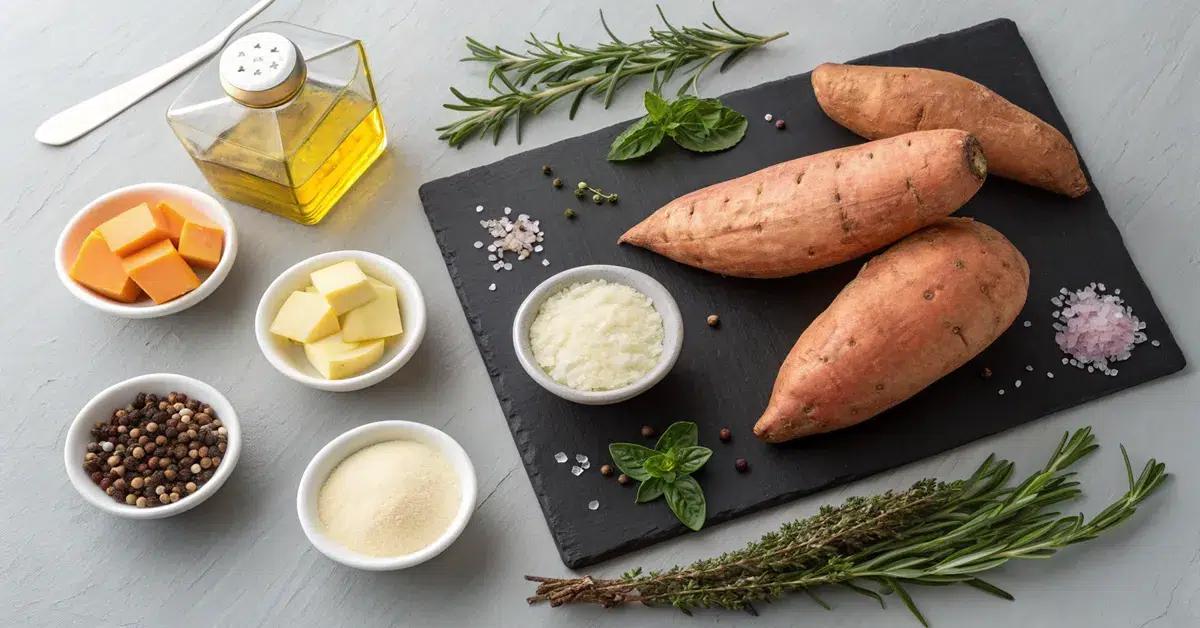
After testing dozens of variations, here’s what works.
- Sweet Potatoes (3 pounds): Choose smooth, unblemished ones that feel heavy. Garnet or Jewel varieties are my go-to for natural sweetness.
- Butter (4-6 tablespoons): Unsalted gives you control. This creates that luxurious mouthfeel.
- Heavy Cream or Milk (1/2 to 3/4 cup): Heavy cream = restaurant quality. Whole milk works beautifully for lighter versions.
- Salt (1-1.5 teaspoons): Don’t skip this. Proper seasoning transforms everything.
- Optional extras: Maple syrup, cinnamon, nutmeg, or brown butter for depth.
Quality Comparison Guide
| Ingredient Type | Budget-Friendly | Premium | Impact |
| Sweet Potatoes | Standard orange | Organic Garnet | Richer color, complex sweetness |
| Fat Component | Milk + butter | Heavy cream + European butter | Silkier texture, deeper flavor |
| Seasonings | Table salt + ground spices | Sea salt + fresh spices | Brighter, more aromatic |
| Sweetener | Brown sugar | Pure maple syrup | More nuanced sweetness |
The Game-Changer Nobody Talks About
Never peel sweet potatoes before cooking. I know it sounds weird, but keeping skin on during roasting traps steam inside while the exterior caramelizes. You get this dual cooking magic that produces incredibly creamy flesh. The skins slip off effortlessly afterward, and you lose zero flesh.
This trick alone changed everything for me. Like pairing it with crustless spinach and feta quiche—proper technique elevates simple ingredients.
The Foolproof Method
Okay, confession time: it took me forty-seven (yes, forty-seven) tries to get Sweet Potato Puree right. But now? I swear this method is completely foolproof. If you follow these steps exactly, you’ll nail it every single time—no guesswork, no disasters, just perfect results.
Preparation: Setting Yourself Up for Success
First things first: crank your oven up to 400°F. That’s the magic number. Lower than that, and the sweet potatoes dry out before they get those caramelized edges. Higher, and the outside chars while the inside is still doing its awkward half-raw thing.
Step 1: Give your sweet potatoes a proper spa treatment. Scrub them under cold water with a veggie brush (no half-hearted rinsing here), then pat them bone-dry. Moisture is the enemy—it makes them steam instead of roast. Stab each one 4–5 times with a fork to let steam escape. Think of it as sweet potato acupuncture.
Step 2: Line a baking sheet with parchment or foil (trust me, this saves you from scrubbing caramelized sugar off later). Place the sweet potatoes directly on the sheet, but give them room to breathe—like two inches apart. Overcrowding = soggy potatoes.
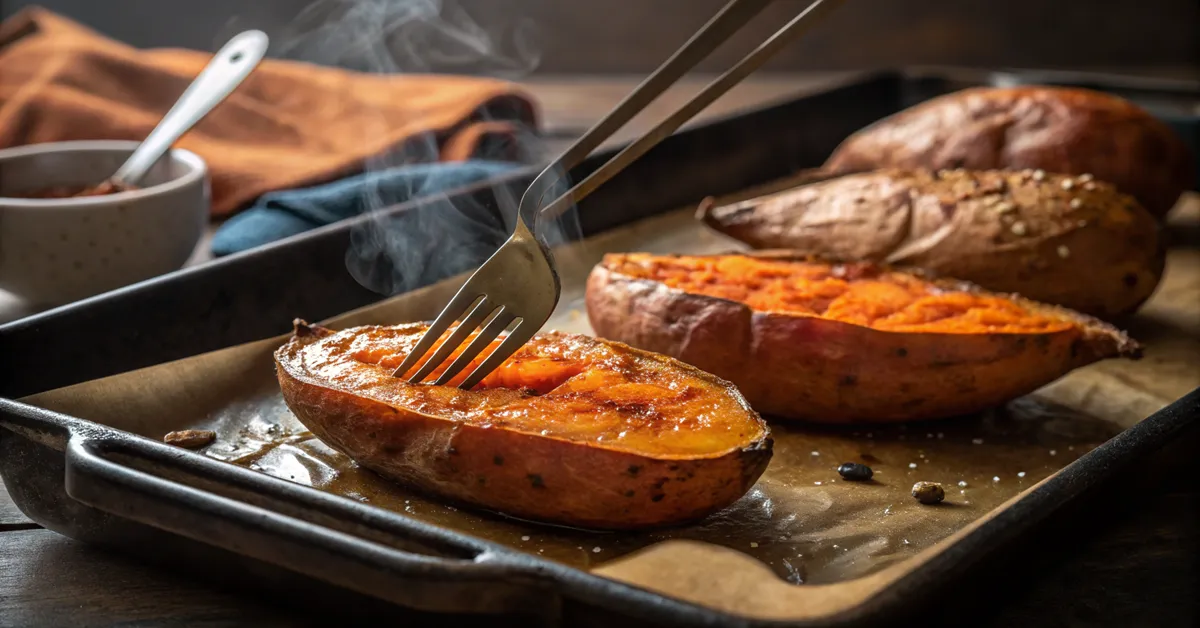
Step 3: Slide them into the oven and roast for 45–65 minutes, depending on size. You’ll know they’re ready when a knife glides in like butter and you can see little sugary bubbles oozing from the fork holes. The skins should look slightly wrinkly and feel soft when you give them a gentle squeeze.
The Main Method: Achieving Perfect Texture
Step 4: Pull them out of the oven and—this is important—let them sit for 10 minutes. I know, waiting is hard. But this pause lets the insides firm up a bit, which makes scooping way easier and the texture much smoother.
Step 5: Cut them open lengthwise and scoop that golden-orange goodness into a food processor or a big bowl. Toss the skins unless you’re into crispy potato snacks (honestly, highly recommend). You should end up with about 4–5 cups of flesh.
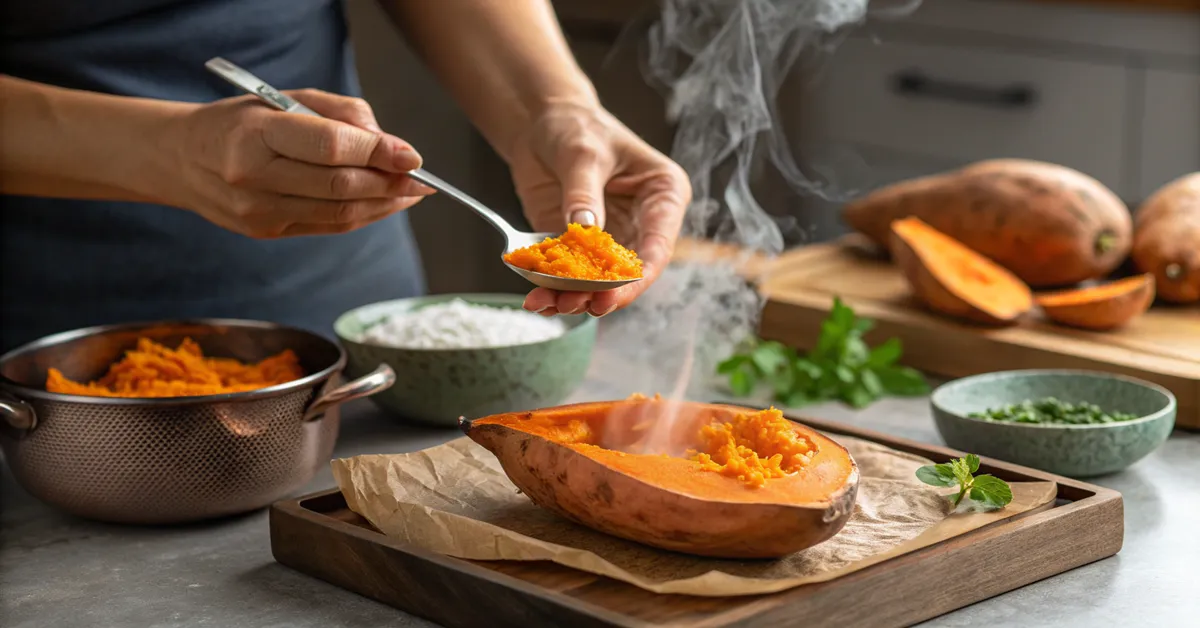
Step 6: Here’s where the magic really happens.
- If using a food processor: Pulse a few times to break up chunks. Then, while it’s running, slowly drizzle in warmed cream and melted butter. Process for about 30–45 seconds until it’s silky-smooth and you’re tempted to eat it straight from the bowl.
- If using a potato ricer or hand mixer: Press the hot potatoes through first, then gradually mix in your warm cream and butter on medium speed. Emphasis on gradually—too much liquid at once and you’re left with soup.
Pro Tip: Warm cream + melted butter = next-level texture. Cold stuff just makes the mixture seize up and turn grainy. This little step takes your puree from “pretty good” to “wow, did I just make this?”
Step 7: Season with salt, taste, adjust. Start with 1 teaspoon. The sweet potato flavor should shine through—balanced, not bland. Add optional flavorings now.
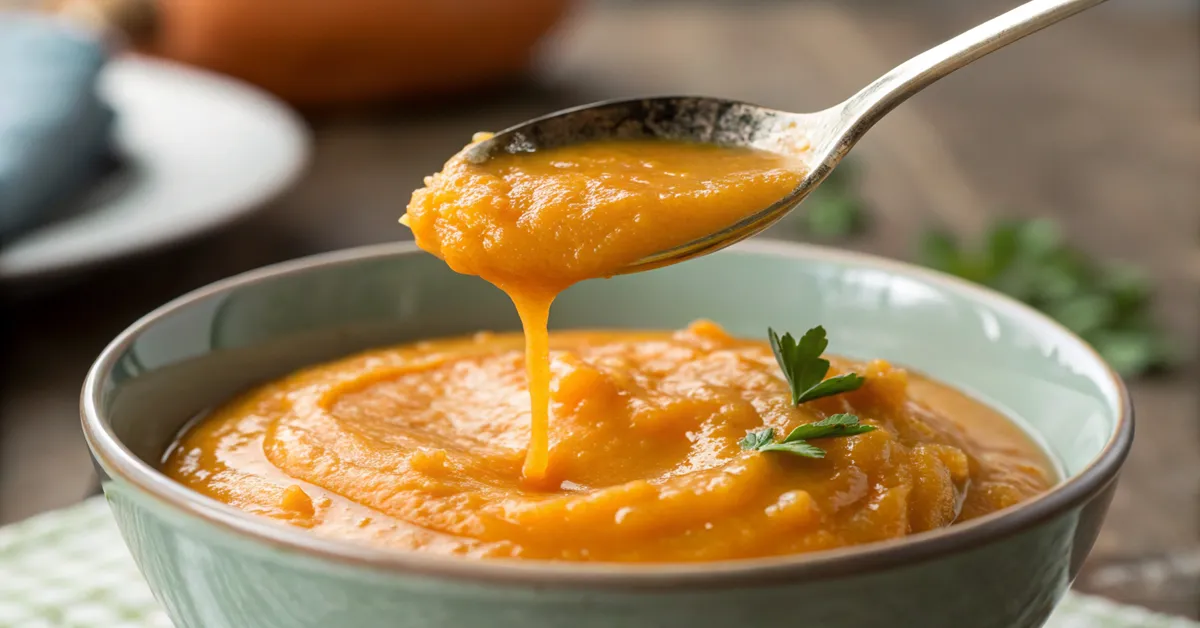
For serving Sweet Potato Puree: 7 Easy Steps to Restaurant-Quality Results alongside protein dishes like lemon and pepper shrimp, keep the seasonings simple. For holiday presentations, feel free to add warming spices and maple syrup.
Creative Variations That Wow
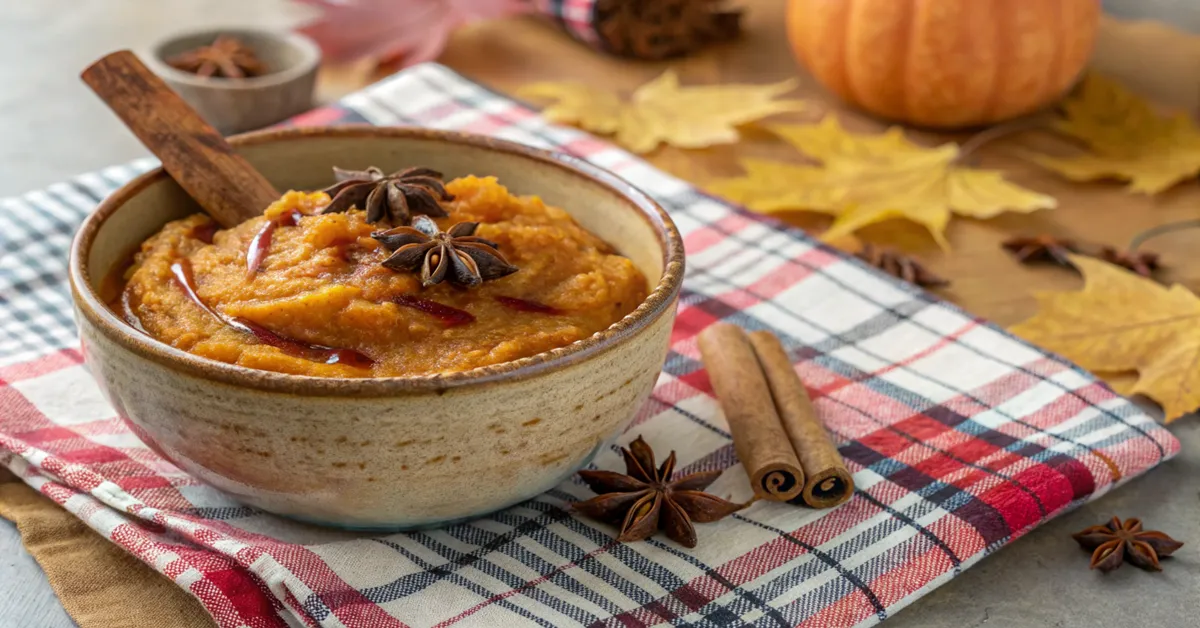
| Variation | Key Additions | Best With | Dietary Notes |
| Savory Herb | Thyme, rosemary, sage, garlic | Roasted meats, stuffed eggplant | Gluten-free, vegetarian |
| Spiced Chai | Cinnamon, cardamom, ginger, maple | Holiday feasts, brunches | Vegan-friendly |
| Brown Butter Sweet Potato | Nutty brown butter, crispy sage | Elegant dinners | Gluten-free |
| Coconut Curry | Coconut milk, curry powder, lime | Mediterranean shrimp bowl | Vegan, dairy-free |
Vegan: Replace butter with olive oil, use coconut milk or oat cream. Arguably even more flavorful.
Paleo: Use ghee and coconut milk. Skip sweeteners or use date paste.
Kid-Friendly: Bump maple syrup to 3 tablespoons, add vanilla, top with mini marshmallows. Gets devoured every time.
Storage & Serving Excellence
Professional Storage Techniques
Short-Term (3-4 days): Cool completely your Sweet Potato Puree, transfer to airtight container. Press plastic wrap directly on surface to prevent skin. Reheat covered at 350°F for 20 minutes, or microwave in 30-second bursts.
Freezer (up to 3 months): Portion into freezer bags. Freeze in silicone muffin tins first, then pop out and bag for individual servings. Thaw overnight in fridge.
Make-Ahead: Roast sweet potatoes up to 2 days ahead, keep whole in fridge. Scoop and puree day-of. Or make everything a day early—flavors get better overnight.
Pairing Suggestions
| Protein | Vegetable | Grain | Why It Works |
| Roasted salmon | Sautéed greens | Wild rice | Sweet-savory balance |
| Herb chicken | Brussels sprouts | Couscous quinoa salad | Classic comfort |
| Pork tenderloin | Root vegetables | None needed | Sweet potato IS the starch |
| Mediterranean shrimp | Cherry tomatoes | Farro | Light Mediterranean vibes |
Nutritional Benefits of Sweet Potato Puree : More Than Delicious
Sweet Potato Puree is a nutrient powerhouse. Here is a detailed breakdown.
Macronutrient Breakdown (Per 1-cup serving)
| Nutrient | Amount | Daily Value % |
| Calories | 215 | 11% |
| Total Fat | 7g | 9% |
| Saturated Fat | 4.5g | 23% |
| Sodium | 320mg | 14% |
| Carbohydrates | 36g | 13% |
| Fiber | 5g | 18% |
| Protein | 3g | 6% |
Micronutrient Powerhouse
| Vitamin/Mineral | Amount | Daily Value % | Key Benefit |
| Vitamin A | 18,869 IU | 377% | Vision, immunity, skin |
| Vitamin C | 28mg | 47% | Immune support |
| Potassium | 542mg | 15% | Blood pressure, heart health |
| Manganese | 0.5mg | 27% | Bone health, metabolism |
The Health Story Behind the Ingredients
Sweet potatoes pack serious nutrition. One cup gives you 400% of daily vitamin A from beta-carotene—crucial for vision, immunity, and skin.
The complex carbs provide steady energy without blood sugar spikes. With a glycemic index around 44-61, they’re blood-sugar friendly. Plus you’re getting 5g fiber per cup for digestion and fullness.
Those antioxidants—beta-carotene, vitamins C and E—fight inflammation and support overall health. Real protective benefits, not empty calories.
Best part? Naturally gluten-free, easily made vegan, with substantial nutrition in reasonable calories. Way more nutrients than traditional mashed potatoes. Like pairing it with zucchini noodles with cherry tomatoes and feta, it’s about balanced meals that taste amazing.
Frequently Asked Questions About Sweet Potato Puree
Can you puree sweet potatoes?
Absolutely! They puree beautifully because they’re naturally creamy with less starch. Roast them first for best flavor, then use a food processor, blender, or potato ricer. Just don’t over-mix or they’ll get gummy.
Is sweet potato puree the same as mashed?
Not quite. Mashed has chunky, rustic texture with some lumps. Puree is completely smooth with zero lumps—think homestyle versus restaurant-quality. Both delicious, but puree needs that extra processing step.
Is sweet potato puree safe for babies?
Yes! Perfect first food around 6 months. Make plain roasted sweet potato with no salt, butter, or cream—blend with breast milk, formula, or water. Start thin, gradually thicken. Always check with your pediatrician first.
Can you puree sweet potatoes in a blender?
Definitely! High-powered blenders create incredibly smooth puree. Add roasted sweet potato and liquids, start low to break up chunks, then increase speed. Use the tamper. You might work in batches. Just don’t over-blend.
Is sweet potato puree healthy?
Yes! Sweet potato for baby food is perfect when starting solids around 6 months. Make plain roasted sweet potato with no salt, butter, or cream—blend with breast milk, formula, or water. Start thin, gradually thicken. Always check with your pediatrician first.
How to make puree potatoes?
Start with properly cooked potatoes (roasted is best). Remove flesh, transfer to processor or blender. Gradually add warm liquid while processing. You want thick enough to hold shape but creamy enough to flow. Season with salt and spices. Goal: smooth, lump-free texture.
Pairing & Serving Ideas
| Occasion | Protein | Side | Flavor Bridge | Complete It |
| Holiday Feast | Prime rib | Brussels sprouts | Balsamic reduction | Watermelon feta salad |
| Weeknight | Sheet pan chicken | Green beans | Pan drippings | Simple salad |
| Dinner Party | Duck breast | Wild mushrooms | Vinaigre | Orzo pesto salad |
| Meal Prep | Baked salmon | Roasted veggies | Lemon-herb | Red quinoa tabbouleh |
Don’t limit this to dinner! Swirl it into oatmeal or yogurt for natural sweetness. Use as smoothie bowl base. Mix into pancake batter—pairs beautifully with pancakes with Greek yogurt and oats. For savory breakfasts, serve alongside poached eggs and greens, like polenta with eggs and greens with a sweeter twist.
Make It Your Own
Your Journey With Sweet Potato Puree Starts Here
After forty-seven test batches and feedback from dozens of guests, I can tell you mastering sweet potato puree is one of those skills that keeps paying off. Simple enough for Tuesday, elegant enough for Thanksgiving. These techniques—roasting with skins on, warm liquids, proper seasoning—work way beyond this recipe.
The real fun starts when you make it yours. Try my basic version, then experiment. Maybe your family goes crazy for smoky chipotle, or citrus-honey becomes your brunch signature. That’s how cooking should work—learn fundamentals, then riff on what you love.
Join the Community
I want to hear how yours turns out! Try a variation? Discover a new combo? Share your photos and tag me—I feature reader creations weekly.
For more Mediterranean comfort food, bookmark The Mediterranean Recipe and check out hummus bil lahme or tuna and white bean salad.
Remember: cooking is technique plus confidence. You’ve got the technique. Trust yourself, taste as you go, adjust to your preference. That’s how you create food people remember.