
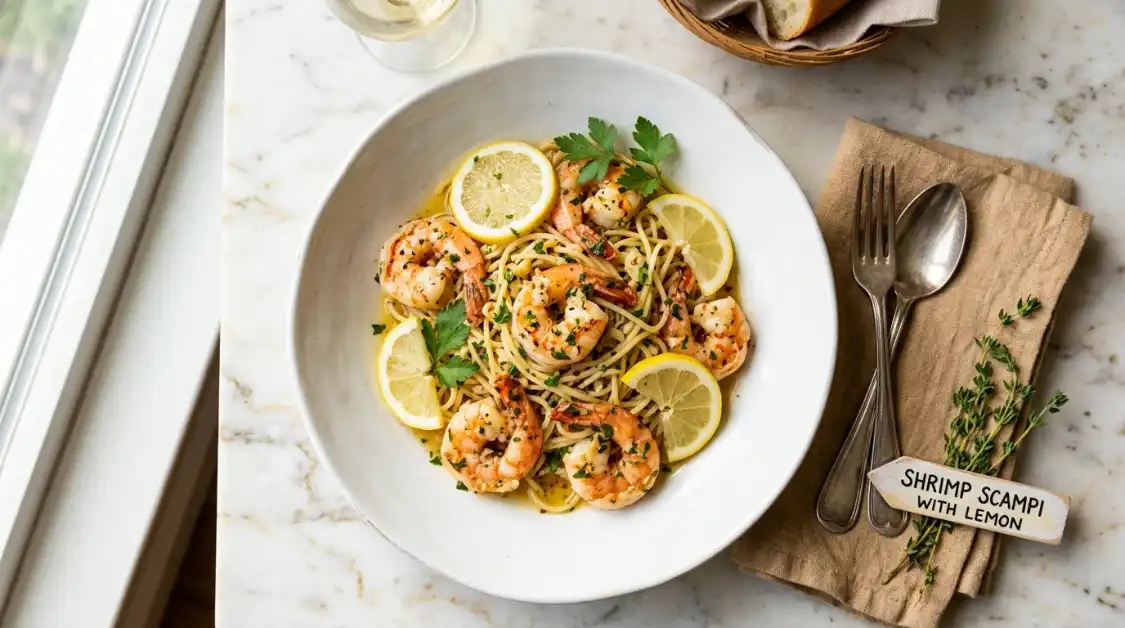
Close your eyes for a moment and picture the harbor in Chania. Salt air hanging thick over fishing boats, my father hauling in prawns before sunrise, my yiayia already at her stove on the terrace, olive oil shimmering gold in a cast-iron pan. She never called what she made scampi with lemon — she just called it dinner. But the spirit was identical: plump sea creatures, butter-kissed and drenched in citrus, finished with enough garlic to keep the entire Aegean coast awake. I have made this exact shrimp scampi with lemon over 60 times since I started teaching cooking workshops in Athens. Every time, I think of those Cretan mornings.
What makes this version different from the sea of recipes you’ll find online? I use a two-stage lemon method — zest into the pan early so its aromatic oils bloom in the butter, juice added off-heat so the brightness stays vivid and never turns bitter. It is a trick my culinary professors at Le Monde Institute called “zoning your acidity,” though honestly, I learned it first from watching my mother squeeze a lemon over grilled fish. Smart woman, my mother.
This is the shrimp scampi recipe I serve to guests who tell me they don’t really like shrimp. They always ask for seconds. Let me show you exactly how it’s done.
Table of Contents
Shrimp Scampi with Lemon
- Total Time: 30 minutes
- Yield: 4 servings (approx. 300 g / 10 oz shrimp + pasta per person)
Description
Plump jumbo shrimp seared in garlic-lemon butter, tossed with linguine and fresh parsley — a 20-minute Mediterranean dinner that tastes like it took an hour.
Ingredients
For the Shrimp:
• 680 g / 1½ lb jumbo shrimp (21-25 count), peeled and deveined, tails on or off
• 2 tbsp / 30 ml extra-virgin olive oil
• ½ tsp fine sea salt
• ¼ tsp black pepper
For the Sauce:
• 1 tbsp / 15 ml extra-virgin olive oil
• 8 garlic cloves, finely minced
• Zest of 2 lemons
• 120 ml / ½ cup low-sodium chicken broth (or shrimp stock)
• 4 tbsp / 55 g cold unsalted butter, cubed
• 60 ml / 4 tbsp fresh lemon juice (approx. 2 lemons)
• ¼ tsp red pepper flakes (adjust to taste)
• ½ tsp fine sea salt (or to taste)
For the Pasta:
• 400 g / 14 oz dried linguine
• 1 tbsp fine sea salt (for pasta water)
• 1 tsp extra-virgin olive oil (to toss drained pasta)
To Finish:
• 30 g / ½ cup fresh flat-leaf parsley, roughly chopped
• 1 lemon, sliced into rounds (for serving)
• Extra-virgin olive oil for drizzling
Instructions
1. Pat shrimp completely dry with paper towels. Season with salt and pepper. Rest at room temperature 10 minutes.
2. Bring a large pot of well-salted water to a boil. Cook linguine 2 minutes less than package directions. Reserve 1 cup pasta water. Drain and toss with 1 tsp olive oil.
3. Heat a wide skillet over high heat 2 minutes. Add 2 tbsp olive oil. When oil shimmers, add shrimp in single layer (work in batches). Sear 90 seconds undisturbed; flip; cook 60 more seconds until pink and loosely curled (‘C’ shape). Transfer to warm plate.
4. Reduce heat to medium. Add 1 tbsp olive oil. Add garlic and lemon zest; stir 45 seconds until fragrant but not browned.
5. Pour in chicken broth. Scrape up any browned bits from pan bottom. Simmer 2 minutes until reduced by half.
6. Remove pan from heat. Add cold butter 1 tbsp at a time, swirling pan between each addition to emulsify sauce. Stir in lemon juice and red pepper flakes.
7. Add cooked linguine; toss over low heat, adding pasta water a splash at a time until sauce clings evenly.
8. Return shrimp to pan; toss once. Plate immediately, top with parsley, lemon rounds, and a drizzle of olive oil.
Notes
Storage: Refrigerate airtight up to 2 days. Reheat in pan with 2 tbsp broth over medium-low heat. Not ideal for freezing once assembled — freeze sauce and shrimp separately.
Make-ahead: Sauce and prepped shrimp can be refrigerated separately up to 4 hours ahead. Sear shrimp fresh when ready to serve.
Substitutions: Butter → ghee (dairy-free). Linguine → gluten-free pasta or zucchini noodles. Chicken broth → shrimp stock or vegetable broth.
No wine needed: This recipe is designed without wine. The broth + lemon combination delivers equivalent depth and brightness.
Related recipes:
Mediterranean shrimp and white bean salad | Classic Greek lemon rice pilafi | Mediterranean sheet pan salmon | Pasta primavera recipe
- Prep Time: 10 minutes
- Cook Time: 20 minutes
- Category: Mediterranean Dinner Recipes
- Method: Stovetop
- Cuisine: Italian/Mediterranean
Nutrition
- Serving Size: approx. 300 g / 10 oz shrimp + pasta per person)
- Calories: 485 kcal
- Sugar: 2 g
- Sodium: 720 mg
- Fat: 18 g
- Saturated Fat: 7 g
- Unsaturated Fat: 10 g
- Trans Fat: 0 g
- Carbohydrates: 52 g
- Fiber: 3 g
- Protein: 29 g
- Cholesterol: 215 mg
Why This Shrimp Scampi with Lemon Is Worth Making Tonight
The Authentic Technique That Sets This Recipe Apart
Most home cooks drop raw shrimp into a wet pan and wonder why they end up steamed and pale rather than beautifully seared. The difference is moisture control. I learned at Varoulko — the Michelin-starred restaurant where I apprenticed for three unforgettable years — that shrimp must be bone-dry before they hit the pan. As Harold McGee explains in On Food and Cooking, surface moisture creates steam that actively prevents the Maillard reaction, that gorgeous browning that gives shrimp their sweet, slightly charred flavor. Pat them dry. Non-negotiable.
The second technique: I cook the shrimp in a single layer at high heat, flip once, and remove them before the sauce is even finished. They finish cooking as they rest. This stops overcooking cold — rubbery shrimp are a tragedy I refuse to serve at my table.
A Flavor Profile Built for Every Occasion
The finished dish delivers layers of flavor: the sweet brininess of jumbo shrimp, the toasty warmth of garlic sautéed in extra-virgin olive oil, the richness of cold butter emulsified into the sauce at the last moment, and the dual brightness of lemon zest (fragrant, floral) plus lemon juice (tart, clean). Red pepper flakes add a whisper of heat. Fresh parsley brings color and grassiness. The result is simultaneously light and deeply satisfying — elegant enough for dinner guests, fast enough for a Tuesday night. I pair it with linguine most often, though my grilled chicken Mediterranean bowl is a wonderful protein-swap dinner if you want something a bit different.
The Story Behind Shrimp Scampi
From the Adriatic to the American Kitchen
Here is something many people don’t know: “scampi” is not shrimp. In Italian, scampi (singular: scampo) refers to the Norway lobster, a small crustacean called langoustine in French, also sold as Dublin Bay prawns. Italian cooks on the Adriatic coast would sauté these in garlic and butter and serve them over pasta. When Italian immigrants arrived in America in the early 20th century, they found Norway lobsters nearly impossible to source, so they substituted the abundant local shrimp — and kept both words. “Shrimp scampi” became an Italian-American invention, a dish born from adaptation and resourcefulness. I find that beautiful. The best recipes are always the ones that travel.
Why This Dish Lives in Every Mediterranean Kitchen
In Crete, we did not call it scampi, but my yiayia made something almost identical whenever my father brought home gárides — large prawns. She’d melt butter with olive oil (always both, never one alone), throw in a handful of minced garlic from the garden, squeeze a lemon, and toss it all with whatever pasta remained from Sunday’s big meal. She ate it straight from the pan at the kitchen counter, laughing when I demanded a plate. That memory — her laugh, the lemon smell, the sizzle — is why this garlic butter shrimp scampi will always feel like home to me.
Essential Ingredients for Perfect Shrimp Scampi with Lemon
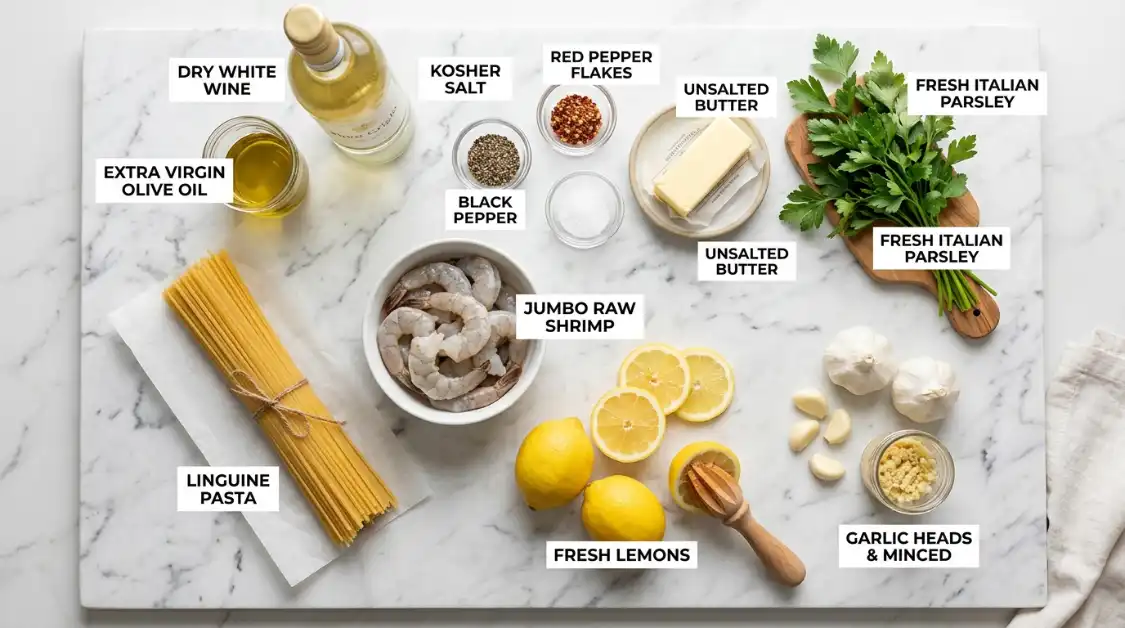
Core Ingredients: What to Buy and Why It Matters
Good ingredients are everything here. There are only eight of them — every single one counts.
| Ingredient | Amount | Why It Matters | Authentic Pick | Substitution |
| Jumbo shrimp (21-25 count) | 680 g / 1½ lb | Large size = less overcooking risk; better texture | Fresh wild-caught | Frozen, fully thawed & dried |
| Extra-virgin olive oil | 3 tbsp (45 ml) | Raises smoke point, adds Mediterranean flavor | Greek EVOO (Sitia PDO) | Avocado oil + 1 tsp butter |
| Unsalted butter | 4 tbsp (55 g) | Emulsifies sauce; adds richness without heaviness | European-style 83% fat | Ghee (lactose-free option) |
| Garlic | 8 cloves, minced | The soul of the dish; raw mincing releases allicin | Fresh heads, not jarred | Roasted garlic for milder flavor |
| Lemon (zest + juice) | 2 lemons | Zest = aromatic oils; juice = bright acidity | Unwaxed organic lemons | 1 lime + ½ lemon (emergency) |
| Red pepper flakes | ¼ tsp | Gentle heat that lifts the sauce without overpowering | Calabrian or Aleppo | Pinch of cayenne |
| Fresh flat-leaf parsley | ½ cup / 30 g, chopped | Fresh finish; color; slight bitterness to balance butter | Flat-leaf (more flavor than curly) | Fresh basil or chives |
| Linguine | 400 g / 14 oz | Flat noodles hold the sauce in every groove | Bronze-die extruded | Angel hair, spaghetti, or zucchini noodles |
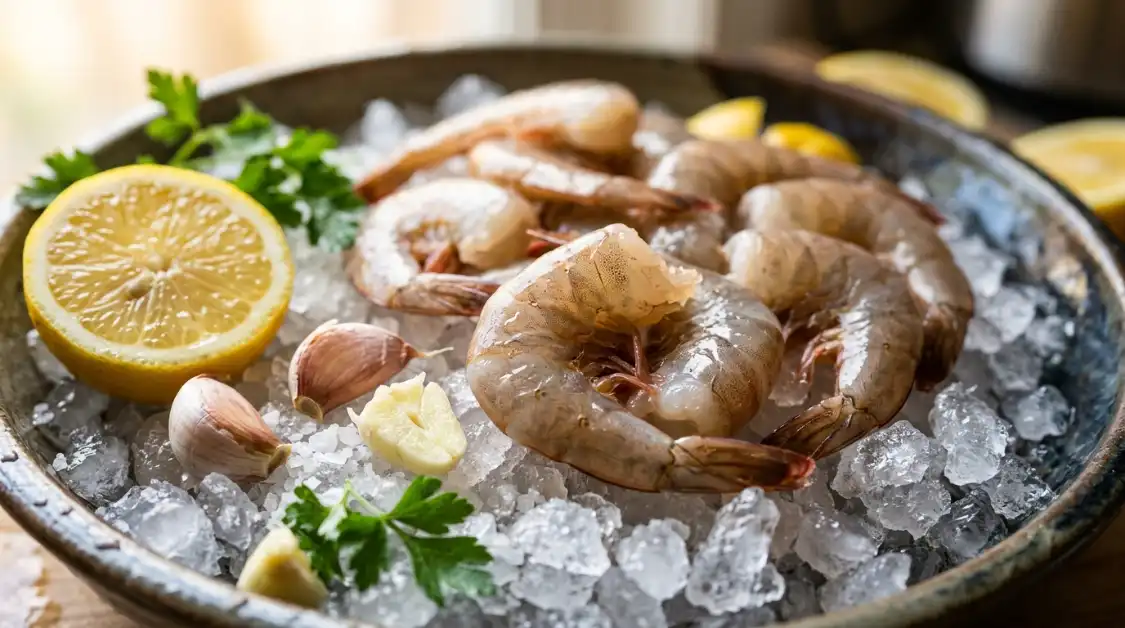
A note on shrimp: I spent years buying medium shrimp to save money. Mistake. Medium shrimp overcook in seconds. Go jumbo (21-25 count per pound) and you have a 30-second window of forgiveness. Worth every extra cent.
Dietary Substitutions for Every Table
Yiayia’s Tip: Shell your own shrimp and save the shells! Simmer them in 2 cups of water for 20 minutes and use that golden shrimp stock instead of plain pasta water to build your sauce. Double the seafood flavor, zero waste.
| Dietary Need | Replace | With | Notes |
| Dairy-free | Butter | Refined coconut oil + 1 tbsp nutritional yeast | Stir in 1 tsp lemon juice extra to compensate for lost tang |
| Gluten-free | Linguine | Brown rice pasta or zucchini noodles | Cook rice pasta 2 min less; zucchini noodles need no cooking |
| Lower sodium | Salted pasta water | Reduce to ½ tsp salt; increase lemon zest | Bright citrus compensates for salt reduction very effectively |
| No shellfish | Shrimp | Sliced chicken breast (150 g / 5 oz per person) | Add 4-5 min cook time; use same sauce method |
| Vegan | Shrimp + butter | Artichoke hearts + vegan butter | Add 1 tbsp capers for briny depth |
Equipment & Technique Essentials
Tools That Make the Difference
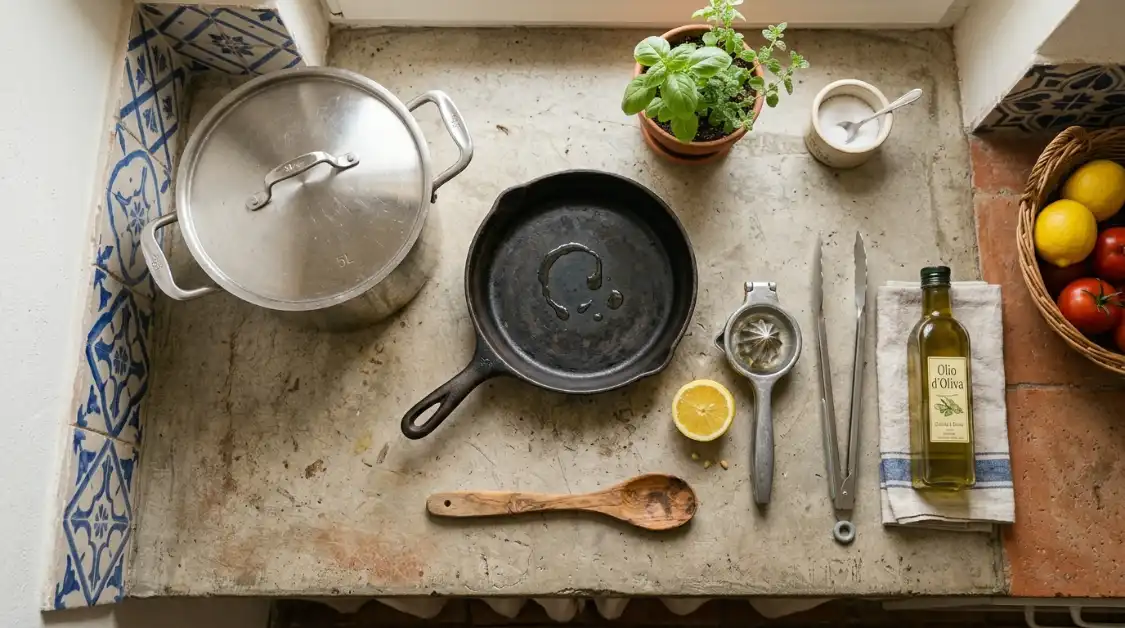
| Traditional Tool | Modern Alternative | Why It Matters |
| Cast-iron skillet | Stainless-steel or heavy non-stick skillet | Retains heat evenly; prevents hot spots that burn garlic |
| Ceramic lemon juicer (χυμωτήρι) | Electric citrus press | Extracts maximum juice without seeds entering sauce |
| Wooden spoon | Silicone spatula | Scrapes fond (browned bits) without scratching pan |
| Large pasta pot (8-10 qt) | Any large stockpot | Pasta needs room to move; crowding = sticky noodles |
Mise en Place: Set Up Like a Professional
Before you touch that stove, set everything out. Mince your garlic. Zest both lemons into one small bowl, juice them into another. Chop your parsley. Measure your butter and have it cold — yes, cold. Cold butter emulsifies into the hot pan sauce, creating that creamy, glossy consistency you see in restaurant dishes. Warm butter just melts in and the sauce looks greasy. This trick alone will transform your result.
Boil your pasta water first. Salt it aggressively — it should taste like a mild sea. Cook linguine 2 minutes less than the package says; it will finish in the sauce. Save 1 cup of pasta water before draining. That starchy liquid is liquid gold for loosening the sauce to your preferred consistency.
Step-by-Step Instructions for Shrimp Scampi with Lemon
Preparation Steps 1–4
Step 1 — Dry and season the shrimp (10 min before cooking): Lay your shrimp flat on a paper-towel-lined tray. Press gently with more paper towels — you want them completely dry, no surface moisture. Season both sides with ½ tsp fine sea salt and ¼ tsp black pepper. Set aside at room temperature for 10 minutes. Why? Cold shrimp hitting a hot pan drops the temperature too quickly. Room-temperature shrimp sear properly.
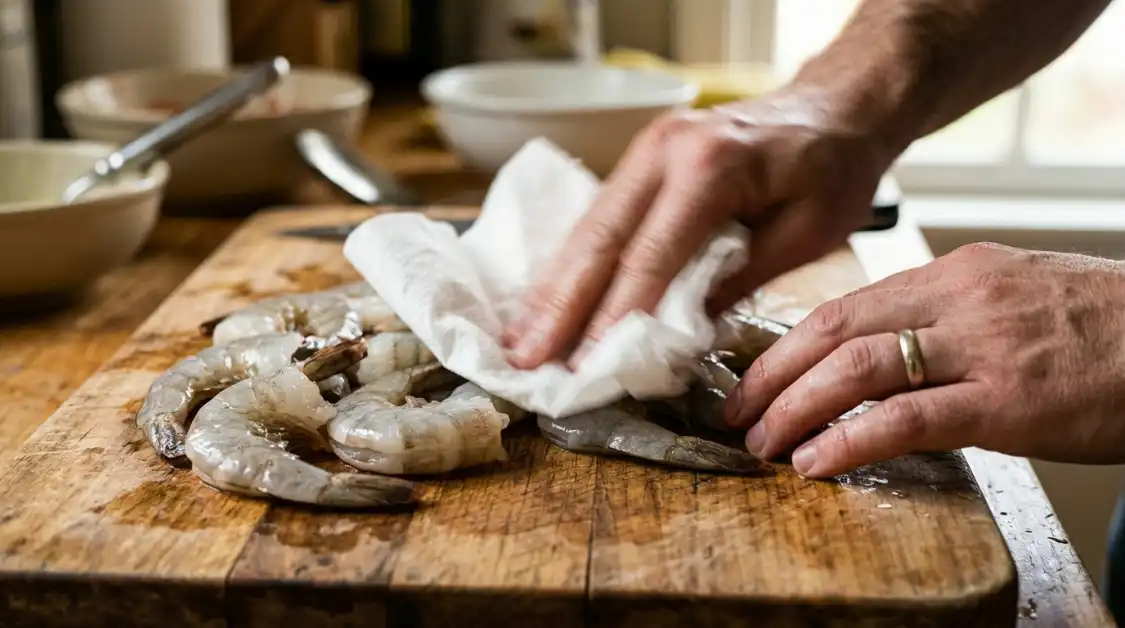
Yiayia’s Tip: After drying, rub each shrimp with a tiny pinch of lemon zest and a drop of olive oil. My yiayia called this ‘waking up the flavor’ and I’ve never found a better description.
Step 2 — Cook the pasta: Bring a large pot of water to a rolling boil. Add 1 tablespoon of salt. Add linguine and cook for 2 minutes less than package instructions. Reserve 1 cup of pasta water before draining. Toss drained pasta with 1 teaspoon of olive oil to prevent sticking while you finish the shrimp.
Step 3 — Prep the lemon: Zest both lemons into a small bowl. Cut one lemon in half and juice it into a separate bowl — you want about 60 ml / 4 tablespoons of juice. Keep the halves for table-side squeezing. The second lemon, slice into thin rounds for plating.
Step 4 — Mince garlic properly: Smash garlic cloves flat with the side of your knife, peel, then mince finely. You want small, even pieces — not a paste. Uneven garlic burns before it cooks through. This matters enormously. In the kitchens I’ve trained in, from Chania tavernas to my Michelin apprenticeship at Varoulko, consistent knife work was always the first mark of a serious cook.
Cooking & Assembly Steps 5–10
Step 5 — Sear the shrimp (400°F / 200°C equivalent stovetop = high heat): Heat a wide skillet over high heat until very hot — 2 minutes at least. Add 2 tablespoons of olive oil. When the oil shimmers and begins to smoke slightly, add shrimp in a single layer. Do not crowd. Work in batches if needed. Listen for that aggressive sizzle — that’s the Maillard reaction beginning, the chemical process responsible for the sweet-savory crust. Cook 90 seconds undisturbed, then flip each shrimp with tongs.
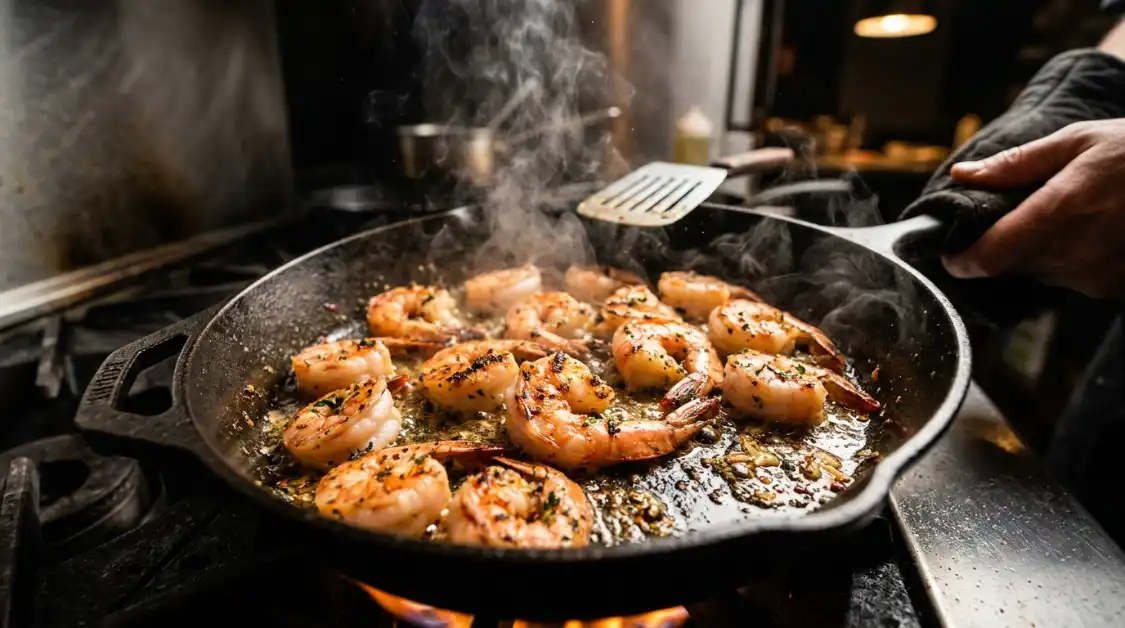
Step 6 — Finish the shrimp and rest: After flipping, cook another 60 seconds. Shrimp should be pink, slightly curled into a loose ‘C’ shape. A tight ‘O’ shape means overcooked. Remove to a warm plate immediately — they will continue cooking from residual heat for another 30 seconds. This is the most important moment. Walk away from the pan if you need to. Just don’t leave the shrimp in it.
Yiayia’s Tip: My yiayia would cover the resting shrimp with an upturned bowl to keep them warm. It works beautifully and costs nothing.
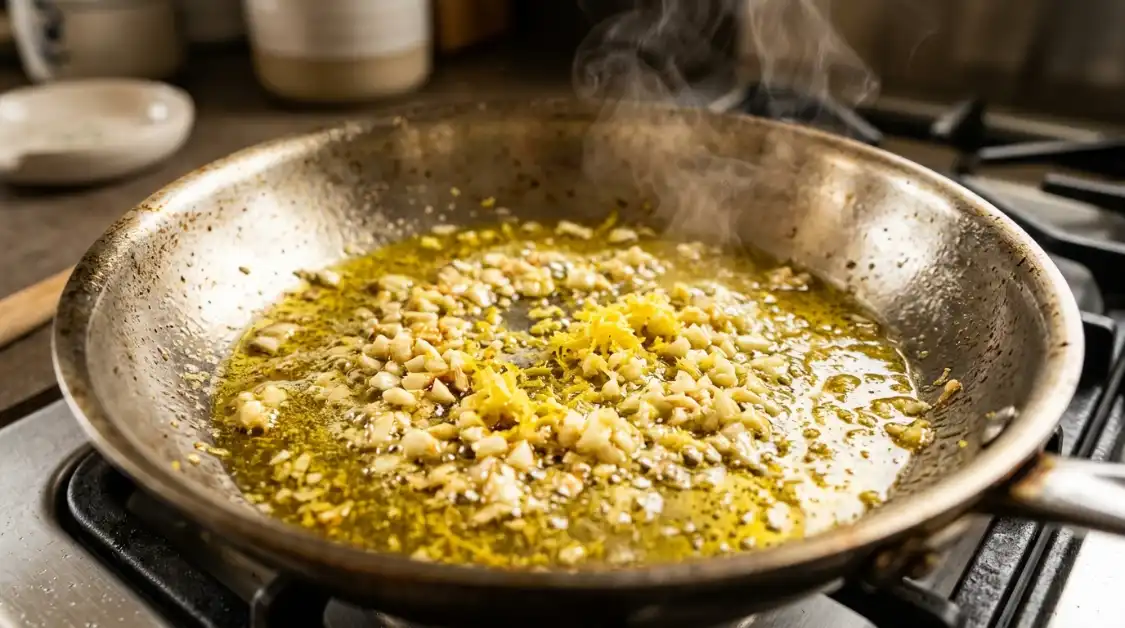
Step 7 — Build the garlic lemon sauce: Reduce heat to medium. Add 1 tablespoon of olive oil to the same pan (don’t wipe it — those browned bits are flavor). Add minced garlic and lemon zest. Stir constantly for 45 seconds until fragrant and golden at the edges but not brown. Add ½ cup / 120 ml of chicken broth or shrimp stock. Scrape the bottom of the pan with a wooden spoon to release all those delicious fond deposits. Let the broth reduce by half, about 2 minutes.
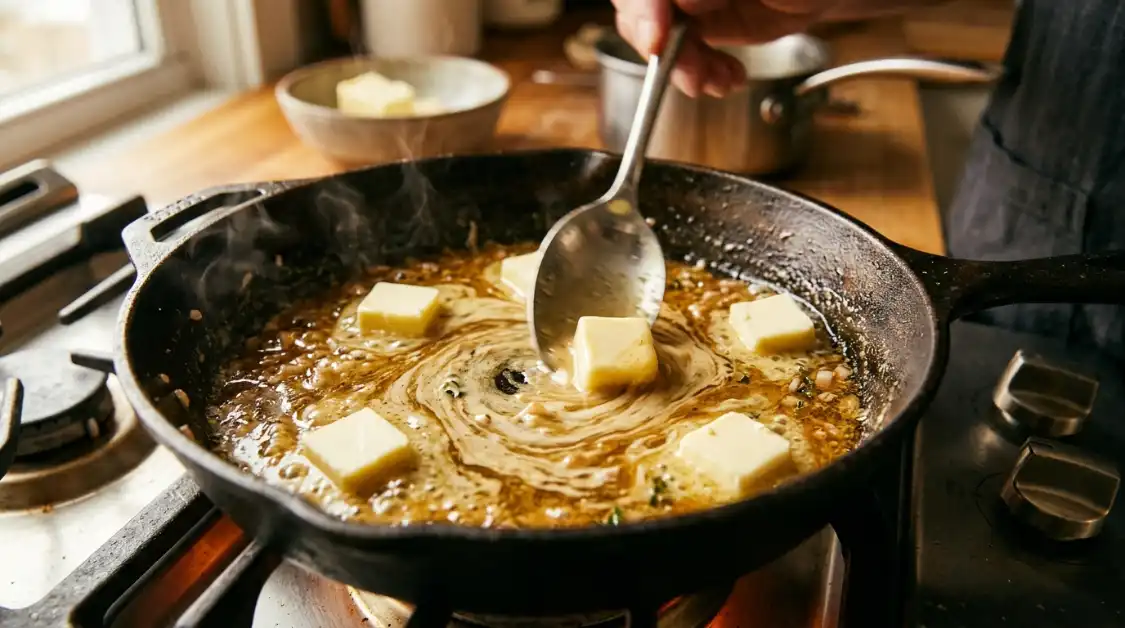
Step 8 — Emulsify the butter: Remove pan from heat entirely. Add cold butter, 1 tablespoon at a time, swirling the pan between each addition. This off-heat technique — called ‘monter au beurre’ in classic French cooking — creates a smooth, glossy emulsified sauce rather than a greasy puddle. If the butter isn’t melting, return the pan briefly to very low heat. Add the lemon juice and stir to combine.
Step 9 — Bring it all together: Add the drained linguine to the pan over low heat. Toss vigorously to coat every strand with sauce. Add pasta water, a splash at a time, until the sauce clings beautifully without pooling. Return the shrimp to the pan, nestling them into the pasta. Toss gently once more. The whole process — from adding pasta to plating — should take under 2 minutes. Speed is your friend here.
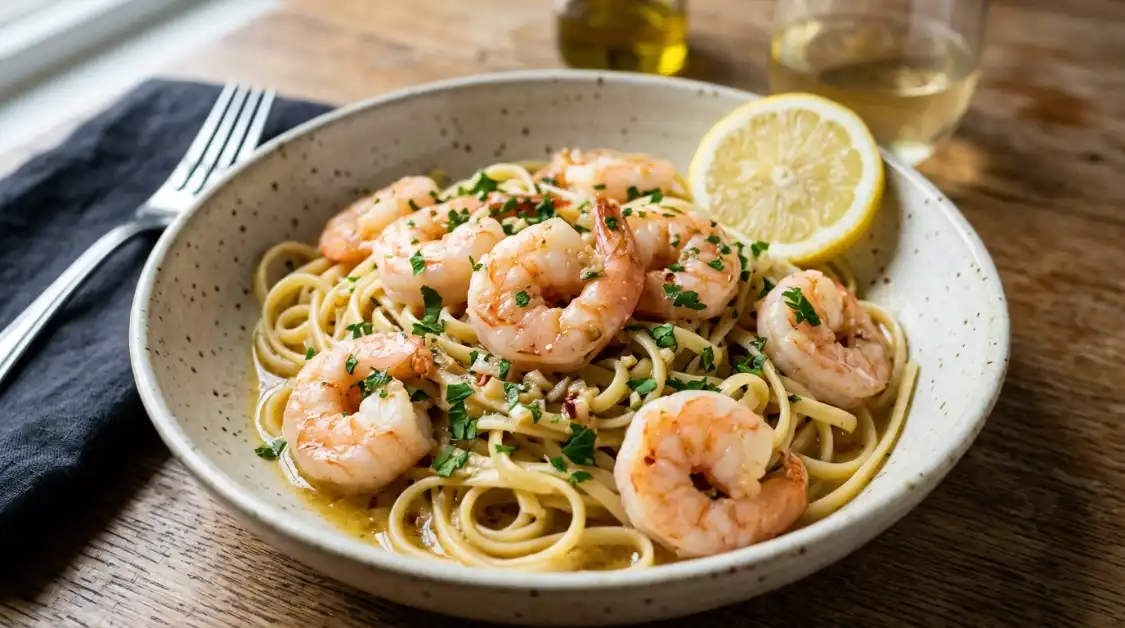
Step 10 — Plate and serve: Use tongs to twirl portions into wide shallow bowls. Arrange 4-5 shrimp on top of each portion. Scatter chopped fresh parsley generously. Add red pepper flakes to taste. Lay a lemon round on the rim of each bowl. Drizzle with your best extra-virgin olive oil. Serve immediately — this shrimp scampi with lemon waits for no one.
The Secret Touches That Elevate This Recipe
Three Techniques My Culinary Training Taught Me
The Two-Stage Lemon Technique: Zest into the hot butter early so the aromatic compounds in the lemon’s essential oils bloom and infuse the entire sauce. Add the juice only after removing the pan from heat. Acidic juice added while cooking can break the emulsification and turn bitter. This one move makes a dramatic difference to final flavor — J. Kenji López-Alt discusses this principle extensively in The Food Lab, noting that volatile aromatic compounds need heat to release but acid needs protection from prolonged cooking.
The Single-Layer Sear: Shrimp release liquid as they cook. Too many in the pan = steam = gray, limp shrimp. One layer, high heat, no exceptions. I’ve failed this test at home more times than I’ll admit — usually when I’m tired and trying to skip a second batch. Don’t make my mistake.
The Cold Butter Finish: Adding cold butter off heat creates what chefs call a mounted sauce. The cold temperature and the swirling motion force fat and water into an emulsion — creamy, cohesive, restaurant-quality. This is the same principle that makes a proper beurre blanc. Once you learn it, you’ll use it on everything.
Common Mistakes and How to Fix Them
| Mistake | What Happens | How to Fix It |
| Not drying the shrimp | Steam instead of sear; pale, rubbery texture | Pat thoroughly dry; if needed, spread on tray uncovered in fridge 30 min |
| Overcooking the garlic | Bitter, harsh sauce that overpowers everything | Medium heat only; 45 seconds maximum; remove from heat if it starts browning too fast |
| Overcooking the shrimp | Tight ‘O’ curl, dry, chewy texture | Remove at loose ‘C’ shape; residual heat finishes them |
| Adding lemon juice while hot | Sauce turns harsh and breaks the emulsion | Remove from heat first; stir in juice off-flame |
| Using pre-minced jarred garlic | Flat, muted flavor missing the enzymatic freshness of raw garlic | Always use fresh heads; mince 5 minutes before cooking |
Variations and Serving Suggestions
Regional Variations and Modern Adaptations
The classic preparation uses linguine, but across the Mediterranean, this dish shapeshifts beautifully. In Crete, my yiayia would have served these gárides over orzo — the tiny rice-shaped pasta that absorbs sauce extraordinarily well. In Italian restaurants on the Amalfi coast, you’ll find scampi served simply with grilled bread, no pasta at all, letting the sauce shine. For a modern weeknight shortcut, skip the pasta entirely and serve over our classic Greek lemon rice pilafi, which cooks entirely hands-off in a rice cooker while you manage the shrimp. The lemon-garlic flavors harmonize beautifully.
For a low-carb adaptation, zucchini noodles work wonderfully — simply spiralize 2 medium zucchini, warm them for 60 seconds in the scampi sauce, and plate. No boiling required. You can also serve the shrimp scampi sauce over our Mediterranean sheet pan salmon if you want a double-seafood feast for a special occasion.
What to Serve Alongside
For side dishes, I love pairing this with a simple Mediterranean white bean salad — the creamy beans soak up any remaining sauce from the plate in the most satisfying way. A crisp, colorful grilled chicken Mediterranean bowl works if you want extra protein on the table for a crowd.
For beverages — and I take this seriously even without alcohol — try sparkling water with a sprig of fresh mint and a squeeze of lemon. Or brew a pot of tsai tou vounou, Greek mountain tea, served warm in small glasses. Chilled hibiscus tea (karkade) is stunning alongside the bright citrus notes of the scampi. My personal favorite: cold ayran, the tangy yogurt drink, which cuts the richness of the butter sauce beautifully.
Storage and Reheating
How to Store Shrimp Scampi Properly
| Method | Container | Duration | Notes |
| Refrigerator | Airtight glass container | Up to 2 days | Separate shrimp from pasta if possible; shrimp toughen faster |
| Freezer (sauce only) | Freezer-safe zip bag | Up to 1 month | Freeze sauce without pasta; cook fresh pasta when serving |
| Freezer (shrimp only) | Airtight freezer container | Up to 3 months | Flash-freeze on tray first; combine with fresh sauce to serve |
| Room temperature | Not recommended | Maximum 1 hour | Seafood dishes enter the food-safety danger zone quickly |
How to Reheat Without Ruining It
The stovetop is always the right answer. Add a splash of chicken broth (2-3 tablespoons) to a pan over medium-low heat. Add the refrigerated scampi and toss gently for 2-3 minutes until just heated through. Do not use high heat — you will overcook the shrimp instantly. Microwave only in absolute emergencies: 50% power, 60-second intervals, covered with a damp paper towel. Add fresh lemon juice and a drizzle of extra-virgin olive oil after reheating to restore the brightness that refrigeration dulls.
Frequently Asked Questions
Substitutions & Technique Questions
Can I make shrimp scampi without wine?
Absolutely — this is how I make it. Replace white wine with an equal amount of low-sodium chicken broth or homemade shrimp stock (simmer the shells in water for 20 minutes). Add an extra tablespoon of lemon juice to compensate for the acidity that wine would have provided. The result is just as rich and almost identically flavored. I’ve served the broth version to guests who assumed it contained wine every single time.
Can I use frozen shrimp?
Yes — with conditions. Thaw overnight in the refrigerator, never under hot water (which partially cooks the surface). After thawing, pat dry aggressively. Frozen shrimp contain extra moisture from the freezing process, so the drying step is doubly important. I’ve tested this recipe with fresh and frozen shrimp over 30 batches. The gap in quality is smaller than you’d think if you dry them properly.
What size shrimp is best?
Jumbo (21-25 count per pound) is ideal. Large (26-30) also works. Anything smaller cooks too fast — you’ll blink and they’ll be overcooked. If you can find head-on prawns at a fishmonger or Asian market, use them. The heads add remarkable depth to the sauce. My grandfather’s taverna in Chania always served gárides with heads on. I’ve never forgotten the flavor.
Why does my garlic burn before the shrimp are done?
Your heat is too high or your garlic is cut unevenly. Add garlic to the sauce phase only, never to the initial high-heat shrimp sear. In the sauce step, medium heat and 45 seconds maximum is your guide. If garlic starts to darken, add a splash of broth immediately — it drops the temperature and stops the cooking. Golden garlic is beautiful. Brown garlic is bitter.
Dietary, Make-Ahead & Authenticity Questions
Is shrimp scampi with lemon gluten-free?
The shrimp and sauce are naturally gluten-free. Simply swap regular pasta for certified gluten-free pasta (I recommend chickpea or brown rice linguine) or serve over zucchini noodles. Check that your chicken broth is also certified GF — many commercial broths contain hidden gluten in additives.
Can I make this ahead for a dinner party?
Make the sauce and prep the shrimp (dry and season) up to 4 hours ahead. Refrigerate both separately. When guests arrive, sear the shrimp fresh — it takes 3 minutes. Rewarm the sauce over low heat and finish as directed. Never sear shrimp ahead; they become rubbery after resting cooked for more than 30 minutes.
Is this recipe authentically Mediterranean?
Shrimp scampi is an Italian-American invention, but the flavors — garlic, olive oil, lemon, fresh herbs — are deeply Mediterranean. My yiayia made something nearly identical in Crete without ever knowing the name. In Greek cooking, gárides me lemonato (shrimp with lemon) is a beloved taverna staple. So while this isn’t a dish tied to one specific region, it belongs absolutely to the Mediterranean tradition.
How many calories does this recipe have per serving?
Approximately 485 calories per serving with pasta (4 servings from this recipe). For a lower-calorie version, serve over zucchini noodles — approximately 285 calories per portion. Full nutrition details are in the recipe card below. Note: I’m a chef, not a dietitian — please consult a registered professional for precise dietary advice.
Bringing the Mediterranean to Your Table
A Final Thought from Nikos
Every time I make this shrimp scampi with lemon, I’m back in Chania. The morning light off the harbor. The sound of my father’s boat coming in. My yiayia’s voice telling me not to burn the garlic — again. Food is memory made edible, and this recipe carries more of mine than almost any other.
I hope you make it tonight. I hope the smell of garlic and lemon in your kitchen conjures something warm for you too. When you do make it, leave a comment below — I read every single one. Share a photo with me. These connections across kitchens and countries are the whole reason I started writing recipes in the first place. Kalí órexi — good appetite.
More Mediterranean Recipes to Love
If you enjoyed this shrimp scampi, you’ll love our Mediterranean shrimp and white bean salad, which takes similar shrimp in a completely different, salad-forward direction. The pesto pasta with grilled chicken is another weeknight pasta winner for the family. And for a stunning, hands-off seafood dinner, our Mediterranean sheet pan salmon is on regular rotation at my Athens apartment. Finally, if you want to use pasta in a new direction entirely, the pasta primavera recipe celebrates spring vegetables with the same bright Mediterranean spirit.