
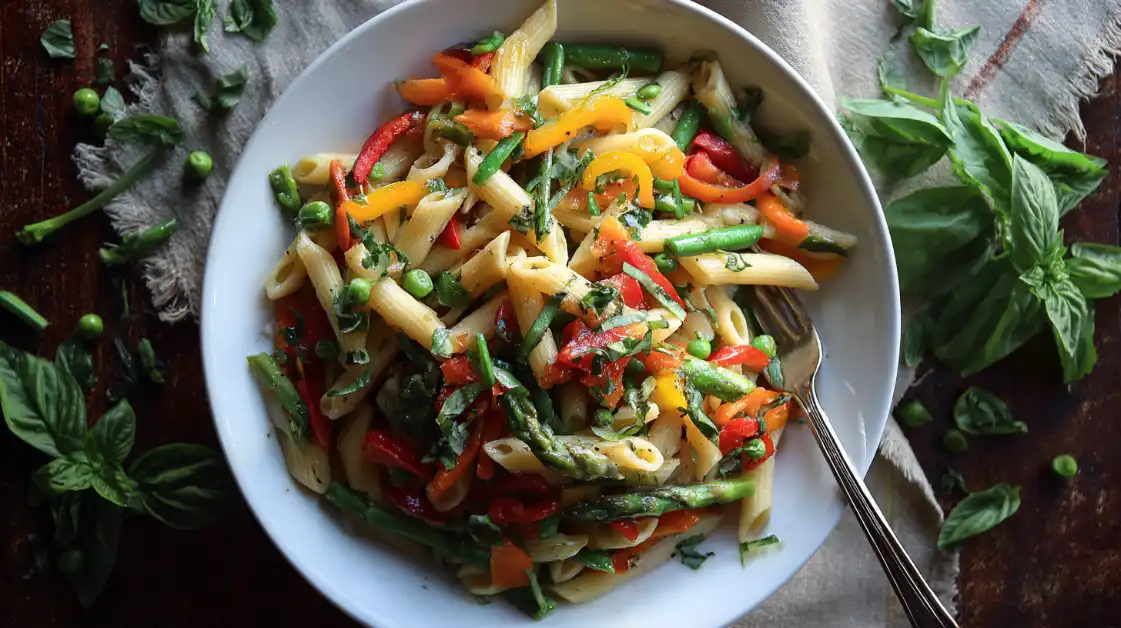
Okay so confession time. March 2022, I made pasta primavera for my book club and it was… bad. Like, really bad. The zucchini had completely disintegrated into this weird green mush, the asparagus was somehow both burnt AND still raw in the middle (how is that even possible??), and the whole thing was swimming in this watery liquid that I guess was supposed to be sauce.
My friend Rosa—who’s way too nice to say anything mean—took one bite and goes “oh, this is… interesting.” Interesting. The kiss of death.
So naturally I became completely obsessed. Made it 26 times over the next two months. My husband Carlos started hiding the zucchini. I’m not even joking—I’d come home from Trader Joe’s and he’d be like “please, not again.” But somewhere around attempt 19 or 20, something clicked. And now? Now I actually get why this dish became famous at Le Cirque back in the 70s.
Here’s everything I learned (so you don’t have to traumatize your book club too).
Table of Contents

Pasta Primavera (Spring Vegetable Pasta That Actually Tastes Like Spring)
- Total Time: 25 min
- Yield: 4 1x
Description
Tender-crisp vegetables tossed with pasta in a light lemon butter sauce. 25 minutes, one pan, and way better than restaurant versions.
Ingredients
1 lb (450g) penne or rigatoni
1 zucchini, half-moons
1 yellow squash, half-moons
1 lb asparagus, trimmed, 1″ pieces
1 cup cherry tomatoes, halved
1 cup frozen peas
1 red bell pepper, thin sliced
½ red onion, thin sliced
4 garlic cloves, minced
3 tbsp olive oil
3 tbsp butter
½ cup parmesan, freshly grated
2 tbsp lemon juice + 1 tsp zest
¼ cup fresh basil, torn
Salt & pepper
Instructions
The Prep (10 min, Don’t Skip)
Okay this is important. Get EVERYTHING ready before you turn on the stove. I cannot stress this enough. The actual cooking moves fast and if you’re mid-sauté trying to frantically chop garlic, stuff will burn. Ask me how I know.
So: grate your cheese. Chop all your veg. Juice your lemon (zest it first—way easier when it’s whole). Get a big pot of water going for the pasta and salt it like the ocean. Like, actually taste it. It should taste salty. This is the only chance to season the actual pasta.
Pro tip that nobody told me: Use less water than you think. Like 4 quarts for a pound of pasta instead of 6. The water gets starchier, and that starchy water is what makes the sauce silky later. Same trick works for our garlic parmesan focaccia recipe when you want that glossy garlic butter situation.
The Actual Cooking (15 min, Stay Focused)
Minutes 0-2: Get your biggest skillet screaming hot with the olive oil. Toss in the onion. Let it sizzle and soften, like 2 minutes. Don’t walk away to check your phone.
Minutes 2-4: Add bell pepper and the asparagus STEMS (not the tips yet, those cook faster). Also drop your pasta in the boiling water now.
Minutes 4-6: In goes the zucchini, yellow squash, and asparagus tips. Season with salt and pepper. Toss everything around. You want some color starting but the veg should still have crunch. Like, serious crunch.
Minutes 6-7: Push everything to the sides, drop garlic in the middle where it’s hottest. Let it sizzle 30 seconds, MAX. Burnt garlic tastes like sadness and will ruin everything.
Minutes 7-8: Cherry tomatoes and frozen peas go in. (Yes, frozen. Straight from the bag. They’ll thaw in like 10 seconds.) Toss everything together.
Minutes 8-10: Take the pan OFF the heat. Add butter and let it melt. Scoop in about half a cup of that starchy pasta water.
Minutes 10-12: Your pasta should be almost done—like 1 minute shy of the package time. Grab another cup of pasta water just in case, then drain the pasta and dump it right into the skillet.
Minutes 12-15: Back on medium heat. Add lemon juice, lemon zest, half the parm. Now TOSS. Like, aggressively. For 2-3 minutes. Add more pasta water if it looks dry. You want everything glossy and coated.
Kill the heat, fold in basil and the rest of the cheese. Taste it. Probably needs more salt than you think.
And that’s it. You did it. If you’ve ever made our crispy zucchini fritters, the vegetable timing feels similar—everything seems underdone in the pan but finishes cooking from residual heat. Same principle here.
Notes
Storage: Fridge 3-4 days. Don’t freeze (veg gets mushy).
Make-ahead: Prep veg up to 24 hrs ahead.
Vegan: Olive oil for butter, nutritional yeast for cheese.
GF: Chickpea pasta works great.
- Prep Time: 10 min
- Cook Time: 15 min
- Category: Mediterranean Dinner Recipes
- Method: Stovetop
- Cuisine: Italian/Mediterranean
Nutrition
- Serving Size: ~2 cups
- Calories: 465 kcal
- Sugar: 9g
- Sodium: 380mg
- Fat: 17g
- Saturated Fat: 7g
- Unsaturated Fat: 9g
- Trans Fat: 0 g
- Carbohydrates: 61g
- Fiber: 7g
- Protein: 15g
- Cholesterol: 25mg
Why Most Pasta Primavera Recipes Fail (And Why This One Won’t)
The Science-y Part (Bear With Me)
Here’s the thing nobody tells you: different vegetables need different cooking times. I know, I know, this seems obvious when I say it out loud. But literally every recipe I found was like “add all the vegetables and cook 5 minutes” and then I’d end up with carrot chunks that could chip a tooth while my cherry tomatoes turned into sad deflated balloons.
A carrot is not a tomato. A carrot is not a tomato. (I’m saying this twice because apparently past-me needed to hear it 26 times.)
The secret is adding stuff in waves based on how dense it is. Dense stuff first, soft stuff last. This is apparently what Harold McGee has been saying for years in his food science books but did I read those before destroying my first 15 batches? No. No I did not.
Also—and this is the part that actually changed everything—you gotta use the pasta water. That starchy cloudy water creates this silky sauce situation that makes everything cling together instead of sliding around. Same trick works great for our spinach and feta pasta if you haven’t tried that one yet.
When To Make This (Spoiler: Whenever)
Okay technically “primavera” means spring in Italian. So spring. Make it in spring.
But also? I make this in December when I’m tired and there’s random vegetables dying slowly in my crisper drawer. Tuesday night, don’t want to think, just want food? Pasta primavera. The whole thing takes like 25 minutes which, honestly, is less time than it takes me to decide what to order on DoorDash.
It IS extra special in late spring though when you can hit the farmers market and get those tiny tender zucchinis and fresh peas still in the pod. The dish was literally invented to show off spring vegetables so if you can time it right… chef’s kiss.
The Stuff You Need

Non-Negotiables (Don’t Skip These)
- 1 lb short penne – penne pasta, rigatoni pasta, whatever you’ve got. NOT spaghetti though, the vegetables just fall off
- 1 medium zucchini, sliced into half moons
- 1 yellow squash (same deal)
- 1 bunch asparagus – about a pound, woody ends snapped off, cut into 1-inch bits
- 1 cup cherry tomatoes, halved (or quartered if they’re huge)
- 1 cup frozen peas – yes frozen is fine, I promise
- 1 red bell pepper, sliced thin
- 4 garlic cloves, minced (or more, I won’t judge)
- ½ red onion, sliced thin
- 3 tbsp good olive oil
- 3 tbsp butter (salted is fine)
- ½ cup parmesan, freshly grated – this matters, the pre-shredded stuff doesn’t melt right
- Juice of 1 lemon (about 2 tbsp)
- Fresh basil, a good handful, torn up
- Salt & pepper (duh)
The thing that changed everything: Add the lemon ZEST too, not just the juice. Like a teaspoon of it. I learned this while messing around with our green goddess pasta salad recipe and now I put lemon zest in basically everything. The oils in the zest have these flavor compounds that just… hit different. Trust me.
Good vs. Bad Ingredients (A Chart Because I’m That Person)
| Thing | Best | Fine | Please No |
| Pasta | Bronze-cut penne | Regular penne/rigatoni | Angel hair or spaghetti |
| Zucchini | Small firm ones (6-7″) | Medium sized | Giant seedy ones |
| Parmesan | Block you grate yourself | Freshly pre-shredded | That green can stuff |
| Asparagus | Thin/medium fresh spears | Thick ones (halve them) | Canned (why does this exist) |
| Tomatoes | Ripe cherry/grape | Romas, chopped | Mealy winter tomatoes |
If you’re looking at that chart going “I don’t have half this stuff” – that’s fine. Use what you’ve got. Our Mediterranean chicken bowl recipe is all about using whatever vegetables are threatening to go bad, and honestly? Same energy here.
How To Actually Make It (Without Messing Up)
The Prep (10 min, Don’t Skip)
Okay this is important. Get EVERYTHING ready before you turn on the stove. I cannot stress this enough. The actual cooking moves fast and if you’re mid-sauté trying to frantically chop garlic, stuff will burn. Ask me how I know.
So: grate your cheese. Chop all your veg. Juice your lemon (zest it first—way easier when it’s whole). Get a big pot of water going for the pasta and salt it like the ocean. Like, actually taste it. It should taste salty. This is the only chance to season the actual pasta.
Pro tip that nobody told me: Use less water than you think. Like 4 quarts for a pound of pasta instead of 6. The water gets starchier, and that starchy water is what makes the sauce silky later. Same trick works for our garlic parmesan focaccia recipe when you want that glossy garlic butter situation.
The Actual Cooking (15 min, Stay Focused)
Minutes 0-2: Get your biggest skillet screaming hot with the olive oil. Toss in the onion. Let it sizzle and soften, like 2 minutes. Don’t walk away to check your phone.
Minutes 2-4: Add bell pepper and the asparagus STEMS (not the tips yet, those cook faster). Also drop your pasta in the boiling water now.
Minutes 4-6: In goes the zucchini, yellow squash, and asparagus tips. Season with salt and pepper. Toss everything around. You want some color starting but the veg should still have crunch. Like, serious crunch.
Minutes 6-7: Push everything to the sides, drop garlic in the middle where it’s hottest. Let it sizzle 30 seconds, MAX. Burnt garlic tastes like sadness and will ruin everything.
Minutes 7-8: Cherry tomatoes and frozen peas go in. (Yes, frozen. Straight from the bag. They’ll thaw in like 10 seconds.) Toss everything together.

Minutes 8-10: Take the pan OFF the heat. Add butter and let it melt. Scoop in about half a cup of that starchy pasta water.
Minutes 10-12: Your pasta should be almost done—like 1 minute shy of the package time. Grab another cup of pasta water just in case, then drain the pasta and dump it right into the skillet.

Minutes 12-15: Back on medium heat. Add lemon juice, lemon zest, half the parm. Now TOSS. Like, aggressively. For 2-3 minutes. Add more pasta water if it looks dry. You want everything glossy and coated.
Kill the heat, fold in basil and the rest of the cheese. Taste it. Probably needs more salt than you think.
And that’s it. You did it. If you’ve ever made our crispy zucchini fritters, the vegetable timing feels similar—everything seems underdone in the pan but finishes cooking from residual heat. Same principle here.
Ways To Switch It Up
Adding Protein (If You Want A Complete Meal)
Look, vegetables are great, but sometimes you want… more. Here’s what I’ve tested:
Chicken – slice up a grilled breast and lay it on top. Or honestly? Leftover rotisserie chicken works great. Our Mediterranean chicken meatballs are also stupid good with this if you want to get fancy.
Shrimp – cook them separately so they don’t overcook, add at the end.
Beans – a can of drained white beans adds protein without changing the vibe. Plus it’s cheap.
Dietary Modifications That Actually Work
| Diet | What To Change | Does It Work? |
| Vegan | Skip butter & cheese; use olive oil + nutritional yeast | Actually yes, add miso for umami |
| Gluten-free | Use chickpea or rice pasta | Banza penne holds up best |
| Dairy-free | Olive oil instead of butter, skip cheese or use Violife | Decent, not amazing |
| Low-carb | Hearts of palm pasta or zoodles | Add sauce at the end or it’s mush |
| Kids | Smaller veg pieces, extra cheese, no spicy stuff | Let them pick their 3 fave veggies |
| Broke | Frozen veg medley, less cheese | Still tastes good tbh |
Want to make it even heartier? Try the Greek chicken casserole technique: layer everything in a baking dish, add extra cheese on top, bake at 400°F for 15 minutes. It’s like primavera meets mac and cheese and honestly sometimes that’s exactly what a Tuesday needs.
Leftovers & Meal Prep
Real Talk About Storage
Here’s the honest truth: this dish is best fresh. Like, eat-it-right-now fresh. The vegetables want to be crisp-tender, not soggy-sad.
But life happens and sometimes you have leftovers so:
Room temp: 2 hours max. Food safety and all that.
Fridge: 3-4 days in a sealed container. The vegetables WILL get softer. It’s unavoidable. But it’s still edible.
Freezer: Don’t. Just… don’t. The vegetables turn to absolute mush. If you MUST freeze something, make extra sauce (the butter/garlic/lemon/cheese part) and freeze that. Then make fresh pasta and veg when you want it.
Reheating: Splash of water, covered, in a pan over medium-low. Stir gently. Microwave technically works but the vegetables get rubbery and sad. For more make-ahead friendly dishes, our kale and sweet potato salad actually improves overnight.
What Goes With This
| Category | Good Options | Why |
| Bread | Garlic bread, focaccia, crusty baguette | To mop up the sauce obviously |
| Salad | Arugula with lemon dressing, simple Caesar | Peppery greens balance the sweetness |
| Protein | Grilled chicken, salmon, white beans | Makes it a complete meal |
| Drinks | Sparkling water with lemon, iced tea, lemonade | Light and refreshing, doesn’t compete |
Our tomato cucumber feta salad is actually perfect alongside this—the bright acidity echoes the lemon while adding totally different textures. Highly recommend.
Nutrition Info (Roughly)
Disclaimer real quick: I’m not a dietitian or nutritionist. These are estimates based on typical ingredients. Your numbers will vary based on exactly what you use and how generous you are with the cheese (no judgment).
That said, pasta primavera is genuinely one of the healthier pasta dishes you can make. You’re getting like 2-3 servings of vegetables in every bowl, plus healthy fats from the olive oil that help you absorb all those fat-soluble vitamins. Win-win.
The Big Numbers
| Per Serving (makes 4) | Amount |
| Calories | 445-485 |
| Fat | 16-18g |
| Protein | 14-16g |
| Carbs | 58-64g |
| Fiber | 6-8g |
Vitamins & Stuff
| Nutrient | % Daily Value |
| Vitamin A | 45-55% |
| Vitamin C | 60-75% |
| Vitamin K | 35-45% |
| Folate | 25-30% |
| Potassium | 15-20% |
For comparison: restaurant pasta primavera (especially the creamy versions) can hit 800-1200 calories with 40+ grams of fat. This homemade version is like 40% less calories and way less sodium. So like… you can have more garlic bread. Just saying.
If you want more vegetable-heavy dishes, our air fryer zucchini fritters are great, and the chicken salad with tzatziki is basically a salad pretending to be a meal.
Questions People Actually Ask
Wait, primavera is American? Not Italian?
Yup! The name means “spring” in Italian but the dish was invented at Le Cirque restaurant in New York City in the 1970s. Italian grandmothers are probably not thrilled about this but honestly—it’s delicious, who cares where it came from.
What pasta shape is best?
Short pasta. Penne, rigatoni, farfalle, fusilli—anything with curves and ridges that can hold onto the veg and sauce. Please don’t use spaghetti or angel hair. The vegetables just slide off and you end up chasing them around your bowl.
Can I use frozen vegetables?
For the peas? Absolutely. Frozen peas are actually better than fresh unless you’re shelling them yourself that same day. For everything else… you can, but they’ll be softer. Don’t thaw them first—add frozen directly to the hot pan. For more ideas with frozen veg, our Mediterranean pasta recipes collection has options.
My vegetables always turn mushy. Help??
Three things: 1) Your pan isn’t hot enough. 2) You’re cooking everything together instead of in stages. 3) You’re cooking too long. Each batch of veg should only get like 2 minutes. Take it off heat while stuff still has crunch—carryover cooking will finish the job.
Can I make this ahead of time?
Sort of. You can prep all the vegetables and store them separately in the fridge (up to 24 hours). You can even make the sauce base ahead. But the actual cooking? Do it fresh. Takes 15 minutes anyway. Reheated primavera is fine but it’ll never be the same.
Is this vegetarian? Vegan?
Vegetarian as written (butter + cheese). Easy to make vegan—swap butter for olive oil, use nutritional yeast instead of parm. Our Greek chicken meatballs work great if you want to add meat.
Why is my sauce watery?
Either you added too much pasta water, or you didn’t toss it long enough. That vigorous tossing for 2-3 minutes is what emulsifies everything into a creamy sauce instead of a watery puddle. Also make sure you’re using starchy pasta water, not plain water.
It tastes bland. What did I do wrong?
Probably underseasoned. This dish needs a LOT of salt—in the pasta water AND on the vegetables as they cook. Also: don’t skip the lemon juice and zest. They add the brightness that makes everything pop. If all else fails, more parmesan. For a bolder flavor profile, check out our pasta salad with olive garden dressing.
Complete Meal Ideas
Menus Based On The Occasion
| Occasion | Menu | Drink |
| Tuesday Night | Just the pasta with some crusty bread | Sparkling water with lemon |
| Date Night In | Caesar salad → primavera → store-bought tiramisu | Fancy sparkling grape juice |
| Family Dinner | Garlic bread + primavera + grilled chicken option | Fresh lemonade |
| Spring Dinner Party | Caprese app → pasta primavera → lemon sorbet | Iced mint tea |
| Meatless Monday | Primavera loaded with extra beans | Cucumber water |
What To Do With Leftovers (Other Than Just Reheating)
If you’ve got leftover pasta primavera, you’ve got options:
• Frittata – Mix with beaten eggs, pour in a skillet, cook till set. Breakfast of champions.
• Cold pasta salad – Toss with extra olive oil and fresh herbs. Actually pretty good.
• Soup – Add to vegetable broth for a chunky minestrone situation.
• Stuffed peppers – Fill halved bell peppers, top with cheese, bake till bubbly.
For more leftover transformation ideas, the dill pickle pasta salad shows how simple ingredients can become something totally new.
Final Thoughts (Just Make It Already)
It Doesn’t Have To Be Perfect
Here’s what I’ve learned after making this dish an embarrassing number of times: it’s supposed to be different every time. That’s the whole point. The dish was invented to celebrate whatever vegetables looked best that day.
Maybe your farmers market had amazing sugar snap peas but no asparagus. Maybe your garden is drowning in zucchini. Maybe (like me last week) you’re just trying to use up that random bell pepper before it gets weird and wrinkly.
Use what you’ve got. It’ll be delicious. And if it’s not? You’ll learn something for next time. That’s literally how I got here—26 failures that eventually turned into something I’m actually proud of.
Let Me Know How It Goes
Seriously though, if you make this, I want to hear about it. Tag us on Instagram or leave a comment. Did you add chicken? Try a weird vegetable combination? Accidentally discover something amazing? Tell me.
And if you liked this easy pasta primavera, you’ll probably also love our spinach and feta pasta (similar technique, Greek vibes) or really any of the Mediterranean pasta recipes collection. There’s something for every night of the week.
Now stop reading and go make some pasta. Your vegetables aren’t getting any younger.