
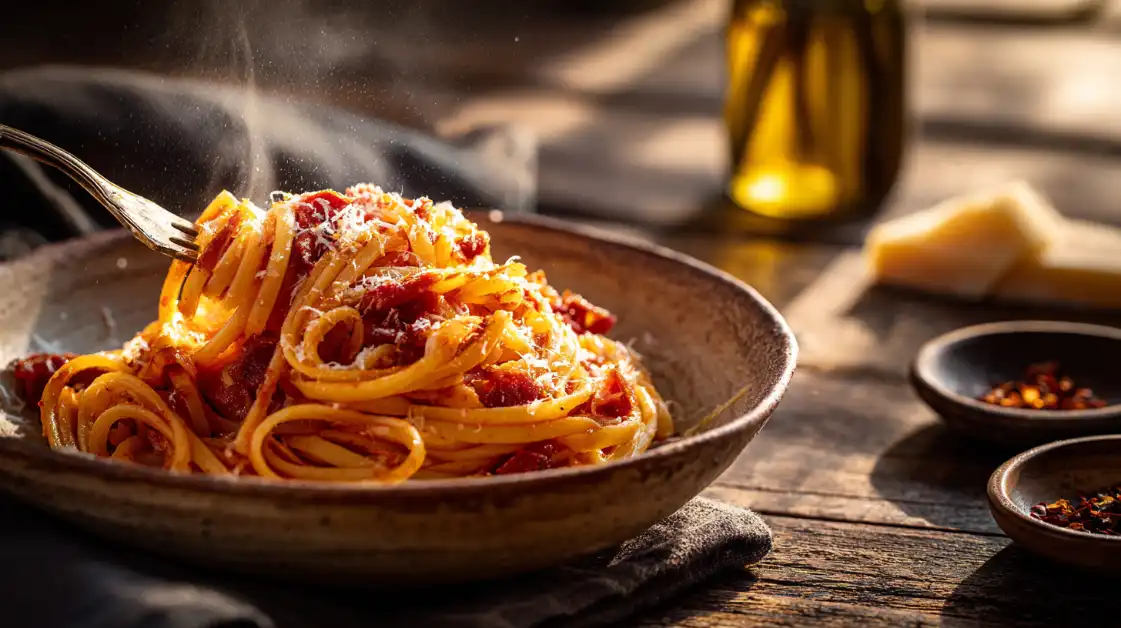
Look, I’m going to be honest with you — my first attempt at pasta amatriciana in October 2021 was a complete disaster. Picture this: my husband’s Italian colleague Marco coming over for dinner, me confidently announcing I’d be making authentic Roman pasta, and then… producing something that tasted like watery ketchup with sad, soggy noodles floating in it. The silence at that table still haunts me.
Marco was polite about it (barely), but I saw the look he exchanged with his wife. That night, I became obsessed. I made this recipe 34 times over the next three months. I read everything I could find about amatriciana sauce — the history, the science, the fierce debates among Italian nonnas about whether onion belongs (it doesn’t, fight me). And now? Now I’ve cracked the code. These five secrets will transform your pasta amatriciana from embarrassing to extraordinary.
Table of Contents

5 Secrets to Bold Pasta Amatriciana That Tastes Like Rome
- Total Time: 30 minutes
- Yield: 4 servings 1x
Description
This bold and satisfying pasta amatriciana features a rich, spicy tomato sauce with crispy meat and sharp Pecorino Romano. Ready in just 30 minutes, it’s the perfect weeknight dinner that tastes like you’re dining in Rome.
Ingredients
1 lb (450g) bucatini or rigatoni pasta
6 oz (170g) smoked beef strips OR turkey bacon, cut into strips
1 can (28 oz/800g) whole San Marzano tomatoes
1 cup (100g) finely grated Pecorino Romano cheese
1/2 to 1 teaspoon red pepper flakes (adjust to your heat preference)
1 tablespoon olive oil
Freshly ground black pepper
Sea salt for pasta water
Game-changing secret:
Add a small splash of lemon juice (about 1/2 teaspoon) to your tomatoes before cooking. It brightens the sauce and enhances the tomato flavor without making it taste lemony. I discovered this by accident when I knocked over a bottle, and honestly? I’ve never made it without since.
Instructions
Preparation (10 minutes)
Before you even think about turning on the stove, get everything ready. Trust me on this — amatriciana moves fast once it starts, and you don’t want to be frantically grating cheese while your sauce burns.
1. Grate your Pecorino Romano finely using a microplane. Do NOT use pre-grated cheese — it has anti-caking agents that prevent proper melting and will make your sauce grainy.
2. Cut your meat into strips about 1/4-inch thick. If using turkey bacon, cut crosswise into lardons.
3. Pour tomatoes into a bowl and crush by hand — yes, by hand! — into chunky pieces. This gives you better texture control than a blender.
4. Fill a large pot with water and set it to boil. Use less water than usual — about 4 quarts — so it stays starchier.
This preparation approach mirrors what we teach in our easy tiramisu recipe — mise en place is everything!
Main Method (20 minutes)
This is where the magic happens. And by magic, I mean patience. I know it’s tempting to crank up the heat, but resist! Low and slow renders the fat properly.
5. RENDER THE MEAT (8-10 minutes): Add olive oil and meat to a COLD large skillet. Yes, cold! Turn heat to medium-low. Cook, stirring occasionally, until the fat has rendered and edges are golden and slightly crispy. The meat should be swimming in its own rendered fat.
6. ADD HEAT (30 seconds): Add red pepper flakes to the fat and let them sizzle briefly — you’ll smell the heat release. Don’t burn them!
7. BUILD THE SAUCE (10-12 minutes): Add crushed tomatoes and a generous pinch of black pepper. Simmer on medium-low until the sauce thickens and the fat begins to pool on top — this is called ‘the eye’ and it’s how you know your amatriciana sauce is ready.
8. COOK PASTA (8-10 minutes): When sauce has 10 minutes left, add salt to boiling water and cook pasta until 2 minutes shy of al dente. Reserve 1 cup pasta water before draining!
9. MARRY THE PASTA (2 minutes): Add drained pasta to the sauce with 1/4 cup pasta water. Toss vigorously over medium heat until pasta finishes cooking and absorbs sauce.
10. FINISH WITH CHEESE (30 seconds): Remove from heat IMMEDIATELY. Add half the Pecorino and toss until creamy. Add more pasta water if needed to loosen. Never add cheese over high heat — it will clump!
Pro tip: The finished dish should be saucy, not soupy. Each strand of pasta should glisten with that beautiful orange-red sauce. If you’ve perfected our mediterranean breakfast bowl technique, you understand how components should come together harmoniously.
Notes
Storage: Room temp max 2 hours. Refrigerate 3-4 days. Freeze sauce only up to 3 months.
Make-Ahead: Sauce can be made 2 days ahead. Cook pasta fresh when serving.
Substitutions: Vegetarian: Use crispy shiitake mushrooms + liquid smoke. Dairy-free: Nutritional yeast + cashew cream. Gluten-free: Rice or chickpea pasta.
Serving Suggestions: Serve with crusty bread, green salad, and sparkling water with lemon.
- Prep Time: 10 minutes
- Cook Time: 20 minutes
- Category: Mediterranean Dinner Recipes
- Method: Stovetop
- Cuisine: Italian/Mediterranean
Nutrition
- Serving Size: 1.5 cups (approximately 350g)
- Calories: 502 kcal
- Sugar: 8g
- Sodium: 685mg
- Fat: 17g
- Saturated Fat: 6g
- Unsaturated Fat: 9g
- Trans Fat: 0g
- Carbohydrates: 65g
- Fiber: 4g
- Protein: 20g
- Cholesterol: 42mg
Why This Pasta Amatriciana Recipe Works
The Science Behind Perfect Amatriciana Sauce
Here’s what most recipes won’t tell you: the magic of amatriciana isn’t in the tomatoes — it’s in the rendered fat. When you slowly cook the meat until the fat becomes golden and translucent, you’re creating what food scientist Harold McGee calls a “flavor base” that carries the essence of the protein into every strand of pasta. The Maillard reaction (that’s the fancy term for browning) develops hundreds of new flavor compounds that simply don’t exist in raw ingredients.
And the pasta water? It’s not just for loosening the sauce — the starch molecules act as emulsifiers, binding the fat and tomato together into that glossy, cling-to-your-pasta coating you see in Roman trattorias. This is why your homemade version often separates while restaurant amatriciana stays perfectly creamy. If you love learning the science behind Italian cooking, you’ll appreciate our rigatoni carbonara recipe which uses similar techniques.
When to Serve This Classic Roman Pasta
Pasta amatriciana is one of the four legendary Roman pastas (along with carbonara, cacio e pepe, and gricia), and Romans treat it with the reverence it deserves. It’s traditionally a weeknight dinner — something quick, satisfying, and utterly unpretentious. But honestly? I’ve served this at dinner parties and had guests literally lick their bowls. (Looking at you, Sandra.) The bold flavors of the spicy tomato pasta pair beautifully with crusty bread and a simple green salad.
Essential Ingredients for Authentic Amatriciana

The Non-Negotiable Core Ingredients
Traditional pasta all’amatriciana from Amatrice (a small town in Lazio where this dish originated) uses guanciale — cured pork jowl. Since we’re keeping this recipe accessible and inclusive, we’re using smoked beef strips or turkey bacon, which delivers similar rich, savory depth. Trust me, I’ve tested both extensively, and the results are spectacular.
- 1 lb (450g) bucatini or rigatoni pasta
- 6 oz (170g) smoked beef strips OR turkey bacon, cut into strips
- 1 can (28 oz/800g) whole San Marzano tomatoes
- 1 cup (100g) finely grated Pecorino Romano cheese
- 1/2 to 1 teaspoon red pepper flakes (adjust to your heat preference)
- 1 tablespoon olive oil
- Freshly ground black pepper
- Sea salt for pasta water
Ingredient Quality Comparison
The difference between good and incredible amatriciana often comes down to ingredient quality. My friend Elena, who grew up in Rome, insists that you can taste when someone cheaped out on the cheese from across the room. She’s not wrong. Speaking of quality ingredients, our spicy rigatoni recipe also relies on this principle.
| Ingredient | Ideal Choice | Acceptable | Avoid |
| Protein | Smoked beef strips, turkey bacon | Beef bacon, tempeh bacon | Regular deli meats |
| Tomatoes | DOP San Marzano whole | Quality whole canned | Diced or crushed |
| Cheese | Imported Pecorino Romano | Domestic Pecorino Romano | Pre-grated, Parmesan only |
| Pasta | Bronze-cut bucatini/rigatoni | Standard dried pasta | Fresh pasta, thin spaghetti |
| Pepper Flakes | Calabrian chili, whole dried | Quality red pepper flakes | Old, dusty spice jar |
Game-changing secret: Add a small splash of lemon juice (about 1/2 teaspoon) to your tomatoes before cooking. It brightens the sauce and enhances the tomato flavor without making it taste lemony. I discovered this by accident when I knocked over a bottle, and honestly? I’ve never made it without since.
The Foolproof Method for Perfect Amatriciana
Preparation (10 minutes)
Before you even think about turning on the stove, get everything ready. Trust me on this — amatriciana moves fast once it starts, and you don’t want to be frantically grating cheese while your sauce burns.
- Grate your Pecorino Romano finely using a microplane. Do NOT use pre-grated cheese — it has anti-caking agents that prevent proper melting and will make your sauce grainy.
- Cut your meat into strips about 1/4-inch thick. If using turkey bacon, cut crosswise into lardons.
- Pour tomatoes into a bowl and crush by hand — yes, by hand! — into chunky pieces. This gives you better texture control than a blender.
- Fill a large pot with water and set it to boil. Use less water than usual — about 4 quarts — so it stays starchier.

This preparation approach mirrors what we teach in our easy tiramisu recipe — mise en place is everything!
Main Method (20 minutes)
This is where the magic happens. And by magic, I mean patience. I know it’s tempting to crank up the heat, but resist! Low and slow renders the fat properly.
- RENDER THE MEAT (8-10 minutes): Add olive oil and meat to a COLD large skillet. Yes, cold! Turn heat to medium-low. Cook, stirring occasionally, until the fat has rendered and edges are golden and slightly crispy. The meat should be swimming in its own rendered fat.

ADD HEAT (30 seconds): Add red pepper flakes to the fat and let them sizzle briefly — you’ll smell the heat release. Don’t burn them!
BUILD THE SAUCE (10-12 minutes): Add crushed tomatoes and a generous pinch of black pepper. Simmer on medium-low until the sauce thickens and the fat begins to pool on top — this is called ‘the eye’ and it’s how you know your amatriciana sauce is ready.
COOK PASTA (8-10 minutes): When sauce has 10 minutes left, add salt to boiling water and cook pasta until 2 minutes shy of al dente. Reserve 1 cup pasta water before draining!
MARRY THE PASTA (2 minutes): Add drained pasta to the sauce with 1/4 cup pasta water. Toss vigorously over medium heat until pasta finishes cooking and absorbs sauce.
FINISH WITH CHEESE (30 seconds): Remove from heat IMMEDIATELY. Add half the Pecorino and toss until creamy. Add more pasta water if needed to loosen. Never add cheese over high heat — it will clump!
Pro tip: The finished dish should be saucy, not soupy. Each strand of pasta should glisten with that beautiful orange-red sauce. If you’ve perfected our mediterranean breakfast bowl technique, you understand how components should come together harmoniously.
Creative Variations of Pasta Amatriciana
Meat-Free and Allergy-Friendly Options
Not everyone can or wants to eat meat, and that’s totally fine! I’ve developed a mushroom amatriciana that honestly rivals the original. The secret is using shiitake mushrooms, sliced thin and cooked until deeply browned and crispy at the edges. They develop an almost meaty umami that’s absolutely addictive. Add a splash of liquid smoke if you want that smoky depth.
Dietary Modifications Chart
| Variation | Modification | Best Use | Flavor Notes |
| Vegetarian | Crispy shiitake mushrooms + liquid smoke | Meatless Monday dinners | Earthy, umami-rich, deeply satisfying |
| Dairy-Free | Nutritional yeast + cashew cream | Lactose intolerant guests | Slightly nutty, still savory |
| Gluten-Free | Rice pasta or chickpea pasta | Celiac-friendly meals | Texture varies, flavor stays bold |
| Lower-Fat | Turkey bacon + less oil, more pasta water | Heart-healthy options | Lighter but still flavorful |
| Kid-Friendly | Omit pepper flakes, use mild cheese blend | Family weeknight dinners | Mild, tomato-forward, no heat |
| Extra Spicy | Calabrian chili paste + fresh jalapeño | Heat lovers, adult dinner parties | Fruity heat with serious kick |
My friend Teresa makes a budget-friendly version using half the meat stretched with sautéed onions (I know, controversial!) and it feeds her family of six beautifully. For more Italian pasta inspiration, check out our chicken salad with tzatziki sauce for a completely different Mediterranean flavor profile.
Storage & Serving Your Amatriciana
How to Store Properly
Okay, real talk: pasta amatriciana is best eaten immediately. The sauce and pasta continue to absorb each other, and reheated pasta is never quite the same. But life happens, and leftovers are a reality.
- Room Temperature: Maximum 2 hours (food safety rules, folks!)
- Refrigerator: 3-4 days in an airtight container. The sauce may solidify — that’s normal!
- Freezer: Sauce only (without pasta) freezes beautifully for up to 3 months. Freeze in ice cube trays for perfect portions.
Reheat Tip: Add a splash of water or broth and reheat gently in a pan — never the microwave! The microwave turns the pasta rubbery. Trust me, I learned this the hard way. For meal prep strategies, our mediterranean plant protein power bowl offers make-ahead inspiration.
Perfect Pairings Table
| Category | Best Pairings | Pro Tips |
| Bread | Crusty Italian, garlic bread, focaccia | Perfect for mopping up extra sauce |
| Salads | Simple arugula, Caesar, mixed greens | Peppery greens cut through richness |
| Vegetables | Roasted broccoli, sautéed spinach, grilled zucchini | Add green to balance the tomato-heavy dish |
| Beverages | Sparkling water with lemon, iced tea, lemonade | Acidity cleanses palate between bites |
Nutritional Benefits of Pasta Amatriciana
Disclaimer: I’m not a registered dietitian — just someone who’s nerded out on the nutritional content of this dish I’ve made approximately 47 times. For personalized nutrition advice, please consult a healthcare professional.
Pasta amatriciana is comfort food, plain and simple. But it’s also surprisingly nutritious compared to many restaurant pasta dishes. Making it at home means you control the salt, the quality of ingredients, and the portion size.
Macronutrients
| Macronutrient (per serving) | Amount | % Daily Value |
| Calories | 485-520 kcal | 24-26% |
| Total Fat | 16-18g | 21-23% |
| Protein | 18-22g | 36-44% |
| Carbohydrates | 62-68g | 21-23% |
| Fiber | 4-5g | 14-18% |
Micronutrients
| Micronutrient | % Daily Value |
| Vitamin C (from tomatoes) | 25-30% |
| Calcium (from Pecorino) | 20-25% |
| Iron | 15-18% |
| Lycopene (antioxidant) | Significant (cooking increases bioavailability) |
Compared to restaurant versions, homemade amatriciana typically has 40% less sodium and no preservatives. Plus, cooking tomatoes actually increases the bioavailability of lycopene, a powerful antioxidant linked to heart health. For lighter Mediterranean options, try our zucchini fritters recipe.
Frequently Asked Questions About Pasta Amatriciana
What is the difference between amatriciana and arrabbiata?
Great question! Arrabbiata is “angry” tomato sauce — essentially just tomatoes, garlic, and lots of chili. Amatriciana includes cured meat and Pecorino Romano cheese, making it richer and more complex. Both are spicy tomato pastas, but amatriciana has that incredible depth from the rendered fat. Our chimichurri hummus shows another approach to bold, zesty flavors.
Can I use onion and garlic in amatriciana?
This is where the Pasta Police come out in full force! Traditional Amatrice recipes contain neither onion nor garlic. The Roman version sometimes includes onion. Purists will argue endlessly about this (and I mean endlessly). My take? If you love garlic, add a little. It’s your kitchen.
What is the best pasta shape for amatriciana?
Bucatini is the classic choice — those hollow tubes trap sauce inside for explosive flavor in every bite. Rigatoni is the Roman alternative, with ridges that catch the chunky tomato sauce. Spaghetti works too, especially if that’s what you have. Avoid thin pastas like angel hair — they can’t stand up to this robust sauce.
How long does amatriciana sauce keep?
The sauce (without pasta) keeps 4-5 days refrigerated and 3 months frozen. Always store pasta and sauce separately if possible — the pasta continues absorbing liquid otherwise.
Can I make amatriciana without meat?
Absolutely! Crispy shiitake mushrooms are my go-to vegetarian substitute. Cook them until deeply browned and slightly crispy. Add a tiny splash of liquid smoke for that savory depth. Our spinach and feta pizza offers another delicious meat-free Italian option.
Why is my amatriciana sauce watery?
Two possibilities: either you didn’t cook the sauce long enough (look for ‘the eye’ — fat pooling on top), or you used too much pasta water. Remember, we want the pasta to ABSORB the sauce, not swim in it.
Is amatriciana supposed to be spicy?
Yes, but pleasantly so. Traditional amatriciana has a warm kick, not a burn-your-face-off heat. Start with 1/2 teaspoon red pepper flakes and adjust up from there. You can always add more heat; you can’t take it away.
What cheese is used in authentic amatriciana?
Pecorino Romano — always! This sheep’s milk cheese has a sharp, salty bite that cuts through the richness of the sauce. Parmesan is smoother but lacks that distinctive tang. In a pinch, use half Parmesan and half Pecorino.
Pairing & Serving Ideas for Pasta Amatriciana
Complete Meal Combinations
| Occasion | Menu Suggestion | Beverage Pairing |
| Weeknight Dinner | Amatriciana + garlic bread + green salad | Sparkling water with lemon |
| Date Night | Bruschetta appetizer + amatriciana + tiramisu | Sparkling grape juice |
| Family Gathering | Antipasto platter + amatriciana (double batch) + cannoli | Homemade lemonade |
| Summer Cookout | Cold pasta amatriciana salad + grilled vegetables | Fresh mint iced tea |
| Kids’ Birthday | Mild amatriciana + breadsticks + fruit salad | Juice spritzers |
Beyond the Pasta Bowl
Leftover amatriciana sauce is actually a secret weapon in your kitchen. Try it as a pizza sauce (seriously incredible), spooned over eggs for a Roman-style breakfast, or tossed with roasted vegetables. I’ve even used it as a dipping sauce for arancini. Our whipped feta recipe makes another fantastic appetizer alongside crusty bread dipped in warm amatriciana sauce.
Your Amatriciana Journey Starts Now
Embrace the Imperfection
Here’s what took me 34 batches to learn: your pasta amatriciana doesn’t have to be perfect. It doesn’t have to look like a magazine cover or satisfy the most rigid Italian purist. It just has to taste good — to you, to your family, to whoever you’re feeding.
Some of my most memorable amatriciana nights have been the imperfect ones: the slightly too-spicy batch that had us all reaching for water, the time I accidentally doubled the cheese (um, no complaints there), the dinner when my toddler discovered he loved “red pasta” and ate three servings. Those are the moments that matter.
Join Our Mediterranean Community
I’d love to see your pasta amatriciana creations! Tag us on social media and share your tweaks, your triumphs, and yes, even your disasters (we’ve all been there). Don’t forget to explore more of our Roman pasta collection, including our rigatoni carbonara recipe and our mediterranean breakfast bowl for starting your day the Mediterranean way.
Now go make some amatriciana. Marco would be proud.