
A Teacher’s Lunch Break Revelation
So here’s the thing—I used to pack the saddest lunches for myself. As a French teacher rushing between classes, I’d grab whatever was quick: a sandwich, chips, maybe an apple if I remembered. By 2 PM, I’d be starving and cranky, snapping at my seventh-graders over irregular verbs.
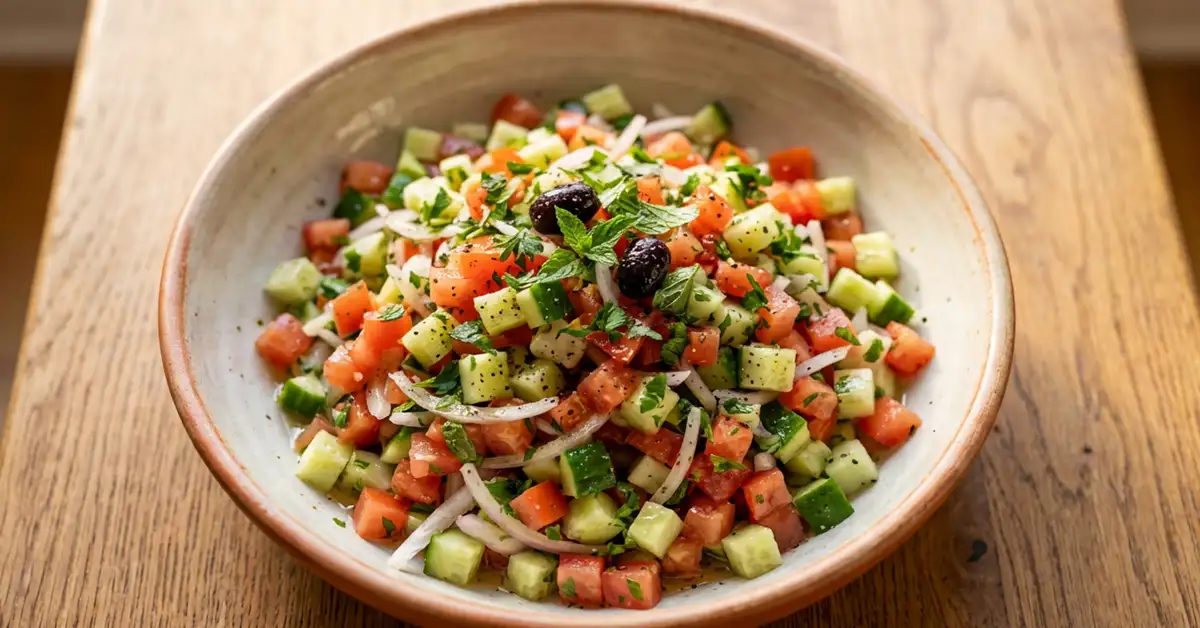
Then last spring, my colleague Maria started bringing this gorgeous Mediterranean salad with cucumber, tomato and onion to our shared lunch breaks. It looked so fresh and vibrant in her glass container, and she’d eat it slowly, actually enjoying her 30 minutes instead of inhaling food like I did.
I asked for the recipe, and she laughed. “There’s no recipe—it’s what my Greek grandmother made every single day.” But when I tried making it at home, it turned into a watery mess with bland vegetables. I was doing it all wrong.
After calling Maria three times and testing different methods for two weeks, I finally figured out the three specific techniques that make this Mediterranean salad with cucumber, tomato and onion actually work. Now I make it four times a week, and my students have stopped asking why I’m always in a better mood after lunch.
Table of Contents

Mediterranean salad with cucumber, tomato and onion: 3 Secrets for Perfect Flavor
- Total Time: 15 minutes
- Yield: 4 servings (approximately 6 cups total) 1x
Description
Fresh Mediterranean salad with crisp cucumber, ripe tomatoes, red onion, feta cheese, olive oil, and lemon juice. Ready in 10 minutes, perfect healthy side dish.
Ingredients
For the Salad:
3 medium cucumbers (English or Persian preferred), diced into ½-inch pieces
4 large ripe tomatoes (Roma or heirloom), diced into ½-inch pieces
1 medium red onion, sliced paper-thin
¼ cup fresh flat-leaf parsley, finely chopped
2 tablespoons fresh mint leaves, finely chopped (optional but recommended)
½ cup feta cheese, crumbled from block (optional)
For the Dressing:
3 tablespoons extra virgin olive oil (use high-quality)
2 tablespoons fresh lemon juice (about 1 lemon)
1 teaspoon fine sea salt (plus more for salting vegetables)
½ teaspoon freshly ground black pepper
½ teaspoon dried oregano (Greek oregano preferred)
Instructions
Dice cucumbers and tomatoes into uniform ½-inch pieces—consistency matters for even flavor distribution and visual appeal. Place in a large mixing bowl.
Sprinkle 1 teaspoon fine sea salt over the cucumbers and tomatoes. Toss gently with your hands or a spoon to distribute salt evenly. Let the salted vegetables sit undisturbed for exactly 10 minutes. You’ll see liquid pooling at the bottom—this is the excess water being extracted, which prevents a watery salad later.
While vegetables are releasing water, slice red onion paper-thin using a sharp knife or mandoline. Immediately submerge sliced onions in a bowl of cold water. Let soak for 10 minutes—this removes the harsh sulfuric bite and makes onions sweet and mild.
After 10 minutes, tilt the bowl of cucumbers and tomatoes over the sink and drain off all accumulated liquid. Don’t rinse—you want the salt that’s absorbed into the vegetables. Drain the red onions thoroughly and pat dry with paper towels if very wet.
Add drained red onions to the cucumber-tomato mixture. Add finely chopped fresh parsley and mint. Toss gently to distribute herbs evenly throughout.
In a small bowl or measuring cup, whisk together extra virgin olive oil, fresh lemon juice, black pepper, and dried oregano until emulsified. Taste the dressing—it should be bright, tangy, and slightly sharp. Adjust lemon or oil to your preference.
Pour the dressing over the vegetable mixture. Using two large spoons or clean hands, toss the salad gently but thoroughly, ensuring every piece is lightly coated with dressing. Don’t over-mix or vegetables will break down.
Crumble feta cheese over the top of the salad (don’t mix it in—it should sit on top for visual appeal). Serve immediately in a wide, shallow bowl for best presentation. Garnish with additional fresh mint or parsley if desired.
Notes
Storage Instructions:
Room Temperature: Serve within 30 minutes to 1 hour of dressing for optimal texture and flavor. This salad is meant to be eaten fresh.
Refrigerator: If you must store, keep undressed vegetables and dressing separate in airtight containers for up to 3 hours maximum. Dressed salad becomes watery and unappetizing after 2 hours.
Freezer: Do not freeze. Cucumbers and tomatoes have high water content and turn to mush when frozen and thawed.
Leftover Management: If you have dressed leftovers, drain excess liquid before eating. Best used within 1-2 hours.
Make-Ahead Tips:
Prep all vegetables (dice cucumbers and tomatoes, slice onions) up to 2 hours ahead. Store in separate containers in refrigerator.
Keep dressing in a sealed jar at room temperature (if using within 2 hours) or refrigerate (up to 2 days).
Salt vegetables and soak onions right before assembling—these steps should be done fresh.
Assemble and dress the salad immediately before serving for best results.
For meal prep: Pack undressed vegetables in main compartment, dressing in small container, feta separate. Combine when ready to eat.
Substitution Options with Ratios:
Cucumbers: English cucumber (1:1), Persian cucumbers (1:1), regular cucumbers peeled and seeded (1:1), or even zucchini raw (1:1)
Tomatoes: Cherry tomatoes halved (1:1 by volume), grape tomatoes halved (1:1), heirloom tomatoes (1:1), or sun-dried tomatoes rehydrated for different flavor (½ cup)
Red Onion: Sweet onion like Vidalia (1:1), shallots finely sliced (½ the amount), green onions sliced (3-4 whole), or omit entirely
Lemon Juice: Red wine vinegar (1:1), white wine vinegar (1:1), apple cider vinegar (1:1), or lime juice (1:1)
Olive Oil: Avocado oil (1:1), grapeseed oil (1:1), or any neutral oil (1:1, though flavor will be milder)
Feta Cheese: Goat cheese crumbled (1:1), ricotta salata crumbled (1:1), halloumi grilled and cubed (¾ cup), or omit for dairy-free
Fresh Herbs: All parsley if no mint (⅓ cup total), cilantro for Middle Eastern twist (¼ cup), basil for Italian touch (¼ cup), or dried parsley (1 tablespoon)
Dietary Modification Instructions:
Vegan/Dairy-Free: Omit feta cheese or substitute with plant-based feta (Follow Your Heart brand works well). Add 1 tablespoon nutritional yeast to dressing for savory depth.
Low-Sodium: Skip the initial salting step (salad may be slightly more watery). Use only ¼ teaspoon salt in dressing. Choose low-sodium feta or omit.
Paleo: Recipe is naturally paleo-compliant—just omit the feta cheese.
Keto/Low-Carb: Recipe is already keto-friendly. Contains approximately 6g net carbs per serving with feta.
Whole30: Omit feta cheese. Ensure all ingredients are compliant (check olive oil and vinegar have no additives).
Kid-Friendly: Omit red onion entirely or use very mild sweet onion. Use half the amount of dressing. Let kids add their own feta. Cut vegetables smaller for easier eating.
Serving Suggestions:
Serve alongside grilled chicken, lamb kebabs, or fish for complete meal
Use as topping for pita bread or flatbread sandwiches
Pair with hummus, tzatziki, and warm pita for mezze platter
Serve over mixed greens for larger salad
Add to grain bowls with quinoa, couscous, or rice
Use as filling for wraps or stuffed pita pockets
Pair with any protein bowl or pasta dish as fresh side
Pro Tips for Success:
Use room temperature vegetables—cold vegetables don’t absorb dressing as well
Cut all vegetables the same size for consistent texture
Don’t skip soaking onions—this single step prevents harsh onion flavor
Use block feta, not pre-crumbled—it’s creamier and less dry
Taste your tomatoes first—if flavorless, add ½ teaspoon sugar to dressing
Fresh lemon juice is non-negotiable—bottled juice tastes artificial
Serve in wide, shallow bowl rather than deep bowl for better presentation
Add dressing right before serving—never in advance
If tomatoes are very juicy, remove seeds before dicing
- Prep Time: 15 minutes (includes salting and soaking time)
- Cook Time: 0 minutes (no cooking required)
- Category: Mediterranean Salad recipe, Side Dish
- Method: Mixing, Tossing, Fresh Assembly
- Cuisine: Mediterranean
Nutrition
- Serving Size: Approximately 1.5 cups (240g)
- Calories: 125 kcal
- Sugar: 5g (natural from vegetables)
- Sodium: 620mg (27% DV – can reduce by using less salt)
- Fat: 9g (12% DV)
- Saturated Fat: 2g (10% DV)
- Unsaturated Fat: 7g
- Trans Fat: 0g
- Carbohydrates: 10g (3% DV)
- Fiber: 2.5g (10% DV)
- Protein: 3g (6% DV)
- Cholesterol: 8mg (3% DV)
Why This Recipe Works So Well
This salad works because of salt timing and proper technique. When you salt cucumbers and tomatoes first, they release their water before you dress the salad. This means no watery puddle ruining your olive oil and lemon juice. The vegetables stay crisp and the dressing stays flavorful.
The combination of fresh vegetables with olive oil creates what nutritionists call a “nutrient synergy”—the healthy fats help your body absorb vitamins from the tomatoes. It’s not just tasty; it’s actually smart eating.
The Mediterranean Way: Fresh Daily, Never Stored
In Mediterranean countries, people make this salad fresh every single day. No one makes it ahead. Why? Because cucumbers and tomatoes release water over time, and yesterday’s salad just doesn’t taste the same as today’s.
Growing up in Tunisia, I watched my mom make this every afternoon for lunch. “Slow cooking for some things, but salad is always now,” she’d say. This appeared at almost every meal—alongside grilled fish, with roasted chicken, next to Mediterranean breakfast bowls, you name it.
Perfect for Summer and Entertaining
This shines brightest in summer when tomatoes actually taste like tomatoes and cucumbers are sweet and crisp. But honestly, I make it year-round because sometimes you just need fresh, crunchy vegetables to balance richer foods.
For entertaining, this is my secret weapon. Takes 10 minutes, looks impressive, costs almost nothing. I serve it with everything from protein bowls to simple grilled chicken. It’s the perfect side for pasta salads when you want something lighter.
The Secret Formula: Essential Ingredients

Quality matters here more than technique. Bad tomatoes make bad salad—no way around it.
For the Salad:
- 3 medium cucumbers (English or Persian)
- 4 large tomatoes (Roma or any ripe variety)
- 1 medium red onion
- ¼ cup fresh parsley, chopped
- 2 tablespoons fresh mint (optional but amazing)
- ½ cup feta cheese, crumbled (optional)
For the Dressing:
- 3 tablespoons olive oil (use the good stuff)
- 2 tablespoons lemon juice (fresh only)
- 1 teaspoon salt
- ½ teaspoon black pepper
- ½ teaspoon dried oregano
The Game-Changing Secret Most People Don’t Know
Here it is: salt your vegetables 10 minutes before dressing. This pulls out excess water so your salad isn’t swimming in liquid. Most people skip this step and wonder why their Mediterranean salad with cucumber, tomato and onion gets watery.
Second secret? Slice onions super thin and soak in cold water for 10 minutes. This removes the harsh bite that makes raw onion overwhelming. My students can actually eat the onions now when I bring this to class parties.
Ingredient Substitutions
No English cucumber? Regular cucumbers work—just peel them because the skin can be bitter. Out of lemons? Red wine vinegar or apple cider vinegar works. Don’t like raw onion? Skip it or use green onions instead. No fresh parsley? The salad still works, just less traditional. These substitutions work for most Mediterranean salad recipes too.
| Ingredient | Best Choice | Good Alternative | Budget Option |
|---|---|---|---|
| Cucumber | English/Persian | Regular (peeled) | Any cucumber |
| Tomato | Heirloom/Roma | Cherry tomatoes | Standard tomatoes |
| Olive Oil | Extra virgin | Regular olive oil | Any vegetable oil |
| Feta Cheese | Block feta | Pre-crumbled | Omit for budget |
The Foolproof Method
This is so simple that calling it a “method” feels fancy. But these steps matter for a proper Mediterranean salad with cucumber, tomato and onion.
Preparation (10 minutes)
Step 1: Prep Your Vegetables
Dice cucumbers into bite-sized pieces (about ½-inch). Cut tomatoes the same size—consistency matters for good texture. Slice red onion super thin, then soak in a bowl of cold water for 10 minutes.
Step 2: Salt and Wait
Put cucumbers and tomatoes in a large bowl. Sprinkle with 1 teaspoon salt. Toss gently and let sit for 10 minutes. You’ll see water collecting at the bottom—that’s good. We’re getting rid of it now instead of later.
Step 3: Drain and Add Onions
After 10 minutes, drain off the liquid from the vegetables. Drain the red onion and add it to the bowl along with chopped parsley and mint.
The Main Assembly (2 minutes)
Step 4: Make the Dressing
In a small bowl, whisk together olive oil, lemon juice, black pepper, and oregano. Taste it—should be tangy and bright.
Step 5: Dress the Salad
Pour dressing over vegetables and toss gently. Don’t be rough—you want vegetables to stay in pieces, not turn to mush.
Step 6: Add Feta and Serve
Top with crumbled feta cheese. Serve immediately. Seriously, don’t wait—this salad is best within 30 minutes of making it.
Pro Tips
- Use ripe tomatoes—underripe ones taste like cardboard
- Don’t skip the salting step—it’s the difference between good and great
- Taste before serving—might need more lemon or salt
- Serve in a wide, shallow bowl—looks better and easier to toss
Creative Variations
This base recipe is super flexible. Here’s how I change it up, inspired by different Mediterranean salad variations.
| Variation | Key Changes | Best For |
|---|---|---|
| Greek-Style | Add kalamata olives, double the feta, use oregano heavily | Traditional flavor |
| Israeli-Style | Dice everything tiny (like really small), add tahini drizzle | Pita sandwich filling |
| Turkish-Style | Add pomegranate seeds, sumac, chopped walnuts | Special occasions |
| Kid-Friendly | Skip onion entirely, add bell peppers instead, mild feta | Picky eaters |
Dietary Modifications
Vegan: Skip the feta or use plant-based feta. Still delicious. The olive oil and lemon juice carry all the flavor anyway. Works great alongside vegan Mediterranean bowls.
Low-Sodium: Don’t salt the vegetables beforehand. Just use a tiny pinch of salt in the dressing. You lose some texture but it works for health reasons.
Keto/Low-Carb: This is already perfect. All vegetables, healthy fats, and if you add feta, good protein too.
Budget Version: Skip the feta, use any tomatoes on sale, regular cucumbers instead of English. Still tastes fresh and good.
Storage & Serving
Here’s the truth: this salad doesn’t store well. But there are workarounds.
Storage Reality
Best Fresh: Eat within 30 minutes to 1 hour of making. This is peak texture and flavor for any Mediterranean salad with cucumber, tomato and onion.
Refrigerator (2-3 hours max): Store undressed vegetables separately from dressing. Combine right before serving.
Don’t Freeze: Just don’t. Cucumbers and tomatoes turn to mush.
Serving Suggestions
| Serve With | Why It Works |
|---|---|
| Grilled meats | Cool crunch balances char |
| Chicken stir fry | Fresh contrast to warm dish |
| Hummus and pita | Classic Mediterranean combo |
| Rice or quinoa bowls | Adds freshness to grains |
| Pasta salads | Perfect light side |
| Zucchini fritters | Double vegetable power |
Beverage Pairings: Cold water with lemon, iced mint tea, or for adults, a crisp white beverage.
Nutritional Benefits
This simple salad packs serious nutrition.
Macronutrients
| Nutrient | Per Serving | % Daily Value |
|---|---|---|
| Calories | 95 kcal | 5% |
| Protein | 2g | 4% |
| Carbohydrates | 8g | 3% |
| Fiber | 2g | 8% |
| Fat | 7g | 9% |
| Sugar | 4g | Natural |
Micronutrients
| Vitamin/Mineral | Amount | % Daily Value |
|---|---|---|
| Vitamin C | 18mg | 20% |
| Vitamin K | 24mcg | 20% |
| Potassium | 285mg | 6% |
| Vitamin A | 950 IU | 19% |
Health Benefits: Cucumbers hydrate (95% water). Tomatoes provide lycopene—an antioxidant linked to heart health. Olive oil delivers healthy fats that help absorb fat-soluble vitamins. Red onion adds quercetin, which may reduce inflammation.
Comparison: Way healthier than creamy dressings or mayo-based salads. This has real vegetables, minimal calories, maximum nutrition.
Your Burning Questions Answered
What is the difference between a Greek and Mediterranean salad?
Greek salad is a specific type of Mediterranean salad. The main difference? Greek salad traditionally includes bell peppers, no lettuce, and always has feta cheese on top (not mixed in). A Mediterranean salad with cucumber, tomato and onion is broader—it’s the everyday version eaten across Tunisia, Lebanon, Turkey, and beyond. Greek salad is fancier. This version is what we actually eat at home. If you want more variety, check out our collection of Mediterranean salads recipes.
What is Mediterranean cucumber and tomato salad called?
It goes by different names across regions. In Turkey, it’s Çoban Salatası (shepherd’s salad). In Israel, it’s Israeli Salad. In Lebanon and Tunisia, we just call it “salad” because it’s so common it doesn’t need a fancy name. The ingredients stay similar everywhere: cucumber, tomato, onion, olive oil, lemon juice. Some regions add different herbs or spices, creating unique Mediterranean salad variations.
What are some common cucumber salad mistakes?
Mistake 1: Not salting first. Your salad ends up watery.
Mistake 2: Using underripe tomatoes. They taste like nothing.
Mistake 3: Cutting vegetables too big. They should be bite-sized.
Mistake 4: Dressing too early. Vegetables get soggy.
Mistake 5: Using dried herbs instead of fresh parsley. Fresh makes a huge difference.
Mistake 6: Skipping the onion soak. Raw onion becomes too harsh.
These mistakes apply to most fresh salad recipes, not just this Mediterranean salad with cucumber, tomato and onion.
What do you put in a Mediterranean salad?
The base is always cucumber, tomato, and red onion. From there, you add:
Olive oil and lemon juice (the dressing)
Fresh parsley (essential for authentic flavor)
Feta cheese (optional but traditional)
Olives (kalamata or green)
Fresh mint (adds brightness)
Oregano (dried is fine)
Some people add bell peppers, but that’s more Greek-style. The simple version is just cucumber, tomato, onion. For more ideas, browse our Mediterranean salads collection.
What is the Jennifer Aniston salad?
The “Jennifer Aniston salad” is actually a bulgur wheat salad with cucumber, parsley, mint, feta, chickpeas, and pistachios. It’s inspired by tabbouleh but more substantial. While similar in spirit to this Mediterranean salad with cucumber, tomato and onion, it’s more of a grain bowl. Our version here is lighter—no grains, just fresh vegetables. If you want that style, try our protein-packed bowls for something similar.
What kind of cheese is used in Mediterranean salad?
Feta cheese is the traditional choice. Use block feta packed in brine—it’s creamier and tastier than pre-crumbled. Greek sheep’s milk feta is ideal, but any good quality feta works.
Some variations use:
Halloumi (grilled, for a warm twist)
Goat cheese (tangier, creamier)
No cheese (still delicious, especially in Lebanon and Tunisia)
The cheese is always optional. In many Mediterranean countries, this salad is served without it.
Pairing & Serving Ideas
Strategic Combinations
| Pair With | Why |
|---|---|
| Grilled chicken | Cool crunch with warm protein |
| Pasta dishes | Freshness cuts through richness |
| Lamb kebabs | Traditional Mediterranean combo |
| Breakfast bowls | Morning vegetables done right |
Occasion-Based Serving
Weeknight Dinner: Serve alongside any protein and rice or bread.
Summer BBQ: Make triple batch, serve in a big bowl, let people help themselves.
Meal Prep: Prep vegetables in containers, dress right before eating each day. Works great with other meal prep salads.
Entertaining: Present in a wide, shallow bowl, garnish with extra feta and herbs.
Conclusion
Make It Your Own
Three years ago, watching Maria eat her beautiful lunch while I inhaled sad sandwiches, I didn’t realize how much a simple Mediterranean salad with cucumber, tomato and onion would change my daily routine. Now it’s muscle memory—I don’t even measure anymore. The three secrets (salt first, soak onions, dress last) transformed my understanding of how simple ingredients work together.
Growing up Tunisian, this salad appeared at every meal. Teaching in America, I realized not everyone knows these little tricks that make the difference. That’s what I’m sharing here—the unspoken knowledge passed down in Mediterranean kitchens.
Start Today
Make this tonight. Don’t wait for perfect tomatoes or a special occasion. Use what you have. The technique matters more than perfection.
Maybe you’ll add olives. Maybe you’ll skip the onion. Maybe you’ll discover that a tiny bit of sumac changes everything (it does). That’s exactly what should happen—recipes should adapt to your life.
Share your results in the comments. Did the salting trick work? Did you pack it for lunch? What did you add or change? I want to know.
This simple salad connects us to centuries of Mediterranean cooking—fresh ingredients, simple preparation, maximum flavor. Even on busy Tuesdays between teaching classes, even when you’re tired, you can make something that tastes like sunshine and tradition.
Welcome to easier, healthier, more delicious eating!