Picture this: November 2022, my brother-in-law Marcus’s birthday dinner. I’d promised to bring something “healthy but actually good” (his words, not mine). What emerged from my oven that night was… well, let’s just say soggy potatoes swimming in watery cucumber sauce. Marcus smiled politely. His wife didn’t. The dog refused seconds.
That disaster launched what my husband now calls my “potato obsession phase”—thirty-nine test batches later, I’ve finally cracked the code to the perfect Mediterranean Potato Tzatziki Bowl. And honestly? The secrets I discovered weren’t where I expected them to be. It’s not about fancy ingredients or complicated techniques—it’s about understanding why certain steps matter and which shortcuts actually work.
Table of Contents

Mediterranean Potato Tzatziki Bowl
Ingredients
Method
- 1. Preheat oven to 425°F. Line two large sheet pans with parchment paper.
- 2. Make tzatziki: Grate cucumber, squeeze out all excess liquid using a kitchen towel. Combine with yogurt, garlic, lemon juice, olive oil, dill, and salt. Refrigerate.
- 3. Toss potatoes with 2 tablespoons olive oil, lemon zest, oregano, thyme, salt, and pepper. Spread on first sheet pan in single layer.
- 4. Roast potatoes for 20 minutes.
- 5. Toss chickpeas and broccoli with remaining olive oil, paprika, cumin, salt, and pepper.
- 6. Flip potatoes, add chickpea mixture to second pan. Roast both pans 15-20 more minutes until golden and crispy.
- 7. Toast almonds in oven for final 5-7 minutes.
- 8. Assemble bowls: swoop tzatziki across bottom, top with roasted vegetables, cherry tomatoes, and almonds. Drizzle with olive oil and garnish with fresh dill.
Nutrition
Notes
Tried this recipe?
Let us know how it was!Why This Mediterranean Potato Tzatziki Bowl Works
The Science Behind Crispy Roasted Potatoes
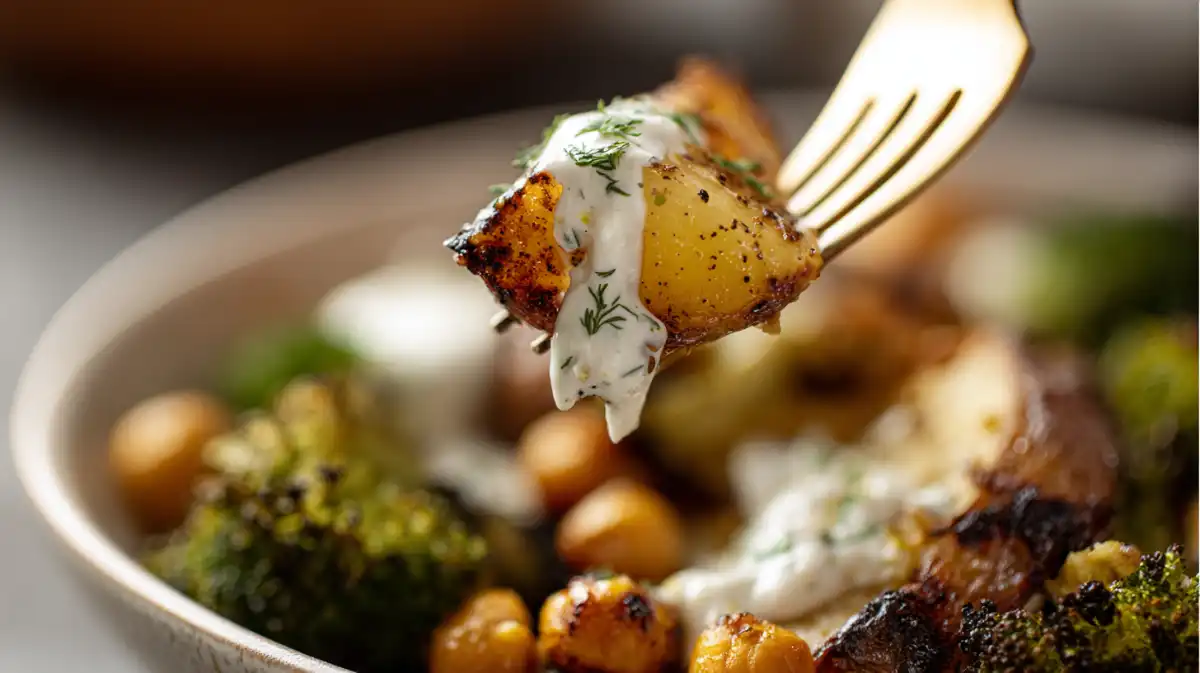
Here’s something that blew my mind when I finally understood it: potatoes are basically water sponges. They’re roughly 80% water, which means if you don’t handle them correctly, you’ll get steamed mush instead of crispy edges. The magic happens when surface moisture evaporates and the Maillard reaction kicks in—that beautiful browning that creates flavor compounds you simply cannot replicate any other way.
The high heat (425°F) is non-negotiable. Lower temperatures just won’t get you that contrast between crispy exterior and fluffy interior that makes this Greek potato bowl so satisfying. I’ve tested this at 375°F, 400°F, and even 450°F—425°F is the sweet spot where you get caramelization without burning. If you’ve enjoyed our Enlightened Mediterranean Chicken Bowl, you’ll recognize this technique.
When to Make This Bowl
I mean, technically anytime? But let me be more helpful. This Mediterranean Potato Tzatziki Bowl shines brightest for meal prep Sundays (the components store separately like a dream), casual dinner parties where you want impressive without stressful, and honestly—random Tuesday nights when you need something satisfying but not heavy. The beauty is everything roasts on one or two sheet pans while you prep the tzatziki. Minimal dishes, maximum flavor.
Essential Ingredients for Your Mediterranean Potato Tzatziki Bowl
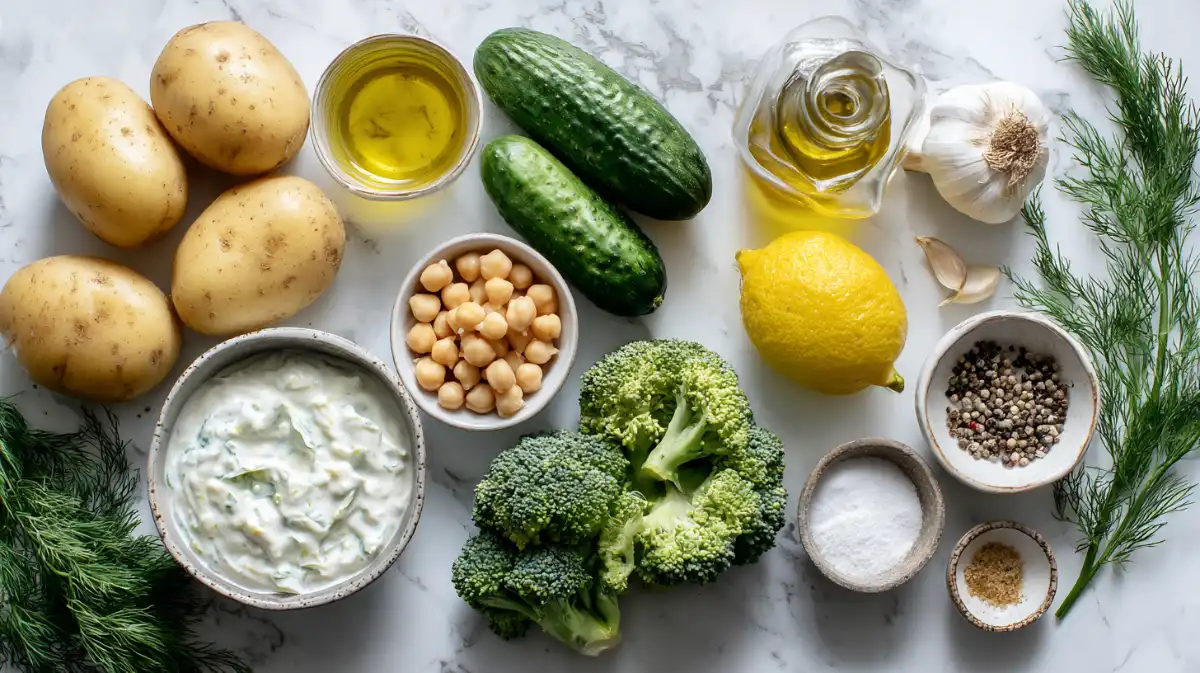
The Potato and Vegetable Lineup
For the Roasted Vegetables:
• 1.5 lbs Yukon Gold potatoes (or baby yellow potatoes), cut into 1-inch wedges
• 1 can (15 oz) chickpeas, drained, rinsed, and patted very dry
• 1 head broccoli, cut into florets
• 1 cup cherry tomatoes, halved
• 3 tablespoons extra virgin olive oil, divided
• 1 teaspoon dried oregano
• 1 teaspoon dried thyme
• 1 teaspoon smoked paprika
• 1/2 teaspoon ground cumin
• Zest of 1 lemon
• 1/4 cup toasted almonds, roughly chopped
• Kosher salt and black pepper
Can we talk about potato varieties for a second? Yukon Golds are my absolute favorite for this roasted potato tzatziki situation because they have this buttery flavor and waxy texture that holds up beautifully. Russets will work but they’re starchier and can fall apart. Red potatoes are fine but lack that golden color. The combination of potatoes with chickpeas creates what I call “the satisfying factor”—you know how our Spinach and Feta dishes feel complete? Same energy here.
The Tzatziki Situation
For the Homemade Tzatziki:
• 1.5 cups full-fat Greek yogurt (this is crucial—I’ll explain)
• 1 medium English cucumber, grated
• 2 cloves garlic, minced (or more if you’re brave like that)
• 2 tablespoons fresh lemon juice
• 2 tablespoons extra virgin olive oil
• 1/4 cup fresh dill, finely chopped
• 1/2 teaspoon kosher salt
• Fresh mint (optional but amazing)
Full-fat Greek yogurt isn’t negotiable for proper creamy tzatziki sauce. I’ve tested this with non-fat, 2%, and full-fat—the difference is night and day. Low-fat versions produce a thin, almost sour sauce that separates weirdly. Full-fat gives you that luxurious texture that clings to each potato perfectly. The technique mirrors what we do in our Crustless Spinach and Feta Quiche—quality dairy makes everything better.
Yogurt Type Comparison for Tzatziki:
| Yogurt Type | Texture Result | Flavor Profile | Best For |
| Full-Fat Greek | Thick, creamy, clings well | Rich, tangy, balanced | Classic tzatziki (BEST) |
| 2% Greek | Medium body, slightly thin | Tangy, less rich | Lighter option |
| Non-Fat Greek | Thin, separates easily | Sour, lacks depth | Not recommended |
| Coconut Yogurt (Vegan) | Thick, slightly sweet | Mild coconut undertone | Dairy-free version |
The Foolproof Method for Mediterranean Potato Tzatziki Bowl
Preparation (15 minutes)
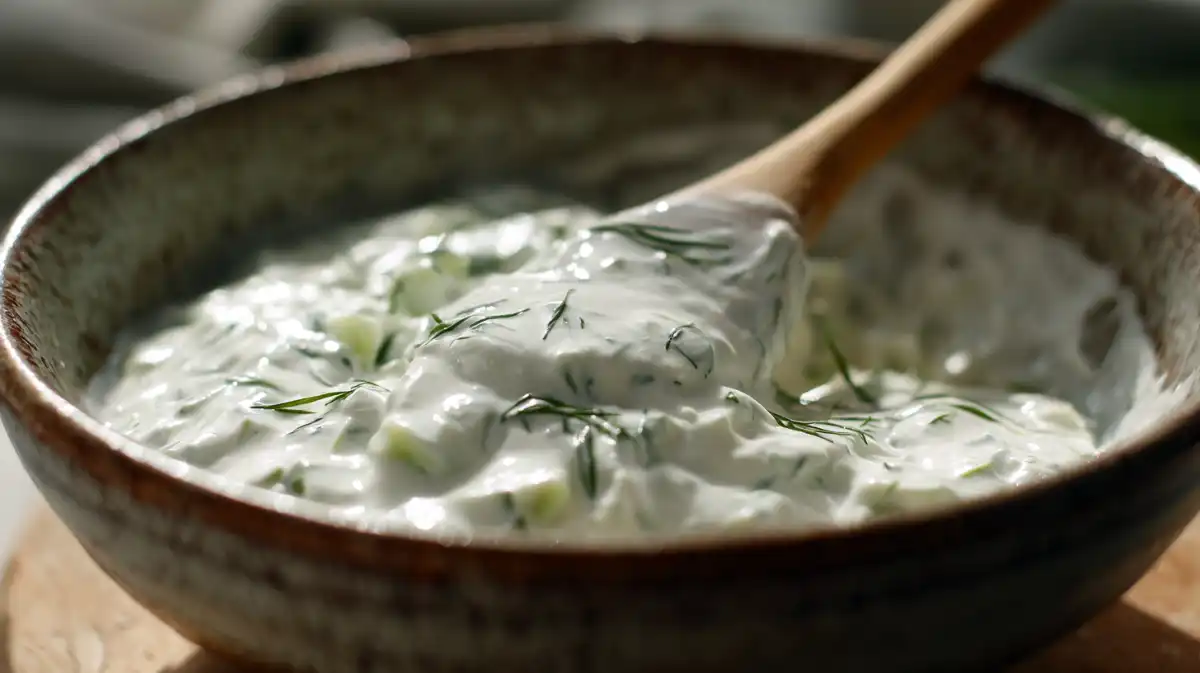
Step 1: Prep the Tzatziki First — This might seem backwards, but trust me. Grate your cucumber on the large holes of a box grater. Now here’s the step that separates watery disappointment from proper homemade tzatziki dip: wrap that grated cucumber in a clean kitchen towel and SQUEEZE. I mean really squeeze. You want to extract at least 1/4 cup of liquid. I usually squeeze for a solid 2-3 minutes. It’s oddly therapeutic.
Step 2: Mix the Tzatziki — In a medium bowl, combine the squeezed cucumber with Greek yogurt, minced garlic, lemon juice, olive oil, dill, and salt. Stir everything together. Cover and refrigerate while you prep everything else. This resting time lets the flavors marry—similar to what we recommend in our Mediterranean Breakfast Bowl guide.
Step 3: Prep Your Vegetables — Cut potatoes into uniform 1-inch wedges (size matters for even cooking!). Pat your chickpeas aggressively dry—seriously, use paper towels and really get them. Cut broccoli into bite-sized florets.
Roasting Method (30-40 minutes)
Step 4: Preheat and Position — Preheat your oven to 425°F. Position your rack in the lower third—this gives you better heat circulation for those crispy roasted potatoes everyone loves. Line two large sheet pans with parchment paper.
Step 5: Season and Arrange Potatoes — Toss potatoes with 2 tablespoons olive oil, lemon zest, oregano, thyme, and salt. Spread in a SINGLE layer on one sheet pan. Touching is okay, but overlapping is not. Pop them in the oven for 20 minutes.
Step 6: Prep the Chickpea Mixture — While potatoes roast, toss chickpeas and broccoli with remaining olive oil, smoked paprika, and cumin. Add salt and pepper.
Step 7: Add Second Wave — After 20 minutes, flip the potatoes and add the chickpea-broccoli mixture to the second sheet pan. Both pans go back in for another 15-20 minutes. The technique here is similar to our Sweet Potato Puree—high heat for caramelization.
Step 8: Assemble Your Bowl — Use the back of a spoon to swoop tzatziki across the bottom of your serving bowl. Add roasted potatoes, chickpeas, broccoli, and cherry tomatoes. Top with toasted almonds and fresh dill. Drizzle with extra olive oil if you’re feeling fancy.
Creative Variations of Your Mediterranean Potato Tzatziki Bowl
Seasonal and Dietary Adaptations
The beautiful thing about this Mediterranean diet bowl is how endlessly customizable it is. I’ve made versions in every season, and they’re all incredible in different ways. Check out our 10 Gluten-Free Mediterranean Recipes for more inspiration on adapting dishes.
| Variation | Swaps | Notes |
| Fall Harvest | Sweet potatoes, roasted butternut squash, Brussels sprouts | Add cinnamon and maple to tzatziki |
| Summer Fresh | New potatoes, zucchini, bell peppers, raw cucumber | Add extra fresh herbs and lemon |
| High Protein | Add grilled chicken or lamb, extra chickpeas | Increases protein to 40g+ per serving |
| Vegan | Coconut or cashew yogurt, tofu crumbles | Add extra garlic to compensate for milder yogurt |
| Kid-Friendly | Skip spices, use mild dip, add cherry tomatoes | Serve tzatziki on the side for dipping |
Sauce Alternatives
While classic tzatziki is perfect, sometimes variety keeps things exciting. Our Chimichurri Hummus makes an incredible swap for a completely different flavor profile—herby, garlicky, with a bit of zing. You could also try tahini-lemon sauce or even a simple garlic aioli.
Storage and Meal Prep Tips for Mediterranean Potato Tzatziki Bowl
Keeping Components Fresh
This is where my healthy potato bowl becomes a meal prep superhero. The key—and I cannot stress this enough—is storing everything separately. I learned this the hard way after finding a container of soggy sadness in my fridge.
Roasted Vegetables: Store in airtight containers for 3-4 days. Reheat in a 400°F oven for 8-10 minutes to restore crispiness. Microwave works (no judgment) but you’ll lose that crispy texture.
Tzatziki Sauce: Keeps beautifully for 5-7 days refrigerated. Press plastic wrap directly onto the surface to prevent a skin from forming. Let it come to room temperature for 10 minutes before serving for best flavor. The same storage method works for our Pancakes with Greek Yogurt and Oats.
Fresh Toppings: Prep tomatoes and herbs day-of for best results. Almonds can be toasted ahead and stored at room temperature for up to a week.
Perfect Pairings
Wondering what else to serve with your Mediterranean Potato Tzatziki Bowl? Here are my tested favorites, including ideas from our Zucchini Corn Fritters collection:
| Pairing | Why It Works | Best For |
| Warm Pita Bread | Scoops up tzatziki perfectly | Casual dinners, family meals |
| Kalamata Olives | Briny contrast to creamy sauce | Mediterranean mezze spread |
| Crumbled Feta | Salty, tangy, adds protein | Elevated weeknight dinner |
| Fresh Greens | Adds freshness and nutrients | Lunch, light dinner |
| Lemon Wedges | Brightens all flavors | Always include |
Nutritional Benefits of Mediterranean Potato Tzatziki Bowl
Quick disclaimer: I’m not a registered dietitian—just someone who’s done a lot of research and eaten a lot of potatoes. This vegetarian Mediterranean bowl happens to be incredibly nutritious, which is honestly a bonus because I’d eat it even if it weren’t.
Macronutrients Per Serving:
| Nutrient | Amount |
| Calories | 520 kcal |
| Protein | 22g |
| Total Fat | 18g |
| Saturated Fat | 4g |
| Carbohydrates | 72g |
| Fiber | 12g |
| Sugar | 9g |
Key Micronutrients:
| Vitamin/Mineral | % Daily Value |
| Vitamin C | 89% |
| Vitamin K | 72% |
| Potassium | 45% |
| Iron | 38% |
| Calcium | 28% |
| Vitamin B6 | 35% |
The combination of potatoes and chickpeas creates a complete protein profile, which is huge for plant-based eating. The resistant starch in potatoes (especially when cooled and reheated) feeds beneficial gut bacteria, similar to what we discuss in our Mediterranean Salads Recipes collection. Plus, that beautiful olive oil delivers heart-healthy monounsaturated fats.
Frequently Asked Questions About Mediterranean Potato Tzatziki Bowl
Can I make the Mediterranean Potato Tzatziki Bowl ahead of time?
Absolutely—this is perfect for meal prep. Store roasted vegetables in the fridge for 3-4 days and tzatziki for up to a week. Reheat veggies in the oven at 400°F for best results. Just don’t combine everything until you’re ready to eat.
What’s the best potato for a Greek potato bowl?
Yukon Gold potatoes are ideal—they have a buttery flavor and hold their shape beautifully when roasted. Baby red potatoes work great too. Avoid russets as they can get too starchy and fall apart.
Why is my tzatziki watery?
The cucumber! You MUST squeeze out the excess water from your grated cucumber—this is the most common mistake. Use a clean kitchen towel and wring it out until no more liquid comes out. Also, make sure you’re using thick Greek yogurt, not regular yogurt.
Is this potato bowl recipe gluten-free?
Yes! This Mediterranean Potato Tzatziki Bowl is naturally gluten-free. Just double-check your spices and yogurt don’t have any hidden additives. For more ideas, check our 10 Gluten-Free Mediterranean Recipes.
Can I make a vegan version of this bowl?
Definitely. Swap Greek yogurt for coconut or cashew-based yogurt. The texture will be slightly different but still delicious. Add extra garlic to compensate for the milder flavor profile.
How do I get my roasted potatoes crispy?
Three secrets: high heat (425°F), single layer with space between pieces, and patience. Don’t flip them too early—let them develop a crust for at least 20 minutes before checking. Our Mediterranean Breakfast Recipes use similar roasting techniques.
Pairing and Serving Ideas for Mediterranean Potato Tzatziki Bowl
Let’s talk about making this potato bowl recipe work for different occasions. I’ve served it everything from Tuesday dinners to summer parties, and it adapts beautifully.
| Occasion | Additions | Beverage Pairing |
| Weeknight Dinner | Keep it simple, add pita | Sparkling water with lemon |
| Meal Prep Lunch | Extra greens, portable containers | Iced herbal tea |
| Summer Entertaining | Mezze spread, grilled halloumi | Fresh lemonade, mint tea |
| Date Night | Candles, cloth napkins, herb garnish | Sparkling grape juice |
| Family Dinner | DIY bowl bar, extra toppings | Orange juice, lemonade |
For a complete Mediterranean spread, pair your bowl with hummus and Chimichurri Hummus for variety. End with something sweet from our Mediterranean Desserts Recipes collection.
Conclusion: Making This Recipe Your Own
The Beauty of Customization
Here’s what I’ve learned after all those test batches: once you understand the fundamentals—crispy potatoes, properly drained tzatziki, balanced flavors—the rules become suggestions. Swap vegetables based on what’s in season. Adjust the spices to your family’s preferences. Make the tzatziki garlicky or mild. This Mediterranean Potato Tzatziki Bowl is yours to play with.
Join the Conversation
I genuinely want to see what you create. Tag your photos, share your variations, tell me about your disasters (we all have them) and your victories. If you loved this recipe, you’ll probably also enjoy our Enlightened Mediterranean Chicken Bowl for protein lovers, or explore the sweet side with our Vegan Lemon Olive Oil Cake. Happy cooking!