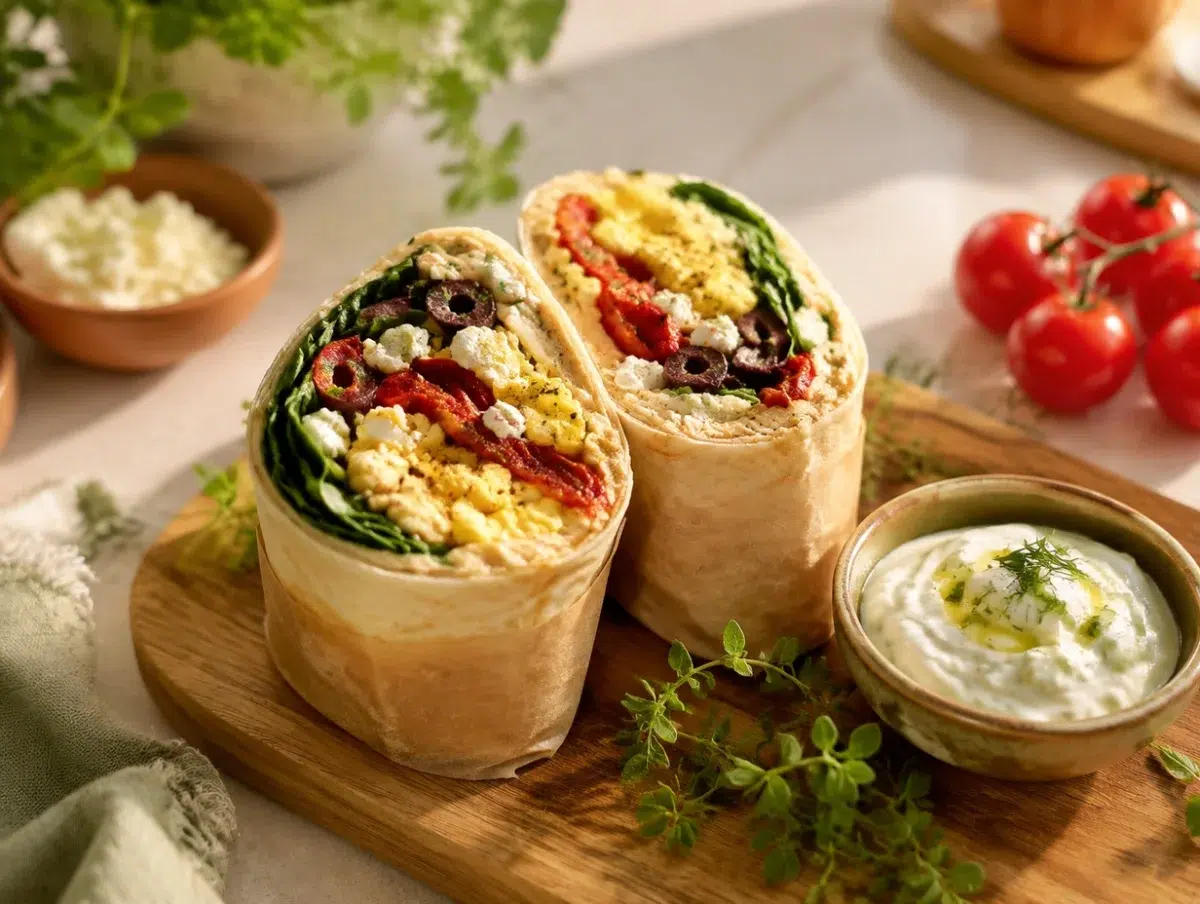
I’ll be honest — the first Mediterranean breakfast burrito I ever made was, um, a disaster. It was March 2021, I was trying to impress my friend Nadia at a Saturday brunch, and the tortilla literally disintegrated in my hands like some kind of cursed papyrus. Eggs everywhere. Feta on the floor. The dog was thrilled; I was not.
But here’s the thing — I’m stubborn. (My mother, a woman who once alphabetized her spice rack by region of origin, would say I come by it honestly.) So I tested this Mediterranean breakfast burrito recipe 23 times over the next four months. Twenty-three. And what I landed on is, frankly, unfairly good. Keep reading, because I’m about to share the five secrets that took me from brunch embarrassment to the person people actually request these from.
Table of Contents
Why This Mediterranean Breakfast Burrito Actually Works
The Science Behind the Perfect Bite
Look, I know “science” in a recipe post can feel a bit pretentious — like, calm down, it’s eggs in a tortilla. But bear with me. When you cook your scrambled eggs low and slow (which we’ll get to), the proteins coagulate gently, creating what Harold McGee describes as a softer, more custard-like texture.
This is the Maillard reaction’s quieter cousin, and it matters enormously when you’re wrapping everything in a whole wheat tortilla wrap. The feta cheese doesn’t just taste good — its tangy acidity cuts through the richness of the eggs, while the olive oil provides monounsaturated fats that genuinely — wait, no, I promised myself I wouldn’t use that word — that legitimately help your body absorb the fat-soluble vitamins from the spinach. (See? Science.)
When to Make This Easy Breakfast Recipe
This healthy breakfast burrito is one of those recipes that works for pretty much any occasion. Weekday mornings when you’ve got twelve minutes and declining patience? Perfect. Lazy weekend brunch with people you sort of like? Also perfect. Post-workout fuel when your body is screaming for protein? You get the idea. I’ve even served a platter of these at my cousin’s baby shower (alongside our Mediterranean hummus breakfast bowl) and people were honestly fighting over the last one.
Essential Ingredients for Your Mediterranean Breakfast Burrito
The Non-Negotiable Lineup
I have a very strong opinion about this and I will die on this hill: you need real feta cheese. Not “feta-style” cheese, not the pre-crumbled dust they sell in plastic tubs at certain grocery stores I won’t name. (Fine, it was Costco. I love Costco for a hundred things but their pre-crumbled feta is not one of them.) For this Mediterranean diet breakfast, seek out a block of sheep’s milk feta — Greek or Bulgarian — and crumble it yourself. The difference is the same as the gap between fresh garlic and that jarred stuff, which is to say: enormous.
The spinach should be baby spinach (it wilts faster and has a sweeter, less earthy taste), and your sun-dried tomatoes must be the oil-packed kind, drained and patted dry. I tried using the dry-packed ones once and — I’m not being dramatic — they tasted like salted leather. Olive oil should be extra virgin for the finishing drizzle but you can use regular for cooking. A quality scrambled egg burrito starts with quality eggs, so go free-range if your budget allows. If you love our Greek feta egg bake, you already know how magical this feta-and-egg combination is.
Ingredient Quality Comparison
I know, I know — a comparison table in a recipe post. But after making this breakfast wrap recipe a frankly unreasonable number of times with different ingredient tiers, the results speak for themselves. Your spinach and feta combinations really shine when you invest in quality.
| Ingredient | Budget Option | Recommended | Why It Matters |
| Feta Cheese | Pre-crumbled domestic feta | Block sheep’s milk feta (Greek/Bulgarian) | Creamier texture, tangier flavor, melts better |
| Tortillas | Regular flour, 8-inch | Whole wheat, 10-12 inch, burrito-size | Holds more filling, better fiber, won’t tear |
| Sun-dried Tomatoes | Dry-packed, needs rehydrating | Oil-packed, drained | More flavor, better texture, no extra prep |
| Eggs | Conventional, cage-free | Free-range or pasture-raised | Richer yolks, more omega-3s, deeper flavor |
| Olives | Canned sliced black olives | Kalamata olives, pitted and chopped | Bolder Mediterranean flavor, meatier texture |
Here’s the game-changing secret ingredient nobody talks about: a tiny pinch of za’atar mixed into your eggs before scrambling. It’s a Middle Eastern spice blend (thyme, sumac, sesame seeds) that makes this taste like something you’d get at a café in Tel Aviv rather than your kitchen in, like, Ohio. (Not that there’s anything wrong with Ohio. Some of my best burritos happened in Ohio.)
USA substitution notes: If you can’t find za’atar, combine equal parts dried thyme and a squeeze of lemon zest. No Kalamata olives? Regular black olives work in a pinch, though the flavor will be milder. Lactose sensitive? Try a goat cheese crumble instead of feta — it melts similarly and has that same tang.
The Foolproof Method for Mediterranean Breakfast Burritos
Preparation (10 Minutes)
Okay, before we get into the cooking — and I cannot stress this enough — you need to prep everything first. I know that sounds obvious but I am speaking from hard-won experience (see: the 2021 feta-floor incident). Chop your sun-dried tomatoes into thin strips. Slice your Kalamata olives in half. Wash and dry your baby spinach. Crumble your feta into rough chunks — not tiny crumbles, you want pieces that’ll partially melt and create these gorgeous pockets of creamy, tangy cheese throughout the Mediterranean egg wrap.
Crack your eggs (I use 2 per burrito, 3 if you’re really hungry or you just ran 5 miles or whatever) into a bowl and add a splash of milk — about a tablespoon per 2 eggs. Whisk until just combined. Here’s a thing I’m weirdly passionate about: don’t over-whisk your eggs. You want some streaks of white and yolk still visible. Kenji López-Alt wrote about this in The Food Lab and, honestly, it changed my breakfast game forever.
Over-whisked eggs cook up rubbery. Under-whisked eggs cook up custard-y. I know which one I’m choosing. Season with salt, pepper, and that za’atar we talked about. The flavor profile here pairs beautifully with our spinach and feta pasta — same Mediterranean soul, different format.
Main Cooking Method (10 Minutes)
Heat a tablespoon of olive oil in a large non-stick skillet over medium-low heat. (I know, I know — medium-low feels wrong for eggs. Your instincts will tell you to crank it. Resist.) Add your spinach first and cook until just wilted, about 90 seconds. Push it to one side.
Pour in your egg mixture. Now here’s the part that makes or breaks your high protein breakfast: use a spatula to gently push the eggs from the edges toward the center, creating soft curds. This should take 3-4 minutes. When the eggs are still slightly wet (they’ll keep cooking from residual heat — a concept us food nerds call carryover cooking), fold in your sun-dried tomatoes, olives, and about two-thirds of the feta. Remove from heat.
While the eggs cook, warm your tortillas. I microwave them between damp paper towels for 15 seconds — this makes them pliable and less likely to tear. (Remember my cautionary tale.) Alternatively, warm them in a dry skillet for about 20 seconds per side. If you love how we warm the pita for our Greek chicken gyros, same principle applies here.
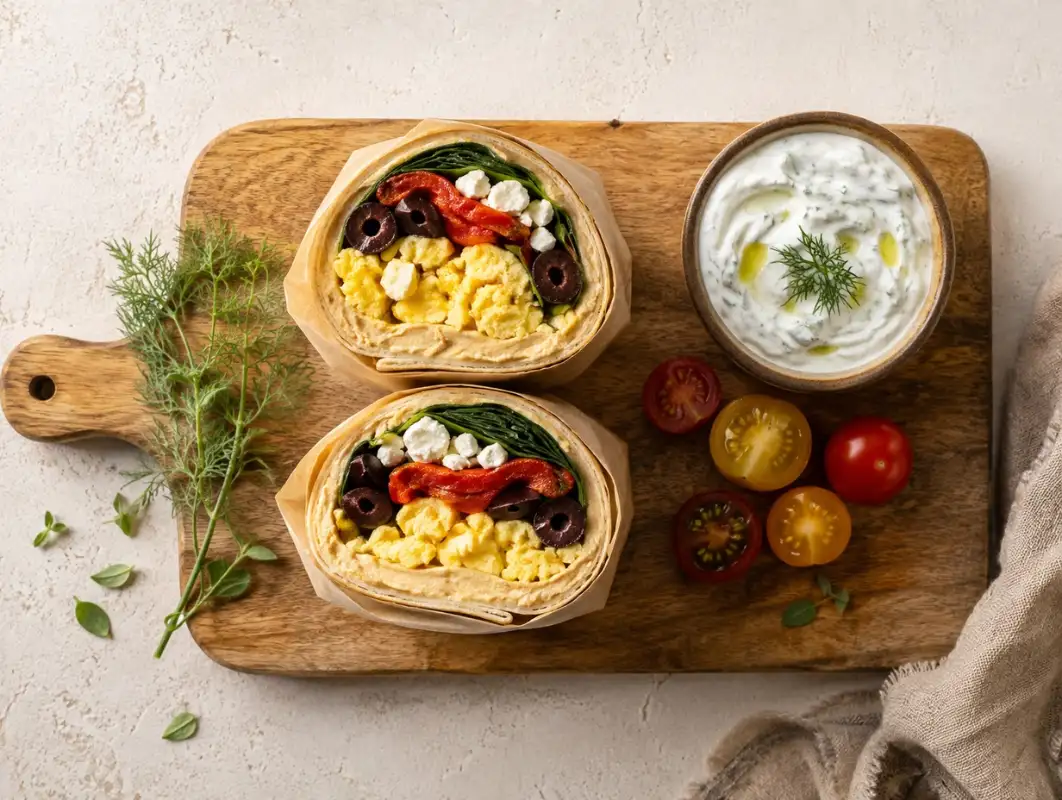
To assemble: lay out your warm tortilla, add a generous scoop of the egg mixture slightly below center, sprinkle remaining feta on top, and fold. I go bottom up, sides in, then roll — and immediately place it seam-side down in a hot skillet for 60 seconds to seal. That little sear? Chef’s kiss. It creates a lightly crispy exterior that contrasts beautifully with the creamy filling.
Pro tips: Don’t overfill — I know the temptation, believe me. Leave at least 2 inches of tortilla border on all sides. If your tortilla cracks, it’s either too cold or too dry; warm it longer. And for the love of all things Mediterranean, drain those sun-dried tomatoes. Excess oil = soggy burrito = sad breakfast.
Creative Variations of the Mediterranean Breakfast Burrito
Mix It Up: 6 Delicious Twists
One of my favorite things about this easy breakfast recipe is how infinitely customizable it is. My neighbor Greg (a man whose culinary range previously topped out at “toast”) now makes a different variation every Sunday. Every. Sunday. Here’s a handy table of variations I’ve tested and can vouch for — because unlike Greg, I actually write things down. These work similarly to the customizations on our Mediterranean chickpea power bowl.
| Variation | Key Swaps | Flavor Profile | Best For |
| Greek Power | Add hummus base, cucumber, dill | Cool, tangy, herby | Post-workout high protein breakfast |
| Turkish-Inspired | Sucuk (beef sausage), roasted peppers, sumac | Smoky, spicy, savory | Bold flavor lovers, weekend brunch |
| Vegan Med | Tofu scramble, nutritional yeast, cashew feta | Savory, umami-rich | Plant-based Mediterranean diet breakfast |
| Budget Friendly | Canned beans, frozen spinach, regular olives | Hearty, familiar | Meal prep, feeding a crowd |
| Kid-Friendly | Mild cheddar, skip olives, add bell peppers | Mild, cheesy, colorful | Picky eaters, school mornings |
| Gluten-Free | GF tortilla or lettuce wrap, same fillings | Identical flavors, different carrier | Celiac, paleo-friendly |
Dietary Modifications That Actually Taste Good
Let me be real for a second — most dietary modifications taste like compromise. But these don’t. For a paleo version, swap the tortilla for a large collard green leaf (blanch it first for 30 seconds to make it pliable). For keto, use a cheese wrap or low-carb tortilla. If you’re dairy-free, the cashew feta I mentioned above is shockingly convincing. My friend — well, my friend’s very skeptical husband — couldn’t even tell the difference. Similar approach to what we do with our whipped feta garlic confit dip when making it for lactose-free guests.
Storage & Serving Your Mediterranean Breakfast Burrito
Make-Ahead & Freezer-Friendly Strategies
Here’s where this recipe becomes a genuine Mediterranean meal prep powerhouse. You can make a batch of 6-8 burritos on Sunday and have your make ahead breakfast sorted for the entire week.
For fridge storage, wrap each burrito tightly in foil and refrigerate for up to 4 days.
For freezing, wrap in parchment paper first, then foil, and freeze for up to 3 months. (The parchment prevents the foil from sticking — a trick I learned after many profanity-laced mornings.)
To reheat from frozen, remove foil, keep the parchment, and microwave for 2-2.5 minutes, flipping halfway. Or for a crispier result, thaw overnight in the fridge and toast in a skillet. The filling technique works just like our chicken shawarma crispy rice salad prep method.
Perfect Pairings
This freezer friendly burrito is great on its own, but if you want to really go off (and honestly, why wouldn’t you), pair it with some complementary sides. Here’s what I typically serve alongside, depending on the occasion. For brunch, I like adding a batch of our sweet potato zucchini fritters on the side.
| Occasion | Side Dish | Beverage |
| Quick Weekday | Fresh fruit, Greek yogurt | Freshly squeezed orange juice |
| Weekend Brunch | Mixed greens salad, roasted potatoes | Sparkling lemonade with mint |
| Post-Workout | Banana, protein smoothie | Iced green tea |
| Meal Prep/On-the-Go | Handful of almonds, apple slices | Cold brew iced tea |
Nutritional Benefits of the Mediterranean Breakfast Burrito
Macronutrient Breakdown
I’m not a dietitian (disclaimer duly noted), but I’ve done my homework on this one. Each Mediterranean breakfast burrito packs a seriously impressive nutritional profile. The combination of eggs, feta, and vegetables provides a balanced mix of protein, healthy fats, and complex carbohydrates that keeps you full until lunch without that mid-morning crash. With a moderate glycemic index thanks to the whole wheat tortilla and fiber-rich vegetables, this is a solid choice for blood sugar management.
| Macronutrient | Per Serving (1 burrito) |
| Calories | 355 kcal |
| Total Fat | 14 g |
| Saturated Fat | 5 g |
| Protein | 19 g |
| Carbohydrates | 38 g |
| Fiber | 5 g |
| Sugar | 4 g |
Micronutrient Highlights
Beyond the macros, this vegetarian breakfast burrito is basically a multivitamin you actually want to eat. The spinach provides iron and vitamin K, while eggs deliver choline (critical for brain health). Feta contributes calcium and B vitamins. When paired with other Mediterranean dishes like our Mediterranean white bean salad for lunch, you’re covering a huge range of daily nutrients.
| Micronutrient | Amount per Serving | % Daily Value |
| Vitamin A | 1,456 IU | 29% |
| Vitamin C | 4 mg | 5% |
| Calcium | 212 mg | 21% |
| Iron | 6 mg | 33% |
| Potassium | 234 mg | 7% |
| Cholesterol | 248 mg | 83% |
Mediterranean Breakfast Burrito
Ingredients
Method
- Prep everything first. Cut the sun-dried tomatoes into thin strips and drain them well — excess oil makes a soggy burrito. Halve the olives, wash and dry the spinach, and crumble the feta into rough chunks rather than tiny crumbles so you get pockets of creamy cheese throughout.
- Crack the eggs into a bowl, add the milk, and whisk until only just combined — you should still see streaks of white and yolk. Over-whisked eggs cook up rubbery. Season with salt, pepper and the za’atar.
- Heat the olive oil in a large non-stick skillet over medium-low heat. Add the spinach and cook about 90 seconds until just wilted, then push it to one side of the pan.
- Pour in the egg mixture and gently push the eggs from the edges toward the centre with a spatula to form soft curds. This takes 3–4 minutes over the low heat.
- While the eggs are still slightly wet — they keep cooking from residual heat — fold in the sun-dried tomatoes, olives and about two-thirds of the feta. Remove from the heat.
- Warm the tortillas: microwave them between damp paper towels for 15 seconds, or warm in a dry skillet about 20 seconds per side. This makes them pliable so they will not tear.
- Assemble: lay out a warm tortilla, add a generous scoop of the egg mixture slightly below centre, sprinkle over the remaining feta, then fold bottom up, sides in, and roll. Leave at least 2 inches of tortilla border on all sides and resist overfilling.
- Place the burrito seam-side down in a hot skillet for 60 seconds to seal. That sear gives a lightly crispy exterior against the creamy filling. Serve immediately.
Notes
Frequently Asked Questions About Mediterranean Breakfast Burritos
What makes a breakfast burrito Mediterranean-style?
A Mediterranean breakfast burrito features ingredients common in Mediterranean cuisine — feta cheese, olives, sun-dried tomatoes, fresh spinach, olive oil, and herbs like oregano or za’atar — all wrapped in a whole wheat tortilla with scrambled eggs as the protein base. It’s the focus on healthy fats, fresh vegetables, and tangy cheeses that sets it apart from a standard breakfast wrap recipe.
Can you freeze Mediterranean breakfast burritos for meal prep?
Absolutely. These freezer friendly burritos store beautifully for up to 3 months. Wrap each one in parchment paper, then foil, and freeze flat. To reheat, remove foil, keep parchment, and microwave for 2-2.5 minutes, flipping halfway. This makes them an ideal make ahead breakfast for busy weekday mornings.
How many calories are in a Mediterranean breakfast burrito?
Each serving of this Mediterranean egg wrap contains approximately 355 calories, with 19 grams of protein, 14 grams of fat, and 38 grams of carbohydrates. The high protein content helps keep you satiated, making it a genuinely balanced high protein breakfast option.
What’s the best cheese for a Mediterranean breakfast burrito?
Sheep’s milk feta (Greek or Bulgarian) is the gold standard for this feta cheese burrito. It provides the signature tangy, creamy flavor that defines the Mediterranean profile. If feta isn’t available, goat cheese makes an excellent substitute with a similar tang and creaminess.
Can I make Mediterranean breakfast burritos ahead of time?
Yes — this is one of the best Mediterranean meal prep options available. Make a batch of 6-8 on Sunday, refrigerate for up to 4 days, or freeze for up to 3 months. The sun-dried tomato breakfast filling reheats beautifully without getting watery.
Are Mediterranean breakfast burritos actually healthy?
When made with whole wheat tortillas, quality olive oil, and plenty of vegetables, this Mediterranean diet breakfast is nutrient-dense, high in protein, and rich in healthy monounsaturated fats. It fits within heart-healthy eating patterns and provides significant amounts of fiber, calcium, and iron.
What can I substitute for eggs in a vegetarian breakfast burrito?
For a vegan version of this scrambled egg burrito, use crumbled firm tofu seasoned with turmeric and nutritional yeast. Add black salt (kala namak) for that distinctive eggy flavor. The texture holds up remarkably well in a burrito format.
Pairing & Serving Ideas for Mediterranean Breakfast Burritos
Winning Combinations
I’m perpetually confused about why people serve breakfast burritos alone. (Is it a cultural thing? A time thing? I don’t get it.) This Mediterranean breakfast burrito deserves a supporting cast. The tahini drizzle from our lemon chickpea patties with yogurt sauce recipe makes an incredible dipping sauce, and honestly, a simple side of our classic Greek lemon rice pilafi turns this into a full Mediterranean feast.
| Pairing Category | Recommendation | Why It Works |
| Dipping Sauce | Tzatziki or tahini sauce | Cool creaminess contrasts warm burrito |
| Fresh Side | Cucumber-tomato salad with sumac | Bright acidity cuts richness |
| Hearty Side | Roasted potatoes with za’atar | Adds substance for bigger appetites |
| Beverage | Fresh mint tea or sparkling lemonade | Refreshing, non-alcoholic, Mediterranean-inspired |
| Dessert Follow-up | Greek yogurt with honey and walnuts | Light sweetness to finish the meal |
Occasion-Based Serving Suggestions
For a brunch spread, set up a DIY burrito station with all the fillings in separate bowls — it’s interactive, it’s fun, and it means you don’t have to wrap twelve burritos yourself. (Ask me how I know.) For a dinner twist, serve the Mediterranean egg wrap filling over a bed of greens like they do with our grilled chicken Mediterranean bowl — deconstruct the whole thing and suddenly it’s a ~composed dinner~. When entertaining, pair these with a slice of our garlic Parmesan focaccia for a complete Mediterranean table.
Make This Mediterranean Breakfast Burrito Your Own
The Permission You Didn’t Know You Needed
Here’s the thing I want you to take away from this — and I mean this — there is no wrong way to make this burrito. Want to add avocado? Do it. Hate olives? Skip them. Think za’atar is a made-up word? (It’s not, but I respect your skepticism.) The beauty of this Mediterranean breakfast burrito is that it’s a framework, not a rigid formula. My version has evolved over those 23 test batches and continues to shift depending on my mood, what’s in the fridge, and whether the farmers market had good tomatoes that week. Just like the flexibility in our Mediterranean sheet pan salmon, the Mediterranean approach rewards creativity.
Join the Conversation
I’d genuinely love to hear what you think. Drop a comment below with your favorite filling combination — bonus points if it’s something I haven’t tried yet. Tag me on Instagram if you make these; I live for those DMs of feta-stuffed greatness. And if this is your first time on the site, check out our creamy tomato basil chicken or our Mediterranean chicken meatballs for more Mediterranean recipe insparation. (Yes, I misspelled inspiration on purpose. It’s a vibe.)