There is a particular kind of magic that happens at midnight in a Greek taverna. The last tables are still laughing, the kitchen is technically closed, but my grandfather — God rest his soul — would slide back behind the stove, pull out a tangle of spaghetti and a bottle of Cretan olive oil, and make something so impossibly good that people would actually cry. He never called it aglio e olio Mediterranean. He just called it ladimakaronada — oil pasta — and he made it look effortless.
A generous pour of cold-pressed oil into a hot pan. Eight cloves of garlic, sliced so thin you could read through them. A fistful of halved cherry tomatoes from the garden. A lemon zested directly over the pan, perfuming the entire kitchen. And then the pasta, still dripping with starchy water, tossed in until every strand gleamed.
That was his version. Mine is built on the same bones, but shaped by what I learned at my culinary degree at Le Monde Institute in Athens, and later during my apprenticeship at Varoulko. I have made this aglio e olio Mediterranean recipe over 70 times — adjusting the garlic quantity, testing the lemon timing, experimenting with the addition of kalamata olives and crumbled feta. The result is a dish that is true to the Italian original while wearing the flavors of the Greek islands with complete confidence. It is ready in 20 minutes. It uses pantry staples. And I promise you, it will become the recipe you reach for every time the refrigerator feels empty and dinner feels impossible.
Table of Contents
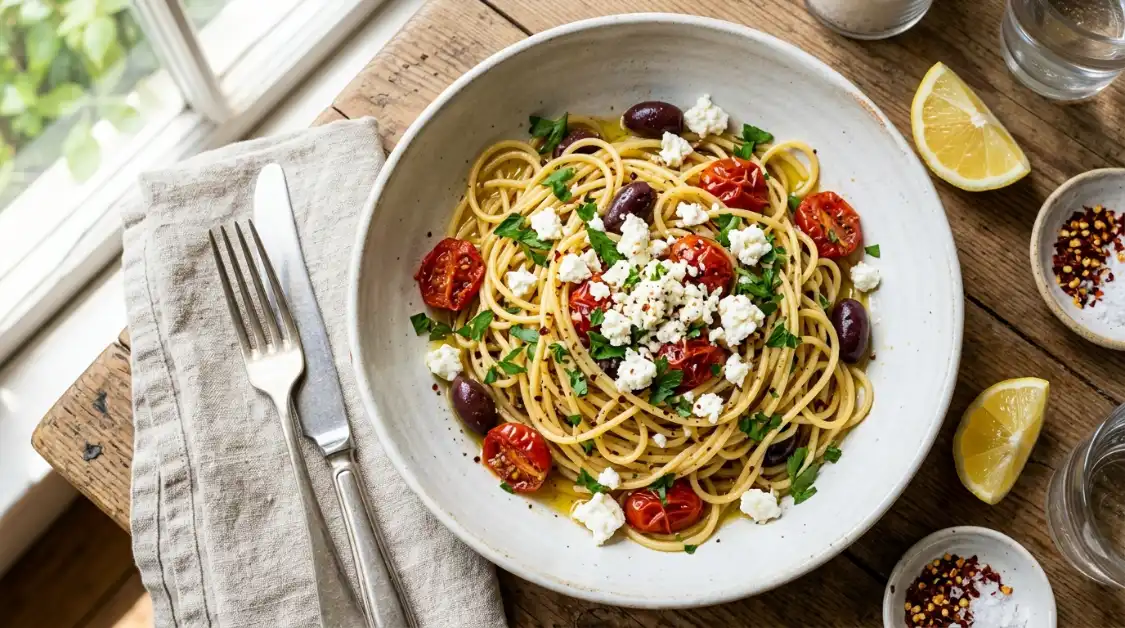
Aglio e Olio Mediterranean Style : 20 Min
Ingredients
Method
- 1. Bring a large pot of water to a boil. Add 1 tbsp salt. Cook spaghetti 2 minutes less than package instructions. Reserve 250ml / 1 cup pasta water before draining.
- 2. While water boils, prep all aromatics: slice garlic thin, mince parsley stems, halve tomatoes and olives, zest and juice the lemon into separate bowls.
- 3. Pour olive oil into a cold wide skillet. Add sliced garlic, red pepper flakes, and minced parsley stems. Place over low heat. Cook 3 minutes, stirring gently, until garlic is pale gold at edges and fragrant. Do not let it brown.
- 4. Add cherry tomatoes. Raise heat slightly to medium-low. Cook 3-4 minutes until softened and releasing their juice. Add kalamata olives. Stir to combine.
- 5. With the pan on low heat, add lemon zest. Stir for 30 seconds to bloom aromatic oils.
- 6. Drain pasta (do NOT rinse). Transfer immediately to skillet. Add half the reserved pasta water. Toss vigorously with tongs over medium heat for 2-3 minutes, adding more pasta water as needed until sauce is glossy and clings to every strand.
- 7. Remove from heat. Squeeze in lemon juice. Toss once more. Taste and adjust salt and lemon.
- 8. Plate in warmed bowls. Scatter fresh parsley. Crumble feta over the top. Drizzle with raw olive oil. Serve immediately.
Notes
Why This Aglio e Olio Mediterranean Recipe Is Worth Your 20 Minutes
The Cold-Pan Garlic Technique That Changes Everything
Every version of spaghetti aglio e olio you will find online tells you to add garlic to hot oil. I am here to tell you that is the second-fastest route to bitter, burned garlic — and the fastest route to a disappointing dinner. The technique I learned from my grandfather, confirmed later during my professional training, is the cold-pan method: garlic and oil go into a cold skillet together, then the heat is raised to medium-low.
This allows the garlic to gently infuse the oil from room temperature upward, developing sweetness and nuttiness without any risk of scorching. As Harold McGee explains in On Food and Cooking, fat-soluble flavor compounds in garlic are extracted most completely at low, gradual heat. Cold start, slow rise. Golden. Fragrant. Perfect.
The second technique unique to this Mediterranean version is finishing the sauce with both lemon zest and lemon juice, each added at a different moment — zest while the pan is warm to bloom the aromatic oils, juice off the heat to preserve the bright acidity. This dual citrus approach is the backbone of Cretan cooking, what my mother called ladolemono in its simplest form: oil and lemon, the universal dressing of our island.
A Flavor Profile That Earns a Standing Ovation
What you get from this Mediterranean garlic pasta is extraordinary in its simplicity. Silky, glossy strands of spaghetti coated in emulsified garlic-lemon oil. Bursts of sweetness from cherry tomatoes that have softened in the oil. Briny punctuation from kalamata olives. Optional crumbled feta that melts into the hot pasta and creates pockets of creamy saltiness. A warm whisper of heat from red pepper flakes. And underneath everything, that unmistakable perfume of genuinely good extra-virgin olive oil. This is a 20 minute pasta dinner that tastes like it took an hour and arrived from Naples via Crete.
The Story Behind Aglio e Olio
An Ancient Dish from the Streets of Naples
Pasta aglio e olio is one of the oldest dishes in the Italian repertoire. Its roots are in Naples and the broader Campania region, where garlic, olive oil, and dry pasta were the staples of the working poor. The name translates with beautiful simplicity: aglio means garlic, olio means oil. In its purest form — the Neapolitan original — it contains nothing else but pasta, salt, and possibly a pinch of peperoncino.
It was historically a midnight supper, eaten after a night of work or celebration, because the ingredients required no shopping and almost no cooking skill. Today it appears on menus across Italy and around the world, elevated to icon status precisely because of what it is not: not complicated, not expensive, not pretentious.
How Crete Made It Greek
When my grandfather’s generation encountered the Italian dish — through the traders, soldiers, and travelers who crisscrossed the Mediterranean throughout the 20th century — they recognized something deeply familiar. The combination of garlic and olive oil is the foundation of almost every Cretan recipe. My grandfather simply added what was already on his taverna table: a handful of his garden cherry tomatoes, a squeeze of the lemons that grew in ceramic pots by the kitchen door, and a small bowl of the Kalamata olives that he cured himself in brine every autumn. He did not invent Mediterranean aglio e olio. He just cooked it the only way a Cretan chef knows how: with his whole heart and whatever the garden offered.
Essential Ingredients for Aglio e Olio Mediterranean
Core Ingredients: What to Use and Why
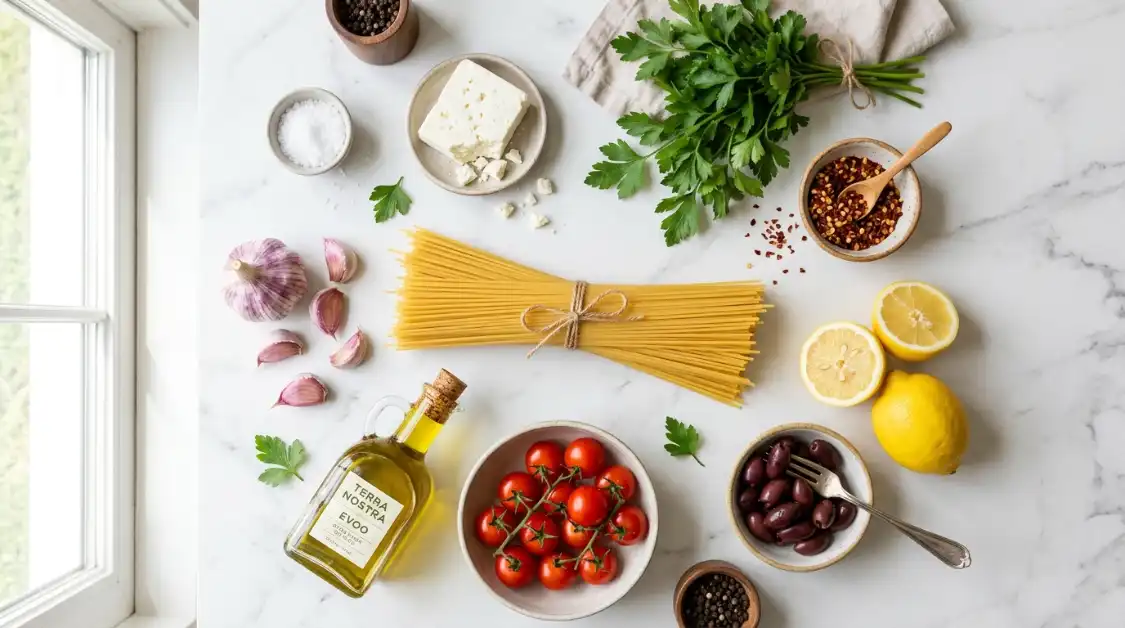
Let me be direct with you: this dish has nowhere to hide. Every single ingredient is visible, tasted, and essential. Do not compromise here.
| Ingredient | Amount | Why It Matters | Authentic Pick | Substitution |
| Spaghetti | 400g / 14oz | Thin strands allow the oil sauce to coat every centimeter | Bronze-die extruded, 100% durum wheat | Linguine, bucatini, or spaghettini |
| Extra-virgin olive oil | 90 ml / 6 tbsp | The sauce — not just a cooking medium. It must be delicious raw | Greek EVOO: Kolymvari or Sitia PDO, Crete | High-quality Spanish or Italian EVOO |
| Garlic | 10 cloves, thinly sliced | The soul of this dish; cold-pan method makes it sweet, not bitter | Fresh heads, never jarred or pre-minced | Roasted garlic (softer, sweeter; add earlier) |
| Cherry tomatoes | 250g / 9oz, halved | Add sweetness and soft texture; break down in oil into a light sauce | Sweet vine cherry tomatoes or Sun Gold | 1 tbsp tomato paste + 3 tbsp water (pantry version) |
| Kalamata olives | 60g / 2oz, pitted & halved | Mediterranean brininess that anchors the dish to the Greek islands | Greek Kalamata DOP in brine, not canned | Castelvetrano (milder) or green Sicilian olives |
| Lemon (zest + juice) | 1 large lemon | Dual citrus technique: zest while warm, juice off heat | Unwaxed organic lemon | Lime + extra pinch of lemon zest from a second lemon |
| Red pepper flakes | 1/4 to 1/2 tsp | Heat that wakes up the garlic oil without overwhelming it | Calabrian or Aleppo chili flakes | Fresh red chili, thinly sliced (more authentic) |
| Fresh flat-leaf parsley | 35g / 3/4 cup, chopped | Freshness, color, and slight bitterness to balance the oil | Flat-leaf Italian variety | Fresh basil (sweeter), or chives (milder) |
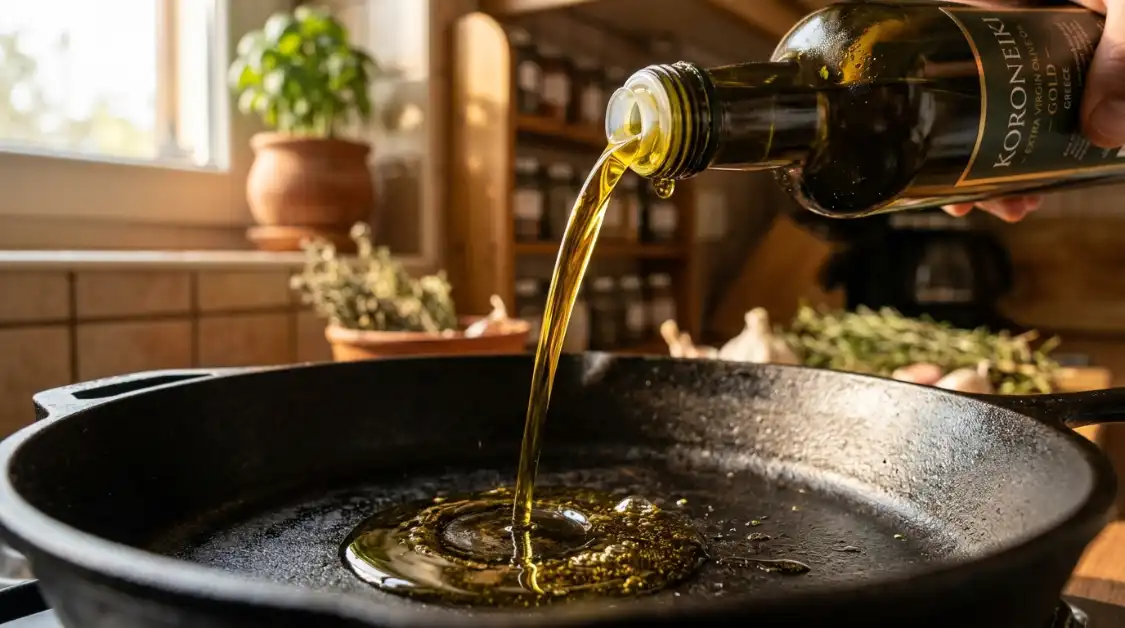
On the olive oil: this is the one purchase in this recipe where I will never let you cut corners. I remember the first time I cooked aglio e olio at my culinary training using a cheap, heavily processed oil. The sauce tasted flat. Tired. Wrong. Then I poured a lug of Kolymvari EVOO from my hometown in Crete, and the difference was so dramatic that my instructor physically stopped the class to have every student smell the pan. Good olive oil is not expensive when you consider it is the primary ingredient in a dish for four people. Spend the extra dollar. Your pasta will thank you.
Dietary Substitutions for Every Table
Yiayia’s Tip: My yiayia insisted on adding the parsley stems — finely minced — directly into the oil with the garlic. The stems are more aromatic than the leaves and release their flavor beautifully into fat. Do not throw them away. Mince them fine and let them cook with the garlic for the full 3 minutes.
| Dietary Need | Replace | With | Notes |
| Vegan | Feta cheese (optional garnish) | Nutritional yeast (2 tbsp) or vegan almond feta | Add a pinch more sea salt to the sauce to compensate for the lost brininess |
| Gluten-free | Regular spaghetti | Certified GF brown rice spaghetti or chickpea pasta | Reserve extra pasta water — GF pasta releases more starch which helps emulsify |
| Low-sodium | Kalamata olives + feta | Reduce to half quantity; increase lemon zest | The extra citrus zest compensates for the reduction in salty elements very effectively |
| Extra protein | Pasta only | Add 200g / 7oz grilled chicken breast, sliced; or 150g / 5oz canned tuna | Toss the protein in for the last 60 seconds of the pasta-tossing step |
| Dairy-free | Feta (if using) | Toasted pine nuts + extra squeeze of lemon | The nuts provide richness and the lemon provides the brightness feta would have given |
Equipment and Technique Essentials
Tools That Matter for Aglio e Olio Mediterranean
| Traditional Tool | Modern Alternative | Why It Matters |
| Wide, shallow skillet (padella) | 12-inch stainless-steel sauté pan | Wide surface area ensures every strand of spaghetti coats evenly in the sauce |
| Wooden spoon (κουτάλα) | Silicone tongs or spatula | Tongs are best for tossing long pasta without breaking strands |
| Large pasta pot (10 qt) | Any deep pot with at least 5 qt capacity | Spaghetti needs length and room; too small a pot means tangled, broken pasta |
| Microplane zester | Fine grater | Creates delicate lemon zest ribbons; a box grater releases too much bitter pith |
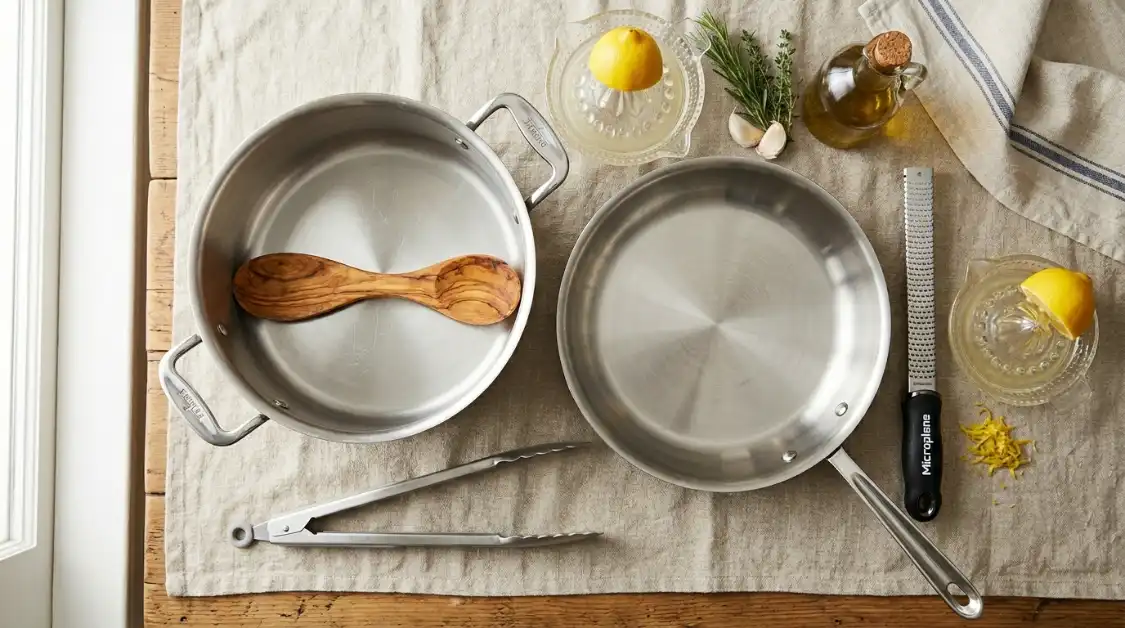
Mise en Place: Ready, Set, Cook
Here is the thing about aglio e olio Mediterranean: once the pasta hits the water and the garlic hits the oil, this dish runs at full speed. There is no time to hunt for parsley or hunt for your zester mid-cook. Set everything out before you start.
Slice all the garlic (very thin — paper thin if possible, no thicker than 2mm). Halve the tomatoes. Pit and halve the olives. Zest and juice the lemon into separate small bowls. Measure the oil into the pan cold — do not heat yet. Chop the parsley. Measure the pepper flakes. Have the pasta water boiling and heavily salted before you start the garlic oil. The dish cooks in under 15 minutes once you start. Everything must be ready.
Step-by-Step Instructions: Aglio e Olio Mediterranean
Preparation Steps 1 to 4
Step 1 — Salt and boil your pasta water: Fill a large pot with water — at least 4 liters for 400g of spaghetti. Bring to a full rolling boil. Add 1 tablespoon of fine sea salt. This is the only chance you have to season the pasta itself. Taste the water — it should taste pleasantly salty, like mild seawater. This is not excessive; the pasta will absorb only a fraction of it. Add your spaghetti and stir immediately to prevent sticking. Set a timer for 2 minutes less than the package instruction.
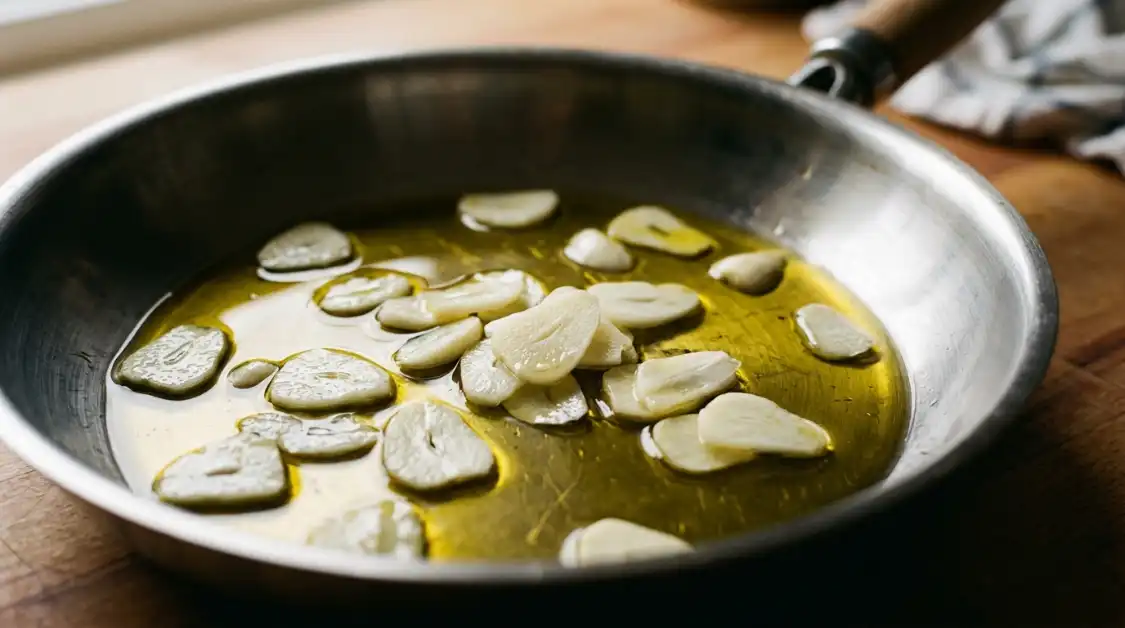
Step 2 — Prepare the cold-pan garlic oil: While the water comes to a boil, pour 6 tablespoons of extra-virgin olive oil into a wide, cold skillet. Add all 10 slices of garlic — yes, all of them. Add the red pepper flakes and the finely minced parsley stems. Do not turn on the heat yet. This cold start is the most important technique in the recipe. As J. Kenji Lopez-Alt explains in The Food Lab, starting garlic in cold oil allows the allicin compounds to develop slowly and evenly, creating a rounded, nutty sweetness instead of the sharp, harsh notes that come from dropping garlic into already-hot fat.
Step 3 — Prep the Mediterranean additions: Halve the cherry tomatoes and set aside. Pit and halve the kalamata olives. Zest the lemon into a small bowl (this goes in while the pan is still warm). Juice the lemon into a separate bowl (this goes in off heat). Chop the parsley leaves. Crumble the feta if using. Have everything within arm’s reach of the stove. You are about to need all of it within about 4 minutes.
Step 4 — Reserve pasta water: Before you drain your spaghetti, use a heatproof cup to scoop out at least 250ml / 1 cup of the pasta cooking water. This starchy liquid is what transforms a greasy oil-coated pasta into a glossy, emulsified sauce that clings to every strand. I learned this lesson the hard way during my first week at Le Monde Institute when I drained the pasta before remembering the water. Do not make my mistake. Set the cup right next to your skillet.
Yiayia’s Tip: My grandfather kept a ladle permanently in his pasta pot for this exact purpose. The moment before draining, he would ladle water into a bowl set on the stovetop to keep it warm. Warm pasta water emulsifies better than pasta water that has cooled down on the counter.
Cooking and Assembly Steps 5 to 10
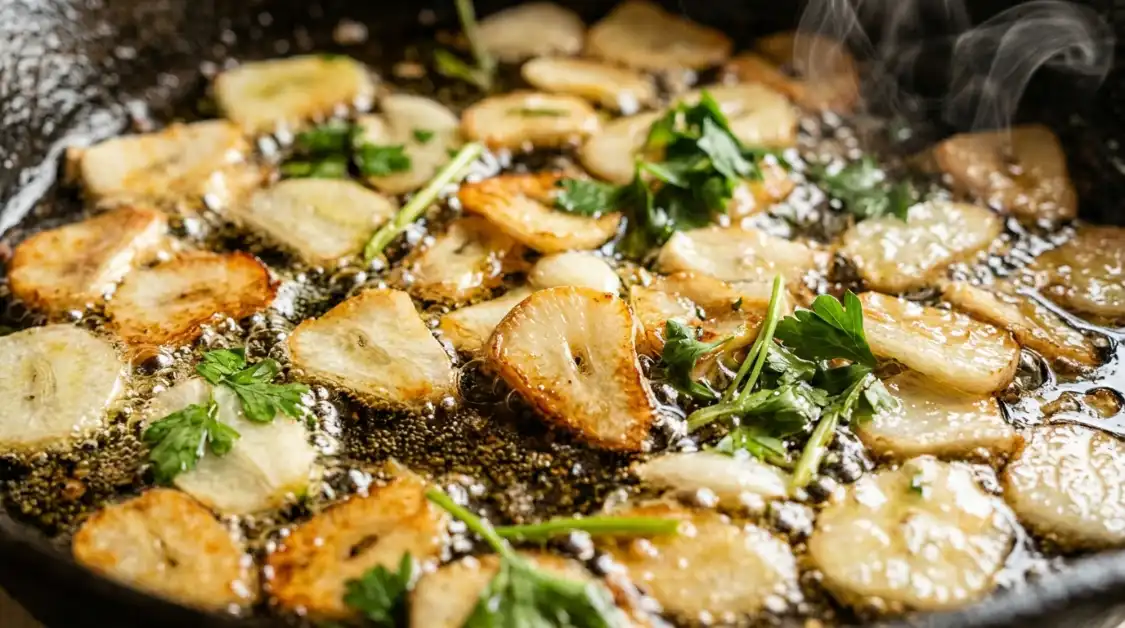
Step 5 — Bloom the garlic oil (low to medium-low heat, 160-170°F / 70-75°C): Place the cold skillet containing the oil, garlic, red pepper flakes, and parsley stems over low heat. Watch and listen. After about 1 minute you will hear a very gentle sizzle beginning. After 2 minutes, you will smell the garlic becoming fragrant and nutty. After 3 minutes, the edges of the garlic slices should be turning the palest gold. That is your target: pale gold, never brown. If the garlic is browning within 2 minutes, your heat is too high. Remove the pan from the burner for 30 seconds, then return to a lower setting.
Step 6 — Add cherry tomatoes: Add the halved cherry tomatoes to the garlic oil and increase heat very slightly to medium-low. The tomatoes will immediately begin releasing their juice into the oil. Cook, stirring gently, for 3-4 minutes until they have softened and released their liquid but still hold some shape — you want them partially broken down, not dissolved. The oil will take on a faintly pink hue and a wonderful sweet-savory aroma. Add the kalamata olives at this point and stir once to combine.
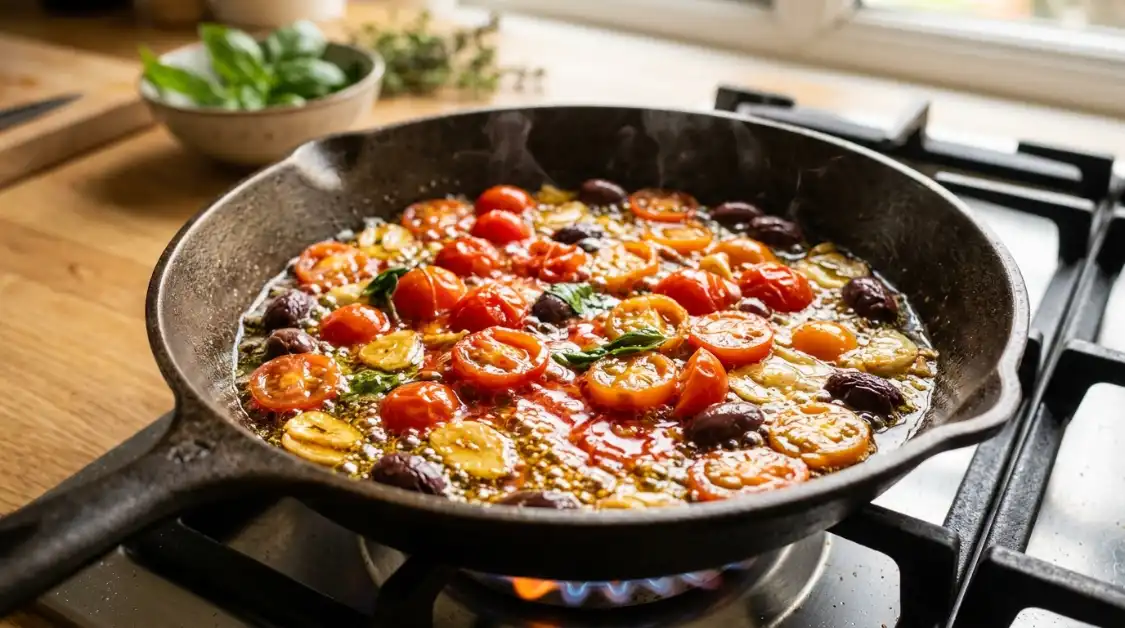
Step 7 — Add lemon zest to the warm sauce: With the pan still on low heat, scatter the lemon zest over the tomato-garlic sauce. Stir for 30 seconds. The heat blooms the aromatic essential oils in the zest into the sauce, creating a citrus perfume that permeates the entire dish. You will smell it immediately and dramatically. This is exactly what should happen. If you added the zest off heat, those volatile aromatic compounds would not release fully. Zest in the pan. Juice off the pan. Always.
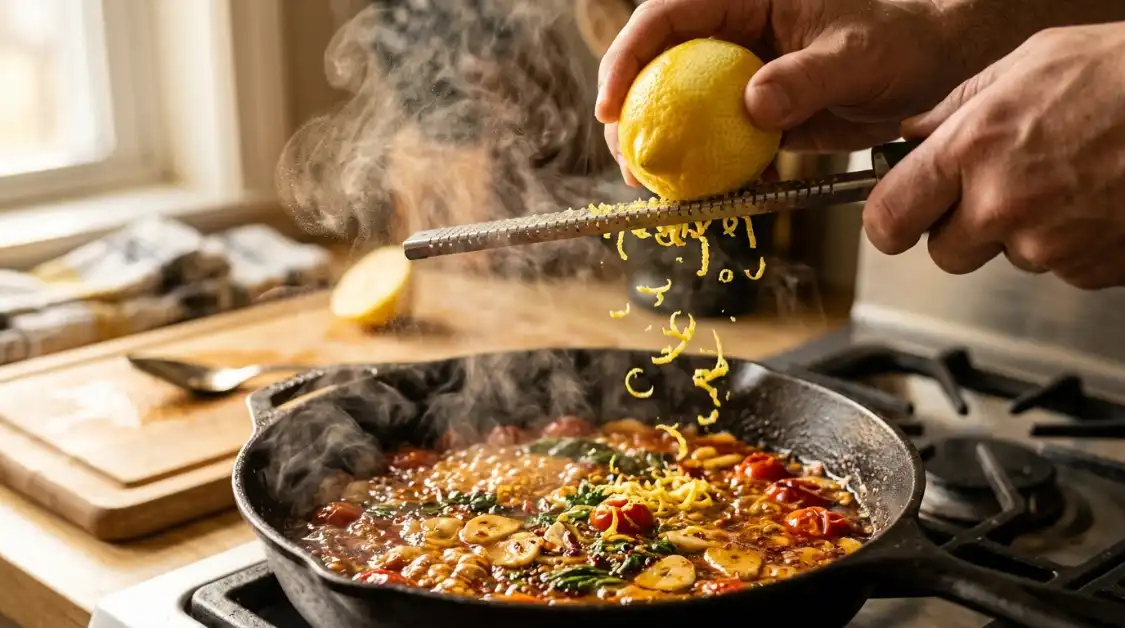
Yiayia’s Tip: My grandfather would hold the lemon directly over the pan while zesting, so every spritz of the essential oils that escaped the grater fell directly into the hot oil. He said the oil would grab the citrus aroma and hold it. He was right, as usual.
Step 8 — Drain pasta and transfer immediately (do not rinse): When the spaghetti is 2 minutes short of al dente, drain it but do NOT rinse it. Never rinse pasta for an oil-based sauce — you are washing off the surface starch that helps the sauce cling and emulsify. Transfer the hot, underdrained spaghetti directly into the skillet with the garlic oil sauce. Use tongs to lift it straight from the pot if possible, allowing some pasta water to drip in naturally — this is a technique used in Italian restaurants that ensures the exact right amount of starchy liquid enters the sauce without measuring.
Step 9 — Toss and emulsify (medium heat, 2-3 minutes): Increase the heat to medium. Add half of your reserved pasta water to the skillet. Toss the pasta vigorously with tongs, turning and folding constantly. Watch what happens: the starchy water meets the olive oil and begins emulsifying into a creamy, glossy sauce that coats every strand. Add more pasta water if the sauce looks dry or if it sticks. The spaghetti aglio e olio is ready when the sauce is glossy and unified — not oily, not watery, but silky and cohesive. This process takes 2-3 minutes of active tossing. Remove from heat.
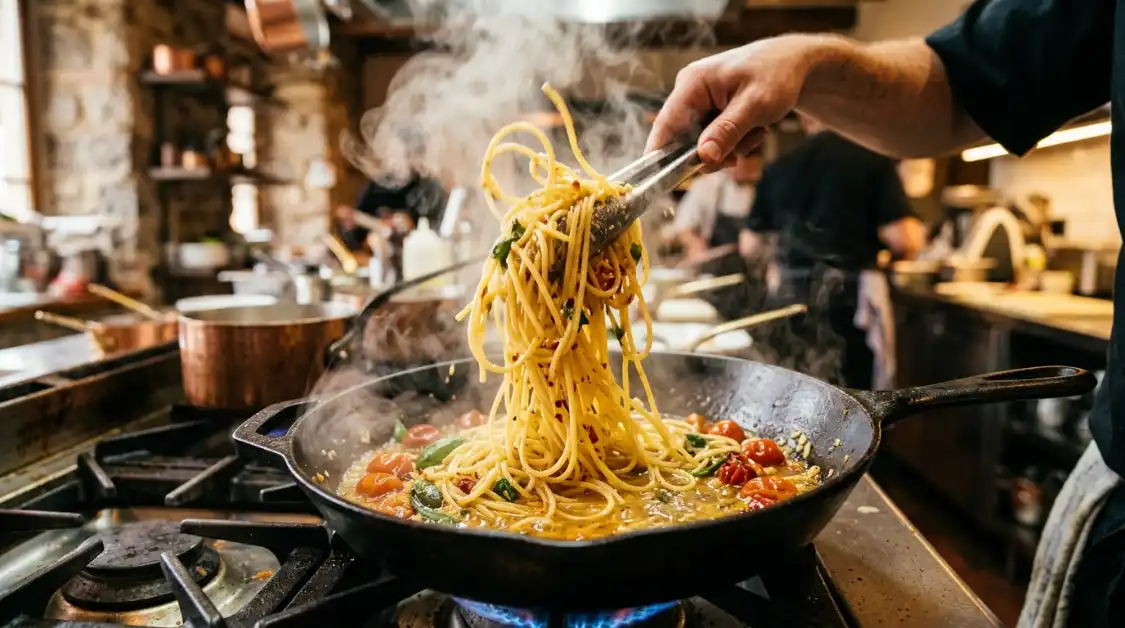
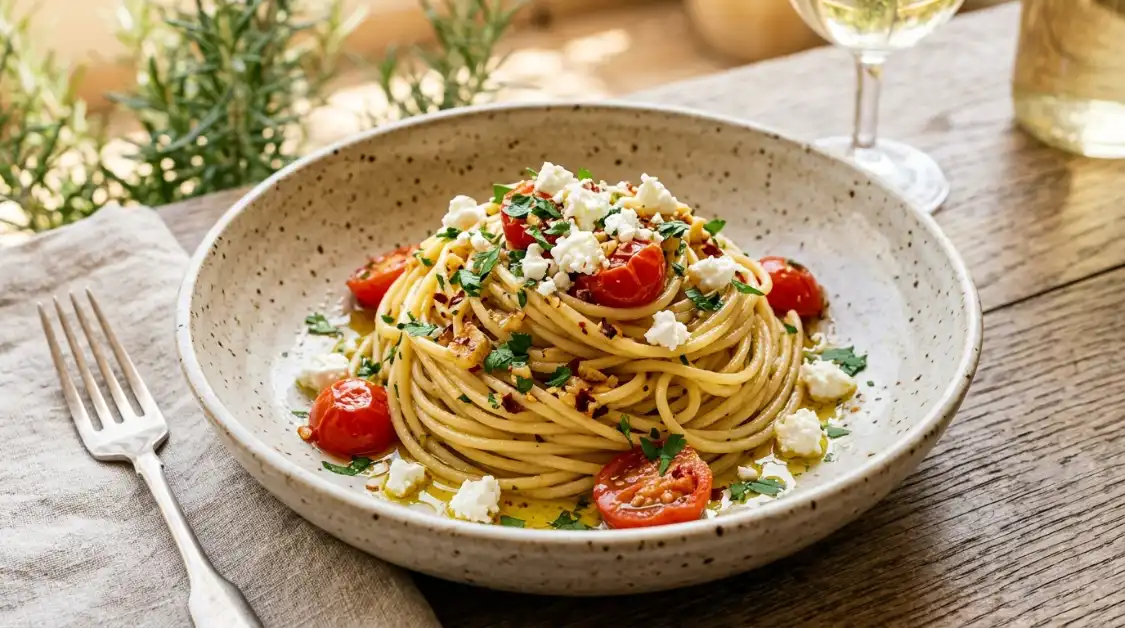
Step 10 — Finish off heat and plate: Off the heat, squeeze the reserved lemon juice over the pasta. Toss once more. Taste: it should be bright, garlicky, and intensely satisfying. Adjust salt and lemon to your preference. Divide into warmed bowls. Scatter the chopped parsley. Add crumbled feta if using. A final drizzle of your best raw extra-virgin olive oil over the top. A pinch more red pepper flakes if you like heat. Serve immediately — aglio e olio Mediterranean waits for no one.
The Secret Touches That Make This Recipe Unforgettable
Four Techniques That Professional Cooks Use
The Cold-Pan Start: As described above, this is the single biggest technique upgrade you can make to any garlic olive oil pasta. Cold oil, cold pan, cold garlic. Build heat together. The result is a sweeter, more complex garlic infusion with zero risk of bitterness. I test this against the hot-pan method approximately once per year at my cooking workshops in Athens, and the cold-pan pasta wins the blind tasting every single time without exception.
The Parsley Stem Infusion: Parsley stems are the most underused part of a bunch of parsley. They are more aromatic than the leaves — the concentration of volatile compounds in the stems is higher, which means they release more flavor into fat during cooking. Mince them finely and add them to the oil with the garlic. They will melt into the sauce invisibly, contributing a deep, green herbaceous layer that the leaves alone cannot achieve.
The Dual Lemon Method: Zest in while warm (to bloom the essential oils), juice in off-heat (to preserve acidity). This distinction matters enormously. Lemon juice exposed to prolonged high heat loses its bright volatile compounds and can turn bitter. Added off heat, it retains its clean, vivid tartness and cuts through the olive oil richness without overwhelming the garlic. This is ladolemono philosophy applied to an Italian classic.
Pasta Water Emulsification: The starch released from cooking pasta creates a powerful emulsifier when it hits the olive oil at high temperature. Harold McGee documents this process in On Food and Cooking, noting that pasta starch creates a colloidal suspension with fat that mimics the mouthfeel of a cream sauce while containing no cream. This is why a great aglio e olio is never greasy. The oil has been transformed into something altogether different: a sauce.
Common Mistakes and How to Fix Them
| Mistake | What Happens | How to Fix It |
| Adding garlic to hot oil | Garlic burns in 30-60 seconds; bitter, acrid, ruins entire dish | Cold pan start; never add to already-hot oil; 3 minutes slow rise maximum |
| Rinsing the pasta after draining | All surface starch washed off; sauce cannot emulsify; greasy result | Never rinse oil-sauce pasta; transfer hot and dripping from pot to pan |
| Not reserving pasta water | Sauce breaks; oil separates; greasy, undressed spaghetti | Reserve 250ml minimum before draining; keep it warm beside the pan |
| Adding lemon juice while pan is hot | Acidity cooks off; sauce becomes slightly bitter and flat | Remove from heat first; stir in lemon juice off-burner only |
| Overcooking the pasta before tossing | Pasta continues cooking in sauce and becomes mushy | Drain 2 full minutes early; it finishes in the pan; pull it when still firm |
| Using low-quality olive oil | Flat, lifeless sauce; the whole dish tastes thin | Use PDO Greek or Italian EVOO; taste the oil raw first; if bland, find a better bottle |
Variations and Serving Suggestions
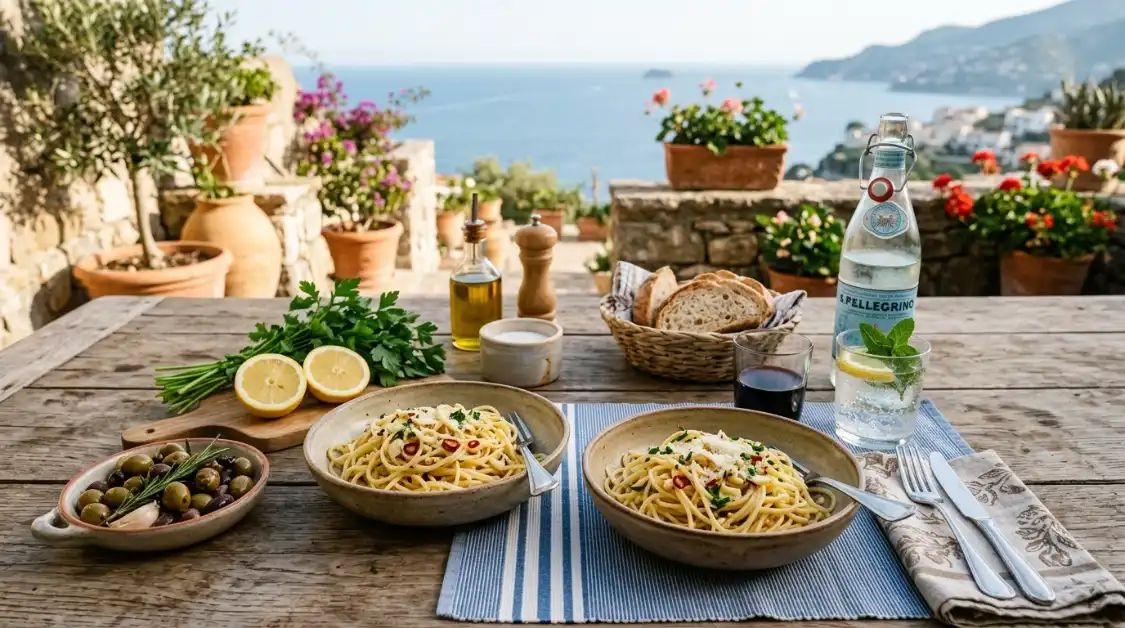
Regional Variations and How to Make This Recipe Your Own
Aglio e olio is a dish with infinite regional expressions across Italy. In Calabria, they add breadcrumbs toasted in olive oil — called pangratatto — scattered over the top instead of cheese, giving a crunchy, nutty contrast to the silky pasta. In Puglia, cherry tomatoes are standard. In Sicily, the dish becomes pasta alla carrettiera with pecorino cheese and extra parsley. My Mediterranean version borrows from Puglia (cherry tomatoes) and layers on the Greek additions of kalamata olives, lemon, and feta that make this spaghetti aglio e olio something entirely its own.
For a weeknight shortcut when you are genuinely exhausted, skip the cherry tomatoes and olives entirely and return to the pure original: garlic, oil, lemon, parsley, pasta. It is still extraordinary. I have made that bare version at 11pm on school nights in my Athens apartment more times than I can count and it has never failed me. The Mediterranean additions are what make this version festive; the base is what makes it essential.
What to Serve With Aglio e Olio Mediterranean
This pasta is beautiful on its own, but it loves company. A crisp Mediterranean white bean salad on the side adds cool, creamy contrast to the warm pasta and picks up the same olive oil and lemon flavors. If you want to add a protein to the table, our Mediterranean sheet pan salmon roasts hands-off while you make the pasta and the flavors pair magnificently. For a vegetable side dish, our gemista — Greek stuffed peppers and tomatoes is a complete Mediterranean table from a single oven.
For beverages — and I take Mediterranean food pairings seriously in every direction — try ice-cold sparkling water with a slice of lemon and a fresh sprig of mint. Or brew tsai tou vounou, the Greek mountain tea made from Sideritis, in small cups alongside the pasta. Hibiscus tea chilled over ice is a beautiful contrast to the richness of the garlic oil. My personal pairing when I want to celebrate this dish properly: homemade pomegranate lemonade — sweet, tart, and stunning in color against a white pasta bowl.
Storage and Reheating
How to Store Aglio e Olio Mediterranean
| Method | Container | Duration | Notes |
| Refrigerator | Airtight glass container | Up to 3 days | The oil will congeal when cold — this is normal; it loosens perfectly when reheated |
| Freezer | Not recommended for assembled dish | N/A | Oil-based pasta sauces separate badly on freezing; make fresh if needed |
| Sauce only (without pasta) | Airtight jar, refrigerated | Up to 5 days | Cook fresh pasta to order; toss with warm sauce and a splash of pasta water |
| Meal prep option | Cook sauce; refrigerate separately from cooked pasta | Pasta 3 days; sauce 5 days | Combine and reheat on stovetop; add 2 tbsp hot water to re-emulsify |
Reheating Without Losing the Sauce
The stovetop is the only acceptable reheating method for this aglio e olio Mediterranean. Add the refrigerated pasta to a wide skillet over medium-low heat. Add 3-4 tablespoons of hot water from a just-boiled kettle. Toss constantly with tongs for 2-3 minutes — the heat re-melts the congealed oil and the water re-emulsifies the sauce. Add a fresh squeeze of lemon juice and a final drizzle of raw olive oil after reheating to restore the brightness. The dish will taste 90% as good as when first made. Never microwave it — the oil separates irreversibly and the pasta becomes rubbery.
Frequently Asked Questions
Substitutions and Technique Questions
Can I use minced garlic instead of sliced?
You can, but I strongly recommend against it for this recipe. Minced garlic has exponentially more surface area than sliced, which means it cooks dramatically faster and burns much more easily. In the cold-pan low-heat method I use here, sliced garlic has 3 full minutes to bloom gently. Minced garlic would brown within 90 seconds at the same temperature, turning the entire sauce bitter. If you truly prefer minced, reduce the cooking time to 60-90 seconds maximum and watch it obsessively.
What pasta shape works best for aglio e olio?
Long, thin shapes are traditional and optimal: spaghetti, linguine, spaghettini, or bucatini. The silky garlic oil sauce clings to the long strands and creates that iconic glossy, unified appearance. Short pasta works in a pinch — penne or rigatoni hold the sauce in their ridges — but you lose the visual drama of a properly coated nest of long noodles. For authenticity, reach for spaghetti first. For heartiness, bucatini (thick, hollow spaghetti) is extraordinary.
My sauce looks greasy and oily — what went wrong?
Two possible causes: you rinsed the pasta (never rinse) or you did not add enough pasta water. The emulsification requires both starch and vigorous tossing over heat. If the sauce has already separated on the plate, return it to a warm pan with 3-4 tablespoons of hot water and toss aggressively for 90 seconds. It will come back together. This is a recoverable situation — do not panic.
Can I add vegetables to Mediterranean aglio e olio?
Absolutely. Beyond the cherry tomatoes and olives already in this recipe, wilted spinach or kale are wonderful additions — add them directly to the garlic oil right before the pasta goes in and let them wilt for 60 seconds. Roasted zucchini, thinly sliced and caramelized, is a summer version I love. Blanched broccoli florets, added with the pasta, work beautifully. The garlic oil sauce is forgiving and generous — it welcomes almost any vegetable you have on hand.
Dietary, Make-Ahead, and Authenticity Questions
Is aglio e olio Mediterranean vegan?
The pasta, garlic oil, cherry tomatoes, olives, lemon, and parsley are all completely vegan. The only non-vegan element is the optional feta cheese garnish. Simply skip it — or use 2 tablespoons of nutritional yeast stirred into the pasta water before tossing, which adds a savory, cheese-like umami note. A scatter of toasted pine nuts provides richness. The dish is excellent without dairy and does not feel like anything is missing.
Can I make this ahead for guests?
The sauce — garlic oil with tomatoes and olives — can be made 4 hours ahead and rewarmed gently before the pasta finishes cooking. Cook and toss the pasta fresh at the last moment: it takes under 10 minutes once the sauce is ready. Do not cook the pasta ahead and let it sit in the sauce — it will absorb all the oil and become dry and clumped. Fresh pasta, warm sauce, immediate tossing. That is the aglio e olio Mediterranean dinner party formula.
Is this authentic Italian aglio e olio?
The Italian original is garlic, oil, pasta, and peperoncino — nothing else. My Mediterranean version adds cherry tomatoes, lemon, kalamata olives, and optional feta, which makes it a genuine Mediterranean interpretation rather than a strictly authentic Neapolitan dish. I am a Greek chef making a Greek chef’s version of an Italian classic. My grandfather would never claim it was something it is not. But he would absolutely claim it is delicious — and that matters more.
How many calories per serving?
Approximately 490 calories per serving with the full recipe including optional feta (4 servings). Without feta, approximately 430 calories. The dish is naturally low in saturated fat and rich in heart-healthy unsaturated fats from the olive oil. Full nutrition details are in the recipe card below. As always: I am a chef, not a registered dietitian. Please consult a nutrition professional for guidance specific to your health needs.
Bringing the Mediterranean to Your Table
A Word From Nikos
I have been teaching cooking workshops in Athens for five years now, and the class that consistently gets the most emotional response is not the one where we make elaborate pastries or complicated seafood dishes. It is the one where we make aglio e olio Mediterranean at 8pm and eat it straight from the pan with torn bread while standing around my kitchen counter. Every time, someone says: I cannot believe something this simple can taste this extraordinary. And I think: yes. That is the whole point.
Make this tonight. Make it for yourself first, standing at your stove, so you understand what it can be. Then make it for someone you love. Leave me a comment below telling me what you thought — I read every single one. If you share a photo on social media, tag me. Watching this recipe reproduced in kitchens from Athens to Auckland is the best part of this job. Kalí órexi.
More Mediterranean Pasta to Explore
If this recipe lit something up in you, our pasta primavera recipe celebrates spring vegetables with the same bright, olive-oil-forward Mediterranean spirit. For a heartier pasta night, our pesto pasta with grilled chicken is a crowd-pleasing weeknight hero. If you want to explore more of the Italian canon, our pasta amatriciana recipe is a bold tomato-based classic made with beef instead of the traditional pork. And for a beautiful rice-based companion dish, our classic Greek lemon rice pilafi carries the same lemon-and-olive-oil philosophy in a different direction entirely.