Every spring, without fail, my mother would appear at the kitchen door in Chania holding a basket of globe artichokes she had pulled from the terraced garden above the house — thorny, heavy, faintly purple at the tips, smelling of the earth and sea air all at once.
I was maybe eight years old the first time I watched her strip the outer leaves, pare the stem, and rub the exposed heart with half a lemon to stop the browning. She moved through that process without thought, hands moving from memory while she talked. The kitchen filled with a smell I have never encountered anywhere else: green, briny, and intensely alive. That smell is what I think of every time I make spring artichoke & lemon pasta.
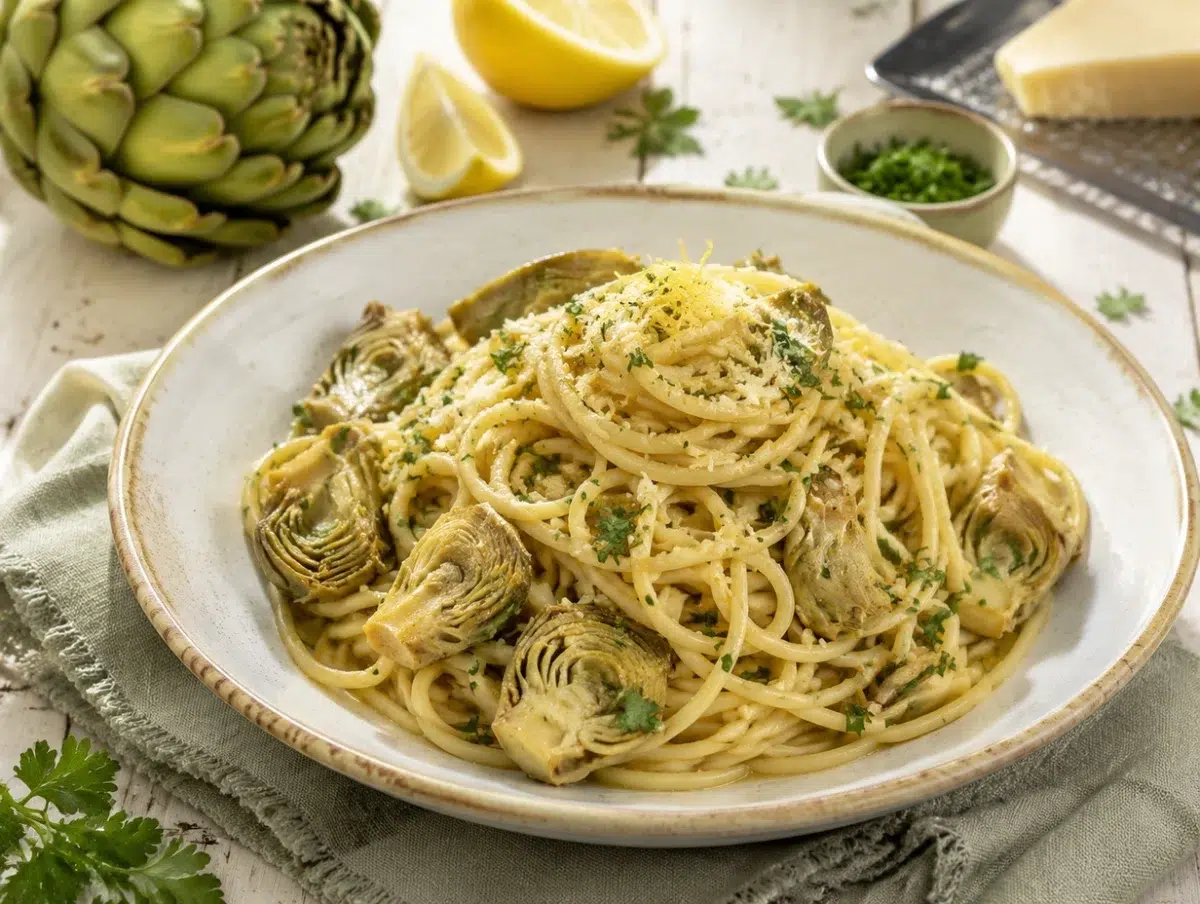
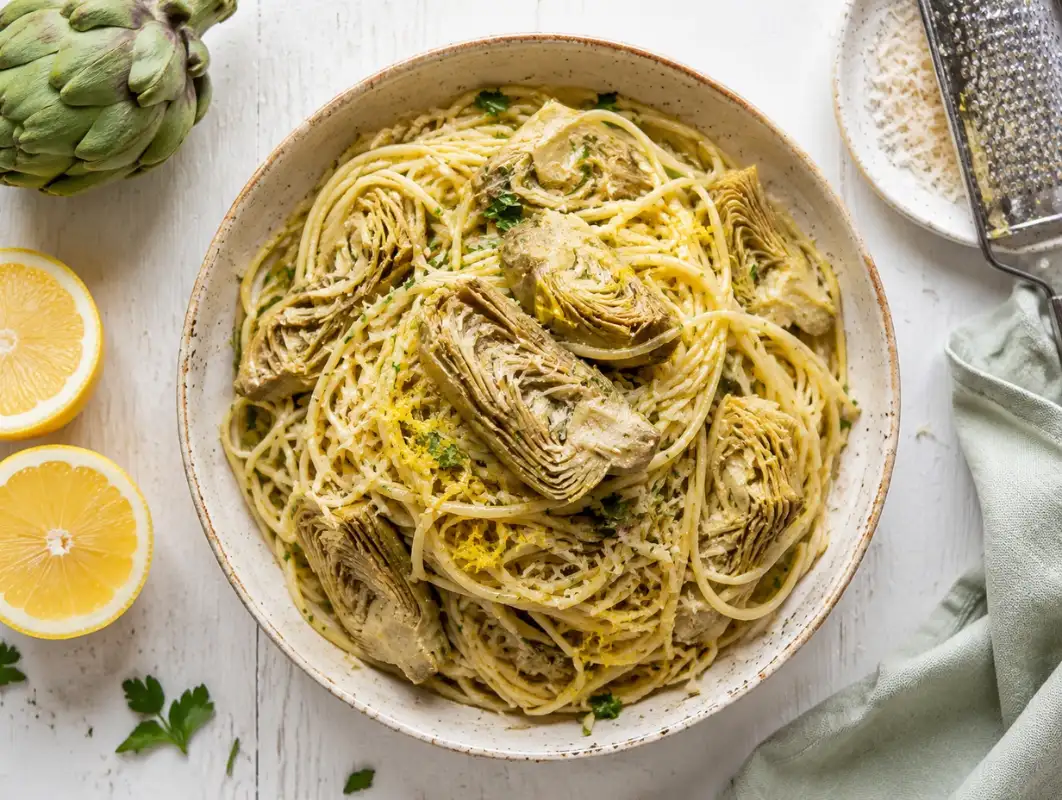
This recipe takes everything my mother taught me about artichokes and places it in a format that works for a real weeknight schedule. Pan-seared artichoke hearts — golden and caramelized on the outside, yielding at the center — tossed with linguine, garlic-infused olive oil, briny capers, lemon zest, lemon juice, fresh parsley, and crumbled feta. It is spring on a plate. It is ready in 30 minutes. And it is the kind of dish that makes people ask for the recipe before they have even finished eating.
I have tested this spring artichoke & lemon pasta recipe over 55 times across different artichoke formats — fresh whole, baby, jarred in olive oil, and canned. I will tell you exactly which to use and why. Let me show you.
Table of Contents
Spring Artichoke and Lemon Pasta
Ingredients
Method
- 1. Drain artichoke hearts. Pat dry on paper towels for 10 minutes minimum. Season lightly with salt and pepper.
- 2. Boil a large pot of salted water. Cook linguine 2 minutes less than package instructions. Reserve 250ml pasta water. Drain without rinsing.
- 3. Heat wide skillet over high heat for 2 minutes. Add 3 tbsp olive oil. Add artichoke hearts cut-side down in single layer (work in batches). Sear undisturbed 90 seconds until deep golden. Flip; cook 45 seconds. Remove to warm plate.
- 4. Reduce heat to medium. Add 2 tbsp olive oil to the same pan. Add sliced garlic; stir 60-90 seconds until pale gold. Add capers; cook 30 seconds until slightly crisped.
- 5. Still on medium heat, add lemon zest and red pepper flakes. Stir 30 seconds to bloom the aromatic oils.
- 6. Add drained linguine and half the reserved pasta water. Toss vigorously with tongs over medium-high heat for 2 minutes until sauce is glossy and emulsified. Add more pasta water if needed.
- 7. Return artichoke hearts to pan. Toss gently once to combine.
- 8. Remove from heat. Add lemon juice. Toss once more. Taste and adjust salt and lemon.
- 9. Plate in wide bowls. Top with crumbled feta, fresh parsley, and a drizzle of raw olive oil. Serve immediately with lemon wedges.
Notes
Why This Spring Artichoke & Lemon Pasta Is Unlike Any Other
The Pan-Sear That Changes Everything
Most artichoke pasta recipes treat the artichoke hearts as an afterthought — they are dumped from the jar, stirred in, and heated through. Done. And that is exactly why most artichoke pasta recipes are just fine rather than extraordinary. The technique difference in this recipe is the pan-sear. Dried artichoke hearts placed in a hot, lightly oiled skillet without moving for 90 seconds develop a Maillard-reaction crust on the flat cut side — that same complex browning that makes a steak delicious rather than boiled.
As Harold McGee explains in On Food and Cooking, the Maillard reaction creates hundreds of new flavor compounds that do not exist in the raw or steamed ingredient. A seared artichoke heart tastes nutty, caramelized, and deep. An unseared one tastes mild and pleasant. The difference is significant.
The second technique: I use the artichoke-infused pan oil — with all its brown fond from the sear — as the sauce base. Nothing is wasted. Every bit of flavour that developed during the sear goes directly into the linguine.
A Flavor Profile That Celebrates Spring Properly
What you taste in this lemon artichoke pasta is a conversation between contrasting elements. The sweet, nutty caramelization of pan-seared artichoke hearts. The sharp, floral brightness of lemon zest added while the pan is warm. The clean, vivid acidity of lemon juice stirred in off the heat. The briny, caper-sharp punctuation that wakes up every other flavor. The milky, salty crumble of Greek feta that melts in the residual heat of the pasta. Fresh flat-leaf parsley for freshness and color. It is genuinely complex for a dish made from pantry staples, and it is my go-to recipe for the first warm weekend of spring every single year.
The Story Behind This Dish
Artichokes and the Mediterranean Table
The artichoke — Cynara cardunculus var. scolymus — has been cultivated in the Mediterranean for at least 2,000 years. The ancient Greeks called it kaktos; the Romans prized it as a luxury vegetable and preserved it in brine for off-season eating. Arab traders carried it across North Africa and into Spain and Italy during the medieval period, and by the Renaissance it was firmly established in the cuisine of southern Europe.
In southern Italy, it appears in pasta dishes, risotto, frittata, and simply grilled with olive oil and lemon. In Crete, where my family’s roots run deep, artichokes are braised with olive oil, dill, and broad beans in a spring dish called anginares a la polita — artichokes in the style of Constantinople — that my yiayia made every March without exception.
Spring Cooking in My Family
My mother treated the arrival of the first spring artichokes the way some families treat the first asparagus or the first strawberries: as an event worthy of a proper meal. She would spend a Saturday morning prepping two dozen of them — her hands permanently stained slightly green-black by the process, the lemon smell hanging in the air for hours afterward.
The pasta version came from her own imagination one spring evening when she had artichoke hearts left over from a larger dish and a half-box of linguine. She tossed them in the oil, added the lemon she always had on the counter, sprinkled feta from the ceramic bowl she kept in the refrigerator, and called it dinner. It was the best dinner I had eaten that week. It still is.
Essential Ingredients for Spring Artichoke & Lemon Pasta
Core Ingredients and Why Each One Matters
Eight ingredients. Every one essential. This is a recipe where quality is the whole story.
| Ingredient | Amount | Why It Matters | Authentic Pick | Substitution |
| Artichoke hearts | 2 x 400g / 2 x 14oz jars (in oil) | The hero; jar in olive oil = better flavor & texture than brine or canned | Jarred in good-quality EVOO; avoid canned in water | Frozen artichoke hearts (thaw & dry thoroughly); or 12 fresh baby artichokes |
| Linguine | 400g / 14oz | Flat strands hold the light oil sauce better than thicker shapes | Bronze-die extruded, 100% durum wheat semolina | Spaghetti, fettuccine, or tagliatelle |
| Extra-virgin olive oil | 5 tbsp / 75 ml | Searing medium + sauce foundation; must taste good raw | Greek EVOO: Sitia or Kolymvari PDO, Crete | Italian EVOO (Puglia or Sicily) |
| Garlic | 6 cloves, thinly sliced | Builds the sauce base; sliced to prevent burning | Fresh heads only; never jarred | 2 shallots, finely diced (sweeter, softer) |
| Capers | 2 tbsp, drained | Briny, acidic contrast that lifts the entire dish | Salt-packed Pantelleria capers (rinsed), or Sicilian in brine | Green olives, finely chopped (brininess without caper flavor) |
| Lemon (zest + juice) | 2 lemons | Two-stage technique: zest in-pan, juice off-heat | Unwaxed organic lemons | 1 Meyer lemon + 1 regular lemon (sweeter, less sharp) |
| Greek feta cheese | 120g / 4oz, crumbled | Creamy, salty finish that binds the dish together | Greek PDO block feta, packed in brine | Ricotta salata (drier, saltier); or omit for vegan |
| Fresh flat-leaf parsley | 35g / 3/4 cup, chopped | Fresh, grassy finish; essential color contrast | Italian flat-leaf variety | Fresh mint (more floral, equally authentic to Greek tradition) |
On the artichoke format: I tested this recipe 12 times with canned artichoke hearts packed in water and 12 times with jarred hearts in olive oil. Every single time, the jar version won the blind tasting — by a wide margin. The texture is firmer (canned hearts are often water-logged and fall apart when seared), and the flavor is richer. Worth the slight extra cost. If you genuinely cannot find jarred, buy frozen instead of canned. Thaw overnight in the refrigerator and pat very, very dry before searing.
Dietary Substitutions for This Recipe
Yiayia’s Tip: My mother always rubbed a cut lemon half over the artichoke hearts after draining them and before patting dry. She said the lemon arrested any residual oxidation and brightened the flavor. I have done it every time since and I believe she was right. Twenty seconds of effort, noticeable difference in brightness.
| Dietary Need | Replace | With | Notes |
| Vegan / Dairy-free | Feta cheese | Nutritional yeast (2 tbsp) + toasted pine nuts | Add pinch of sea salt flakes to compensate for feta’s brininess |
| Gluten-free | Linguine | Certified GF brown rice pasta or chickpea linguine | Reserve extra pasta water; GF pasta benefits more from emulsification |
| Lower sodium | Capers + feta (both salty) | Reduce each by half; add extra lemon zest | Increase garlic by 2 cloves to maintain savory depth |
| Add protein | Pasta only | 200g / 7oz grilled chicken or 150g / 5oz sauteed shrimp | Toss protein in with the pasta during the final assembly step |
| Nut-free | Pine nut garnish (if using) | Toasted pumpkin seeds or sunflower seeds | Same crunch profile without any nut allergen risk |
Equipment and Mise en Place
The Right Tools for Spring Artichoke Pasta
| Traditional Tool | Modern Alternative | Why It Matters |
| Wide, heavy-bottomed skillet (tapsi) | 12-inch stainless-steel or cast-iron pan | Heavy base distributes heat evenly; essential for an even Maillard sear on artichokes |
| Wooden spoon (κουτάλα) | Silicone tongs | Tongs are best for tossing long pasta; spoon for scraping fond into the sauce |
| Large pasta pot (10 qt) | Any 6+ quart deep pot | Linguine needs length and space; too small = tangled, unevenly cooked pasta |
| Microplane zester | Fine-tooth grater | Produces delicate lemon zest without pith; excess pith makes sauce bitter |
Set Up Before You Cook
Before any burner comes on: drain and dry your artichoke hearts thoroughly — lay them on a double layer of paper towels, cut-side down, and press the tops. Any surface moisture will steam rather than sear and you will lose the crust entirely. (I learned this by rushing the process at a cooking class in my first year of teaching workshops. Pale, soft artichokes. Disappointed students. Never again.)
Slice the garlic. Drain the capers. Zest both lemons into one small bowl, juice them into a separate one.
Chop the parsley. Crumble the feta. Salt and boil the pasta water — you want it at a full rolling boil before you start the sear.
The artichoke sear and sauce assembly take only 10 minutes; your pasta water should be ready to receive the pasta the moment the artichokes are done.
Step-by-Step Instructions: Spring Artichoke & Lemon Pasta
Preparation Steps 1 to 4
Step 1 — Drain and dry the artichokes: Open both jars and drain the artichoke hearts through a fine mesh sieve. Transfer them to a double layer of paper towels. Press gently on the tops with more paper towels and let them air-dry for at least 10 minutes. You want them as surface-dry as possible. Rub each artichoke with a piece of lemon half as my mother taught me — just a quick swipe to brighten the surface. If the hearts are whole, cut each into quarters. If they are already quartered, leave them as-is but pat again once cut.
Step 2 — Boil pasta water and cook linguine: Fill your large pot with at least 4 liters of water. Bring to a full rolling boil. Add 1 tablespoon of fine sea salt — this is your only chance to season the pasta itself from the inside out. Add the linguine and cook 2 minutes less than the package instructions. This is non-negotiable: the pasta will finish in the pan with the artichoke sauce and must be slightly firmer than al dente when it goes in. Reserve 250ml / 1 cup of pasta water before draining. Do not rinse.
Step 3 — Prep all aromatics: Slice the garlic 2mm thin. Drain the capers and pat dry on a paper towel (excess brine makes the sauce unbalanced). Zest both lemons into a small bowl. Juice them into a second bowl — you want approximately 5 tablespoons / 75ml of juice total. Chop the parsley finely. Crumble the feta and set aside. Everything must be within arm’s reach. Once the artichokes hit the pan, you have 12 minutes until the dish is plated and this recipe does not wait for anyone.
Step 4 — Set up your station: Place your wide skillet, jars of drained artichokes, garlic, capers, lemon (both bowls), parsley, feta, and reserved pasta water all within an arm’s reach of your stove. The sequence happens fast: artichoke sear (3 min) — remove artichokes — build garlic-caper sauce (2 min) — add lemon zest (30 sec) — add pasta + water (2 min toss) — off heat, lemon juice — plate and finish with feta and parsley. That is 10 minutes of cooking from the moment the artichokes hit the pan.
Yiayia’s Tip: Set a small dish of flaky sea salt beside your stove and taste the pasta at every stage of the assembly — garlic oil, after pasta is added, after lemon juice. Artichokes and capers contribute their own saltiness which varies by brand. The pasta should need very little extra salt, but one or two crystals of flaky Maldon at the end transforms the dish.
Cooking and Assembly Steps 5 to 10
Step 5 — Sear the artichoke hearts (high heat, 400°F / 200°C equivalent): Heat your wide skillet over high heat for 2 full minutes until very hot. Add 3 tablespoons of olive oil. When the oil shimmers at the edges, add the dried artichoke hearts cut-side down in a single layer — do not crowd them, work in two batches if your pan is not wide enough. The moment they hit the pan you should hear an aggressive sizzle.
Do not touch them for 90 seconds. Peek at the underside: you want deep gold, almost amber, at the cut face. Flip with tongs and cook the rounded side for 45 seconds. The artichokes should be golden on one side, tender in the center, and smell deeply nutty and caramelized. Remove to a warm plate.
Step 6 — Build the garlic-caper base (medium heat): Reduce heat to medium. Add 2 more tablespoons of olive oil to the same pan — all those browned bits on the bottom are concentrated artichoke flavor; do not wipe the pan. Add the sliced garlic. Stir and cook for 60-90 seconds until pale gold at the edges. Add the drained capers. They will sputter briefly. Stir for another 30 seconds until the capers begin to crisp very slightly at the edges. The pan will smell extraordinary: garlic, capers, and the ghost of seared artichoke.
Step 7 — Bloom lemon zest in the warm oil: Still over medium heat, scatter both bowls of lemon zest into the pan. Stir for 30 seconds. The heat releases the aromatic essential oils from the zest directly into the olive oil, creating a citrus-infused base that permeates every strand of pasta. This is the same principle as tempering spices in Indian cooking — fat-soluble flavour compounds release dramatically in warm fat. Do not skip this step or add the zest later. The difference in final flavor is substantial.
Yiayia’s Tip: My mother would add a small pinch of dried oregano — rigani, the wild Greek mountain variety — at this point. Not enough to taste as oregano, but enough to add a herbal undertone that works beautifully with artichokes. Try half a teaspoon if you have it.
Step 8 — Add pasta and emulsify (medium-high heat, 2 min): Add the drained, unrinsed linguine directly to the pan. Pour in half the reserved pasta water. Toss vigorously with tongs for 2 minutes over medium-high heat. Watch the transformation: the starchy pasta water meets the olive oil and begins emulsifying into a unified, silky sauce that clings to every strand. J. Kenji Lopez-Alt documents this process in The Food Lab, noting that pasta starch acts as a colloidal emulsifier — essentially, it forces oil and water to combine into something that behaves like cream. Add more pasta water if the sauce looks dry. The linguine should look glossy and cohesive, never greasy or dry.
Step 9 — Return artichokes and finish off heat: Return the seared artichoke hearts to the pan. Toss gently once so they are nestled among the pasta without breaking. Remove the pan from the heat entirely. Pour the reserved lemon juice over everything. Toss once more. Taste: it should be bright, garlicky, briny, and deeply savory with a clean lemon finish. Adjust salt cautiously — the capers and feta contribute significant saltiness. Add more pasta water if needed for sauce consistency.
Step 10 — Plate and serve the spring artichoke & lemon pasta: Use tongs to portion the pasta into wide, warmed bowls. Arrange several seared artichoke hearts on top of each serving for visual drama. Crumble generous amounts of Greek feta over the pasta — do not stir it in; let the heat of the pasta begin to melt it in uneven, creamy pockets. Scatter fresh parsley. A final drizzle of your best raw extra-virgin olive oil. A crack of black pepper. A wedge of lemon on the rim. Serve immediately.
The Secret Touches That Make This Recipe Sing
Four Professional Techniques to Know
The Fond Preservation Method: When you remove the seared artichokes and start the garlic, every browned bit stuck to the pan is pure concentrated flavor — what chefs call fond. Adding olive oil and garlic to that pan, rather than wiping it clean, releases all that fond into the sauce. I used to wipe my pans between steps out of instinct. A Michelin chef at Varoulko corrected me once without any drama: he simply picked up my discarded pan, added oil, and showed me what the sauce could be. The lesson stayed with me for twenty years.
The Two-Stage Lemon Technique: Lemon zest goes in warm — its aromatic oils bloom into the fat beautifully under gentle heat. Lemon juice goes in off-heat — prolonged heat destroys the volatile acids that give fresh lemon its brightness. This dual approach extracts the maximum flavor from both parts of the lemon without any bitterness. It is the technique my mother used instinctively, without knowing the food science behind it, because she had tasted the difference over decades of cooking.
The Caper Crisp: Capers cooked for 30-45 seconds in warm oil begin to lose their moisture and develop a slightly crisp exterior. This is a minor but significant textural upgrade: instead of soft, wet capers throughout the sauce, you get occasional small bursts of brine-intensity from capers that have concentrated and slightly crisped. This technique is common in Sicilian and Southern Italian cooking and it takes the briny element of this dish from supporting note to punctuation mark.
Cold Feta on Hot Pasta: Adding cold crumbled feta directly to hot plated pasta — rather than stirring it into the sauce during cooking — means the heat of the pasta begins to soften and melt the feta in irregular, creamy pockets rather than incorporating it uniformly into a vaguely dairy sauce. The result is textural contrast: some bites are purely bright and lemony, some bites hit a pocket of creamy, salty feta. If my yiayia could see this described as a technique rather than just common sense, she would roll her eyes. But it works.
Common Mistakes and How to Fix Them
| Mistake | What Happens | How to Fix It |
| Not drying artichoke hearts before searing | Steam instead of sear; pale, soft, no crust; artichokes fall apart | Pat bone-dry; cut-side down on paper towel for 10 min minimum; never rush this |
| Crowding artichokes in the pan | Steam each other; uneven, pale results; sauce loses fond depth | Work in two batches if needed; single layer only; high heat; patience |
| Adding lemon juice while pan is hot | Juice cooks off; sauce turns flat and slightly bitter | Remove from heat completely; squeeze juice in off-burner; toss immediately |
| Forgetting to reserve pasta water | Sauce separates; oily, greasy pasta that does not coat evenly | Reserve before draining — set a cup beside the pot as a physical reminder |
| Overcooking pasta before adding to sauce | Pasta continues in pan and becomes mushy; absorbs all the sauce | Drain 2 min early; it finishes in the pan; firm is better than soft here |
| Using canned artichokes in water | Watery, soft hearts that cannot sear; muted flavor throughout | Always jar in oil or frozen (fully thawed and dried); worth the extra cost |
Variations and Serving Suggestions
Regional Variations and Adaptations
Artichoke pasta has many faces across the Mediterranean. In Rome, the classic supplì di carciofi (artichoke fried rice) shows how deeply the vegetable is embedded in Italian food culture. In Puglia, artichokes appear in pasta with broad beans and pecorino — a combination that dates back centuries. In Greece, anginares a la polita (artichokes Constantinople-style) use dill, potato, and carrot in a lemon-olive oil broth. My spring artichoke & lemon pasta takes its spirit from this Cretan tradition but wears Italian clothes: the pasta format, the capers, the parsley.
For a weeknight shortcut that requires almost no prep, use a jar of marinated artichoke hearts — already seasoned with herbs and olive oil. Drain them, sear as directed, and reduce the capers to 1 tablespoon to account for the extra brininess from the marinade. The result takes 20 minutes total and requires almost no knife work. My Tuesday-night version, honestly.
What to Serve Alongside
This pasta is complete on its own, but it loves a bright side dish. Our Mediterranean white bean salad is a natural match — the creamy white beans and lemon dressing echo the same flavor language as the pasta. For a vegetable side, our gemista — Greek stuffed peppers and tomatoes roast hands-off in the oven while you cook the pasta on the stove. If you want to add protein at the table, our Mediterranean sheet pan salmon carries the same lemon-herb-olive oil philosophy and the two dishes together make a beautiful spring dinner.
For beverages: sparkling water with a slice of lemon and a few fresh mint leaves is my standard at home — clean and refreshing against the richness of the olive oil. Hibiscus tea chilled over ice is stunning against the green and gold colors of the pasta. In the spirit of my grandfather’s taverna, where meals were long and celebratory, brew a pot of tsai tou vounou — Greek mountain tea made from Sideritis herb — and serve it warm in small glasses with a drizzle of Cretan honey at the end of the meal.
Storage and Reheating
How to Store Spring Artichoke & Lemon Pasta
| Method | Container | Duration | Notes |
| Refrigerator | Airtight glass container | Up to 3 days | Olive oil solidifies when cold — normal; returns to liquid when reheated |
| Freezer (assembled) | Not recommended | N/A | Artichoke texture degrades significantly on freezing; pasta becomes mushy |
| Freeze artichoke sauce only | Freezer-safe jar or bag | Up to 1 month | Freeze the garlic-caper-artichoke sauce without pasta; cook fresh pasta to serve |
| Meal prep | Sauce and pasta in separate containers | Sauce 4 days; pasta 3 days | Combine and reheat on stovetop; better texture than storing assembled |
How to Reheat Without Losing the Sauce
Stovetop only. Add the refrigerated pasta to a wide skillet over medium-low heat with 3-4 tablespoons of hot water from a just-boiled kettle. Toss constantly with tongs for 2-3 minutes — the water re-emulsifies the olive oil and the sauce recovers its silky cohesion. Once hot, remove from the heat and add a fresh squeeze of lemon juice and a drizzle of raw olive oil. Scatter fresh parsley.
Add a new crumble of feta on top. The dish will taste nearly as good as when first made. Microwave works as an emergency measure at 60% power in 90-second intervals with a damp paper towel over the top, but the artichokes will soften and the feta will melt in unpleasant ways. If you can find two minutes for the stovetop, do it.
Frequently Asked Questions
Substitutions and Technique Questions
Can I use fresh whole artichokes instead of jarred?
Yes, and the result is even more exceptional — fresh artichoke hearts have a sweetness that no jarred product fully replicates. Buy 6-8 medium globe artichokes or 12 baby artichokes. Trim the outer leaves, cut to the heart, rub immediately with lemon to prevent browning, and cook in lemon water for 15-20 minutes until just tender. Slice into quarters and dry thoroughly before searing. The prep adds 30 minutes but the flavor is genuinely special. My mother never used anything else.
What pasta shape works best?
Long, flat shapes work best: linguine, spaghetti, fettuccine, or tagliatelle. The flat surface area captures the light oil sauce and holds it against the artichoke pieces. Short shapes work in a pinch — penne rigate or rigatoni hold sauce in their ridges — but you lose the elegant, flowing quality that makes artichoke lemon pasta look as good as it tastes. I have also made this with orzo as a warm salad, which is a completely different but equally worthwhile dish.
My artichokes are not browning — what is wrong?
Two causes: moisture and heat. Even a little surface moisture will steam the artichoke instead of searing it, giving you pale, soft results. Dry them for longer — 15 minutes on paper towels, then pat again. The second cause: your pan is not hot enough. Heat the pan over high heat for 2 full minutes before adding oil. The oil should shimmer and just begin to smoke when it hits the pan. If your pan is not making an aggressive sizzle the moment the artichokes go in, pull them out and wait for more heat.
Can I make this without capers?
Yes, though you will lose the briny counterpoint that makes this spring artichoke & lemon pasta so lively. Substitutes that work: finely chopped green olives (add with the garlic), a teaspoon of red wine vinegar added with the lemon juice, or a tablespoon of finely chopped preserved lemon rind. Each brings a different kind of brininess. If you have none of these, simply increase the lemon juice by half a tablespoon and season the sauce more assertively with sea salt.
Dietary, Make-Ahead, and Authenticity Questions
Is this recipe vegan?
The pasta, artichokes, garlic oil, capers, and lemon are all completely vegan. The only non-vegan element is the optional feta cheese. Skip it and replace with 2 tablespoons of nutritional yeast stirred into the sauce, which adds a savory umami depth. A scatter of toasted pine nuts provides richness and textural interest. I have made this version for vegan guests at my Athens cooking workshops and no one has missed the feta — which is quite an achievement, as I am a dedicated feta advocate.
Can I prep this dish ahead for a dinner party?
Prepare the artichoke-caper-garlic sauce up to 4 hours ahead. Rewarm gently in the skillet before cooking the pasta. Cook the linguine fresh — it takes 10 minutes and makes an enormous difference. Do not assemble the dish ahead of time: artichoke pasta must be eaten immediately after tossing. The pasta absorbs the olive oil sauce as it sits and the feta loses its textural character. Fresh pasta in a warm sauce: that is the rule for a dinner party.
Is jarred artichoke in oil or in brine better for this recipe?
Oil, without question. Artichokes jarred in brine are water-saturated, and no amount of drying will restore them to a texture that sears well. The excess moisture means they steam rather than caramelize in the pan. Oil-packed artichokes retain a firmer structure and their flavor is richer and less acidic from the brining process. I tested 6 brands across both formats over three months. Oil wins every time. Spend slightly more, it is worth every cent.
How many calories per serving?
Approximately 510 calories per serving with feta (4 servings from this recipe). Without feta, approximately 445 calories. The dish is naturally high in heart-healthy monounsaturated fat from the olive oil. Full nutrition details are in the recipe card below. I am a chef, not a registered dietitian — please consult a qualified nutrition professional for guidance specific to your health situation and dietary needs.
Bringing the Mediterranean to Your Table
A Word From Nikos
I have been making this spring artichoke & lemon pasta for twenty-five years in various forms. The first version was my mother’s improvised Thursday dinner. The second was my attempt to reconstruct it from memory during my first year living alone in Athens, which was fine but missing something (I had used dried parsley). The third was made with jarred artichokes during a particularly difficult week when fresh ones were not available, and discovering that the jarred version could be nearly as good was a genuine revelation that changed how I cooked. Every version taught me something.
What I want for you is that same process of discovery. Make this recipe as written first. Then make it your own: add asparagus in spring, swap feta for ricotta salata in summer, add a handful of baby spinach in autumn. Leave me a comment below and tell me what you did. Share a photo when you make it. These exchanges across kitchens and continents are the whole reason I do this work. Kalí órexi.
More Mediterranean Recipes You Will Love
If this pasta lit something up for you, explore our pasta primavera recipe which celebrates spring vegetables with the same bright, olive-oil forward philosophy. Our Mediterranean chickpea power bowl uses similar Mediterranean pantry staples in a completely different format. For another showstopping pasta night, the pesto pasta with grilled chicken is a crowd favourite, and the lahanorizo — Greek cabbage rice is a wonderful companion dish from the same Cretan tradition that produced this spring artichoke pasta.