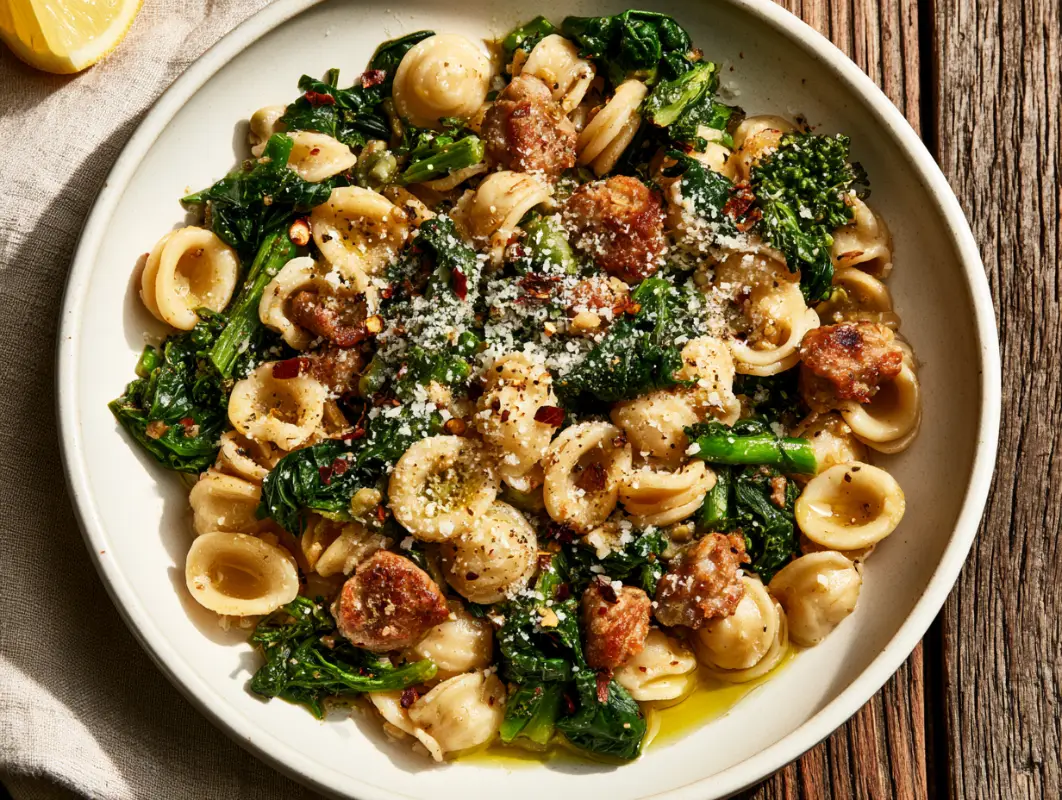
The first time I tasted something close to orecchiette with broccoli rabe & sausage, I was 24, sitting at a long wooden table in the Varoulko kitchen after a brutal Saturday service. One of the Italian line cooks — a Pugliese named Salvatore — had made a pot of it for the staff meal. The smell hit me from across the room: garlic sizzling in olive oil, something bitter and green transforming under heat, the meaty savor of seasoned sausage. I sat down without being invited and didn’t leave until the pot was empty.
That night, Salvatore explained that this dish — what Pugliesi call orecchiette con le cime di rapa, or pasta con le cime di rapa — was not a recipe so much as a birthright. Every family in the heel of Italy’s boot makes it. Every cook has an opinion about how bitter the rapini should be, how garlicky the oil, whether to add chili or cheese or both. “It’s the simplest complicated thing you’ll ever cook,” he told me, grinning.
I have been making this Mediterranean pasta dinner ever since, using chicken or lamb sausage in place of the traditional pork. The result is lighter, just as deeply savory, and — I think — more interesting. This orecchiette with broccoli rabe & sausage recipe is my version of that staff-meal pot: honest, bold, fast enough for a weeknight, and beautiful enough to make for people you love.
Table of Contents
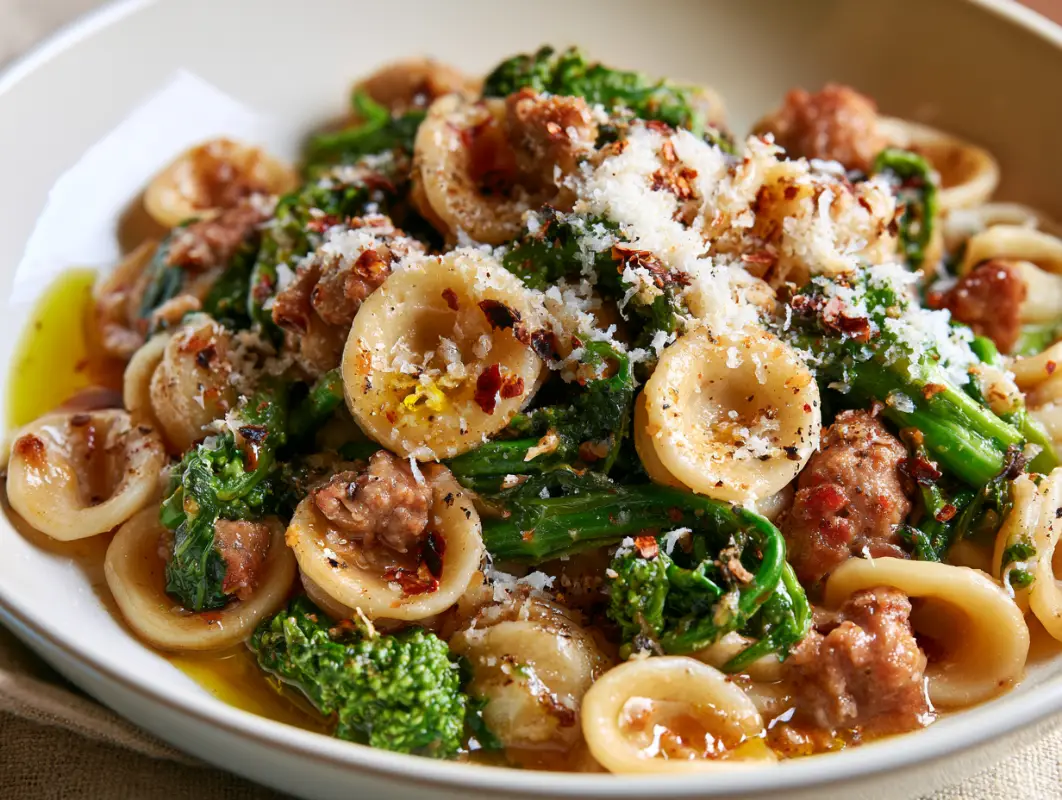
Orecchiette with Broccoli Rabe and Sausage
Ingredients
Method
- 1. Bring a large pot (5L / 5 qt) of water to a rolling boil. Add 10–15g salt per litre. Add broccoli rabe and blanch exactly 2 minutes until bright emerald green. Remove with a spider or slotted spoon to a colander; do not dump the water. Keep the water boiling for the pasta.
- 2. Heat 3 tbsp olive oil in a large (30cm / 12-inch) skillet over medium-high heat. Add sausage, breaking into rough ½-inch pieces. Cook undisturbed 2–3 minutes, then stir. Brown for 8–10 minutes total until deeply golden. Remove to a plate.
- 3. Reduce heat to medium-low. Add remaining 2 tbsp olive oil to the same pan. Add sliced garlic. Cook gently 2–3 minutes until pale gold at the edges — watch carefully. Add red pepper flakes, cook 30 seconds.
- 4. Add blanched broccoli rabe to the garlic pan. Toss to coat. Add 60ml chicken broth. Cook 2 minutes, scraping up any browned bits (fond) from the pan bottom. Return sausage to pan. Toss everything together. Reduce heat to low.
- 5. Add orecchiette to the boiling salted water. Cook 2 minutes less than package instructions. Before draining, scoop out 300ml cooking water. Drain pasta.
- 6. Add drained orecchiette to the skillet over medium-high heat. Add 100ml reserved pasta water. Toss vigorously for 90 seconds until the pasta is coated in a glossy, emulsified sauce. Add more pasta water in 50ml splashes if needed.
- 7. Remove from heat. Add half the Pecorino Romano and toss. Taste; adjust salt and chili. Squeeze in lemon juice if using. Serve immediately in warm bowls, topped with remaining Pecorino and a generous drizzle of raw extra-virgin olive oil.
Notes
Storage:
Refrigerate up to 3 days airtight. Reheat in a pan with 2–3 tbsp water over medium-low heat. Finish with fresh olive oil and Pecorino.Make-ahead:
Prepare sauce (sausage + rapini + garlic oil) up to 24 hours ahead. Cook fresh pasta the day of serving.Key substitution:
Replace chicken sausage with lamb merguez sausage (spicier) or turkey Italian sausage. Replace broccoli rabe with broccolini for a milder result.Dietary:
Use halal-certified chicken sausage and broth. For dairy-free, replace Pecorino with nutritional yeast + lemon. For GF, use certified GF orecchiette.Serving suggestion:
Serve with a lemon-dressed green salad, grilled flatbread, and homemade lemonade or hibiscus tea.Related recipes:
explore the broader Italian pasta world with our Rigatoni Pomodoro, find a lighter pasta salad option in our Caprese Pasta Salad Orzo, or end the meal beautifully with our Easy Tiramisu Recipe.Why This Orecchiette with Broccoli Rabe & Sausage Is Special
The Authentic Technique That Sets This Recipe Apart
What separates a great Orecchiette with Broccoli Rabe & Sausage from a mediocre one is the blanching step — and knowing precisely when to stop it. Broccoli rabe (rapini) is a member of the Brassica family, closely related to the turnip rather than broccoli. Its bitterness comes from glucosinolates: sulfur-containing compounds that break down in boiling water. A 2-minute blanch in heavily salted water reduces bitterness by roughly 40% while preserving the rapini’s vivid green color through chlorophyll retention, as Harold McGee explains in On Food and Cooking. Under-blanch and the dish turns harsh. Over-blanch and you’ve got army-green mush. Two minutes. Don’t walk away.
The second technique is the aglio olio pasta foundation: garlic, olive oil, and red pepper flakes cooked together until the garlic is golden (not brown), creating a fragrant base that the blanching water, sausage, and rapini will later emulsify into a glossy, light sauce. There’s no cream. No flour. Just the alchemy of fat, starch, and heat — exactly as J. Kenji López-Alt describes emulsified pasta sauces in The Food Lab.
🫒 Yiayia’s Tip: Save at least 300ml of pasta-cooking water. It’s starchy liquid gold that ties this dish together at the end.
The Flavor Profile and When It Shines
This Southern Italian pasta delivers something rare: it is simultaneously earthy, bitter, spicy, savory, and bright. The rapini brings a pleasant assertive edge. The chicken sausage offers herby, fennel-kissed savoriness. The garlic oil is sweet and aromatic. The Pecorino Romano pasta topping adds a salty, sharp finish that pulls every element together. It’s a weeknight Italian pasta that also impresses at a dinner party. I have made it for 4 people and for 20 people. The pan scales beautifully. Start the year you serve this; I promise you’ll be asked for the recipe.
The Story Behind the Dish
A Pugliese Birthright: Cultural and Historical Context
This dish is as Pugliese as the olive groves that carpet the landscape between Bari and Brindisi. Orecchiette — “little ears” in Italian — is the handmade pasta shape native to this region, rolled by thumb across a rough wooden board until each piece curls into a concave disc. Pasta con le cime di rapa has been eaten in Puglia for centuries, tied to the region’s agricultural calendar: broccoli rabe grows best in cool-weather months (October to March), and the dish is traditionally a winter meal, deeply embedded in Pugliese food culture. Some culinary historians trace the combination of bitter greens and pasta back to ancient Greek and Roman agricultural practices in the region.
Salvatore’s Kitchen and My Varoulko Education
I learned the soul of this dish from Salvatore, but my yiayia had prepared me for it without knowing. In Crete, we eat horta — wild bitter greens — dressed with ladolemono (lemon and olive oil). Bitter greens are not something to tolerate; they are something to seek. The leap from horta over pasta with beans to orecchiette with broccoli rabe & sausage is smaller than you might think. Both traditions trust the same instinct: balance bitterness with fat, salt, and heat. After Varoulko, I spent two weeks in Puglia specifically to study this rapini pasta recipe with local nonnas. It is the most educational pasta trip I have ever taken.
Essential Ingredients for Orecchiette with Broccoli Rabe & Sausage
Core Ingredients: What Goes In and Why
This recipe has very few ingredients. That means every single one matters enormously. Here’s everything you need and why it’s there:
| Ingredient | Amount | Why It Matters | Authentic Pick | Substitution |
| Orecchiette pasta | 400g / 14oz | Concave shape traps sausage and rapini in every bite — no other pasta does this | Artisan dried orecchiette (semolina) | Cavatappi or farfalle (different texture) |
| Broccoli rabe (rapini) | 500g / 1.1 lb | The defining bitter green — glucosinolates mellow beautifully when blanched | Fresh rapini with tight buds | Broccolini (less bitter) or kale (earthier) |
| Chicken sausage (Italian-style) | 350g / 12oz | Provides herby, fennel-kissed savory depth without pork | Homemade or artisan chicken sausage with fennel seeds | Lamb merguez sausage (spicier) or turkey sausage |
| Extra-virgin olive oil | 5 tbsp | The base of the aglio olio sauce — use the best you have | Cretan or Puglian EVOO | Any quality EVOO |
| Garlic | 8 cloves, thinly sliced | The aromatic backbone — sliced, not minced, for gentle fragrance | Fresh purple-skin garlic | Roasted garlic for sweeter version |
| Red pepper flakes | ½–1 tsp | Adds the signature southern Italian heat that cuts the fat | Calabrian chili flakes (peperoncino) | Pinch of cayenne |
| Pecorino Romano | 50g / 2oz, finely grated | Salty, sharp, sheep-milk finish that binds the sauce | Aged Pecorino Romano D.O.P. | Parmigiano Reggiano (milder) |
| Chicken broth | 60ml / ¼ cup | Replaces wine in building the pan sauce; adds depth without alcohol | Homemade or low-sodium | Pasta cooking water (free and equally effective) |
The sausage question always comes up. Traditional orecchiette con le cime di rapa uses Italian pork sausage — but I have been cooking this version with high-quality Italian-spiced chicken sausage for seven years and it is a genuine, delicious dish in its own right. The key is finding chicken sausage seasoned with fennel seeds and herbs. That fennel seed flavor is non-negotiable. It is what makes the dish recognizable as a Puglia pasta dish. (I once used a plain chicken sausage and my Pugliese-raised friend Salvatore looked at me with visible disappointment. I corrected this immediately.)
Dietary Substitutions for Every Table
This is already a flexible, accessible dish. Here are the key adaptations I’ve tested:
| Dietary Need | Replace | With | Notes |
| Halal | Any pork sausage | Halal-certified chicken or lamb sausage | Look for Italian-spiced varieties with fennel |
| Gluten-free | Semolina orecchiette | GF orecchiette (chickpea or brown rice) | Cook 1 min less — GF pasta overcooks fast |
| Dairy-free | Pecorino Romano | Nutritional yeast + squeeze of lemon | Add 2 tbsp extra olive oil for richness |
| Vegetarian | Chicken sausage | Spicy chickpea sausage or sliced portobello mushrooms | Add 1 extra tbsp olive oil and a pinch more chili |
| Lower heat | Red pepper flakes | Sweet smoked paprika | Changes the character — less Southern Italian, still delicious |
★ Pro Tip: For the most authentic flavor, buy your chicken sausage from an Italian deli or specialty butcher — fennel seed content varies enormously between brands. It is worth the extra five minutes of driving.
Equipment and Technique Essentials
Traditional and Modern Kitchen Tools
This dish requires almost nothing — but what it does require should be the right thing:
| Traditional Tool | Modern Alternative | Why It Matters |
| Rough wooden pasta board | Silicone baking mat or back of wooden board | Texture helps roll orecchiette by thumb — essential if making fresh pasta |
| Wide, heavy terracotta pan | 30cm / 12-inch stainless steel or cast-iron skillet | Wide surface area allows sausage to brown rather than steam |
| Large pasta pot (6+ litres) | Any pot at least 5 litres | Rapini and pasta both need space to move — crowding prevents even cooking |
| Pasta spider (skimmer) | Slotted spoon or tongs | Essential for transferring blanched rapini without dumping the pasta water |
Mise en Place and Pre-Cook Setup
Before you touch the stove: trim the bottom 2–3cm of the broccoli rabe stems and discard them (too tough). Cut the remaining stalks and florets into 5cm / 2-inch pieces. Slice the garlic thinly — not minced. Remove sausage from its casings. Grate the Pecorino. Measure the red pepper flakes. Boil the water now — a large pot takes time. This dish moves fast once it starts, so your mise en place is your insurance policy. Every second you spend not searching for the grater is a second your garlic isn’t burning.
🫒 Yiayia’s Tip: Keep a glass of cold water beside the stove. If garlic starts turning too dark too fast, add a small splash — it cools the pan instantly and saves your base sauce.
Step-by-Step Instructions for Orecchiette with Broccoli Rabe & Sausage
Preparation Steps 1–4: The Foundation
- Bring a large pot (at least 5 litres) of water to a rolling boil. Salt it aggressively — I use about 15g of salt per litre. It should taste like a light sea breeze. This water will blanch the rapini and cook the pasta. Use it wisely. Drop the trimmed broccoli rabe pieces into the boiling water and cook for exactly 2 minutes. You’ll see the color shift from dull to vivid emerald almost immediately — that’s chlorophyll activating under heat. Using a spider or slotted spoon, transfer the blanched rapini to a colander. Do not dump the water. That starchy, slightly bitter water is your secret sauce ingredient. Reserve 300ml before draining the pasta.
The color change is your sensory cue. Bright green = ready. Khaki green = overcooked. Don’t trust the clock alone — look at the pan.
🫒 Yiayia’s Tip: Plunge the blanched rapini into a bowl of ice water for 30 seconds after blanching if you’re doing this step ahead of time — it stops the cooking and keeps the color electric green.
- Heat 3 tablespoons of extra-virgin olive oil in your widest, heaviest skillet over medium-high heat until it shimmers. Add the chicken sausage, removed from its casing. Break it into rough, irregular pieces — ½ inch chunks — with a wooden spoon. Don’t make them uniform. Uneven pieces create more surface area and more Maillard browning: the high-heat chemical reaction between proteins and sugars that produces hundreds of savory flavor compounds. Leave the sausage undisturbed for 2–3 minutes before stirring. You want a golden-brown crust, not gray, steamed meat. Cook for 8–10 minutes total until deeply browned. Remove the sausage to a plate.
- Reduce the heat to medium-low. Add the remaining 2 tablespoons of olive oil to the same pan — don’t wipe it out. All those browned bits (fond) left behind by the sausage are flavor. Add the thinly sliced garlic. This step requires your full attention. Sliced garlic in olive oil goes from beautifully golden to acrid and burnt in about 45 seconds. Cook it gently for 2–3 minutes, swirling the pan occasionally, until each slice is pale gold and fragrant. The kitchen will smell extraordinary. Add the red pepper flakes and cook another 30 seconds. If anything starts browning too fast, pull the pan off the heat.
🫒 Yiayia’s Tip: In Puglia, the garlic is cooked so gently that the slices stay almost white — golden at the edges only. This is the correct way. Patience over heat, always.
- Add the blanched broccoli rabe to the garlic oil pan. Toss to coat everything in the fragrant oil. Add 60ml of chicken broth. Let the broth bubble and reduce for 2 minutes, helping to deglaze any remaining fond from the pan bottom. The pan will smell incredible at this point — garlic, bitter greens, good olive oil. Return the browned sausage to the pan and toss everything together. You’ve built your sauce. Now cook the pasta.
Cooking and Assembly Steps 5–9
- Return the reserved water to a boil (or use the same salted pot). Add the orecchiette and cook according to package directions minus 2 minutes. For most dried orecchiette this means cooking for 9 minutes if the package says 11. You’re looking for just-al-dente — firm in the center with the faintest bit of tooth resistance. The pasta will finish cooking in the pan with the sauce. Immediately before draining, scoop out 300ml of pasta cooking water with a ladle or heatproof measuring cup. This step is critical — don’t forget it.
- Drain the pasta and add it directly to the skillet with the rapini and sausage. Turn the heat to medium-high. Add 100ml of the reserved pasta water and toss everything vigorously for 90 seconds. The starch in the water emulsifies with the olive oil to create a light, glossy sauce that coats every curve of the little ears pasta. Add more pasta water in 50ml splashes if the pan looks dry. You’re looking for a glossy, flowing consistency — not dry, not soupy. The orecchiette with broccoli rabe & sausage should look like a well-dressed pasta, not a swimming one.
This emulsification step is where the magic happens. Golden. Glossy. Perfect.
- Remove from heat. Add half the Pecorino Romano and toss again. The heat from the pan will melt the cheese slightly without making it clump. Taste. Adjust salt. Add more chili flakes if you want more fire. Divide into warm bowls — always warm bowls. A drizzle of your best raw olive oil over each serving is not optional. It’s the finish line. Top with the remaining Pecorino and serve immediately.
🫒 Yiayia’s Tip: Warm your serving bowls in the oven at 80°C / 175°F for 5 minutes. Pasta in a cold bowl goes from perfect to lukewarm before your first fork. This small step matters more than you think.
The Secret Touches That Make This Recipe Sing
Three Techniques That Separate Good from Brilliant
The first secret is what I call the “fond harvest.” After browning the sausage, do not clean your pan. Those caramelized protein deposits on the pan bottom are pure flavor. When the broth and pasta water hit the pan later, they deglaze the fond — dissolving it into the sauce and adding depth you simply cannot replicate any other way. This is a technique every professional kitchen uses. When you smell that nutty, meaty aroma release during deglazing, you’ll understand why.
The second is the two-water system. Many home cooks use only pasta water. This recipe uses both blanching water (reserved from the rapini) and pasta water. The blanching water carries the light bitterness of rapini’s glucosinolates, which adds a subtle vegetal complexity to the sauce that makes it taste like you’ve been cooking all day. I learned this from a recipe card Salvatore wrote out for me by hand on a paper napkin, which I still have.
The third is the cold oil finish. I’ve already mentioned the raw olive oil drizzle, but I want to be clear: this is not optional garnish. Raw extra-virgin olive oil contains volatile aromatic compounds that vaporize when heated — by adding it after cooking, you preserve that grassiness and fruitiness that bottled heat destroys. McGee devotes an entire chapter to this in On Food and Cooking. Trust the chemistry. Use good oil raw.
★ Pro Tip: Add a tablespoon of toasted breadcrumbs (pangrattato) on top of each bowl instead of, or alongside, the Pecorino. It adds extraordinary crunch and is a traditional Puglian technique for giving body to pasta without cheese.
Common Mistakes and Exactly How to Fix Them
| Mistake | What Happens | How to Fix It |
| Burning the garlic | Bitter, acrid flavor that ruins the entire base sauce | Cook garlic on medium-LOW heat only; have cold water or lid ready; if garlic burns, start the oil over in a clean pan |
| Over-blanching the rapini | Khaki-green, mushy greens with sulfurous flavor | Set a timer for exactly 2 minutes; use tongs to test texture — should be just tender with slight bite |
| Not reserving pasta water | Dry, disconnected sauce that doesn’t emulsify | Set a visible reminder (bowl on the counter); do it before draining — you cannot get it back once the water is gone |
| Overcooking the pasta to start | Mushy orecchiette after the pan-toss finish step | Cook pasta 2 minutes LESS than package directions — it finishes cooking in the pan with the sauce |
| Using insufficient salt in pasta water | Bland pasta that fights the bold sauce | Salt until the water tastes like a mild broth — approximately 10–15g per litre of water |
Variations and Serving Suggestions
Regional Variations and Modern Adaptations
In Puglia itself, this is typically a meatless dish — just rapini, garlic, chili, and orecchiette. The sausage is a more modern, Italian-American addition that has become standard in restaurants outside of Puglia. My halal-friendly version with chicken or lamb sausage sits within that evolutionary tradition: the dish has always adapted to its context.
On the Greek islands, bitter greens are paired with pasta differently — typically dressed with ladolemono and served alongside white beans or chickpeas. I once made a hybrid version: orecchiette with blanched horta (wild greens), slow-cooked chickpeas, and lamb merguez sausage. It was extraordinary. If you have access to wild greens, try it.
For a weeknight shortcut, skip the blanching and simply sauté the rapini directly in the garlic oil for 6–8 minutes over medium-high heat with a splash of water to help it wilt. The dish will be slightly more bitter and the greens darker — but it will be on the table in 25 minutes. I’ve made this shortcut version on a Monday night after a 12-hour workday. No regrets.
If you love the pasta-and-bitter-greens concept and want to explore further, try our Caprese Pasta Salad Orzo for a lighter summer variation, or use our versatile Cheese Sauce with Feta as a creamy drizzle over the finished orecchiette for a fusion twist that works beautifully.
Accompaniments and Non-Alcoholic Beverage Pairings
This Orecchiette with Broccoli Rabe & Sausage is a complete meal — you need almost nothing beside it. A green salad with a sharp lemon vinaigrette provides a refreshing counterpoint. A piece of grilled flatbread to mop the bowl is always welcome. For those who want a starter, our Crustless Spinach and Feta Quiche is an elegant, light opener that shares the Italian-Mediterranean spirit of this meal.
For beverages, the bitterness of rapini calls for refreshing contrast. Homemade lemonade with fresh mint and a pinch of sea salt is the best pairing I’ve found. Sparkling water with a twist of lemon and fresh basil works beautifully. Chilled hibiscus tea (karkadé) — both tart and floral — holds up to the bold garlic and chili without being overwhelmed. For a warm option, tsai tou vounou (Greek mountain tea) is calming and herbal after a spicy, assertive pasta.
Storage and Reheating
How to Store Your Orecchiette with Broccoli Rabe & Sausage
| Method | Container | Duration | Notes |
| Refrigerator (pasta + sauce) | Airtight glass container | Up to 3 days | Pasta absorbs oil and moisture as it sits — this is actually not bad, just needs rehydrating |
| Refrigerator (sauce only, no pasta) | Airtight container | Up to 4 days | Cook fresh pasta when ready to serve — yields superior results |
| Freezer (sauce only) | Freezer bag or container | Up to 3 months | Freeze sauce without pasta; rapini may soften but flavor holds well |
| Freezer (pasta + sauce) | Not recommended | — | Pasta texture becomes mealy; sausage and rapini separate poorly on thawing |
Reheating Without Losing Quality
The best way to revive leftover Orecchiette with Broccoli Rabe & Sausage is the stovetop pan method. Add the pasta to a wide pan with 3–4 tablespoons of water over medium-low heat. Cover and steam for 2–3 minutes, then uncover and toss to re-emulsify. Finish with a drizzle of raw olive oil and fresh Pecorino. The microwave works in a pinch — use 70% power in 90-second intervals with a tablespoon of water added to the container, stirring between rounds. Never reheat at full microwave power: the sausage turns rubbery and the rapini goes gray. A fresh squeeze of lemon juice after reheating wakes the whole dish up remarkably.
Frequently Asked Questions
Substitutions and Technique Q&As
I can’t find orecchiette — what pasta can I use?
Cavatappi (corkscrew pasta) is my first choice substitute — the ridges and curves trap bits of sausage and rapini almost as well as orecchiette. Farfalle also works. Avoid long pasta like spaghetti: the chunky sausage and rapini are too heavy and slide off. If you want to go deeper into pasta shape exploration, our Mezzi Rigatoni article explains how pasta geometry affects sauce pickup.
How bitter is broccoli rabe and can I reduce that bitterness?
Rapini is assertively bitter — more so than regular broccoli, kale, or spinach. The 2-minute blanch removes a meaningful amount of that bitterness. For a milder result: blanch for 3 minutes and shock in ice water. You can also substitute broccolini (almost no bitterness) or baby kale (earthy, mild). My yiayia would tell you to embrace the bitterness — it is the point of the vegetable. She is correct, but I understand not everyone has grown up eating horta.
Can I make this dish without any sausage?
Absolutely. This rapini pasta recipe with just garlic, olive oil, chili, and orecchiette is actually the traditional Pugliese way — called orecchiette alle cime di rapa without meat. The sauce is lighter and the rapini becomes the true star. Add an extra tablespoon of olive oil and a generous hand with the Pecorino to compensate for the lost richness. A handful of toasted pine nuts adds great texture and substance.
My garlic burned. Can I save it?
Burnt garlic is a dish-killer and cannot be saved by adding more ingredients. I know this is a painful answer. Wipe the pan clean, add fresh oil, and start the garlic step again. Takes only 3 minutes. The dish is worth redoing. I have burned garlic once per year for 20 years of professional cooking — it happens to everyone. The key is to recognize when it’s heading that direction and pull the pan off the heat 10 seconds before you think you need to.
Dietary, Make-Ahead, and Authenticity Q&As
Is this Orecchiette with Broccoli Rabe & Sausage recipe halal?
Yes, as written here. This recipe uses Italian-spiced chicken or lamb sausage instead of pork. Always verify your specific sausage brand is halal-certified. The broth should also be halal-certified (check the label). There is no alcohol in this recipe — I use chicken broth and pasta water in place of the traditional white wine, with a squeeze of lemon to provide acidity. The result is a fully authentic-tasting dish.
Can I make this ahead for a dinner party?
Yes — with one important distinction. Make the sauce (sausage + rapini + garlic oil) up to 24 hours ahead and refrigerate it. Cook the pasta fresh on the day, then combine and finish in the pan. Pre-assembled and refrigerated pasta absorbs the sauce and becomes stiff. The 8 minutes for fresh pasta is genuinely worth it. For a make-ahead Mediterranean pasta dinner that also stores assembled, our Caprese Pasta Salad Orzo is more forgiving.
Is orecchiette with broccoli rabe a Mediterranean dish?
Puglia sits at the very tip of the Italian peninsula — bathed by both the Adriatic and Ionian Seas. The cooking of Puglia is quintessentially Mediterranean: olive oil over butter, vegetables over cream, simple preparations over complicated technique. Orecchiette with Broccoli Rabe & Sausage reflects the same principles as Greek, Turkish, and Levantine cooking: let good ingredients speak with minimal intervention. The parallel to Cretan cooking is striking — and it’s why I feel so at home making this dish.
What does “cime di rapa” mean?
Cime di rapa translates literally to “turnip tops” in Italian — which tells you something important about this vegetable’s character. Broccoli rabe (rapini) is botanically more turnip than broccoli, and its flavor is correspondingly bitter and sulfurous in a way that regular broccoli never is. This bitterness is the whole point of the dish. The orecchiette con le cime di rapa is built around managing and celebrating that bitterness rather than hiding it.
Bringing Italy and Greece to Your Table
A Closing Note from Nikos’s Kitchen
Orecchiette with Broccoli Rabe & Sausage is one of those dishes that reminds me why cooking is worth doing with care. It has almost no ingredients. It takes under 30 minutes once you’ve done it a few times. But it requires attention, technique, and respect for the ingredients — the same things my yiayia demanded in her kitchen in Chania, the same things Salvatore demanded on the line at Varoulko. Simple food, made well, is the hardest kind of food to make. And the most satisfying.
Make this. Make it for someone who thinks pasta is boring. Watch their face after the first bite. Then make it again the following week, because you’ll want to. Leave a comment below — I genuinely want to know how it went, what sausage you used, and whether you went traditional (no sausage) or added chicken. Every version is interesting to me.
Related Recipes Worth Exploring
If this Southern Italian pasta has awakened your appetite for great weeknight Mediterranean pasta, our Rigatoni Pomodoro is a five-ingredient masterpiece worth knowing. For something with a creamier base that still celebrates bold garlic and olive oil, explore our Spicy Rigatoni. And when you’re ready for dessert after this savory dinner, the bright citrus elegance of our Limoncello Tiramisu is the perfect close, or keep things simple and deeply comforting with our Easy Tiramisu Recipe.