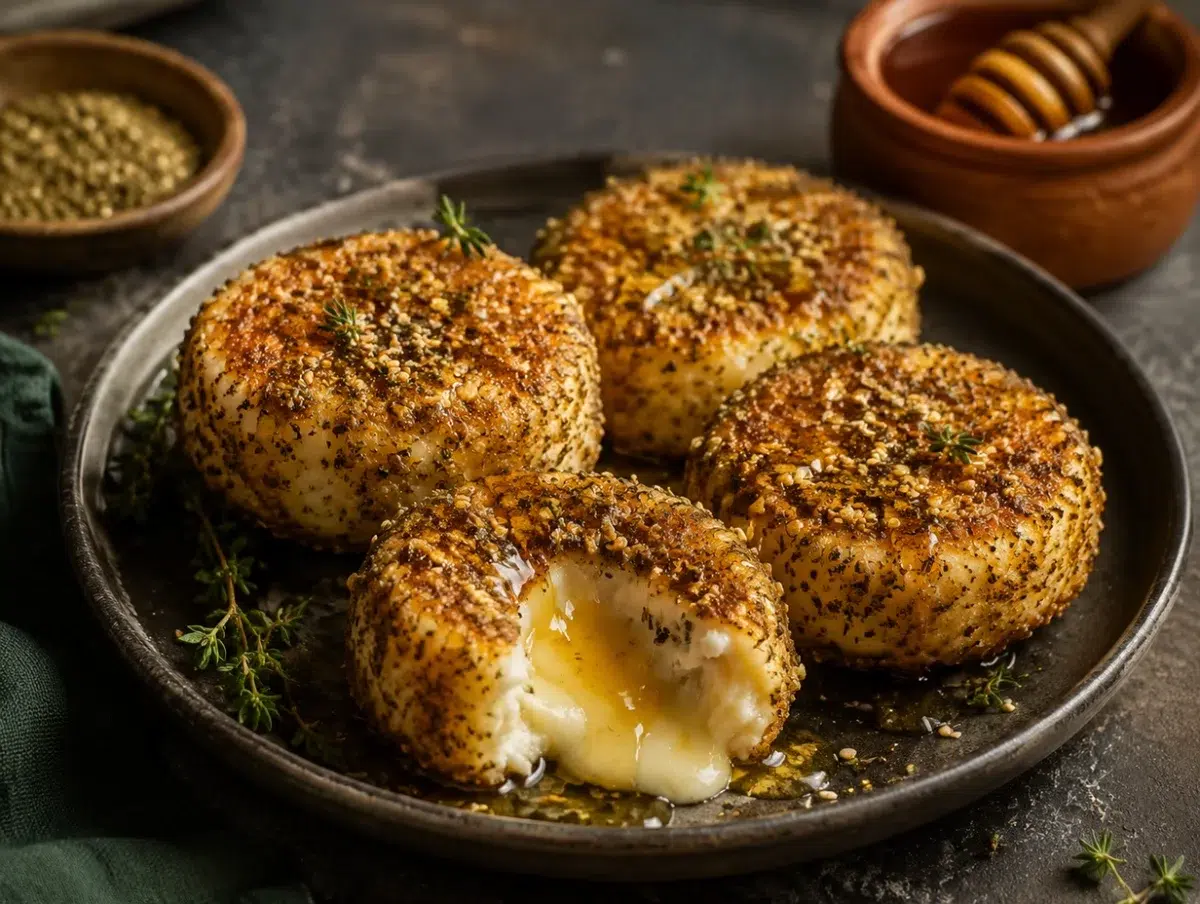
So let me tell you about the time I fried goat cheese and it literally exploded in the pan. February 2022. Dinner party for eight. I’d skipped the freezing step because I was, you know, impatient (shocker), and what I got was a skillet full of melted cheese soup with breadcrumb confetti floating in it. My friend Nadia laughed so hard she snorted her sparkling water. But here’s the thing—that disaster launched an 11-batch obsession.
I tested every variable: freezing times, oil temperatures, breading techniques, and finally, the za’atar coating that changed everything. This fried goat cheese with za’atar crust recipe is the result of all that chaos, and honestly? It’s the best crispy goat cheese appetizer I’ve ever made. Let me show you every secret.
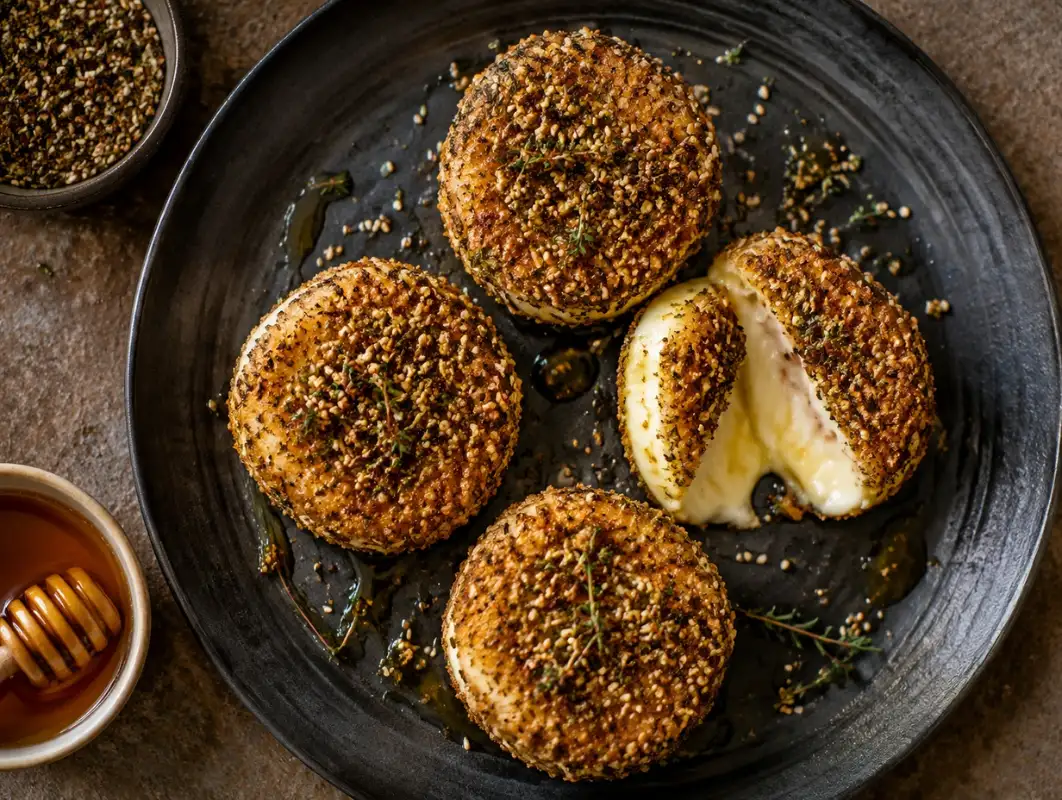
Crispy, golden goat cheese medallions coated in a fragrant za’atar and breadcrumb crust, pan-fried in extra virgin olive oil until perfectly crunchy outside and molten inside. A 5-ingredient Mediterranean appetizer ready in 21 minutes.
Table of Contents
Fried Goat Cheese with Za’atar Crust
Ingredients
Method
- 1. FREEZE: Place the goat cheese log in the freezer for 15 minutes until firm but not frozen solid.
- 2. SET UP DREDGE: Whisk egg and water in a shallow bowl. Place flour in a second shallow bowl. Place breadcrumbs in a third shallow bowl. Spread za’atar on a separate plate.
- 3. SLICE: Remove cheese from freezer. Using a sharp knife or dental floss, slice into ½-inch discs (approximately 12 medallions). Gently pack each disc with your hands to form tidy rounds.
- 4. BREAD: Coat each disc in flour (shake off excess), dip in egg wash (let excess drip off), then press firmly into breadcrumbs on all sides.
- 5. CHILL: Place breaded medallions on a parchment-lined plate. Refrigerate for at least 20 minutes.
- 6. FRY: Heat olive oil in a skillet over medium heat. Test with a pinch of flour—it should sizzle gently. Fry medallions for 90 seconds per side until golden brown. Work in batches to avoid overcrowding.
- 7. COAT: Immediately transfer hot medallions to the za’atar plate and roll to coat on all sides.
- 8. SERVE: Arrange on a plate or board. Drizzle with honey, garnish with fresh mint. Serve warm with pita chips or figs.
Notes
Storage:
Room temperature: serve within 1 hour. Refrigerator: store fried pieces in airtight container for 3–4 days. Freezer: flash-freeze unfried breaded medallions for up to 3 months in a freezer bag.Make-Ahead Tips:
Bread the medallions up to 48 hours before frying. Store breaded, unfried pieces in a single layer in the fridge, covered. For parties, fry in batches and keep warm in a 200°F oven.Substitutions:
Goat cheese → firm feta (1:1, will be saltier). Breadcrumbs → panko (1:1, slightly crunchier). Flour → GF flour blend (1:1). Za’atar → 1 tbsp dried thyme + 1 tsp sumac + 1 tsp toasted sesame seeds. Olive oil → avocado oil (1:1).Dietary Modifications:
Gluten-free: use GF flour and GF panko. Vegan: use vegan goat cheese and flax egg. Paleo: use almond flour instead of breadcrumbs, omit regular flour.Serving Suggestions:
Best as a warm appetizer with honey and figs, as a salad topper on arugula-beet salads, or crumbled over Mediterranean soups. Pair with mint tea, sparkling lemonade, or pomegranate sparkling water.Why This Fried Goat Cheese with Za’atar Crust Works Every Time
The Food Science Behind the Perfect Crust
Here’s what’s actually happening when you fry goat cheese—and why most people mess it up. Goat cheese has a lower melting point than cow’s milk cheeses because of its different casein protein structure (Harold McGee covers this extensively in On Food and Cooking). That means it goes from solid to liquid fast. Like, alarmingly fast. The breading creates a thermal barrier—basically a crunchy little shield that holds the molten cheese inside while the exterior undergoes the Maillard reaction and turns golden.
The za’atar gets rolled on after frying while the cheese is still hot, which is crucial. The residual heat activates the volatile oils in the thyme, sumac, and sesame seeds, releasing that incredible earthy-citrusy aroma. It’s not just seasoning at that point—it’s flavor chemistry.
When to Serve This Crispy Mediterranean Cheese Appetizer
I’ve served this fried goat cheese at everything from a random Tuesday when I wanted something fancy-ish for dinner to my sister-in-law’s engagement party (where, yes, it was the first thing to disappear from the table). It works as a standalone warm goat cheese appetizer with honey and figs, it’s an absolute game-changer as a fried cheese salad topper, and it pairs brilliantly with something like our Mediterranean white bean salad for a light but deeply satisfying meal. The contrast of that cold, lemony salad with the hot, crispy, tangy cheese? Chef’s kiss.
Essential Ingredients for Fried Goat Cheese with Za’atar Crust
The Complete Ingredients List
1 (10-ounce) log firm goat cheese (chèvre)
1 large egg
1 tablespoon water
¼ cup all-purpose flour
¼ cup unseasoned breadcrumbs (plus more as needed)
¼ cup za’atar spice blend
2–3 tablespoons extra virgin olive oil, for frying
Optional for serving:
Warm honey or hot honey, for drizzling
Fresh figs, halved
Pita chips or warm flatbread
Fresh mint leaves, for garnish
The Ingredient Lineup (It’s Genuinely Just 5 Things)
I’m weirdly proud of how short this ingredient list is. Like, I will fight anyone who says good food needs to be complicated. Here’s what you need for the best fried goat cheese appetizer:
Goat cheese—a firm 10-ounce log (give it a squeeze at the store; you want the firmest one they’ve got, not the squishy one sitting in the back).
One egg, whisked with a splash of water.
All-purpose flour—about a quarter cup, nothing special here.
Unseasoned breadcrumbs—you want plain so the za’atar can do all the talking. And finally, the star of the show:
za’atar. That’s it. Plus extra virgin olive oil for frying, but I’m assuming you already have that because honestly, if you don’t, we need to have a different conversation.
If you want to turn this into a full spread, our whipped feta with hot honey makes the most incredible dipping companion—the sweet heat against the tangy za’atar-crusted cheese is just… ridiculous.
Goat Cheese Quality Guide: What to Look For
| Cheese Characteristic | What You Want | What to Avoid | Why It Matters |
| Firmness | Firm log, holds shape when squeezed | Soft, squishy, or crumbly | Firm cheese slices cleanly and survives the frying pan |
| Packaging | Vacuum-sealed log (10 oz) | Pre-crumbled tubs | Logs slice into perfect medallions; crumbles can’t be shaped |
| Flavor | Mild, fresh, tangy | Aged, strong, funky | Mild cheese lets the za’atar shine as the star flavor |
| Brand (USA) | Vermont Creamery, Montchevre | Generic store brand (often too soft) | Quality brands have better texture for frying |
| Temperature | Well-chilled to frozen (15 min in freezer) | Room temperature | Cold cheese holds its shape in hot oil |
The Za’atar Secret (And Why Store-Bought Is Totally Fine)
I need to be upfront about something: I’m extremely particular about za’atar. Like, unreasonably particular. (My partner once brought home a jar from the wrong brand and I may have audibly gasped.) Za’atar is a Middle Eastern spice blend—wild thyme, oregano, sumac, and sesame seeds—and the quality varies wildly between brands. The sumac gives it that lemony brightness, while the sesame adds crunch and nuttiness. For this za’atar crusted cheese recipe, a good store-bought blend absolutely works, but check the label—some brands pack it with salt or fillers.
USA substitutions: If you truly cannot find za’atar (though most grocery stores carry it now in the international aisle), you can make a rough approximation with 1 tablespoon dried thyme + 1 teaspoon sumac + 1 teaspoon toasted sesame seeds. It won’t be identical, but it’ll get you close. For a completely different but equally amazing cheese experience, our whipped feta garlic confit dip uses a similar philosophy of letting one bold flavor do the heavy lifting.
The Foolproof Method for Perfect Fried Goat Cheese
Preparation: The Critical Steps Most People Skip
Step 1—Freeze the cheese (15 minutes minimum). I cannot overstate this. This is the step I skipped during The Incident of 2022 and it’s the step that separates crispy goat cheese medallions from cheese soup. Pop your unwrapped log into the freezer for at least 15 minutes. You want it firm but not rock-solid—you should be able to slice through it with a sharp knife without it crumbling.
Step 2—Set up your dredging station. Three shallow bowls, assembly-line style: flour in the first, whisked egg (with 1 tablespoon water) in the second, breadcrumbs in the third. And then a plate with your za’atar spread out, waiting for the grand finale. I always set these up left to right because… well, I don’t know, it just feels correct that way. (Is anyone else weirdly specific about the direction of their dredging station, or is that just a me thing?)
Step 3—Slice into ½-inch discs. Pro tip from Kenji López-Alt that I wish I’d known years ago: use dental floss or unwaxed thread instead of a knife. I’m not kidding. A knife, no matter how sharp, tends to compress and squish the cheese. Thread slices clean through like butter. You should get about 12 medallions from a 10-ounce log. Pack each disc gently with your hands—squeeze the edges to make them tidy little pucks.
Speaking of dredging techniques, if you enjoy this kind of Mediterranean frying magic, our kolokithokeftedes (Greek zucchini fritters) use a similar coat-and-fry approach that’s equally addictive. And for a lighter take on fried Mediterranean goodness, the sweet potato zucchini fritters are a crowd-pleaser too.
The Pan-Frying Process: Timing Is Everything
Okay, here’s where things get exciting—and where you need to pay attention because it moves fast.
Dredge each disc: Flour first (shake off excess), then egg (let the drips fall off), then breadcrumbs (press them on firmly). Set each breaded medallion on a parchment-lined plate and—this is important—put them back in the fridge for at least 20 minutes. I know, I know, more waiting. But this second chill firms everything up so the breading doesn’t slide off in the pan. Trust the process.
Heat your oil: About 2–3 tablespoons of extra virgin olive oil in a skillet over medium heat—not medium-high, not high, medium. This is the most common mistake. Too hot and the outside burns while the inside stays cold. Too cool and the cheese absorbs oil and gets greasy instead of crispy. Test it: drop a pinch of flour into the oil. If it sizzles gently, you’re good. If it spits aggressively, turn it down.
Fry for 90 seconds per side. That’s it. Don’t touch them, don’t fuss, don’t peek under them every 10 seconds (guilty). Let the Maillard reaction do its thing. When the bottom is golden brown, flip once—gently!—and give the other side the same treatment. Then immediately transfer to a paper towel-lined plate.
The za’atar moment: While the cheese is still hot, roll each medallion in the za’atar plate. The warmth activates those essential oils and the residual moisture helps the spice blend stick. This is the step that transforms basic breaded goat cheese into fried goat cheese with za’atar crust, and honestly it smells so good you’ll want to eat them standing over the stove. (Not that I’ve done that. Multiple times. Every time.)
Creative Variations for Your Fried Goat Cheese with Za’atar Crust
Theme-Based Variations
Once you’ve mastered the base fried goat cheese recipe, you can go honestly kind of wild with it. I’ve been testing variations for the better part of two years now and here are the ones that made my guests actually stop mid-conversation to ask what they were eating—which, let’s be honest, is the highest compliment.
| Variation | Coating/Twist | Best Served With | Difficulty |
| Honey-Drizzled Classic | Za’atar crust + warm honey drizzle | Fresh figs, pita chips | Easy |
| Herbed Panko | Rosemary-thyme panko + lemon zest | Arugula salad, balsamic | Easy |
| Spiced Sesame | Black sesame + sumac + Aleppo pepper | Pickled vegetables, flatbread | Medium |
| Everything Bagel | Everything seasoning + panko | Tomato soup, crusty bread | Easy |
| Nut-Crusted | Crushed pistachios + za’atar | Beet salad, citrus vinaigrette | Medium |
Dietary Modifications & Budget-Friendly Options
Gluten-free: Use gluten-free panko breadcrumbs—they work surprisingly well and get just as crispy. Bob’s Red Mill makes a great one.
Vegan: This one’s trickier since, you know, cheese. But there are some genuinely good vegan goat cheese alternatives now—Miyoko’s makes a solid one. Use a flax egg instead of regular egg for the dredge.
Paleo: Swap breadcrumbs for finely ground almond flour. The texture’s slightly different but still excellent.
Kid-friendly: My nephew Omar (he’s 9) won’t touch anything with “weird green stuff” on it, so for kids I skip the za’atar coating and just serve the crispy goat cheese medallions with a drizzle of honey. He eats them by the handful now.
Budget-friendly: Generic-brand goat cheese logs work fine—just make sure they’re firm. And za’atar lasts forever in the pantry, so the per-recipe cost is tiny.
Pair with our Mediterranean chickpea power bowl for a complete, affordable meal. For more Mediterranean appetizer inspiration, our lemon chickpea patties with yogurt sauce are another budget-friendly crowd-pleaser.
Storage & Serving Secrets for Fried Goat Cheese
How to Store (And Make Ahead—Because You Absolutely Should)
Listen, the best thing about this za’atar crusted cheese recipe is that it’s incredibly make-ahead friendly. Here’s the breakdown: breaded but unfried medallions keep in the fridge for up to 48 hours (cover them well).
For longer storage, flash-freeze the breaded discs on a parchment-lined baking sheet, then transfer to a freezer bag—they’ll keep for up to 3 months. When you’re ready, fry straight from frozen, adding about 30 extra seconds per side. Already-fried goat cheese keeps in an airtight container in the fridge for 3–4 days. Reheat in a skillet over medium-low heat or in a 350°F oven for 5–8 minutes to recrisp. Do not—I repeat, do not—microwave them. I tried it once. The texture was like a warm, sad sponge. Nobody wants that.
For meal prep, I like to fry a big batch on Sunday and use them throughout the week: on salads, crumbled over our grilled chicken Mediterranean bowl, or honestly just eaten cold standing in front of the fridge at midnight. No judgment.
Serving Pairings That Actually Work
| Pairing Style | Serve With | Why It Works |
| Sweet & Savory | Warm honey + fresh figs + pita chips | Honey tempers the tang; figs add fruity depth |
| Salad Topper | Arugula + beet + walnut + citrus dressing | Peppery greens contrast the creamy cheese |
| Mezze Platter | Hummus + olives + roasted peppers + flatbread | Za’atar ties all the Mediterranean flavors together |
| Soup Garnish | Tomato soup or roasted cauliflower soup | Crispy cheese in warm soup = textural perfection |
| Breakfast Board | Eggs + labneh + cucumber + za’atar flatbread | Mediterranean brunch at its finest |
If you’re going the soup route, I can’t recommend it enough alongside our creamy tomato basil chicken—drop a few fried goat cheese medallions on top of the sauce and prepare to have a spiritual experience.
Nutritional Benefits of Fried Goat Cheese with Za’atar
Macronutrient Breakdown (Per 2-Piece Serving)
I’m not a dietitian (and I want to be clear about that), but goat cheese actually has some legitimately interesting nutritional properties. It’s lower in lactose than cow’s milk cheeses, which makes it easier on sensitive stomachs. The za’atar adds antioxidants from the thyme and sumac without meaningful calories. And because we’re pan-frying in olive oil rather than deep-frying, the fat profile skews toward heart-healthy monounsaturated fats. Here’s the approximate breakdown:
| Macronutrient | Amount (per 2 pieces) | % Daily Value | Primary Sources |
| Calories | 185–210 kcal | 9–11% | Goat cheese, olive oil, breadcrumbs |
| Protein | 10–12g | 20–24% | Goat cheese, egg wash |
| Total Fat | 13–15g | 17–19% | Goat cheese, olive oil |
| Carbohydrates | 8–10g | 3–4% | Breadcrumbs, flour |
| Dietary Fiber | 1–2g | 4–7% | Za’atar (sesame seeds, herbs) |
Key Micronutrients & Health Benefits
| Micronutrient | Amount | Key Benefits | Top Sources |
| Calcium | 95–120mg | Bone health, nerve function | Goat cheese |
| Phosphorus | 110–140mg | Bone formation, energy metabolism | Goat cheese, sesame seeds |
| Vitamin A | 8–12% DV | Vision, immune support | Goat cheese, egg |
| Iron | 1.5–2mg | Oxygen transport, energy | Za’atar herbs, sesame seeds |
| Vitamin B2 (Riboflavin) | 0.2–0.3mg | Energy metabolism, cell function | Goat cheese, egg |
The glycemic index of this dish is relatively low (GI: roughly 30–40) since the majority of the calories come from protein and fat rather than carbohydrates. Goat cheese also contains beneficial probiotics from the fermentation process, and the za’atar spice blend contributes compounds like carvacrol and thymol from thyme, which have been studied for their antimicrobial properties. For more nutrient-dense Mediterranean recipes, our Mediterranean sheet pan salmon is another omega-3-rich powerhouse.
Frequently Asked Questions About Fried Goat Cheese with Za’atar Crust
How do you keep fried goat cheese from falling apart in the pan?
The two non-negotiable steps are freezing and chilling. Freeze the log for at least 15 minutes before slicing, then chill the breaded medallions for another 20 minutes before frying. This firms the cheese enough to survive contact with hot oil. Also, make sure your oil is at proper medium heat—too cool and the breading absorbs oil and gets soggy, which causes it to fall apart.
What does za’atar taste like and where can I buy it?
Za’atar is a Middle Eastern spice blend with an earthy, herby, slightly tangy flavor thanks to wild thyme, oregano, sumac, and sesame seeds. It’s available at most grocery stores in the international or spice aisle, at Middle Eastern markets, or online. The sumac gives it a distinctive lemony brightness that sets it apart from other herb blends.
Can I make fried goat cheese with za’atar crust ahead of time?
Absolutely. Bread the medallions and refrigerate up to 48 hours before frying, or flash-freeze for up to 3 months. Already-fried pieces keep in the fridge for 3–4 days and reheat well in a 350°F oven for 5–8 minutes. Never microwave—they lose all their crispiness.
What oil is best for frying goat cheese?
Extra virgin olive oil gives the best Mediterranean flavor and works perfectly for the gentle pan-frying this recipe uses. You only need about 2–3 tablespoons—we’re shallow frying, not deep frying. Avocado oil also works well if you prefer a neutral flavor. Avoid butter alone as it burns at the temperatures needed.
Can you air fry goat cheese instead of pan frying?
Yes! Preheat your air fryer to 375°F, spray the breaded medallions with cooking spray, and air fry for 6–8 minutes, flipping halfway through. They won’t get quite as golden as pan-fried, but you’ll still get a satisfying crunch with less oil. Roll in za’atar immediately after removing from the air fryer.
What goes well with fried goat cheese with za’atar crust?
Warm honey, fresh figs, and pita chips are the classic pairing. It’s also stunning on salads (arugula and beet is my favorite), crumbled over soups, added to a mezze platter, or served with roasted vegetables. The tangy, earthy flavors pair beautifully with sweet, acidic, or peppery accompaniments.
Is fried goat cheese gluten-free friendly?
The standard version uses all-purpose flour and breadcrumbs, which contain gluten. However, you can easily make a gluten-free version by substituting gluten-free flour blend and gluten-free panko breadcrumbs. The za’atar itself is naturally gluten-free, but always check labels for potential cross-contamination.
Pairing & Serving Ideas for Za’atar Fried Goat Cheese
Occasion-Based Serving Guide
| Occasion | Serving Style | Pair With | Non-Alcoholic Beverage |
| Dinner Party Appetizer | On a slate board with honey and figs | Mezze platter, warm flatbread | Sparkling water with lemon |
| Weeknight Salad | Warm over arugula-beet-walnut salad | Crusty sourdough on the side | Fresh mint iced tea |
| Game Day | In a bowl with marinara for dipping | Pita chips, vegetable crudites | Homemade lemonade |
| Brunch | Alongside eggs and labneh | Za’atar flatbread, fresh herbs | Fresh-squeezed orange juice |
| Holiday Spread | As part of a large grazing board | Olives, nuts, roasted peppers | Pomegranate sparkling water |
For the dinner party route, pair your fried goat cheese with za’atar crust alongside our garlic parmesan focaccia—the warm bread torn into pieces with the crispy cheese is absolutely heavenly. And for brunch, our Greek feta egg bake plus a few of these za’atar cheese medallions creates the kind of Mediterranean morning spread that makes weekends feel like a vacation.
Beverage Pairings (All Non-Alcoholic)
The earthy, citrusy za’atar needs a beverage that won’t compete. My go-to is fresh mint tea—hot or iced—because the mint provides a cooling contrast to the warm, rich cheese. Sparkling lemonade with a sprig of thyme is another winner. And here’s one that sounds weird but honestly works: iced hibiscus tea with a squeeze of orange. The floral tartness of the hibiscus plays off the sumac in the za’atar in this surprisingly elegant way. I discovered this pairing completely by accident at a friend’s barbecue and now I’m like, annoyingly evangelical about it.
Make It Yours: Your Za’atar Fried Goat Cheese, Your Rules
Personalize and Experiment
Here’s what I hope you take away from this: the fried goat cheese with za’atar crust is a framework, not a commandment. Once you nail the basic technique—freeze, dredge, chill, fry, coat—you can riff endlessly. Swap the za’atar for dukkah. Try it with goat brie instead of fresh chèvre. Roll them in crushed pistachios. Put them on pizza. (Actually, please put them on pizza and tell me how it goes because I haven’t tried that yet and now I’m obsessed with the idea.) Use the leftovers in our spinach and feta pasta for an extra layer of crispy, tangy decadence, or crumble them over our gemista (Greek stuffed peppers and tomatoes) as a finishing touch.
Share Your Creations
I’d love to see what you create. Tag your za’atar fried goat cheese experiments, tell me about your best (and worst) batches, share the bizarre toppings you tried. And if your first attempt melts into cheese soup like mine did? That’s fine. That’s honestly fine. You’ll freeze it longer next time and everything will be beatiful. Now go get yourself a log of goat cheese and some za’atar, and let’s make something crispy.